
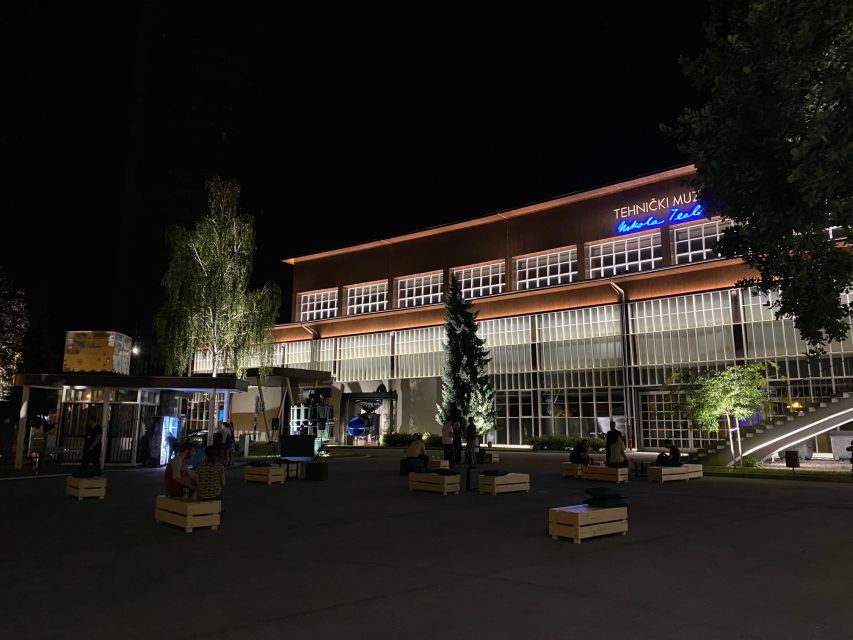
Reviewed · MUSEUMS
Zagreb: Nikola Tesla Technical Museum Ticket
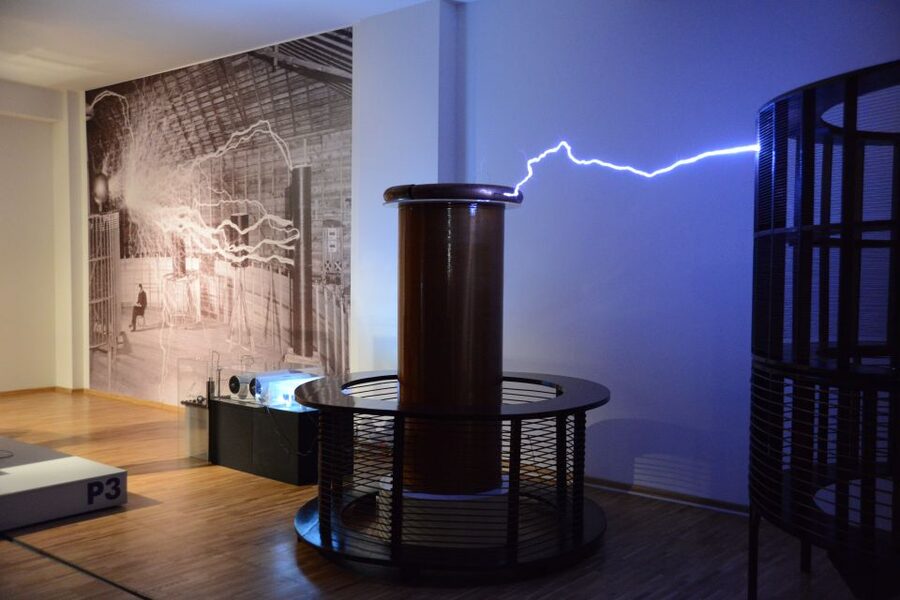
The most exciting part of Zagreb’s Nikola Tesla Technical Museum is not a glass case of old gadgets. It is the chance to see electricity behave badly, with Tesla coils, sparks, and live demonstrations in the Nikola Tesla Cabinet. You can also walk through an underground mine, then move on to engines, aircraft, cars, farming tools, radio equipment, and space technology.
I like the free guided tour through the mine and the Tesla experiment demonstration. I also like the sheer variety: this is not just a Tesla shrine, but a large survey of how people have produced energy, moved goods, communicated, farmed, flown, and explored space.
The main drawback is that the museum can feel dated and unevenly explained, especially if you depend on English signs. Some sections are cold in winter, and visitors with mobility impairments or wheelchair users may not be able to enjoy the full experience.
Key points to know before you go
- Tesla’s experiments are the star attraction: Join the live demonstration of electrical inventions when the schedule fits.
- The mine adds a real sense of place: You walk below ground rather than simply looking at mining tools behind glass.
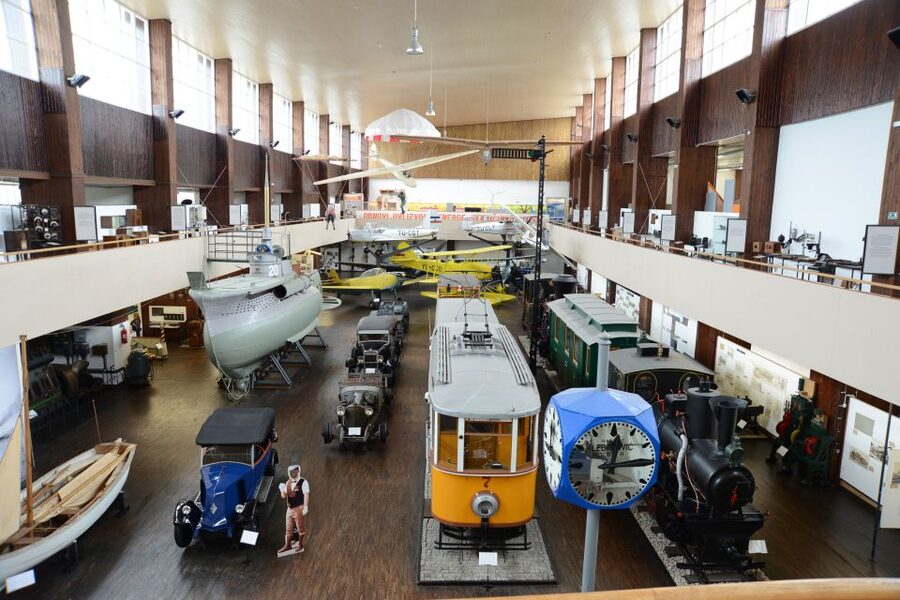
- The collection goes far beyond Tesla: Expect vehicles, aircraft, turbines, generators, farming equipment, communications gear, and space exhibits.
- Timing matters: The free guided visit is offered at 3:00 PM Tuesday through Friday, and at 11:00 AM Saturday and Sunday.
- Plan for at least two hours: You can rush through in about an hour, but the museum rewards a slower visit.
- The $8 ticket is good value: It covers a wide collection and a full day of validity, though the museum is best for curious minds rather than a quick city-center checklist.
Why the Tesla Cabinet is worth your time
Nikola Tesla gives the museum its name and its biggest draw. The Tesla Cabinet presents his ideas through demonstrations rather than only through portraits, dates, and technical drawings. That matters because alternating current, high voltage, and electromagnetic force can seem dry on a label. When electricity crackles in front of you, the subject becomes much easier to grasp.
The demonstrations are interactive in the useful sense. You may be asked to take part, and the presentation explains scientific principles through visible effects. Children and teenagers with an interest in engineering should get a lot from this section, but adults who remember school physics as a blur of formulas can enjoy it too.
Try to arrange your visit around the free Tesla demonstration. It is scheduled for 3:00 PM from Tuesday to Friday, and 11:00 AM on Saturday and Sunday. You may also join the free guided visit through the mine at those times. The supplied schedule links these attractions, so check the current availability when booking and make sure you are inside at the right hour.
English support is not perfectly even. Many objects have English descriptions, but not every label does. Audio is available in several languages, although it may not be obvious at first, so ask about it before you start. The free tour can help make the displays clearer, especially when the written material is mostly in Croatian.
Guides including Eva and Tonka have been praised for explaining the material with energy and for adding information about Zagreb. The guide matters here because the collection is broad and some machinery needs context. If you see a guided tour operating in English, I would choose it over wandering past the larger machines alone.
More Museums and Galleries in Zagreb
- Zagreb: Skip-the-Ticket-Line Museum of Broken Relationships
★ 4.5 · 847 reviews - Zagreb: Museum of Illusions Entrance Ticket
★ 4.0 · 261 reviews - Museum of Illusions Zagreb
★ 4.0 · 197 reviews
Walking through the underground mine
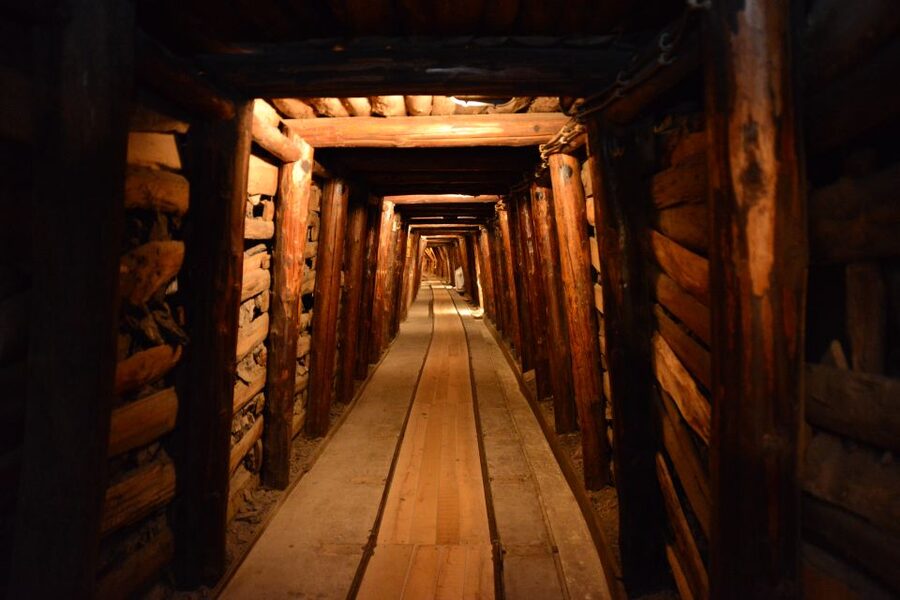
The mine is one of the museum’s most distinctive features. Instead of looking at mining tools in a bright exhibition hall, you follow a route below ground and see how work in a mine was organized. It gives the technical collection a physical edge that many science museums lack.
This is also the point where mobility becomes important. The experience is specifically not suitable for wheelchair users or people with mobility impairments. If stairs, narrow areas, or uneven surfaces are difficult for you, ask museum staff what parts can be visited before committing to the route.
The mine is not a separate paid attraction. It is part of the museum visit, and the guided route is free of charge at the scheduled times. I would not treat the mine as a quick add-on. It is one of the best reasons to plan your arrival around the tour rather than simply buying a ticket and leaving whenever you finish the first hall.
Engines, turbines, and the machinery that changed daily life
The permanent collection is at its strongest when it shows progress through real machines. Large engines, motors, turbines, generators, and industrial equipment make clear how much physical hardware sits behind the modern world.
The energy section follows the transformation of energy and includes displays related to electrical generation. The machines are substantial, not pocket-sized teaching models. If you enjoy mechanical engineering, this may be the part that keeps you inside for hours. Even if you are not technical, the size and age of the equipment help you understand how difficult early industrial work was compared with today’s compact devices.
The museum also traces the development of transport. You can see bicycles, motorcycles, cars, railway items, and aircraft. The appeal is partly technical and partly personal. An older vehicle can bring back a childhood memory, while the progression from early machines to later designs shows how quickly comfort, speed, and efficiency changed.
The aircraft and aeroplane engine displays work in the same way. You are not simply looking at the history of flight from a distance. The engines show the problem designers had to solve: how to create enough power while keeping weight under control.
One especially useful feature is the range. A narrow Tesla museum might leave you with a good story about one inventor and little else. Here, Tesla appears in a much larger account of generators, transport, communications, agriculture, and energy policy.
Radio, nuclear technology, and the future of energy
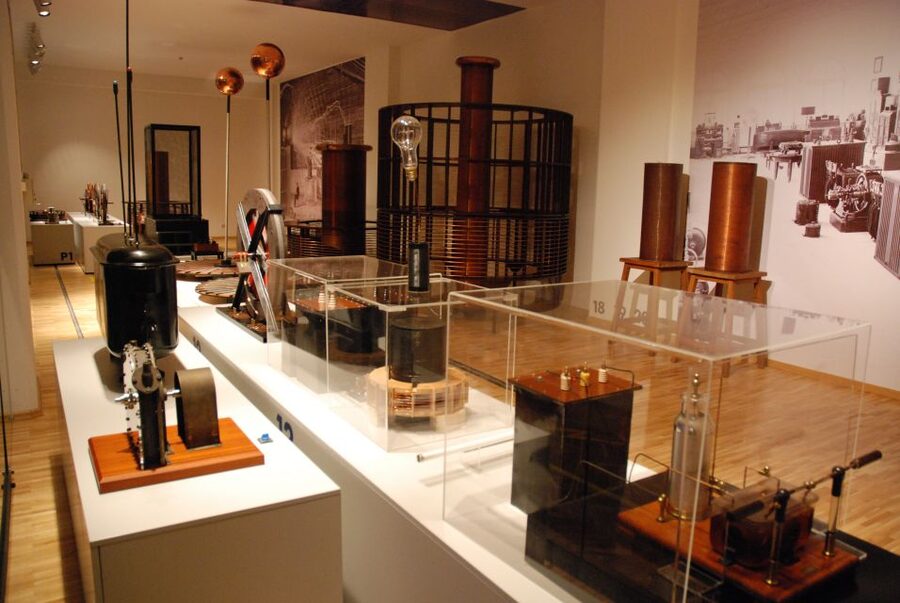
The museum’s subject list reaches from early electrical equipment to radioactive waste, astronautics, and a planetarium. That broad sweep gives you a chance to connect inventions to their consequences.
The radio and communications material shows how information moved before the age of instant digital messaging. Wire and wireless systems may look simple now, but they changed how quickly people could share news and coordinate work. The collection also includes material related to geodetics and cadastre, subjects tied to measuring land, mapping it, and recording ownership.
The section on radioactive waste adds a more serious note. Technology is not presented only as a parade of clever successes. Energy systems create problems, and the museum includes the difficult question of what to do with hazardous byproducts.
Renewable energy and energy efficiency bring the collection into the present. Solar power and other renewable sources sit alongside older machines, letting you compare the tools of industrial growth with the systems now used to reduce waste and emissions. I find this part useful because it turns the visit from a look backward into a question about how you want technology to work next.
Astronautics and the planetarium add another change of scale. After seeing engines and generators up close, you move toward spacecraft and the study of space. It is a reminder that technological history is not a straight line from old to new. Different problems require different kinds of invention.
Same stretch of coast, a completely different kind of day:
- Communism & Croatian Homeland War Tour
★ 5.0 · 1,355 reviews - Best of Zagreb with the WW2 Tunnels
★ 5.0 · 973 reviews - Zagreb: Small Group Walking Tour City Center and WW2 Tunnels
★ 4.9 · 895 reviews - Zagreb: City and WWII Tunnels Walking Tour
★ 4.9 · 845 reviews
Agriculture, beekeeping, firefighting, and the unexpected rooms
Some of the museum’s best surprises are outside the areas most people expect. The permanent exhibitions include early agricultural foundations and an apiary, along with firefighting, geology and oil, and tools connected with land measurement.
The agriculture section shows that technology is not only about factories and laboratories. Farming depends on machines, materials, measurement, and energy too. The apiary adds a quieter subject and broadens the idea of technology beyond engines and electricity.
Firefighting equipment has a similar value. It shows how technical design responds to danger in everyday life. Geology and oil then shift the focus toward natural resources and the materials that have powered modern industry.
This variety can feel scattered if you want one tight narrative. The museum is more like a series of connected rooms than a perfectly choreographed story. I see that as part of its character, but you should know what you are buying: a large technical collection with many subjects, not a polished, single-theme attraction.
How long to allow, and when to visit
The ticket is valid for one day, so you are not forced into a short, tightly timed visit. The practical question is how much you want to see. An hour may cover the highlights, but it is not enough for the full range of exhibitions.
Plan on around two hours if you want the Tesla Cabinet, mine, transport displays, and a selection of the permanent rooms. A technically minded visitor could easily spend much longer examining turbines, generators, engines, vehicles, and aircraft. One person with an engineering background described the machinery collection as a reason to stay for several hours, and I can see why.
The free tour should shape your schedule. Arriving early and leaving before the demonstration means missing the most memorable part. If you arrive at 9:30 AM and finish the main halls by 10:30 AM, you may not feel like waiting for the later tour, so check the day’s schedule before entering.
Sunday hours can make planning harder if you arrive late. A short visit may leave you seeing only a fraction of the collection. I would choose a weekday afternoon for the 3:00 PM tour if possible, or arrive before 11:00 AM on Saturday or Sunday.
The museum can be cold in winter. Wear a layer if you visit during the colder months, especially if you plan to spend time in the mine. Spring and summer may be more comfortable, though the museum can also be a sensible rainy-day stop.
What the $8 ticket delivers
At about $8 per person, this is a strong-value museum ticket if you are interested in science, machinery, transport, or the story of modern technology. The price covers entrance to the museum, and the ticket is valid for one day. You are paying for breadth rather than a short, high-production presentation.
The value improves if you attend the free mine tour and Tesla demonstration. Those activities add structure and live explanation without an extra charge. A paid audio guide may also help if English labels are important to you, since descriptions are not equally available for every object.
The value is less certain if you have only two or three days in Zagreb and prefer art, architecture, food, or major historic sights. This is an excellent specialist stop and a pleasant rainy afternoon, but it may not outrank the city’s central highlights for every first-time visitor.
If you drive, allow time to sort out parking. One practical route places paid parking behind the museum, at roughly €1.50 per hour according to the information available for the visit. Do not assume the entrance area itself is a parking area, and check local signs when you arrive.
Who will enjoy this museum most
I would recommend the museum first to people who like to understand how things work. Engineers, science students, mechanics, and fans of old vehicles will find plenty to examine. The collection is also a good choice for families with older children and teenagers who enjoy machines more than quiet display cases.
Adults can enjoy the nostalgia of older cars, bikes, household technology, and equipment from their younger years. Children may like the Tesla experiments and the scale of the engines, although the museum is not an all-touch attraction. Some displays are preserved objects rather than hands-on exhibits.
The museum is less suitable if you want polished English interpretation at every stop, a compact visit, or a completely modern exhibition design. Some areas look dated, and the organization can feel loose. The trade-off is access to large, genuine specimens that you can often see from close range.
Keep food and drinks outside. They are not allowed in the museum. Also consider the physical demands of the mine before you book, since the full visit is not suitable for wheelchair users or people with mobility impairments.
Should you book the Nikola Tesla Technical Museum?
Book it if you have a free afternoon in Zagreb and enjoy real machines, electrical experiments, or the practical story of invention. At $8, the ticket offers a lot of material, and the free guided tour makes the visit considerably better. Set aside at least two hours, then aim for the 3:00 PM weekday tour or the 11:00 AM weekend tour.
Skip it if your Zagreb schedule is already packed with the city’s main historic sights, or if you need a fully accessible museum with consistent English text and modern presentation. For everyone else, especially young engineers, curious families, and adults who like seeing how old technology actually worked, this is a worthwhile and reasonably priced stop.
FAQ
How much does the Nikola Tesla Technical Museum ticket cost?
The ticket costs $8 per person.
How long is the ticket valid?
The ticket is valid for one day.
What does the ticket include?
It includes entrance to the Nikola Tesla Technical Museum and its permanent exhibitions.
Is the mine tour included?
Yes. A guided tour through the museum’s mine is available free of charge at the scheduled times.
When can I join the free mine tour and Tesla demonstration?
The free guided tour and Tesla experiment demonstration are available at 3:00 PM Tuesday through Friday, and at 11:00 AM Saturday and Sunday.
Are the Tesla experiments included in the ticket?
Yes. The demonstration at the Nikola Tesla Cabinet is free of charge for museum visitors at the scheduled time.
Are there English descriptions?
Many exhibits have English descriptions, but not every object is labeled in English. Audio is available in several languages, so ask about it before you begin.
Is the museum accessible for wheelchair users?
The experience is not suitable for wheelchair users or people with mobility impairments.
Can I bring food and drinks inside?
No. Food and drinks are not allowed inside the museum.
Just added around Zagreb
- Toast to the Morning After: Zagreb Museum of Hangovers Visit★ 4.0 · 39 reviews
- Private Walking Tour of Zagreb★ 4.9 · 5 reviews
- Jump into Zagreb: Walking Tour with local guide★ 4.8 · 3 reviews
- From Zagreb: Varazdin Baroque Town & Trakoscan Castle★ 4.9 · 38 reviews
- From Zagreb:Discover North Croatia, Museums, Castle and City★ 5.0 · 26 reviews
- From Zagreb: Prehistoric and Medieval Croatia Tour★ 4.9 · 3 reviews
- From Zagreb: Mrežnica kayaking & Rastoke village – day trip★ 4.9 · 27 reviews
- Exclusive old Zagreb walking tour★ 4.4 · 32 reviews
Museums, compared.

Blue Lagoon & Underwater Museum from Split with Lunch & Drinks
Read our review →
Zagreb: Skip-the-Ticket-Line Museum of Broken Relationships
Read our review →
SPLIT-PREMIUM Emperor’s Walking Tour for History Lovers + Museum
Read our review →
Split: Klis Fortress GOT and Olive Museum Entry Tickets
Read our review →

Browse the lists this tour appears in