
Reviewed · MUSEUMS
SPLIT-PREMIUM Emperor’s Walking Tour for History Lovers + Museum
Diocletian’s Palace is not a fenced-off monument. It is the heart of modern Split, with homes, cafés, shops, lanes, and Roman stonework woven together. This tour helps you see how a retirement palace built in 305 AD became a living city, guided by locals such as Joško, Daniela, and Joe, who bring the story far beyond a quick photo stop.
I like the small maximum of 15 people, which makes it easier to hear and ask questions. I also like the strong focus on Split’s full story, from Roman rule and Emperor Diocletian to medieval Croatia and the city today. The main consideration is that the group tour is for adults only, and the Cathedral, Temple of Jupiter, and palace cellars are either viewed from outside or paid for separately.
Key points to know before booking
- A real history tour: The focus is Diocletian, Roman architecture, Split, and Dalmatian history, not a costumed performance or a Game of Thrones-themed walk.
- Small group format: The maximum is 15 people, with a minimum of four needed for the group departure.
- Local guides: Joško, Daniela, Joe, and Joseph are praised for clear explanations, humor, patience, and strong local knowledge.
- Cellars cost extra: Entry to the Museum of Diocletian’s Cellars is €10 per person and is not included in the tour price.
- Good for cruise port visits: The meeting point is on the Riva waterfront, within walking distance of the cruise port.
- Plan for heat: Split can be very hot in summer, so an early departure is the sensible choice.
Why Diocletian’s Palace makes this tour different
At $30 per person, this is an inexpensive way to get your bearings in Split while learning what you are actually looking at. The palace is enormous by ancient standards, but it no longer feels like one complete building. Centuries of rebuilding have turned it into a maze of streets and courtyards.
That can be confusing on your own. One arch may be Roman, the next wall medieval, and the building above it much newer. A good guide connects those layers. You learn why the palace was built, how it was arranged, and how ordinary life gradually took over the emperor’s former residence.
I especially like that the walk does not stop at the palace gates. It moves through Old Split, across several important squares, and along the Riva. That gives you a better sense of the city as a whole rather than treating Diocletian’s Palace as an isolated archaeological site.
The guides also add a personal link to the place. Joško is described as a local who grew up in Split, while Daniela is praised for her clear account of Dalmatian and Split history. Joe and Joseph are also noted for humor, local insight, and an easy way of explaining complicated events. Your exact guide depends on the departure, but the experience is built around local presentation rather than a recorded script.
More Historical Tours in Split
- Walking Tour of Split with a ‘Magister’ of History
★ 5.0 · 1,122 reviews - Split Walking Tour with Professor of History
★ 5.0 · 926 reviews - Split: History and Heritage Walking Tour
★ 4.9 · 650 reviews
Walking from the Riva into the Roman palace
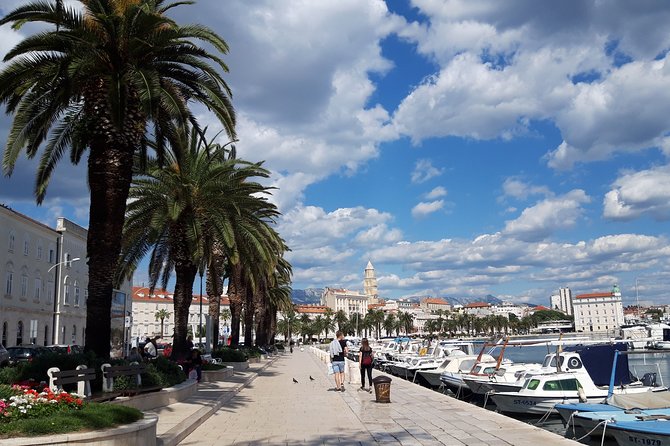
The tour begins and ends at the Main Stage on the Riva promenade, at Obala Hrvatskog narodnog preporoda 22. This is a practical meeting point, especially if you arrive from a cruise ship or are already exploring the waterfront.
From the Riva, the walk leads into the old center and Diocletian’s Palace. The route covers a lot in roughly two hours, although some walks have lasted closer to two and a half or three hours when the guide allowed extra questions, helped with photos, or adjusted the pace for the group.
The palace was built for Emperor Diocletian, who retired there in 305 AD. That detail matters because this was not simply a fortress or a public temple. It was a private imperial residence joined to military defenses, ceremonial spaces, religious buildings, and service areas.
You will hear how the palace functioned as a complete compound. The scale becomes easier to understand when you picture the emperor’s private quarters, formal entrances, sacred buildings, and working areas all linked together.
The Peristyle, Vestibule, and Temple of Jupiter
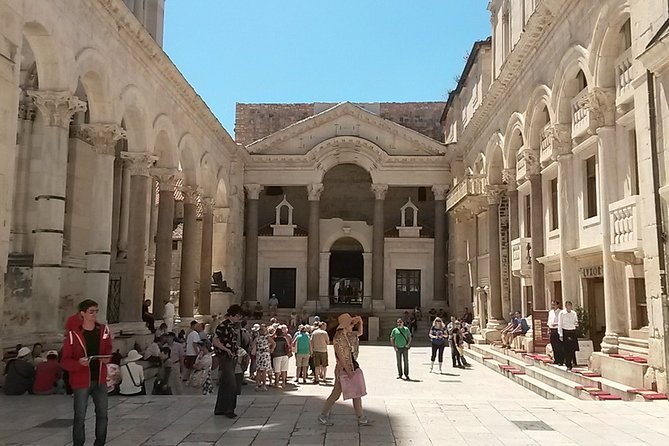
The Peristyle is the symbolic center of the palace. This large ceremonial square was used for imperial display, and it remains one of the most memorable places on the route. Tall stone columns and surrounding buildings make the space feel theatrical even when the square is busy.
Your guide will explain the role of the Peristyle and how it related to the emperor’s residence. This is also one of the best places to pause and look carefully at how Roman construction was absorbed into later city life.
Nearby, the Vestibule marks the main entrance to the emperor’s private residence. Its round form and unusual acoustics make it a distinctive stop, but the key point is its position. You are not just looking at a pretty structure. You are standing at the threshold between public ceremony and private imperial life.
The Temple of Jupiter is seen from the outside during the standard route. It was once dedicated to the principal Roman god and later became part of the Christian city. An optional visit inside may be possible, but admission is not included, so you should ask the guide about the current arrangement if entering matters to you.
The same applies to the Cathedral of Saint Domnius. The tour views the cathedral from outside. That is enough to explain its place within the palace complex, but you should not book this walk expecting a full cathedral interior visit or treasury tour.
The palace cellars and the €10 decision
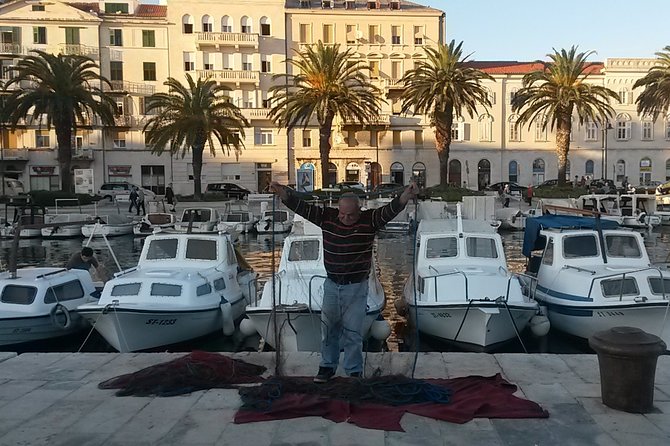
The Diocletian Palace Substructures are one of the strongest parts of the experience. They are among the best-preserved sections of the palace, and they show the building’s original plan more clearly than many of the upper streets do.
The cellars also explain the layout above them. As you walk through the lower passages, your guide can point out how the substructures supported the emperor’s apartments and helped organize the palace. This is where the ancient design becomes easier to picture.
Entry to the Museum of Diocletian’s Cellars costs €10 per person and is not included in the $30 tour. That makes the total closer to $40 per person before gratuity if you choose to enter.
I consider the extra fee reasonable for anyone who enjoys Roman architecture or wants a fuller palace visit. If you are watching every dollar, the guide still covers the palace from the streets and squares, so you can decide on the spot. One useful detail is that some people have continued independently after the walking tour to visit the Jupiter Temple, cathedral, or treasury.
More Museums and Galleries in Split
- Blue Lagoon & Underwater Museum from Split with Lunch & Drinks
★ 4.5 · 1,122 reviews - Split: Game of Thrones Museum Entrance Ticket
★ 3.8 · 385 reviews - Split: Klis Fortress GOT and Olive Museum Entry Tickets
★ 4.6 · 283 reviews - Split: Museum of Illusions Entrance Ticket
★ 4.2 · 254 reviews
Old Split, where Roman stone meets daily life

The Old Split section adds context that the palace alone cannot provide. The route passes through medieval streets and public squares where the ancient compound became part of an active town.
Fruit Square, officially Trg Brace Radic, occupies the site of a former green market. It also features a statue of Marko Marulić, often called the father of Croatian literature. This is a brief stop, but it shows how the city’s cultural identity developed after the Roman period.
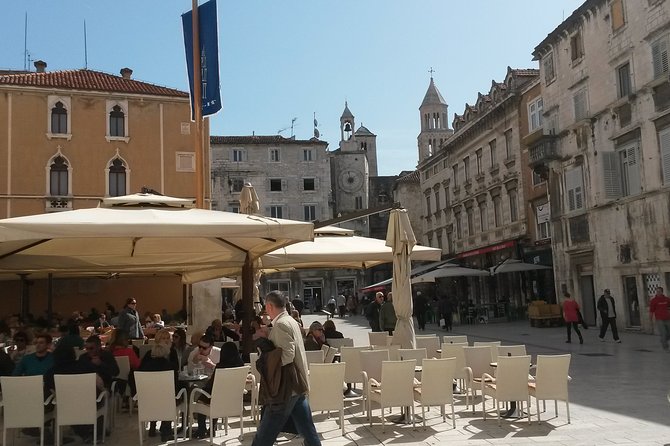
Narodni Trg, or People’s Square, is another useful contrast. It is the largest and liveliest piazza in the old center, surrounded by later architecture and urban activity. Here, you see Split as a medieval and modern city rather than only as Diocletian’s imperial retreat.
The City Clock is another small but memorable detail. The 500-year-old 24-hour clock is the sort of feature you could easily pass without noticing. A local guide earns the fee by directing your attention to these details and explaining why they matter.
The Golden Gate and Grgur Ninski
The Golden Gate was the main and most impressive entrance to Diocletian’s Palace. Its size and position help you understand the palace’s defensive role, while the route through it gives the walk a satisfying sense of orientation.
The stop at the statue of Grgur Ninski introduces an important Croatian historical figure. Your guide explains his role and why he remains significant in Croatia. This is a useful reminder that Split’s story is not only Roman. Croatian religious, political, and literary figures also shaped the city.
The statue is famous for its polished toe, although the supplied tour details emphasize the historical figure rather than treating it as a quick good-luck photo stop. You will get more from this part if you listen for the connection between language, church history, and Croatian identity.
What the guides do especially well
The strongest part of this experience is the guide’s delivery. The most consistent praise goes to the ability to make complicated history easy to follow without turning the walk into a dry lecture.
Joško is described as funny, thorough, and especially good at fitting the important sights into a tight schedule. That matters if you are visiting from a cruise ship and need to return on time. Daniela is praised for her detailed explanation of Dalmatia and Split, as well as her patience with a person who had limited mobility.
The walk can also be adjusted around your interests. One small private group received more attention on history, architecture, humor, and local recommendations. Guides have also helped with restaurant and bakery suggestions after the walk, although those favors are extras rather than promised parts of the booking.
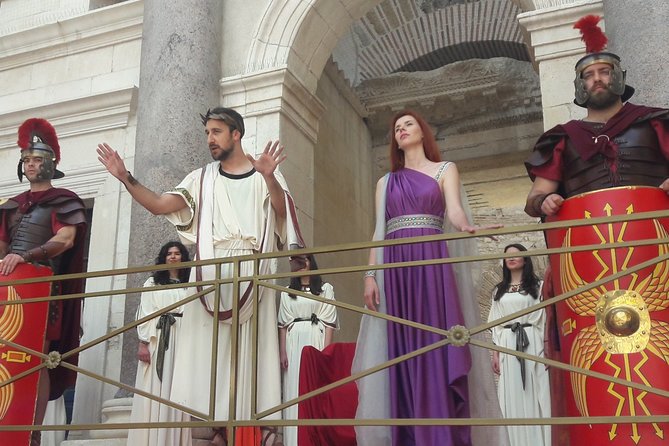
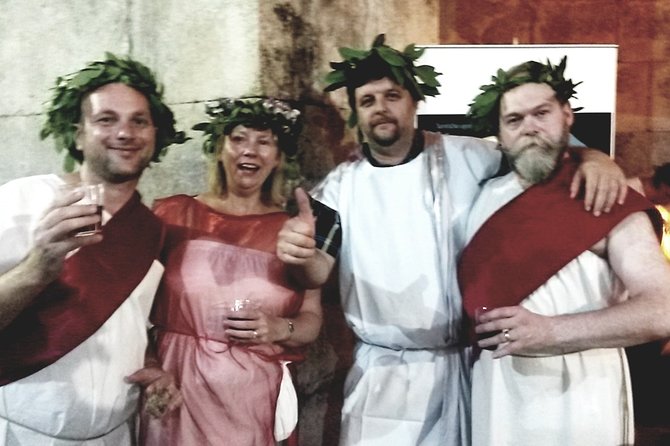
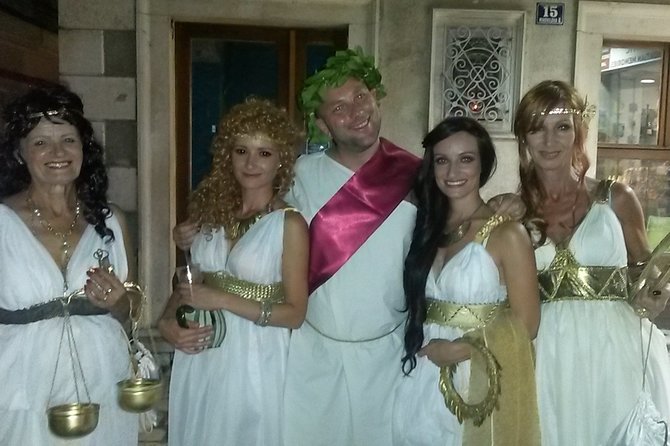
You should also know what this tour is not. It does not include a costumed theater show or a similar performance. It is not designed as a Game of Thrones tour, either. You may pass filming locations, but the focus is Roman and Croatian history. That is a strength if you want the real story of Split, but a limitation if television locations are your main reason for booking.
Group size, pace, and summer heat
The group tour is limited to 15 people, which is much more manageable than the large walks that often gather around the palace during cruise ship days. A small group allows you to hear the guide, ask questions, and stop without blocking a large section of a narrow lane.
The minimum group size is four. The group option is for adults only and is not recommended for anyone under 18. A private version is available for all ages, so families should look at that option instead.
The route is a walking tour over old streets and public squares. Most people can participate, but the experience is not a seated museum visit. If you have mobility concerns, mention them when booking. Daniela’s willingness to slow down and give extra time is encouraging, but the tour still involves moving through the old center.
Summer heat is the main practical concern. Split can be extremely hot even early in the day, and one person described a walk in 38-degree weather. I would choose the earliest available time, carry water, wear comfortable shoes, and bring sun protection. The shade in old streets helps, but you should not count on a cool walk.
Is $30 a fair price?
At $30, this tour offers solid value if you want an introduction to Split rather than a series of unconnected photo stops. You receive a licensed resident guide, a planned route, and explanations at major Roman, medieval, and Croatian sites.
The price does not cover the €10 cellar admission, gratuities, or any optional entry to the Temple of Jupiter or other paid sights. That is worth adding to your budget before you book. Still, the base cost is modest for a small group, especially if the guide spends extra time answering questions or helping you get oriented for the rest of your day.
The value is highest for first-time visitors, cruise passengers, and people who enjoy history but do not want to research every column and courtyard in advance. If you already know Split well, you may prefer a private walk with a more specialized focus.
Booking, cancellation, and practical details
You receive confirmation when you book, and the meeting point is close to public transportation and within walking distance of the cruise port. The activity returns to the same Riva meeting point, so you finish where you began.
Free cancellation is available up to 24 hours before the start time for a full refund. Changes or cancellations inside 24 hours are not accepted for a refund. The walk depends on good weather and a minimum number of participants. If poor weather or low numbers cancel the departure, you are offered another date or experience, or a full refund.
Because the experience is often booked well ahead, with an average lead time of about 47 days, reserve early if your Split visit falls on a busy cruise date.
Who should book this Split walking tour?
You should book it if you want a clear introduction to Diocletian’s Palace, prefer a small group, and enjoy learning from a local guide. It is especially useful on your first morning in Split because you finish with a map in your head and several ideas for what to see next.
History fans will get the most from the palace substructures, Peristyle, Vestibule, and Temple of Jupiter. Cruise passengers will appreciate the waterfront meeting point and the guides’ willingness to keep an eye on the clock.
You may want another option if you are traveling with young children on the adults-only group departure, need a fully accessible route, or mainly want Game of Thrones filming locations. You should also allow extra money and time if you want to enter the cellars or other paid sights.
For most first-time visitors, I would book it. The mix of Roman remains, medieval streets, local stories, and a genuinely small group gives you a useful first look at Split without burying the city under a theatrical show.
FAQ
How long does the Emperor’s Walking Tour last?
The scheduled duration is approximately two hours. Some walks may run longer when the guide allows extra questions, takes photographs, or adjusts the pace.
Where does the tour begin and end?
It begins at the Main Stage on the Riva promenade, at Obala Hrvatskog narodnog preporoda 22 in Split. The activity ends back at the same meeting point.
Is admission to the Diocletian Palace cellars included?
No. Admission to the Museum of Diocletian’s Cellars costs €10 per person and is paid separately.
Does the tour enter the Cathedral of Saint Domnius?
The standard route views the Cathedral of Saint Domnius from outside. Cathedral or treasury admission is not included.
Is the tour suitable for children?
The group tour is for adults only and is not recommended for anyone under 18. The private tour is available for all ages.
How many people can join the group?
The group tour has a maximum of 15 participants. A minimum of four participants is required for the group departure to operate.
What happens if I cancel?
You can cancel at least 24 hours before the start time for a full refund. Cancellations or changes made less than 24 hours before the experience are not refunded. If bad weather or insufficient numbers cancel the tour, you are offered another date or a full refund.
More Walking Tours in Split
- Split: Old Town and Diocletian Palace Walking Tour
★ 4.9 · 4,727 reviews - Walking Tour of Split and Diocletian’s Palace
★ 5.0 · 2,588 reviews - Split & Diocletian’s Palace Walking Tour
★ 5.0 · 1,125 reviews - Split: Diocletian Palace & Old Town Guided Walking Tour
★ 4.7 · 882 reviews
Just added around Split
- Split Day Trip from Dubrovnik★ 4.0 · 59 reviews
- Dubrovnik to Split Private Transfer with Local Experienced Driver★ 5.0 · 52 reviews
- Private Transfer from Dubrovnik to Split★ 5.0 · 3 reviews
- Private Transfer from Dubrovnik to Split with 2 hours for sightseeing★ 5.0 · 50 reviews
- Private Transfer: Dubrovnik to Split★ 5.0 · 7 reviews
- Dubrovnik to Split Private Transfer with Mostar Town★ 5.0 · 38 reviews
- Private Tour: Split Day Trip from Dubrovnik★ 5.0 · 9 reviews
- Private Day Trip :Dubrovnik- Mostar- Split★ 5.0 · 3 reviews
Museums, compared.

Blue Lagoon & Underwater Museum from Split with Lunch & Drinks
Read our review →
Zagreb: Skip-the-Ticket-Line Museum of Broken Relationships
Read our review →
Split: Klis Fortress GOT and Olive Museum Entry Tickets
Read our review →

Browse the lists this tour appears in