
Reviewed · WALKING TOURS
Zagreb: City and WWII Tunnels Walking Tour
Zagreb’s story comes together nicely on this walk, from elegant Zrinjevac Park and the market stalls of Dolac to the WWII tunnels beneath the old center. The route links the Lower Town with Gradec on Grič Hill, so you get both the city’s polished public spaces and its older, more atmospheric corners. The tunnels and Upper Town give the tour its character.
I like the way this tour helps you get your bearings early in a Zagreb visit, and I like the practical tips supplied by guides such as Marko, Iva, Robert, Lucia, and Lutzia. Their style is lively, clear, and often funny. The main drawback is important: the funicular is closed for renovation until March 2026, and the tunnels or other stops may be unavailable on certain dates.
Key points to know before booking
- A 2.5-hour route with real variety: Parks, café streets, a cathedral, market, tunnels, towers, churches, and old gates all fit into one walk.
- The WWII tunnels add a modern layer: You move beyond postcard Zagreb and hear about the city during wartime.
- The funicular is currently unavailable: It is included when operating, but renovation keeps it closed until March 2026.
- The guides are the main strength: Marko, Iva, Robert, Lucia, Lutzia, and others are praised for clear English, humor, useful advice, and personal warmth.
- You finish where you started: The meeting point is in front of the Meteorological station at Trg Nikole Zrinskog 2, and the tour returns to the same area.
- $23 is a fair orientation price: You receive a licensed guide and, when available, the funicular ticket, but food, drinks, and museum admissions are not included.
Why this walk works for a first day in Zagreb
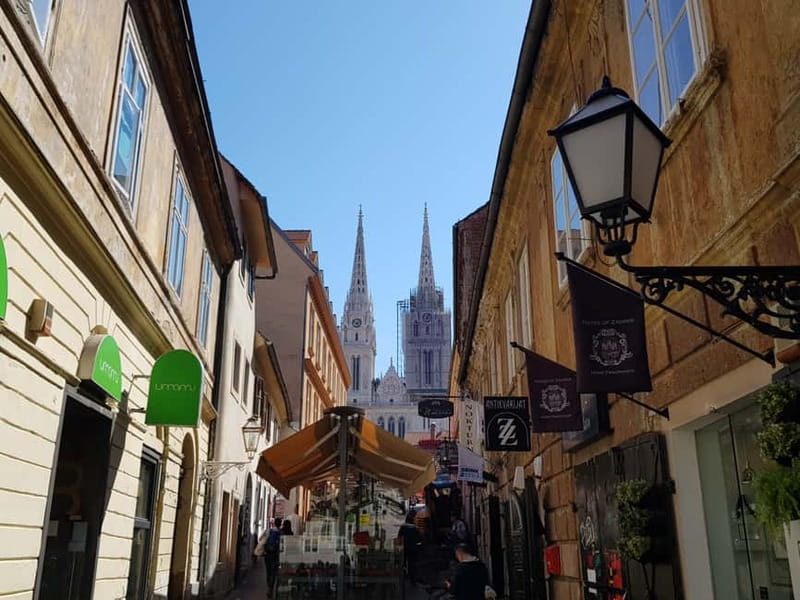
Zagreb is easy to explore on foot, but its center has two distinct personalities. The Lower Town is laid out around parks, squares, shops, restaurants, and formal buildings. The Upper Town rises toward Grič Hill, where streets feel older and the views open across the city.
This tour gives you a useful bridge between the two. You are not simply ticking off monuments. You are moving through the city in the order that makes sense geographically, starting in the Lower Town and climbing toward Gradec before coming back down through Tkalčićeva Street.
I would choose it near the start of a Zagreb stay. The route shows you where to return later for lunch, drinks, shopping, or a museum visit. Guides also offer suggestions for food and additional sights, which can save you from spending your first evening guessing where to go.
The pace is full but reasonable. Two and a half hours is long enough for context without taking up an entire morning or afternoon. A group can be somewhat large, but the guides handle the route well. One guide, Lucia, is specifically praised for keeping a bigger group together while making the commentary easy to follow.
More Walking Tours in Zagreb
- Zagreb: Small Group Walking Tour City Center and WW2 Tunnels
★ 4.9 · 895 reviews - Walking tour of Zagreb
★ 5.0 · 383 reviews - Zagreb Small Group Guided Walking Tour with WW2 Tunnels
★ 5.0 · 380 reviews
From Zrinjevac Park to Bogovićeva Street
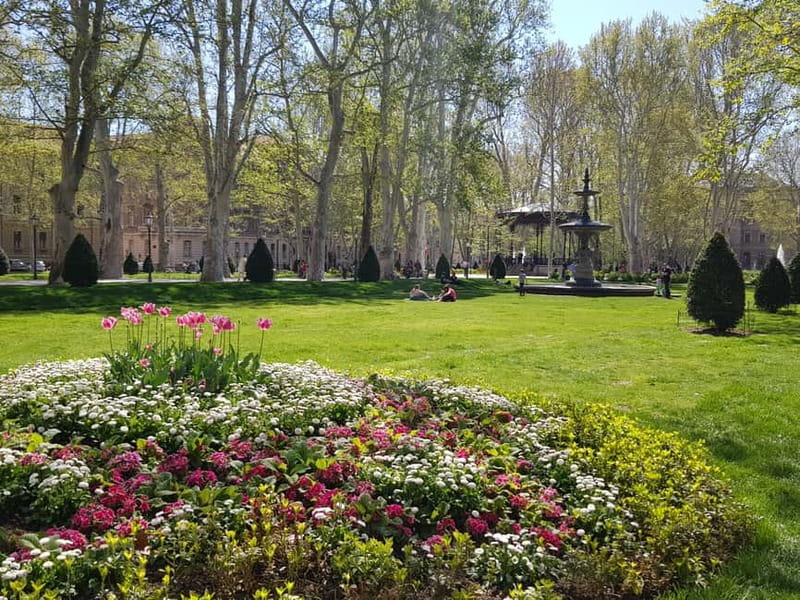
The tour begins in front of the Meteorological station at Trg Nikole Zrinskog 2. Zrinjevac Park, one of Zagreb’s most recognizable green spaces, is the first stop and an easy introduction to the city center.
Expect a guided walk and time for photographs among the park’s formal paths and public features. It is a good place to meet your guide because the surroundings give you an immediate sense of Zagreb’s Lower Town: open, orderly, and designed for strolling.
From here, you continue to Bogovićeva Street. This is one of the city’s popular café and restaurant strips, so it helps you see how Zagreb uses its central streets in daily life. The stop is less about entering a particular venue and more about learning where locals go to sit, meet, eat, and watch the city move around them.
That practical side is one of the tour’s strengths. You are shown places that matter not only for their monuments but also for planning the rest of your day. If you want a snack after the walk, Bogovićeva and Tkalčićeva later in the route are useful areas to remember.
Ban Jelačić Square and Zagreb Cathedral
The walk continues across Ban Jelačić Square, Zagreb’s central meeting place. The square helps you understand the city’s layout, since several major routes converge here and the tour both passes through it and ends here.
Your guide places the square within Zagreb’s wider story rather than treating it as a quick photo stop. You also receive an early view of the contrast between the Lower Town and the hilltop old town, which becomes clearer as the route continues.
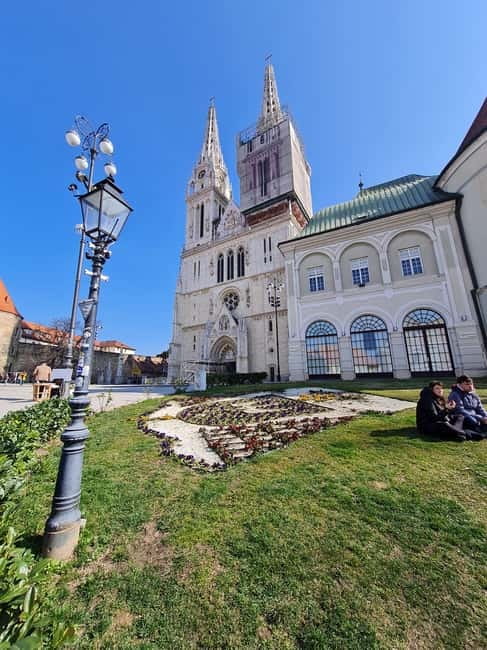
Next comes Zagreb Cathedral. The cathedral is one of the major landmarks on the route, and the stop gives you time for photographs and an explanation of its place in the city. Keep in mind that Zagreb’s monuments have faced earthquake damage and ongoing repairs, so some buildings or interiors may not be fully available during your visit.
That limitation does not make the stop pointless. A good guide can still explain what you are seeing, point out architectural details, and give you the context needed to appreciate the building later, even if access is restricted. Robert is especially praised for filling in the background when some sights were out of action.
Dolac Market, where Zagreb feels more local
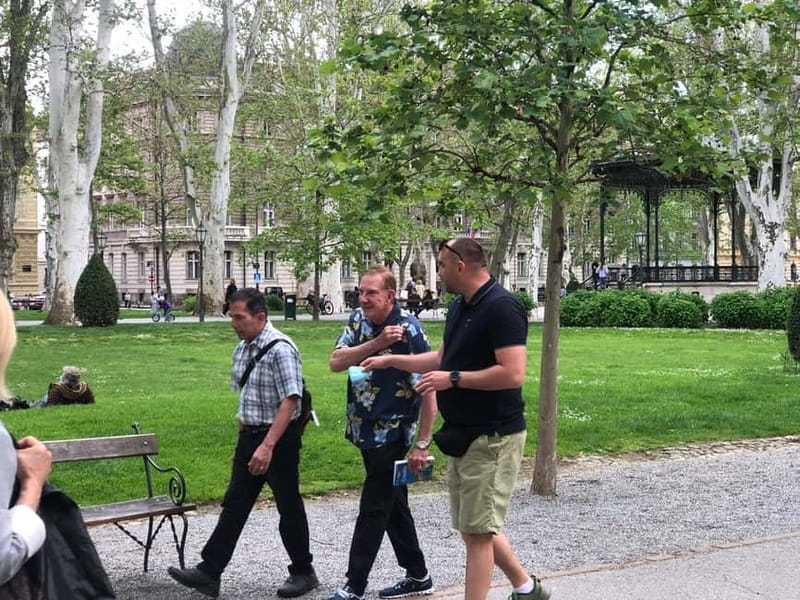
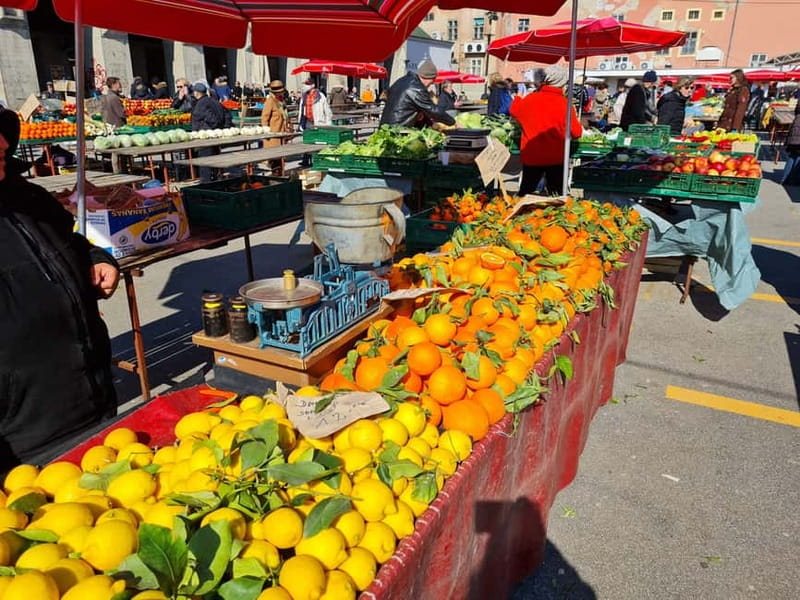
After the cathedral, you walk through Dolac Market. This is one of the best transitions on the tour. You leave grand civic buildings behind and enter a place connected with everyday shopping and food.
The market is included as a visit and sightseeing stop, not as a meal or tasting experience. Food and drinks are not included, so bring your own spending money if you want to buy something. The tour does not promise a formal market tasting, and you should not expect one.
Still, Dolac is valuable because it adds a practical, ordinary side of Zagreb to a route otherwise filled with landmarks. Your guide can help explain why the market matters and how it fits into the city center. It is also a natural place to look for visual details, local products, and photographs.
I would not plan a long market shop during the tour. The group has a fixed route and several stops ahead. Instead, note the market’s location and return later if you want more time.
Same stretch of coast, a completely different kind of day:
- Communism & Croatian Homeland War Tour
★ 5.0 · 1,355 reviews - Best of Zagreb with the WW2 Tunnels
★ 5.0 · 973 reviews - Zagreb: Skip-the-Ticket-Line Museum of Broken Relationships
★ 4.5 · 847 reviews - Zagreb: Communism and Croatian Homeland War Tour
★ 4.9 · 779 reviews
Inside the WWII tunnels
The WWII tunnels are the most unusual stop. They shift the tour from Zagreb’s public squares and historic churches to a more recent period of the city’s past.
The tunnel visit gives the walk a stronger sense of time. You are not only hearing about older Upper Town landmarks. You are also entering a space linked with wartime Zagreb, which helps explain how the city’s center has been used and protected during difficult periods.
Access depends on the date and operating conditions. The tour information specifically warns that the WWII tunnels do not operate on certain dates, so check availability before booking if this is the feature you most want to see.
If the tunnels are closed, the rest of the route still covers a lot, but the experience loses one of its most distinctive elements. I would treat tunnel access as a feature to confirm, not an automatic guarantee.
The funicular and Grič Hill
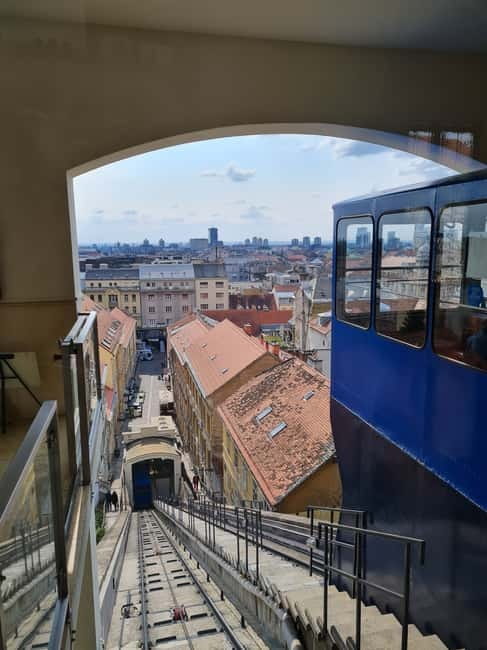
The planned funicular ride takes only about two minutes. It connects the Lower Town with the Upper Town and is described as the smallest funicular in the world. The short ride is more of a charming Zagreb signature than a major transport experience.
At present, the funicular is closed for renovation until March 2026. That means you should not book this tour expecting to ride it before then. The ticket is included when the funicular is operating, and the route can continue to Grič Hill even when the ride is unavailable.
This is the clearest practical weakness in the current version of the tour. Several people still found the walk fully worthwhile without the ride, since the guide continues through the Upper Town and covers the same central sights. Even so, the operator should make the closure clear at booking, and you should read the current date information carefully.
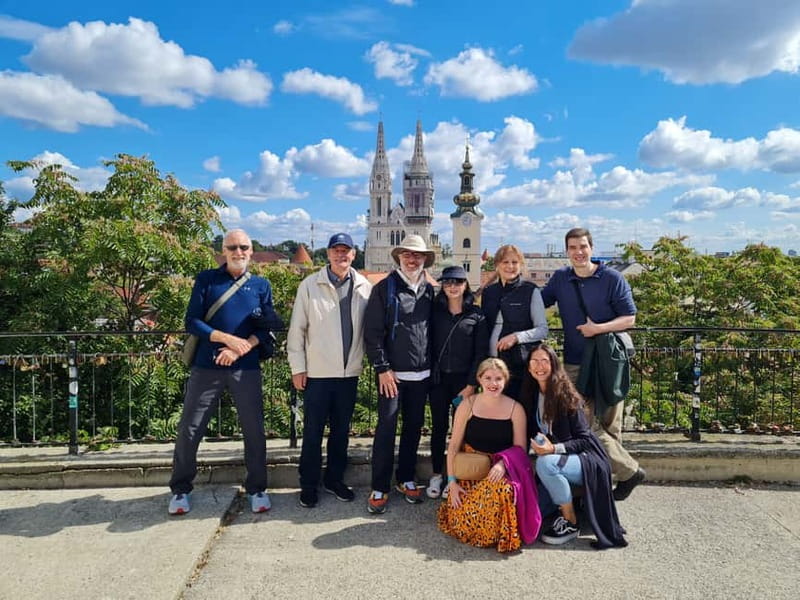
Once you reach Grič Hill, the tour enters Gradec, Zagreb’s Upper Town. The higher position gives you broad views across the city. This is one of the best moments for photographs, but it is also a chance to pause after the steady movement through the Lower Town.
Lotrščak Tower, St. Mark’s Church, and Stone Gate
Lotrščak Tower is one of the Upper Town’s key landmarks. The stop provides another view into Zagreb’s defensive past and gives your guide a natural point for explaining how Gradec developed above the Lower Town.
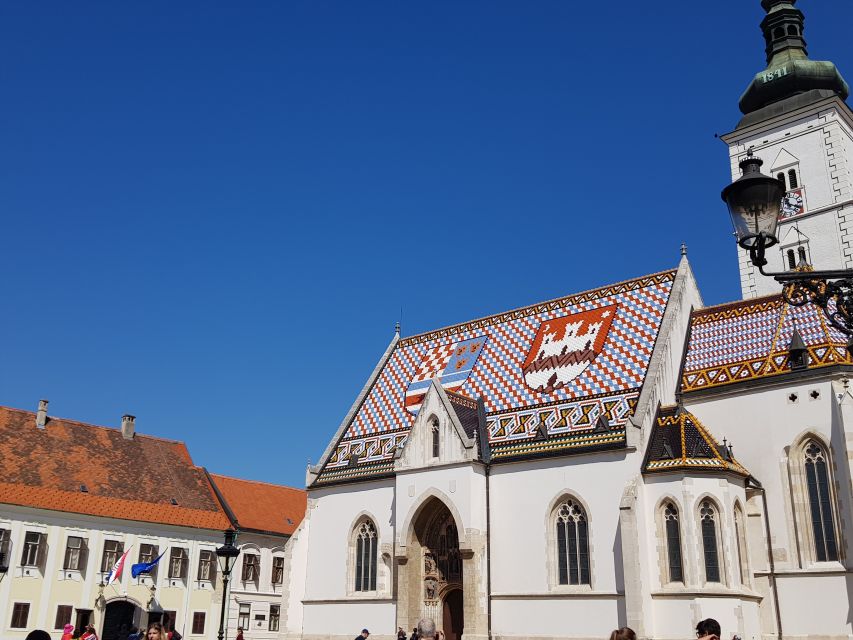
The next major sight is St. Mark’s Church, recognized by its colorful tiled roof. The tour includes a photo stop and sightseeing here. You may not have interior access, so think of the stop as an exterior visit with explanation rather than a church tour.
Stone Gate offers a different mood. This old gateway is one of the defining points of the Upper Town route, and it helps you understand how the medieval street pattern survives within modern Zagreb. The stop is brief enough to fit the walk but important enough to remember when you return on your own.
These three sights work well together. Lotrščak gives you the tower and city views, St. Mark’s gives you a memorable facade, and Stone Gate gives you a sense of the old town’s entrances and streets. The guide’s commentary matters here because the buildings can seem like isolated photo stops without a clear explanation of how they connect.
Marko is praised for answering questions carefully and explaining history in clear English. Robert is described as an entertaining storyteller who adds humor and useful recommendations. Iva is noted for her warmth and strong command of the route. The exact guide varies, but the human side of the tour is a major part of its value.
Down to Tkalčićeva Street and back to the square
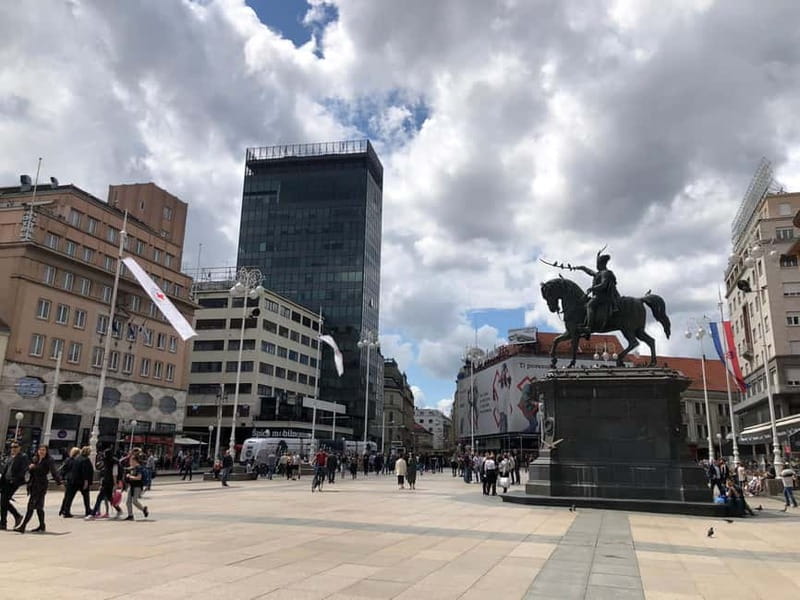
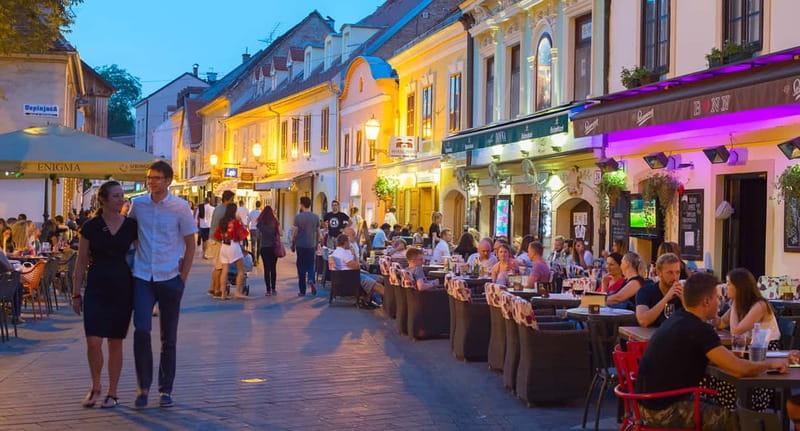
After Gradec, the route descends toward Tkalčićeva Street. This street is known for bars and restaurants, making it a practical place to stop for food after the tour.
Because the tour ends back at the meeting point, you can decide later where to eat rather than being tied to a final restaurant reservation. The guide can point you toward options, but food and drinks are your responsibility.
Tkalčićeva also gives the tour a relaxed finish. After the formal parks, cathedral, market, tunnels, and Upper Town monuments, you end among places designed for sitting and socializing. The route then returns to Ban Jelačić Square, so you are left in a central location with an easier sense of direction.
The walk is not a museum-heavy experience. It is better for seeing the city’s public spaces, learning the main story, and finding places to explore independently afterward.
Guide quality and group feel
The strongest pattern across this experience is the guide’s delivery. Marko is repeatedly praised for energy, humor, patience, and personal attention. Iva is described as friendly and informative. Robert is valued for his storytelling, jokes, and practical suggestions. Lucia and Lutzia are also praised for keeping the tour clear and well paced.
That matters because a walking tour can become a string of names and dates. Here, the best guides make the information easier to remember by adding local anecdotes, food suggestions, myths, and humor. They also speak clearly and loudly enough for the group to follow.
Group size may vary. One group had ten people, while another felt somewhat large. If you prefer a private, quiet experience, this may not be the right format. If you like asking questions and meeting other people while moving through the city, the shared walk should work well.
The tour is offered in English and is wheelchair accessible. It operates in all weather conditions, so you should be ready for rain or sun rather than assuming a cancellation because of poor weather. Wear practical shoes and bring weather protection, since the activity remains outdoors for much of its two and a half hours.
Is $23 good value?
At $23 per person, this is a sensible price for a guided introduction to Zagreb. You receive a licensed guide, a structured route through both Lower and Upper Town, and the funicular ticket when the funicular is operating.
The value is strongest if you are new to Zagreb and want an efficient overview. You would spend more time and energy finding every stop independently, especially when moving between the market, tunnels, Grič Hill, and the Upper Town.
The price does not include food, drinks, or admissions beyond the stated funicular ticket. That keeps the cost simple, but you should budget separately for anything you buy at Dolac, Bogovićeva, or Tkalčićeva.
The closure of the funicular slightly reduces the package value until March 2026. It is only a two-minute ride, so I would not reject the tour for that reason alone. But if the funicular is the main reason you are booking, wait until it reopens or confirm the current operating date first.
Who should book this Zagreb walk?
I would recommend this tour if you have one or two days in Zagreb and want a strong first look at the center. It suits people who enjoy history explained through streets and buildings rather than a long indoor lecture.
It is also a good choice for you if you want practical suggestions for later meals and sightseeing. The route puts you near several places worth revisiting, and the guides often add useful local advice.
Families and mixed-age groups may appreciate the variety, though the walk still lasts 2.5 hours. People who need frequent breaks should consider that it is a continuous city walk with several stops rather than a hop-on, hop-off outing.
You may want another option if you are mainly seeking museum interiors, a food tour, or a private guide. You should also think twice if you need the funicular or WWII tunnels to be open on your exact date. Check both before paying.
Final verdict: a smart Zagreb orientation walk
I would book this for the first part of a Zagreb visit, especially at $23. The combination of Zrinjevac Park, Dolac Market, the WWII tunnels, Grič Hill, Lotrščak Tower, St. Mark’s Church, Stone Gate, and Tkalčićeva Street gives you a well-rounded route in a manageable two and a half hours.
The best reason to go is the guide. Marko, Iva, Robert, Lucia, and Lutzia are praised for making the facts friendly, clear, and memorable. The main caution is the funicular closure until March 2026, along with possible tunnel closures on certain dates.
Book it if you want orientation, local tips, and a lively walk through Zagreb’s main historic districts. Skip it only if you need guaranteed access to every listed stop or prefer a private, slower tour.
FAQ
Where does the Zagreb walking tour start?
The tour starts at Trg Nikole Zrinskog 2, in front of the Meteorological station.
Where does the tour end?
The activity ends back at the meeting point, near Ban Jelačić Square.
How long does the tour last?
The tour lasts 2.5 hours. Starting times vary, so check availability for your chosen date.
What language is the tour offered in?
The live tour guide speaks English.
Is the funicular ride included?
The funicular ticket is included when the funicular is operating. The funicular is closed for renovation until March 2026.
Are the WWII tunnels always open during the tour?
No. The WWII tunnels do not operate on certain dates, so check the current availability before booking.
Are food and drinks included?
No. Food and drinks are not included. You can decide where to stop for a snack or meal in areas such as Bogovićeva Street or Tkalčićeva Street.
Is the tour wheelchair accessible?
Yes. The activity is listed as wheelchair accessible.
Just added around Zagreb
- Toast to the Morning After: Zagreb Museum of Hangovers Visit★ 4.0 · 39 reviews
- Private Walking Tour of Zagreb★ 4.9 · 5 reviews
- Jump into Zagreb: Walking Tour with local guide★ 4.8 · 3 reviews
- From Zagreb: Varazdin Baroque Town & Trakoscan Castle★ 4.9 · 38 reviews
- From Zagreb:Discover North Croatia, Museums, Castle and City★ 5.0 · 26 reviews
- From Zagreb: Prehistoric and Medieval Croatia Tour★ 4.9 · 3 reviews
- From Zagreb: Mrežnica kayaking & Rastoke village – day trip★ 4.9 · 27 reviews
- Exclusive old Zagreb walking tour★ 4.4 · 32 reviews
Walking Tours, compared.
Split: Old Town and Diocletian Palace Walking Tour
Read our review →
Walking Tour of Split and Diocletian’s Palace
Read our review →
Krka Waterfalls tour with Trogir Walking tour and Krka panoramic boat cruise
Read our review →
Dubrovnik: City Walls Early Morning or Sunset Walking Tour
Read our review →Browse the lists this tour appears in