
Reviewed · ZAGREB TOURS
Best of Zagreb with the WW2 Tunnels
Zagreb’s Gric Tunnel gives this walking tour an unusual finish. Built during the Second World War, the passage cuts beneath the Upper Town and adds a darker, less polished side to a city tour filled with markets, churches, grand squares, and old streets. Along the way, you’ll taste local specialties at Dolac Market and get a quick, useful introduction to Zagreb from a local guide.
I like the tour’s compact route. You see the main old-city sights without spending half a day on a coach, and the private format gives your guide room to answer questions. I also like the local touch: guides such as Diana, Darko, Ena, Ivana, Iva, and Kristina have been praised for mixing history with humor and personal stories.
The main consideration is the walking. You’ll deal with hills, stairs, and uneven old-town streets, and some buildings may still be closed after earthquake damage. The advertised duration is about 2.5 to 3 hours, though some outings finish closer to two hours.
Key points to know before booking
- Gric Tunnel adds a wartime layer: End the route underground in a former World War II passage beneath Zagreb’s Upper Town.
- Dolac Market is more than a photo stop: You’ll see the city’s central food market and sample local specialties.
- The route covers Zagreb’s essential old town: Ban Jelačić Square, the cathedral, Bloody Bridge, Stone Gate, and St. Mark’s Square all fit into one walk.
- A private guide keeps the conversation personal: The group limit is 15, and the guide’s attention is not divided among a large coach group.
- Expect hills and stairs: Comfortable shoes matter, and the tour is a better fit for people happy to walk at an active city pace.
- It is a strong first-day choice: The route helps you get oriented before you explore Zagreb on your own.
Why this Zagreb walk works well for a first visit

Zagreb can feel split between the modern lower city and the older Upper Town. This tour links both areas in a short route, beginning at Ban Jelačić Square and climbing toward the historic center.
That makes the walk useful on your first morning. You get the city’s basic layout, hear how Croatians talk about their capital, and collect ideas for what to do after the guide leaves. Past guides have been praised for explaining daily life as well as dates and monuments. Diana and Darko, in particular, are noted for humor, while Ena has offered practical suggestions for food and later sightseeing.
The price is about $23.98 per person. For a private walking tour with a certified local guide, that is a reasonable way to spend two or three hours, especially if you are new to Zagreb or have only a short stay. You are not paying for transport or entry tickets. You are paying for direction, context, and the chance to ask questions as you go.
The group can reach 15 people, so private does not always mean a one-couple experience. If your booking is small, the conversation should feel personal. With a fuller group, you still have a local guide rather than an impersonal audio recording, but staying close and hearing every explanation may matter.
A few more Zagreb half-days worth comparing
- Communism & Croatian Homeland War Tour
★ 5.0 · 1,355 reviews - Zagreb: Small Group Walking Tour City Center and WW2 Tunnels
★ 4.9 · 895 reviews - Zagreb: Skip-the-Ticket-Line Museum of Broken Relationships
★ 4.5 · 847 reviews
Ban Jelačić Square sets the city in place
The tour begins at the Ban Josip Jelačić Monument in the main city square at 10:30 in the morning. This is a practical meeting point because the square is central and easy to use as a reference for the rest of your stay.
Your guide starts with the basic shape of Zagreb and introduces the city through its central gathering place. Rather than rushing straight to an old church, the tour begins with the public heart of the capital. That gives you a useful sense of how the lower city connects with the Upper Town.
Allow about 20 minutes here. The stop is not just a monument photograph. It is your orientation session, where you can ask about the route, local customs, and places to return to later.
Zagreb Cathedral and the limits of sightseeing
The cathedral is one of the city’s most recognizable landmarks and one of Croatia’s tallest buildings. The tour gives you about 20 minutes to hear about its place in Zagreb and take in its scale.
Do not assume you will enter every church or historic building. Damage from the 2020 earthquake has affected access to some sites, and repairs may still shape what you can see from the outside. The cathedral and other churches are not presented as guaranteed interior visits, so this experience works best if you value explanation and exterior views rather than a long architectural tour indoors.
That limitation is worth knowing before you book. You can still learn why the cathedral matters, but the route may change depending on current repair work and access.
Dolac Market, Zagreb’s Belly of the City
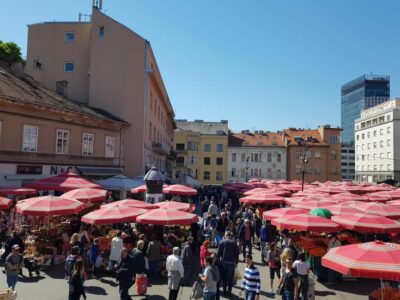
Dolac Market is one of the most useful stops on the route. Locals call it the Belly of the City, and the name tells you what to expect: a central green market tied to everyday shopping and eating.
The stop is listed at about 10 minutes, so this is an introduction rather than an extended market visit. Your guide can point out local food and help you understand the market’s role in city life. You may also sample local specialties, which gives the tour a more direct connection to Croatian tastes than a walk that only lists monuments.
Keep your expectations practical. Ten minutes is enough to get your bearings and sample something, but not enough for a slow market breakfast or a careful browse of every stall. If Dolac interests you, return after the tour with more time and use the guide’s suggestions to choose what to try.
This is one reason I like the route. A market tells you something about present-day Zagreb that a grand facade cannot. You see where food enters the city’s daily rhythm, not just where important people once lived or worshiped.
Same stretch of coast, a completely different kind of day:
- Zagreb: City and WWII Tunnels Walking Tour
★ 4.9 · 845 reviews - Zagreb: Communism and Croatian Homeland War Tour
★ 4.9 · 779 reviews - Hop On Hop Off Panoramic bus – Zagreb City Tour
★ 3.7 · 769 reviews - Ljubljana and Bled Lake – Small Group – Day Tour from Zagreb
★ 5.0 · 675 reviews
Bloody Bridge and the path into the Upper Town
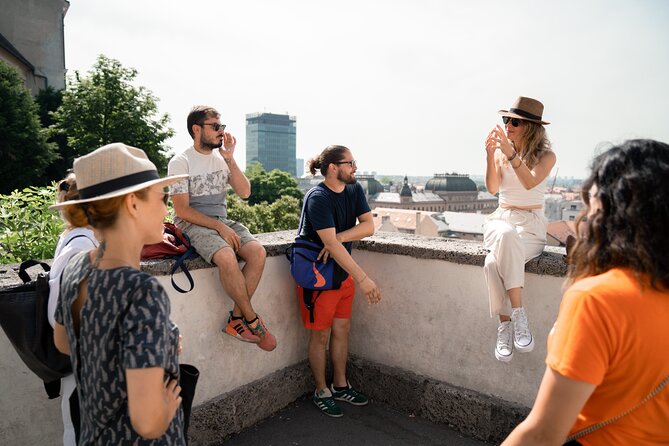
Krvavi Most, or Bloody Bridge, is now a street, but it was once a bridge and the scene of battles and disputes. The name gives your guide an opening to explain how Zagreb’s older districts developed and how conflict shaped the city’s streets.
The stop lasts about 15 minutes. That is enough time for a story and a look around, but not a long historical lecture. The value comes from seeing the place in context. On your own, you might walk across without realizing that the ordinary street had a much more troubled past.
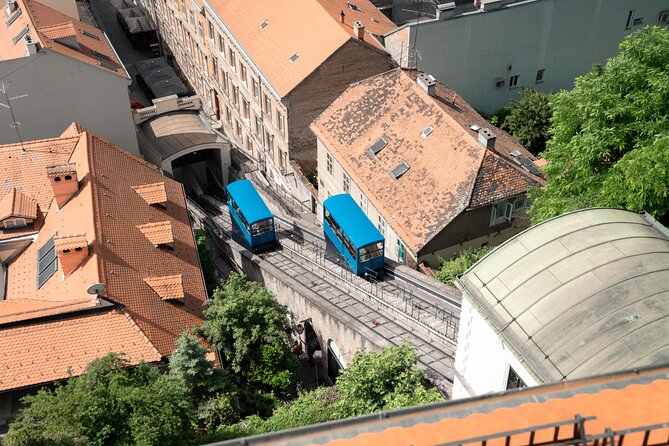
From here, the route continues toward the Upper Town. This is where the physical side of the tour becomes more noticeable. The walk includes slopes and stairs, so you should not treat it as a flat stroll through the lower city.
Stone Gate and the old pharmacy
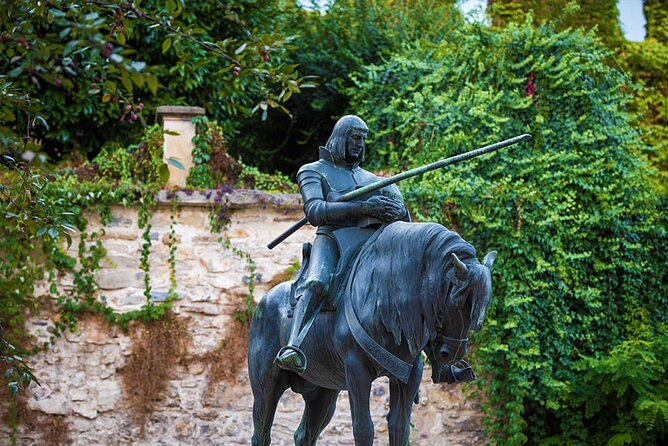
Petrini Pyli, or Stone Gate, is the historic entrance to the Upper Town. It also contains a chapel connected with Zagreb’s patron saint, making it both a passage and a place of devotion.
The guide allows about 10 minutes here. That short stop suits the site. You get the story, see the old entrance, and continue rather than standing in one place while the rest of the city waits.
Nearby is one of the oldest pharmacies in the world. The tour does not promise a long interior visit, but the location adds a memorable detail to this section of the route. You are not just seeing a gate. You are moving through a part of Zagreb where religious tradition, old commerce, and civic history sit close together.
St. Mark’s Square and Zagreb’s political center
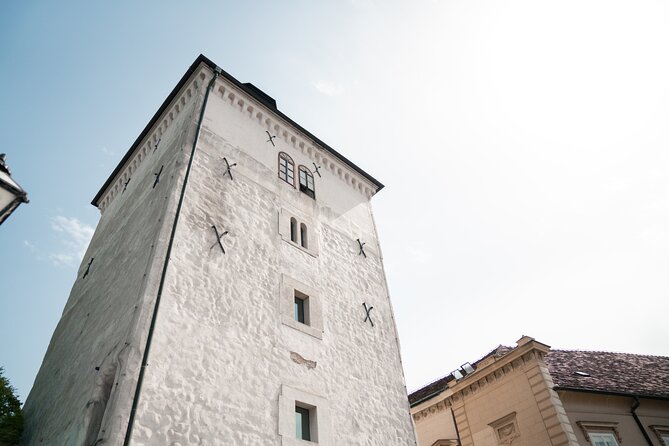
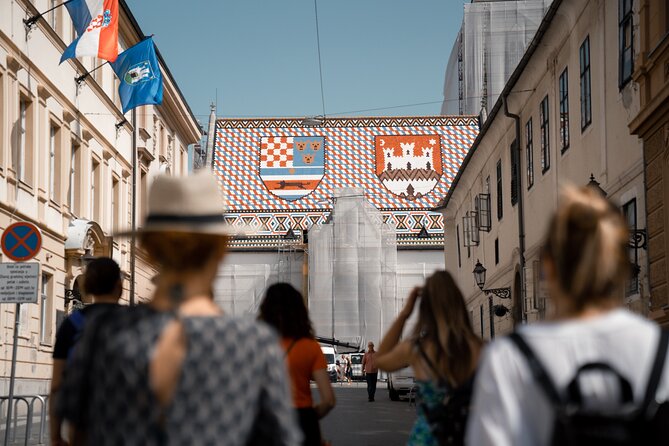
St. Mark’s Square is one of the most photogenic stops. St. Mark’s Church is known for its colorful tiled roof, and the square is also home to Croatia’s Parliament and Government buildings.
The guide spends about 20 minutes here, which gives you time to look at the church and understand the political importance of the setting. This is a good place to ask questions about Croatia’s government and national identity, topics that can otherwise feel abstract when you are simply passing through.
The colorful roof is the obvious attraction, but the surrounding buildings make the stop more than a picture break. You are seeing the religious and political center of the Upper Town in one compact square.
Again, access can depend on repair work and current restrictions. The tour focuses on the square and its buildings, not on guaranteed entry to every structure.
Inside the Gric Tunnel
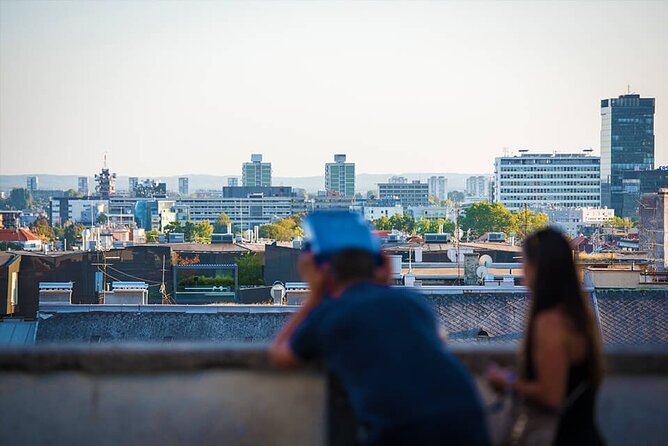
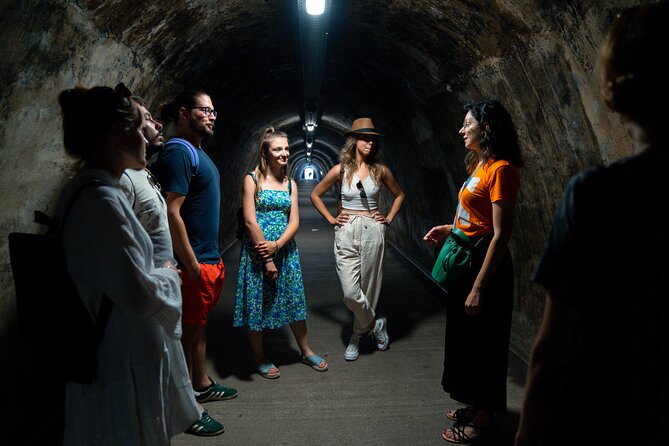
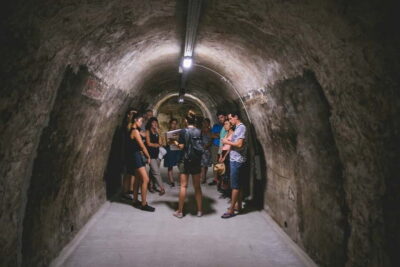
The final major stop is Tunel Gric, a tunnel built during the fascist period of World War II. Walking through it changes the mood of the tour. After markets, churches, and open squares, you move underground into a site linked to wartime fear and civil protection.
About 20 minutes is set aside for the tunnel. That is long enough to understand why it exists without making the whole experience about military history. The tunnel gives you a physical sense of Zagreb’s past, and it is likely to be the most distinctive stop for anyone who has already seen the city’s standard monuments.
It also makes a useful ending. You leave the bright Upper Town and finish with a quieter, more atmospheric look at a difficult period. The route then returns to the original meeting point.
The guide makes the difference
The tour includes a certified local guide with more than 500 tours of experience. That matters because the route contains several short stops, and a weak guide could turn them into a list of dates and names.
The strongest guide style here appears to combine local perspective with humor. Diana has been praised for making history fun, while Darko is described as engaging each person and adding wit and sarcasm. Ena is known for sharing parts of her life in Zagreb and offering ideas for food and later activities. Ivana, Iva, and Kristina have also been singled out for clear explanations, warmth, and energy.
You cannot normally choose your guide when booking, so treat those names as examples of the available guide team rather than a promise. What you can expect is a guide-led walk focused on Croatian history, customs, food, and ordinary life, not only famous buildings.
That local angle is important. You can read about Zagreb’s cathedral or Stone Gate in advance. What is harder to find is how a local connects those places to the city people live in today.
Timing, walking effort, and practical value
The stated duration is approximately 2 hours and 30 minutes, with some descriptions rounding it to three hours. Actual outings can finish in about two hours while still covering the planned route. If you are booking another activity immediately afterward, leave a little breathing room.
The tour runs every day at 10:30 a.m. It starts and ends at Ban Jelačić Square, which keeps your transport simple. The mobile ticket is useful for a morning meeting, and the route is near public transportation.
Wear shoes suited to hills, stairs, and old streets. One especially useful warning is that the tour involves a lot of walking, with some uphill sections and many stairs. Most people can participate, but anyone looking for a gentle, flat route should think carefully before booking.
A minimum of two people is required, and the maximum group size is 15. Service animals are allowed. Free cancellation is available up to 24 hours before the start time, but changes or cancellations inside that window are not refunded. If the minimum number is not reached and the tour is canceled, you are offered another date or experience, or a full refund.
Who should book this Zagreb tour?
I would choose this walk if I had one or two days in Zagreb and wanted a clear introduction before exploring alone. It suits first-time visitors, families with older children, and anyone who wants history delivered through stories rather than a formal lecture.
It is also a good match if you want the market and tunnel included in the same route. Many city walks cover the cathedral and main squares but skip the wartime passage. Here, the food stop and the underground section add variety.
You should reconsider if you want long visits inside churches, plenty of free time at Dolac Market, or a completely flat route. The tour is an overview. It points you toward the city’s main sights and gives them meaning, but it cannot provide a detailed museum visit or a slow food tour in just a few hours.
Should you book Best of Zagreb with the WW2 Tunnels?
Yes, if you want a short, good-value introduction to Zagreb with a personal guide and a few details you might miss alone. The combination of Ban Jelačić Square, Dolac Market, Stone Gate, St. Mark’s Square, and Gric Tunnel covers the city’s public life, food culture, old streets, politics, and wartime past.
Book it early in your Zagreb stay so you can use the guide’s food and sightseeing suggestions afterward. Just allow for a two-hour finish, wear proper walking shoes, and accept that earthquake repairs may limit interior access. At about $23.98 per person, it is an efficient choice for orientation, local context, and the city’s essential Upper Town sights.
FAQ
Where does the Zagreb walking tour start?
It starts at the Ban Josip Jelačić Monument in Ban Jelačić Square, Zagreb.
What time does the tour begin?
The tour starts at 10:30 a.m.
Where does the tour end?
It ends back at the original meeting point in Ban Jelačić Square.
How long does the experience last?
The approximate duration is 2 hours and 30 minutes. Some descriptions give a range of 2 to 3 hours, and some outings finish in about two hours.
Is the tour private?
It is described as a private walking tour, with a maximum of 15 participants.
What sights are included?
The route includes Ban Jelačić Square, Zagreb Cathedral, Dolac Market, Bloody Bridge, Stone Gate, St. Mark’s Square, and the Gric Tunnel.
Does the tour include food?
You may sample local specialties at Dolac Market. The included service is guidance by a certified local guide.
Is there much walking?
Yes. The route includes hills, stairs, and old-city streets, so comfortable walking shoes are recommended.
Can I cancel for a full refund?
You can cancel at least 24 hours before the start time for a full refund. Cancellations or changes made less than 24 hours before the start are not refunded.
Just added around Zagreb
- Toast to the Morning After: Zagreb Museum of Hangovers Visit★ 4.0 · 39 reviews
- Private Walking Tour of Zagreb★ 4.9 · 5 reviews
- Jump into Zagreb: Walking Tour with local guide★ 4.8 · 3 reviews
- From Zagreb: Varazdin Baroque Town & Trakoscan Castle★ 4.9 · 38 reviews
- From Zagreb:Discover North Croatia, Museums, Castle and City★ 5.0 · 26 reviews
- From Zagreb: Prehistoric and Medieval Croatia Tour★ 4.9 · 3 reviews
- From Zagreb: Mrežnica kayaking & Rastoke village – day trip★ 4.9 · 27 reviews
- Exclusive old Zagreb walking tour★ 4.4 · 32 reviews
Zagreb Tours, compared.
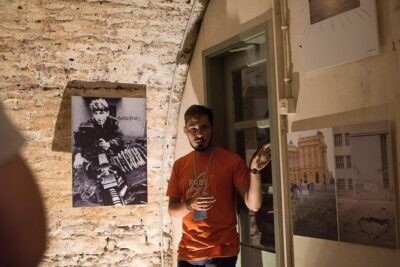
Zagreb: Small Group Walking Tour City Center and WW2 Tunnels
Read our review →
Zagreb: Skip-the-Ticket-Line Museum of Broken Relationships
Read our review →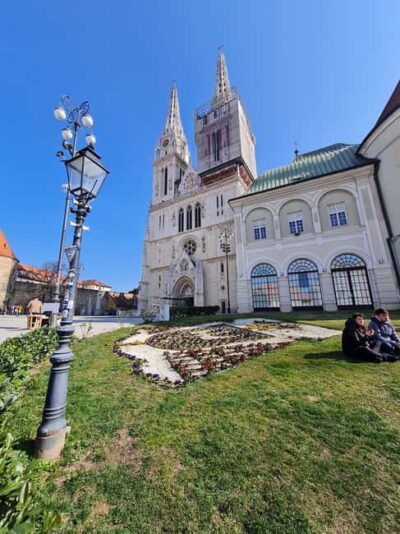
Zagreb: Communism and Croatian Homeland War Tour
Read our review →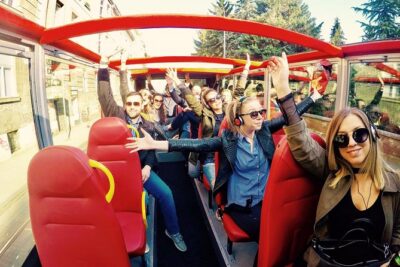
Hop On Hop Off Panoramic bus – Zagreb City Tour
Read our review →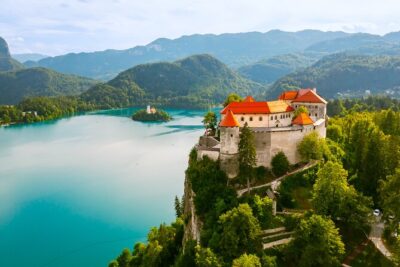
Ljubljana and Bled Lake – Small Group – Day Tour from Zagreb
Read our review →
Browse the lists this tour appears in