
Reviewed · WALKING TOURS
Zagreb Small Group Guided Walking Tour with WW2 Tunnels
The most unusual part of this Zagreb walk is the Gric Tunnel, a passage built during World War II that cuts beneath the Upper Town. It gives the tour a welcome change of pace after the squares, churches, and cafe streets. You also reach Lotrscak Tower, where the Gric cannon fires at noon, so timing can add a memorable local sound effect.
I like the clear introduction to Zagreb’s two medieval settlements, and I like the small group limit of 16, which makes it easier to ask questions. Guides such as Petra, Tomislav, Tom, Maya, and Mia have been praised for their stories, humor, and restaurant advice. The main drawback is practical: the funicular is closed for renovation until March 2026, so you will need to use stairs on that section.
Key points to know before you book
- World War II tunnel: Walk through Gric Tunnel, unless an exhibition, theater event, or other activity closes it.
- A useful first-day tour: The route covers Zagreb’s central sights and helps you get your bearings quickly.
- Small group format: The maximum group size is 16 people, with a licensed local guide.
- No funicular ride for now: The historic funicular is closed until March 2026, so expect stairs.
- Market timing matters: Dolac Market is closed during afternoon tours and on public holidays.
- Good value at $24.20: For two and a half hours of guiding across the city center, the price is reasonable.
Why this walk makes sense on your first day
Zagreb is compact, but its character is split between a polished lower city and a hilltop medieval center. This tour connects those pieces in one continuous walk. You begin among the formal parks of the Lower Town, then move through the main square, market, old lanes, tunnel, towers, churches, and city gate.
That broad sweep is the tour’s main strength. You are not spending two hours on one museum or one monument. Instead, you get a working map of central Zagreb and enough background to understand why the Upper Town feels different from the streets below.
The guide also adds the local details that are easy to miss on your own. You hear about Croatian coffee habits, the importance of bread, homemade liquor, the story behind Zagreb’s name, and the daily rhythm around the main square. Those small cultural notes help the city feel lived in rather than simply displayed.
At $24.20 per person, the value is strong if you want orientation, history, and a local voice in one outing. The price includes the licensed guide and, under normal conditions, the funicular ride. There are no separate admission charges for the listed stops, though the funicular is currently unavailable during renovation.
More Walking Tours in Zagreb
- Zagreb: Small Group Walking Tour City Center and WW2 Tunnels
★ 4.9 · 895 reviews - Zagreb: City and WWII Tunnels Walking Tour
★ 4.9 · 845 reviews - Walking tour of Zagreb
★ 5.0 · 383 reviews
Starting beneath the meteorological station at Zrinjevac
The meeting point is Zrinjevac 2, at the north side of Zrinjevac Park, in front of the small meteorological station. This is a central and easy-to-identify place, surrounded by Zagreb’s orderly Lower Town.
Your guide begins with the city’s origins and the development of Zagreb from its medieval settlements. Allow yourself a few minutes to find the exact meeting point, especially if you are arriving by public transport or coming from an unfamiliar hotel.
Zrinjevac is a calm opening to the walk. The park helps you settle into the tour before the route moves toward busier streets. You will spend about 20 minutes here, so this is not simply a roll call of buildings. It sets up the story that continues through the rest of the morning or afternoon.
Ban Josip Jelacic Square and Zagreb’s daily meeting place
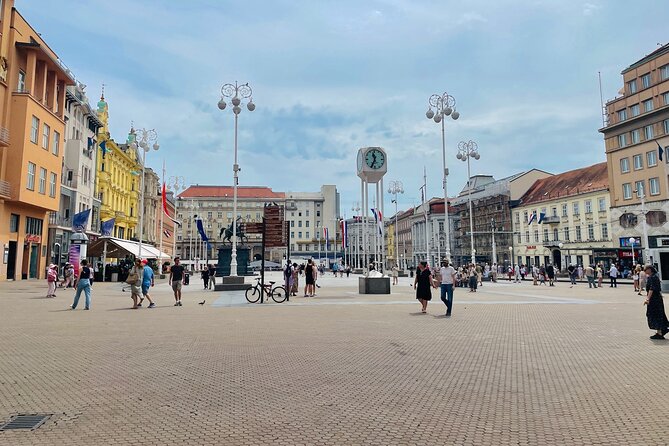
From Zrinjevac, you walk to Ban Josip Jelacic Square, the city’s central gathering place. Locals use it as a meeting point, and the square is a practical reference point throughout a stay in Zagreb.
Here, the guide explains how Zagreb got its name and places the modern city within its older setting. This is also where the tour ends, so you will have a second chance to recognize the square later in your visit.
The stop is listed at about 20 minutes. That is enough time to understand the square’s role without lingering too long in one open space. If you are planning to use the tour as an orientation walk, pay attention to the streets leading off the square. They help you connect the Lower Town with the Upper Town route.
Zagreb Cathedral, Dolac Market, and the taste of local life
The Zagreb Cathedral is one of the route’s most imposing sights. Its Neo-Gothic form gives you a strong visual marker and a chance to discuss the city’s religious and architectural past.
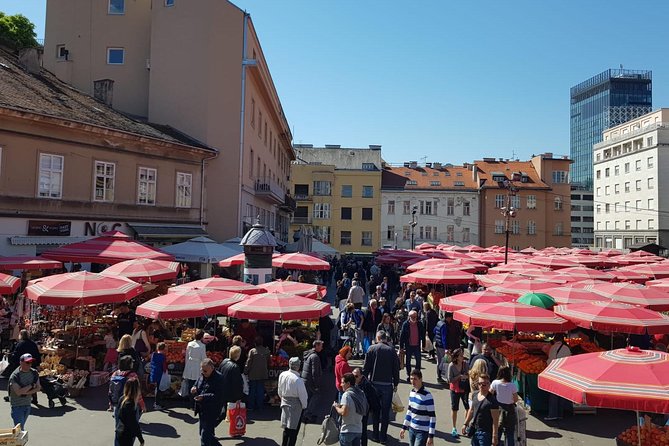
The next stop is Dolac Market, Croatia’s largest farmers market. The guide points out the statue of Kumica and explains parts of Croatian food culture. This is one of the better stops for understanding ordinary life, since a market tells you more about daily habits than a grand building can.
Timing is important here. Dolac Market is closed for afternoon tours and on public holidays. If the market matters to you, book a morning departure and check the date carefully. An afternoon visit can still cover the surrounding area, but you will miss the market’s working atmosphere.
The market stop lasts about 10 minutes, which is enough for an introduction rather than a full food tour. Do not expect time to browse every stall or sit down for a meal. Think of it as a short window into Croatian cooking and shopping.
Same stretch of coast, a completely different kind of day:
- Communism & Croatian Homeland War Tour
★ 5.0 · 1,355 reviews - Best of Zagreb with the WW2 Tunnels
★ 5.0 · 973 reviews - Zagreb: Skip-the-Ticket-Line Museum of Broken Relationships
★ 4.5 · 847 reviews - Zagreb: Communism and Croatian Homeland War Tour
★ 4.9 · 779 reviews
Tkalciceva Street and Zagreb’s cafe culture
Tkalciceva Street brings a different mood. It is known for its bars and steady flow of people, and it gives the guide a natural place to explain Croatia’s coffee culture and the local philosophy of taking time to sit and talk.
This part of the walk is useful because it shifts the focus from monuments to behavior. You learn how Zagreb residents use public spaces and why lingering over coffee is part of the city’s social rhythm.
The stop is short, around 10 minutes. That is enough for context, but not enough for a proper cafe break. If you like the street, mark it for a return visit after the tour. The guide may also provide restaurant suggestions, a detail that several participants have valued when deciding where to eat later.
Inside Gric Tunnel, the tour’s most distinctive stop
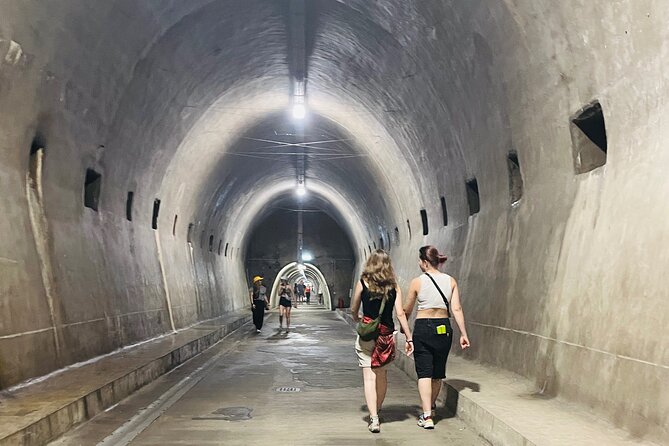
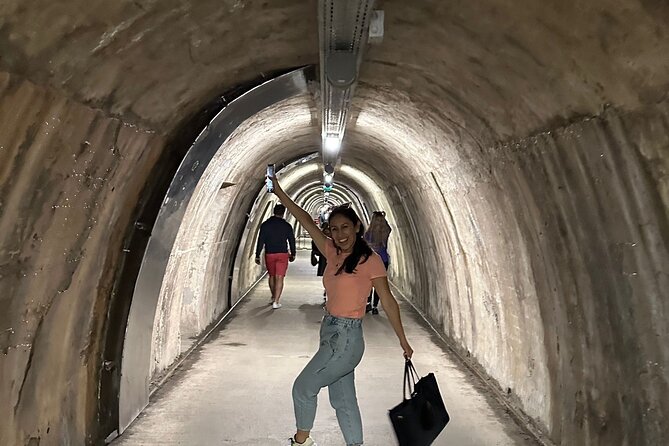
Gric Tunnel is the experience’s signature attraction. Built during World War II, it runs beneath the Upper Town and offers a physical reminder of Zagreb’s wartime past.
Walking through a tunnel gives the tour a stronger sense of place than simply hearing dates in a square. You are moving through an actual piece of the city’s 20th-century story. The passage is also a welcome contrast to the open streets and formal architecture earlier in the route.
The tunnel can close if an exhibition, theater show, or another event is taking place. That closure is outside the normal sightseeing plan, so you should treat the tunnel as an important possibility, not an absolute guarantee.
The listed visit lasts about 10 minutes. It is brief, but the setting makes it one of the stops you are most likely to remember. One guide, Petra, was especially praised for making the tunnel and cannon sequence memorable, though guide assignments vary from day to day.
The funicular, Lotrscak Tower, and the missing ride
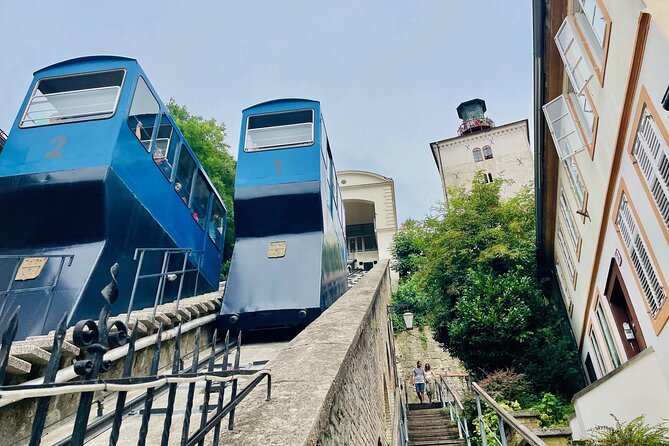
Under normal conditions, the Zagreb funicular adds a short ride to the route. It is the city’s oldest form of public transport and is famous for being one of the shortest funicular rides in the world. The ride normally takes only a few minutes, but it offers a pleasant break from walking and links the lower streets with the Upper Town.
At present, the funicular is closed for renovation until March 2026. The route therefore requires stairs in this section. This is not a minor detail if you have knee problems, are traveling with a stroller, or simply want to limit uphill walking. One participant specifically noted the extra stairs caused by the closure.
Lotrscak Tower is nearby. It houses the Gric cannon, which fires at noon each day. If your tour reaches the tower at the right time, you may hear the cannon fire. The timing is not guaranteed by the tour description, but guides have included it in the experience when schedules line up.
The tower stop itself is brief, about five minutes. The cannon gives it more punch than a standard photo stop, especially if you are in Zagreb at midday.
Upper Town, St Mark’s Church, and the city’s political heart
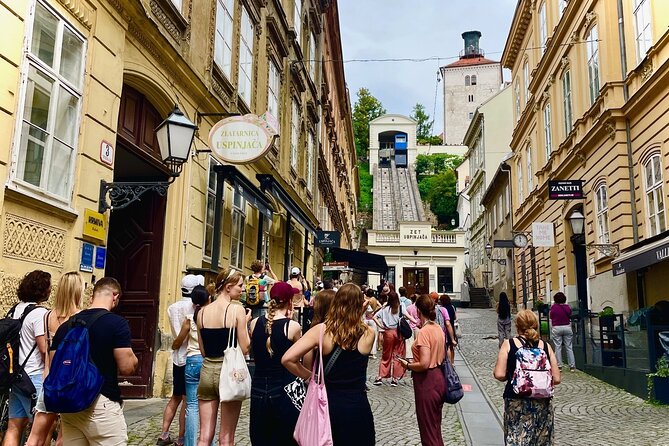
The Upper Town, or Gornji Grad, is the longest section of the tour, with about 50 minutes devoted to its streets, views, and landmarks. This is where the walk earns its keep.
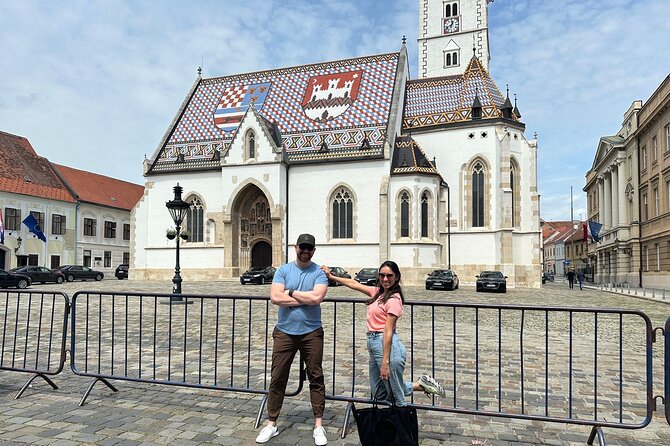
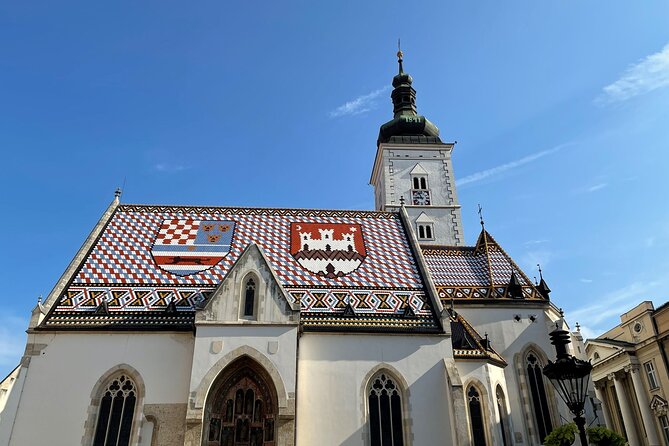
You follow the Strossmayer Promenade for views across Zagreb’s rooftops, then pass the Museum of Broken Relationships, the Croatian Parliament, the Government buildings, and St Mark’s Church. The church is famous for its colorful tiled roof, which is one of the most recognizable images in Zagreb.
The guide explains that the Upper Town grew from Gradec, one of the two medieval settlements that formed Zagreb. That background helps explain the narrow streets and compact arrangement of the hilltop. You are not just seeing attractive buildings. You are following the older political and religious center of the city.
The promenade is also a good place to pause for photographs. You might find the views especially useful early in your stay, since they help you understand the layout of the Lower Town below.
The Museum of Broken Relationships is seen from the outside on this walk. The tour does not include entry, so plan a separate visit if the museum interests you. The same applies to the interiors of the parliament and government buildings. The tour gives you context and an exterior view, not a full museum or institutional visit.
Stone Gate and the return to the main square
The final old-city stop is Stone Gate, also called Petrini Pyli. It is the only medieval city gate that survived, and inside it is a small chapel with an image of Our Lady, regarded as the patron of Zagreb.
This is a quiet, focused ending after the open views and crowded streets. The gate is not large, but its survival gives it unusual weight. You see how a simple passage through the old walls became a place of devotion.
From Stone Gate, you return to Ban Josip Jelacic Square, where the guide says goodbye. The endpoint is useful because it puts you back at Zagreb’s main transport and meeting hub. You can continue sightseeing, find lunch, or use the square as a base for exploring on your own.
What the guide can add to the walk
The quality of a city walk depends heavily on the person leading it. Here, several guides have been singled out for clear explanations, humor, patience, and local recommendations. Petra has been praised for enthusiasm and personal warmth. Tomislav and Tom have been noted for strong historical context, restaurant suggestions, and an easy manner with families and teenagers. Maya and Mia have also been described as clear and engaging.
That does not mean every tour will feel identical. The guide assigned to your departure may shape the pace and tone. Most feedback points to well-organized, friendly guiding, but one serious complaint described rushed sections, poor time control, and an abrupt response to requests from older participants.
That criticism is worth taking seriously. The route covers many stops in two and a half hours, so the guide must balance explanation with forward movement. You may occasionally find a stop longer than expected, or feel that another one receives less time. If walking speed matters to you, tell the guide early and stay near the front of the group.
The group limit of 16 is a useful middle ground. It is small enough for questions and easier street movement, but it is not a private tour. A group of six or eight will feel more personal than a full group of 16.
How hard is the walk?
Most people can take part, but this is an active city walk. You will be on your feet for about two and a half hours and will encounter uphill streets and stairs, especially while the funicular is closed.
Wear comfortable shoes and bring water. Weather matters, too. The experience requires good weather and may be rescheduled or canceled if conditions are poor. Rain can make the walk less comfortable, and cold weather led one participant to leave early.
The route is not designed as a food tour, museum tour, or fully accessible sightseeing option. It is best for someone who wants to walk through the center, listen to stories, and see many landmarks from the outside.
Who should book this Zagreb tour?
I would choose this walk if you are visiting Zagreb for the first time and want a strong introduction before exploring alone. It works particularly well on your first day because it shows you the main square, market, cafe street, Upper Town, tunnel, tower, church, and Stone Gate in one outing.
It also suits history-minded visitors who want more than architecture. The WWII tunnel adds a modern historical layer, while the medieval gate and Upper Town explain how the city developed over time.
Families and older children can enjoy it, provided they are comfortable walking and climbing stairs. Children must be accompanied by an adult. The guides have also handled teenagers well, according to the feedback supplied.
You might skip it if you dislike group walks, need a slow pace, or want long visits inside museums and churches. You should also think twice about booking an afternoon departure if Dolac Market is a priority.
Free cancellation is available up to 24 hours before the start time for a full refund. Changes made less than 24 hours ahead are not accepted, and weather-related cancellations offer a new date or full refund.
Should you book it?
For $24.20, this is a sensible Zagreb introduction with a good mix of major sights and local detail. The best reasons to book are the WWII tunnel, the Upper Town walk, the small group size, and the chance to hear practical advice from guides such as Petra, Tomislav, Tom, Maya, or Mia.
Book a morning tour if you want Dolac Market open. If you are visiting before March 2026, plan for stairs because the funicular is under renovation. With those points understood, I would recommend the tour to first-time visitors who want a compact, story-filled walk rather than a slow museum visit.
FAQ
How long does the Zagreb walking tour last?
The tour lasts approximately 2 hours and 30 minutes.
Where does the tour start?
It starts at Zrinjevac 2 in Zagreb, in front of the meteorological station on the north side of Zrinjevac Park.
Where does the tour finish?
The tour ends at Ban Josip Jelacic Square, also called Trg bana Josipa Jelacica.
Is the funicular included?
The funicular is normally included in the route, but it is closed for renovation until March 2026. You should expect to use stairs instead during this period.
Will I visit Dolac Market?
You will visit the Dolac Market area, but the market is closed during afternoon tours and on public holidays. Choose a morning tour if you want to see the market operating.
Can the Gric Tunnel be closed?
Yes. The tunnel may close if an exhibition, theater show, or another event is taking place. If it is closed, the tour cannot enter it.
What is the cancellation policy?
You can cancel up to 24 hours before the start time for a full refund. Cancellations or changes made less than 24 hours before the tour are not accepted, and poor weather may lead to a new date or full refund.
Just added around Zagreb
- Toast to the Morning After: Zagreb Museum of Hangovers Visit★ 4.0 · 39 reviews
- Private Walking Tour of Zagreb★ 4.9 · 5 reviews
- Jump into Zagreb: Walking Tour with local guide★ 4.8 · 3 reviews
- From Zagreb: Varazdin Baroque Town & Trakoscan Castle★ 4.9 · 38 reviews
- From Zagreb:Discover North Croatia, Museums, Castle and City★ 5.0 · 26 reviews
- From Zagreb: Prehistoric and Medieval Croatia Tour★ 4.9 · 3 reviews
- From Zagreb: Mrežnica kayaking & Rastoke village – day trip★ 4.9 · 27 reviews
- Exclusive old Zagreb walking tour★ 4.4 · 32 reviews
Walking Tours, compared.
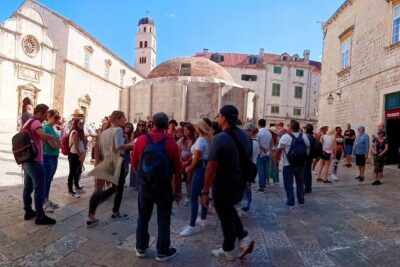
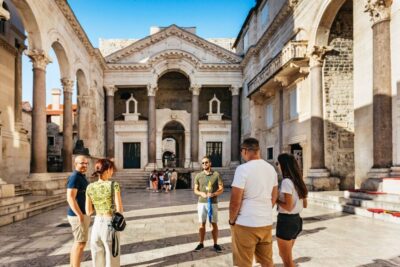
Split: Old Town and Diocletian Palace Walking Tour
Read our review →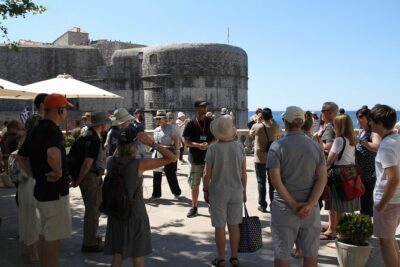
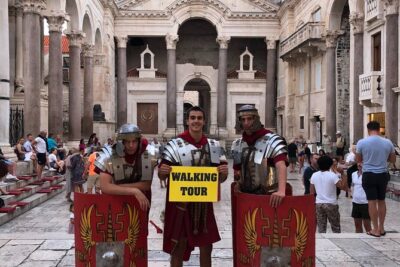
Walking Tour of Split and Diocletian’s Palace
Read our review →

Krka Waterfalls tour with Trogir Walking tour and Krka panoramic boat cruise
Read our review →
Dubrovnik: City Walls Early Morning or Sunset Walking Tour
Read our review →Browse the lists this tour appears in