
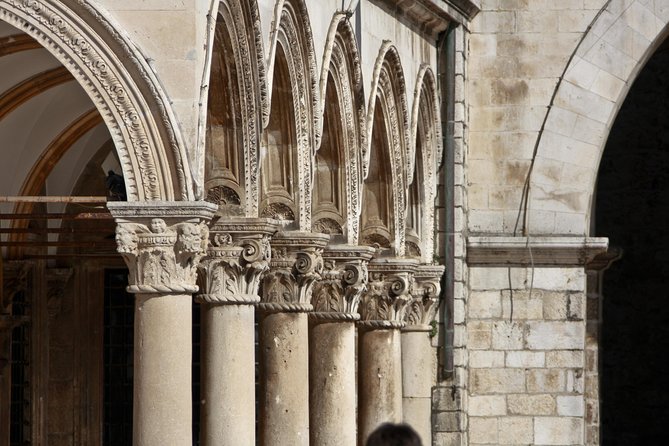
Reviewed · HISTORICAL TOURS
Dubrovnik Old Town History Walking Tour
Dubrovnik’s Old Town is compact, but its story is not. In 90 minutes, this walking tour takes you from the Large Onofrio Fountain along Stradun, through churches and market squares, and down to the harbor where Ragusa’s ships once sailed across the Mediterranean. It is a fast, useful way to get your bearings before wandering on your own.
I like the mix of major sights and small details, especially the 1317 pharmacy at the Franciscan Monastery and the old quarantine system near the port. I also like the human side of the guiding. Ivana, Jelena, Sara, Joseph, Pero, and other local guides are praised for adding family stories, wartime context, humor, and practical advice. The main drawback is pace: 90 minutes is efficient but not leisurely, and the group may include as many as 30 people.
Key points to know before you book
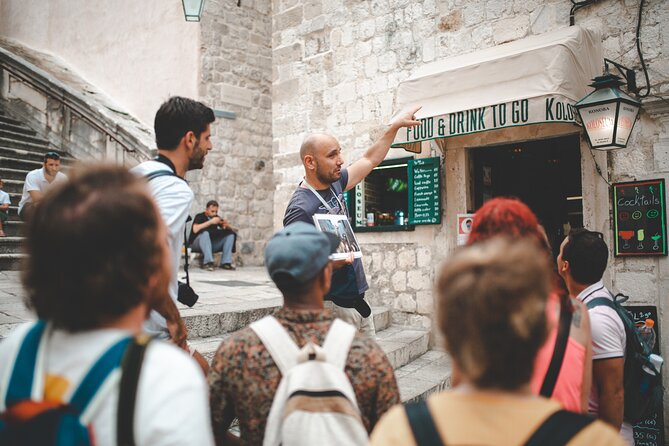
- A strong first-day tour: You see the main Old Town route and get suggestions for the rest of your stay.
- A clear historical arc: The guide connects medieval Ragusa, the fall of the republic, Yugoslavia, and the Homeland War.
- No attraction admissions included or needed: The tour explains sights from outside rather than taking you inside them.
- Mostly an easy route through the center: The main walk is step-free, though Dubrovnik itself has many steps beyond this route.
- Local voices matter: Guides add personal stories about daily life, family, religion, and the city’s recovery.
- Good value at $24.19: You pay for orientation, context, and local advice rather than entry tickets.
Why this 90-minute route works so well
Dubrovnik is one of those places where it is easy to see beautiful stone and miss the point. You can walk the polished length of Stradun, photograph the bell tower, and leave without understanding why this small city became the Republic of Ragusa, how it made money, or why its walls and quarantine facilities mattered.
This tour gives you that framework. It does not try to cover every museum or church interior. Instead, it uses the streets as a history lesson. You move from the city’s water supply to its religious life, public squares, government buildings, port, defenses, and modern scars.
The route lasts about an hour and a half and ends where it begins. That makes it particularly useful on your first day. You can ask about restaurants, museums, boat trips, and less crowded corners while the city is still new to you. One guide, Nino, even earned praise for a good gelato recommendation, which tells you something about the practical tone of the experience.
At $24.19 per person, the price is reasonable for Dubrovnik, an expensive city where a short private guide service can cost much more. You do not receive entrance tickets, hotel transport, or a private group. You are paying for a shared introduction, with a maximum of 30 people. If you want detailed interior visits, the tour will feel limited. If you want to understand the city before exploring it alone, it offers solid value.
More Historical Tours in Dubrovnik
- Game of Thrones & History of Dubrovnik Tour
★ 5.0 · 628 reviews - Dubrovnik: Old Town History Walking Tour
★ 4.9 · 474 reviews - Early Bird Dubrovnik History Tour – 7:30 Start
★ 5.0 · 198 reviews
Meeting the guide at Large Onofrio’s Fountain
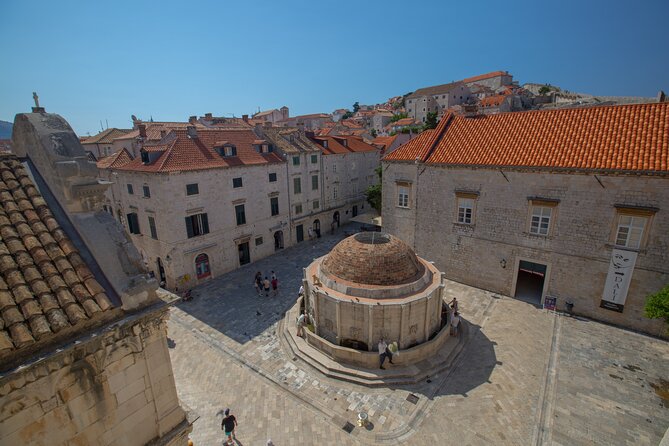
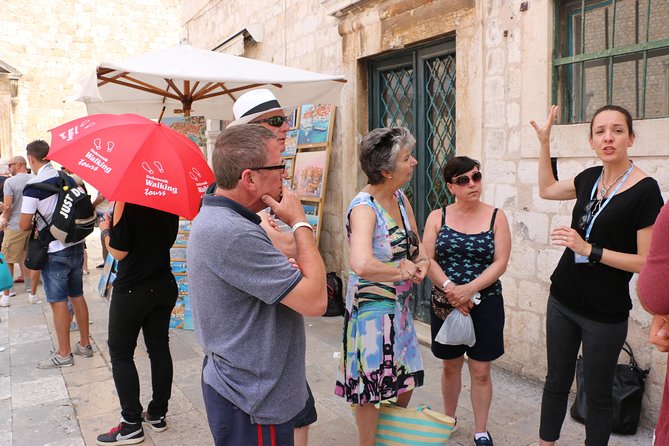
The meeting point is the Large Onofrio’s Fountain, beside the Hard Rock Cafe and the red umbrella used by Dubrovnik Walking Tours. The guide introduces the group, then leads everyone into the Old Town.
This is a practical meeting place because the fountain is easy to identify once you reach the main entrance area. The tour begins with a short orientation rather than a long lecture. You learn how Dubrovnik grew from a small maritime trading city-state and why its water system was such an important achievement.
The fountain is part of an aqueduct built to bring fresh water into the city. That detail immediately gives you a better sense of Ragusa’s priorities. This was not simply a pretty walled town. It was a carefully organized republic that needed reliable water, trade links, defenses, laws, and diplomacy to survive.
The first few minutes also help you understand the route. The guide sets a steady pace, which several comments praise as comfortable and well timed. Still, arrive ready to walk and listen without long stops. The tour is designed to keep moving.
Stradun, Holy Savior, and the city’s religious life
From the fountain, you walk along the main street, Stradun, also called Placa. Before reaching the Franciscan Monastery, the guide points out the small Church of Holy Savior.
This is a good early stop because it introduces the role of religion in public life. Churches were not only places for private prayer. They shaped ceremonies, processions, civic identity, and the layout of the town. As you walk, the guide explains how those traditions helped form the Dubrovnik you see today.
Stradun is the Old Town’s main promenade and business street. It divides the city into northern and southern sections and serves as a setting for public celebrations and processions. The broad, pale stone street is easy to follow, but its polished surface can be slick after rain. Wear shoes with a firm grip, especially if the weather has been wet.
The guide also uses Stradun to explain the city’s changing fortunes. You hear about the end of the Republic of Ragusa, later Yugoslav history, and the Homeland War in the 1990s. This modern section matters. Dubrovnik can look untouched at first glance, but the city endured shelling and damage during the war before being repaired.
If you want a tour that sticks only to medieval legends, this may feel broader than expected. I consider that a strength. Dubrovnik’s past is not frozen in stone, and the modern story explains some of the city’s present-day character.
The Franciscan Monastery and one of Europe’s oldest pharmacies
The Franciscan Church and Monastery is one of the route’s most rewarding stops. The complex includes a church, monastery, library, and pharmacy. The first monastery was built outside the walls in the 13th century, while the present complex reflects centuries of religious and civic life inside the city.
The pharmacy dates from 1317 and is described as the third-oldest functioning pharmacy in the world. You do not enter as part of this walking tour, so treat the stop as an introduction rather than a museum visit. If the subject catches your interest, you can return later and explore more on your own.
The library contains more than 20,000 books, including 1,200 old manuscripts. Those numbers help explain why this is more than a photogenic church facade. The monastery was a place of learning, care, and preservation.
This is also where local traditions enter the tour. Guides explain customs that continue after centuries, giving the stop a more personal feel. Sara, Ivana, and Jelena are repeatedly praised for bringing in local anecdotes rather than reciting dates alone. The quality of the experience will still depend on who leads your group, but the tour company uses several guides with different personalities and stories.
More Walking Tours in Dubrovnik
- Dubrovnik: Old Town Walking Tour
★ 4.8 · 5,174 reviews - Dubrovnik Discovery Old Town Walking Tour
★ 5.0 · 4,458 reviews - Dubrovnik: Game of Thrones Walking Tour
★ 5.0 · 1,732 reviews - Dubrovnik: City Walls Early Morning or Sunset Walking Tour
★ 4.8 · 1,523 reviews
Orthodox, Jewish, and Muslim influences near the market

The route leaves Stradun for narrower inner streets and heads toward the port. Along the way, you stop at the Orthodox Church of the Holy Annunciation.
This part of the tour corrects an easy misunderstanding about Dubrovnik. The city’s identity was shaped by more than one religious community. The guide discusses Orthodox Christian, Jewish, and Muslim influences and explains how those communities formed part of the city’s story.
The stop is brief, about 10 minutes, but it adds useful balance. The Old Town’s churches and Catholic traditions are highly visible. Other communities can be easier to overlook unless someone points them out.
Next comes Gundulić Square and the Green Market, near the monument to poet Ivan Gundulić. Here, the focus shifts from grand political events to food, daily life, and local customs. You may see produce and hear stories connected with the market and the way people use public spaces.
This is one of the tour’s more everyday moments. It helps you see Dubrovnik as a lived-in town, not only a historic setting. The market may be busy, and the group can gather tightly around the guide, so stay close if you want to hear the details.
Rector’s Palace and the machinery of Ragusa
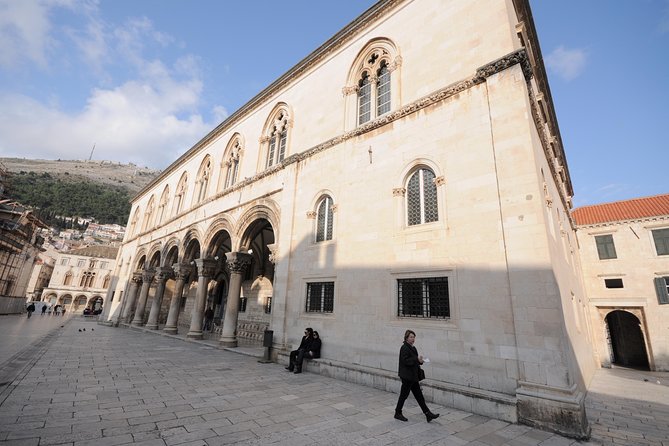
Rector’s Palace was the seat of the Rector of the Republic of Ragusa from the 14th century until 1808. It also housed the Minor Council and state administration, along with an armoury, powder magazine, watch house, and prison.
The building gives the guide a chance to explain how the republic functioned. The Rector was not a permanent monarch ruling without limits. The palace was part of a wider system of councils and offices, and its rooms reflected both government and security needs.
You see the palace from the outside during the walking tour. That is enough for a useful orientation, but it is not a substitute for visiting the interior if you want a closer look at the rooms and collections. The tour helps you decide which buildings deserve a return visit.
For first-time visitors, this kind of stop is valuable because it turns architecture into a story about power. You are not simply looking at a grand facade. You are learning where decisions were made and how a small republic protected its independence.
The Cathedral and the Richard the Lionheart legend
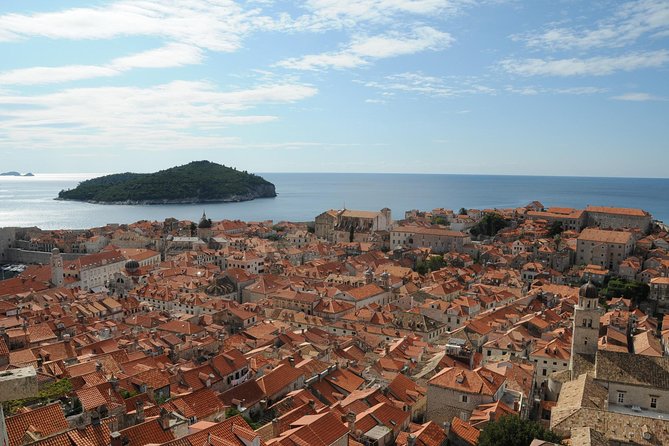
The Cathedral of the Assumption of the Virgin Mary is the next major landmark. The guide connects it with a local legend about Richard the Lionheart, who was said to have been shipwrecked on nearby Lokrum Island while returning from the Crusades in 1192.
The wording matters here. This is presented as a legend, not a proven event, and it adds the sort of memorable tale that helps fix a place in your mind. The cathedral also gives you another chance to consider how religion, politics, and civic identity overlapped in Dubrovnik.
The stop is short, around five minutes. You should not expect a detailed examination of the cathedral’s interior or art. Instead, you get a concise explanation and a reason to return if the building interests you.
The Old Port, Arsenal, and the quarantine system
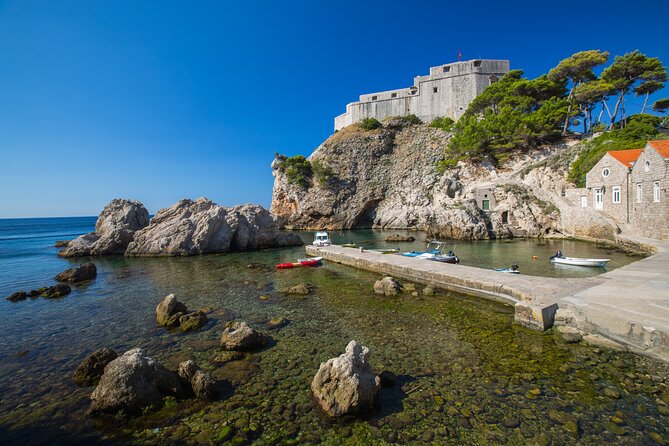
The walk then reaches the City Harbor, one of the most important places for understanding Dubrovnik’s success. Ships from the republic sailed throughout the Mediterranean, and its galleons served in fleets across Europe and beyond.
The guide explains the Arsenal, where ships were built and loaded. This helps connect the narrow streets of the Old Town with the larger world. Ragusa’s strength came from trade, seamanship, negotiation, and careful control of its port.
You also hear about the famous quarantine facilities and the nearby fortresses of St. Luke and St. John. Quarantine was a serious tool for protecting a trading city from disease. It also shows the practical side of Ragusan government: commerce mattered, but public health mattered too.
This section lasts about 15 minutes, one of the longer stops. It is a good place to pause and look outward toward the water. The harbor can feel exposed in poor weather, and the tour requires good weather to operate. If rain cancels the walk, you can choose another date or receive a full refund.
Luža Square, Orlando’s Column, and the final stories
Leaving the port, you return to the eastern end of Stradun and Luža Square. The final section brings together several well-known sights: the Church of St. Blaise, Orlando’s Column, Sponza Palace, the Small Onofrio’s Fountain, and the high Bell Tower.
Orlando’s Column carries a legend about the knight Orlando. The guide uses it to explain how symbols of strength and civic freedom appeared in the public heart of the city. Sponza Palace adds another layer, since it was tied to trade and administration.
The Small Onofrio’s Fountain and Bell Tower round out the tour with more familiar landmarks. By now, the route has made a loop through the Old Town’s main historic zones. You return to the original meeting point, ready to revisit anything that caught your eye.
Several guides are praised for humor and warmth. Joseph is described as engaging, Pero as funny and gracious, and Ivana and Jelena as especially good at mixing facts with local stories. Names and guide assignments can change, so book this for the route and format rather than expecting a particular person.
Who will get the most from this tour
I would choose this tour for a first visit, especially if you have only a few days in Dubrovnik. It gives you a map in your head, a basic timeline, and useful ideas for what to do next.
It suits:
- First-time visitors who want context before exploring alone
- Families who need a manageable 90-minute introduction
- History fans interested in Ragusa, trade, religion, and the 1990s war
- People arriving in Dubrovnik without a fixed plan
- Visitors who prefer a local guide to a phone-based audio tour
It may not suit you if you dislike groups, want extensive time inside monuments, or prefer a slow photography walk. A group can contain up to 30 people, and the guide must keep to the schedule. The route is described as step-free, but the wider Old Town has many steps, so anyone with limited mobility should plan beyond the tour itself.
The tour is offered in English, with a choice of departure times. Confirmation arrives when you book, service animals are allowed, and the meeting point is near public transportation. There is no hotel pickup or drop-off.
Should you book the Dubrovnik Old Town History Walking Tour?
Book it if you want a clear, affordable introduction to Dubrovnik before spending the rest of your time choosing museums, restaurants, boat trips, and viewpoints. The best feature is not the number of sights. It is the way the guide connects water, religion, trade, government, war, and daily life into one walk.
At $24.19, it is a sensible buy for most first-time visitors. Go early in your stay, wear shoes with good grip, and keep the rest of your schedule flexible enough to return to the places that interest you. Cancel at least 24 hours before departure for a full refund. If bad weather cancels the tour, you can move to another date or receive a full refund.
Skip it if you already know Dubrovnik well or want to spend 90 minutes inside museums and churches. For everyone else, this is a practical way to get your bearings and see the Old Town with more meaning than a self-guided stroll usually provides.
FAQ
Where does the Dubrovnik Old Town walking tour begin?
The tour begins at Large Onofrio’s Fountain on Poljana Paska Miličevića, next to the Hard Rock Cafe and the red umbrella used by Dubrovnik Walking Tours.
Where does the tour end?
The walk ends back at the meeting point near Large Onofrio’s Fountain.
How long does the tour last?
The tour lasts approximately one hour and 30 minutes.
What language is the tour offered in?
The tour is offered in English.
What attractions are covered?
The route includes Large Onofrio’s Fountain, the Church of Holy Savior, the Franciscan Church and Monastery, Stradun, the Church of the Holy Annunciation, Gundulić Square, Rector’s Palace, the Cathedral, the City Harbor, Orlando’s Column, Sponza Palace, Small Onofrio’s Fountain, and the Bell Tower.
Are entrance tickets included?
No attraction entrance tickets are included. The listed price includes a local guide and all taxes, fees, and handling charges.
Is hotel pickup provided?
No. Hotel pickup and drop-off are not included.
Can I cancel for a refund?
Yes. You can cancel at least 24 hours before the start time for a full refund. Cancellations or changes made less than 24 hours before the tour are not refunded. If poor weather causes the tour to be canceled, you are offered another date or a full refund.
Just added around Dubrovnik
- Welcome to Dubrovnik Walking Tour★ 5.0 · 36 reviews
- Walls Of Dubrovnik: Small-Group Walking Tour With A Local★ 5.0 · 67 reviews
- Dubrovnik at War 1991-1992 Private Walking Tour★ 5.0 · 4 reviews
- Olive farm & village★ 5.0 · 41 reviews
- City Walls of Dubrovnik★ 5.0 · 70 reviews
- Walls of Liberty: A Self-Guided Audio Tour of Dubrovnik★ 3.5 · 3 reviews
- Trebinje Gastro Tour From Dubrovnik★ 4.5 · 12 reviews
- Try Scuba Diving Discovery in Dubrovnik★ 5.0 · 43 reviews
Historical Tours, compared.
Walking Tour of Split with a ‘Magister’ of History
Read our review →



Split History and Gastro Small-Group Tour with Food and Drinks
Read our review →
SPLIT-PREMIUM Emperor’s Walking Tour for History Lovers + Museum
Read our review →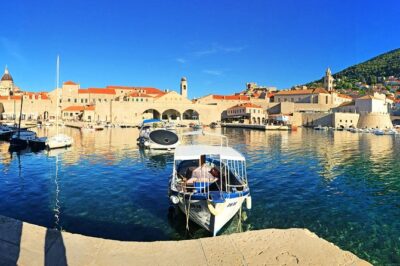
Browse the lists this tour appears in