
Reviewed · HISTORICAL TOURS
Split Walking Tour: History, Legends & Tales
Split’s ancient core is not a museum sealed behind glass. It is a living town built inside and around a Roman emperor’s retirement palace. On this 90-minute walk, you move from the seafront Riva through Diocletian’s Palace and into the squares and lanes where Split still carries on daily life. The Roman past is all around you, but the local stories help make sense of it.
I like two things here: the tour is short enough to fit neatly into a first day, and guide Lucija brings a local point of view to the history. I also like that the route covers the main sights without charging you for entry to places you may prefer to visit later on your own. The tradeoff is that 90 minutes goes quickly, and this is an outdoor walking tour, not a long archaeological visit.
Key points to know before you book
- A useful first walk: The route gives you a quick map of Split’s old center before you explore it on your own.
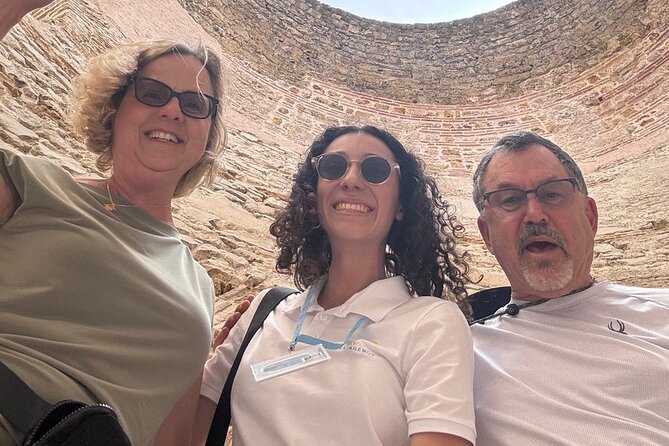
- Local guide Lucija: She grew up in Split and can add present-day details to the Roman and medieval story.
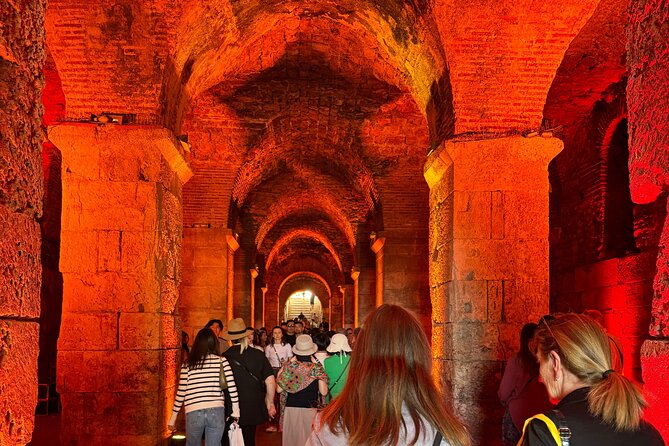
- Main sights in one route: You visit the Riva, Diocletian’s Palace, Vestibul, Peristil, Golden Gate, People’s Square, and Fruit Square.
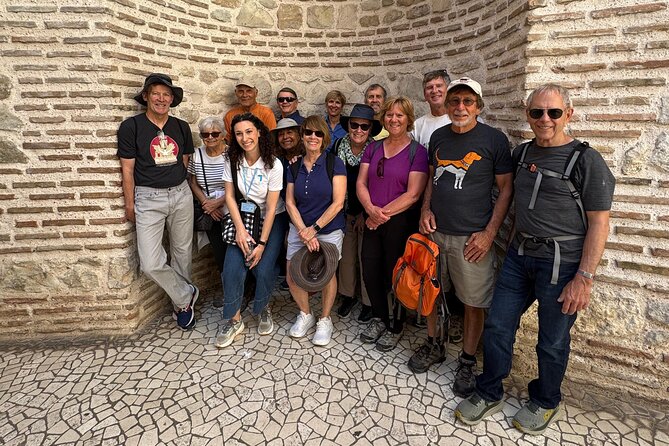
- Small-group format: The group setting is intended to keep the walk more personal and make questions easier.
- No site entrance fees included: You receive background on cultural and religious sites, then decide what you want to enter later.
- Practical footwear matters: Expect cobbled streets and regular walking, so comfortable shoes are a smart choice.
Why this 90-minute walk works well in Split
Split can be confusing at first. The old town is compact, but its streets do not always follow a neat modern grid. Roman walls, later homes, narrow lanes, open squares, shops, and cafés all occupy the same area. A local introduction helps you understand what you are seeing instead of simply passing through a handsome stone street.
The tour begins beside the model of Split at Obala Hrvatskog narodnog preporoda 22. Your guide waits with a Tour4You sign. That meeting point is useful because it gives you a clear object to look for, and the tour ends in the same place.
I would book this early in your stay. You will get the broad outline first, then you can return to the places that interest you most. If you are in Split for only a short time, the route also provides a sensible way to see the old center without spending half a day deciding where to go next.
The tour is conducted in English and lasts about an hour and a half. That is long enough for a proper introduction, but not long enough for every room, church, museum, and side street in the palace complex. Think of it as orientation with stories, not a complete archaeological course.
More Historical Tours in Split
- Walking Tour of Split with a ‘Magister’ of History
★ 5.0 · 1,122 reviews - Split Walking Tour with Professor of History
★ 5.0 · 926 reviews - Split: History and Heritage Walking Tour
★ 4.9 · 650 reviews
Starting on the Riva and meeting Split at the waterfront
The first guided stop is the Riva, Split’s waterfront promenade. It is a natural place to begin because the city’s modern public life meets the old center here. From the seafront, you can better understand how close the palace is to the water and how the old town connects to the rest of Split.
The Riva also gives the walk a gentle start. You are not immediately pushed into a tight lane or crowded square. Instead, you begin with a wider view before moving into the stone heart of the city.
This is one of the places where a local guide can add useful context. Lucija is from Split, so the experience includes more than dates and architectural labels. The information provided for the tour specifically points to stories about present-day Split as well as its past, giving you a chance to ask about local life beyond the Roman period.
Walking through Diocletian’s Palace
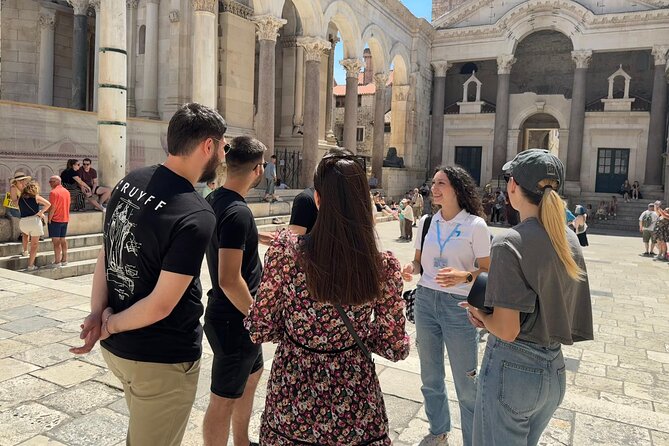
The main focus is Diocletian’s Palace, the enormous Roman complex built more than 1,700 years ago. Emperor Diocletian chose this place as his luxurious residence, and the remains still shape the center of Split.
The important point is that this is not simply a palace ruin surrounded by a modern city. The old center developed within the palace walls, so streets and buildings use the Roman structure as part of everyday life. As you walk, you can begin to see how the ancient plan survives beneath later changes.
A guide helps separate what belongs to the original complex from what was added later. Without that explanation, you might see a wall, gate, or column but miss why it matters. Lucija’s role is especially useful here because the palace is large enough to reward interpretation, yet compact enough to blur together when you first arrive.
You should expect an overview rather than a detailed visit to every interior. Entrance tickets to cultural and religious sites are not included. That keeps the basic tour price at $28 per person, but you will need to pay separately if you decide to enter places along the way.
For many people, that is a sensible arrangement. You can hear what each site is about, then choose later based on your time and interest. If you already know that you want extended interior visits, allow extra time after the walk.
Vestibul and Peristil: the palace’s grand central spaces
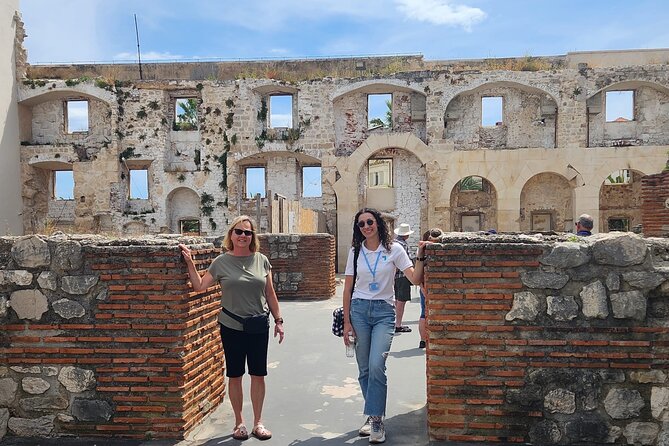
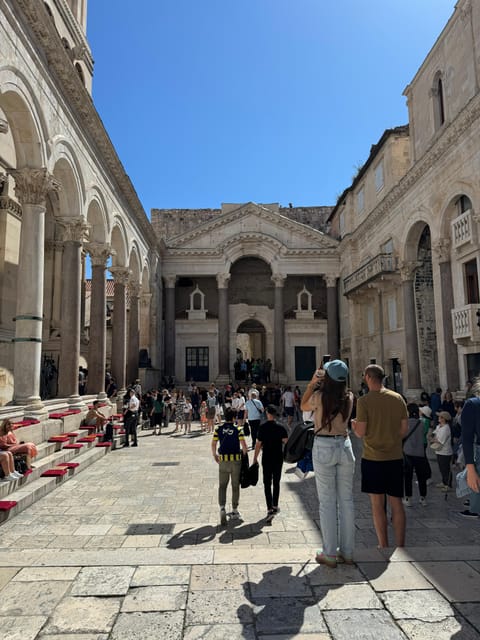
The Vestibul is one of the clearest stops for understanding the ceremonial side of the palace. Its position and form help show how visitors once moved toward the emperor’s residence. A guide can explain the purpose of the space and point out details you might otherwise walk past.
From there, the route continues to Peristil, one of the best-known spaces in Split’s old center. This square gives you a strong sense of the palace’s scale and design. It is also the sort of place where the layers of Split become easy to notice: Roman architecture, later religious use, and present-day activity occupy the same setting.
Peristil is worth seeing with a guide because a quick photograph does not explain its role. The tour’s focus on legends and local tales also suits a place like this, where the formal history is only part of the appeal.
Keep your expectations realistic. You are likely to spend only part of the 90 minutes at each major location. The guide needs to cover several stops, so this is not the right choice if you want a long, quiet session at Peristil or a detailed study of individual stones and carvings.
More Walking Tours in Split
- Split: Old Town and Diocletian Palace Walking Tour
★ 4.9 · 4,727 reviews - Walking Tour of Split and Diocletian’s Palace
★ 5.0 · 2,588 reviews - Split & Diocletian’s Palace Walking Tour
★ 5.0 · 1,125 reviews - Split: Diocletian Palace & Old Town Guided Walking Tour
★ 4.7 · 882 reviews
The Golden Gate and Split’s Roman entrances

The Golden Gate is another major stop on the route. It helps you understand how people entered the palace and how the fortified complex was organized. The name itself is memorable, but the value of the stop comes from seeing the gate as part of a larger Roman plan.
This is also a good point to pay attention to the walls. The tour description emphasizes the palace walls and architecture, and the Golden Gate gives you a practical reference for how those defenses shaped movement through the old town.
I like the way this part of the route connects a famous sight with basic orientation. Once you know where one of the main entrances sits, the old center becomes easier to navigate on your own. You can use the gates and larger squares as reference points instead of relying only on a phone map.
People’s Square and Fruit Square beyond the palace walls
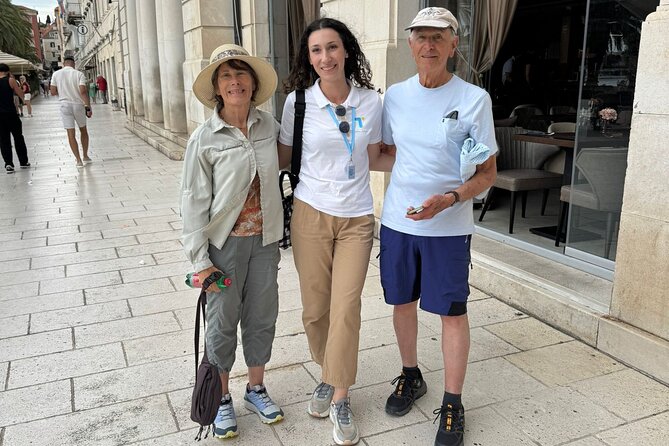
The walk then moves to People’s Square and Fruit Square. These stops broaden the story beyond Diocletian himself. You see how Split’s center developed into a town with public spaces, local routines, and later layers of architecture.
People’s Square offers a change from the more formal Roman remains. Fruit Square does the same, giving you another view of the old center and its connection to everyday life. The route is not limited to one emperor or one period, which is important if you want to understand Split as a living city rather than a collection of ancient monuments.
These squares are also useful for getting your bearings. After the tour, you can return to them while exploring on your own, and they can help you locate nearby streets and sights.
The exact amount of time at each square will depend on the guide and group. Since the route includes seven guided stops after the meeting point, you should expect concise explanations rather than long pauses. That pace suits a first visit, but anyone who prefers slow photography or extended people-watching may want to continue independently afterward.
Local stories make the old stones easier to remember

The strongest personal element of this tour is the local perspective. Lucija was born and raised in Split, and the experience is designed to include questions about life in the city as well as historical material.
That matters because Split’s past can otherwise feel like a list of Roman names and dates. A local guide can connect the old center with the city you see today, including newer happenings and details about life around the historic core. You are encouraged to ask questions, and the small-group setting should make that easier than on a large bus-style tour.
The available ratings are all five out of five, with nine ratings listed. The praise focuses on Lucija’s kindness, clear explanations, and ability to answer questions about Split beyond the historical story. Those comments suggest that the guide’s personal approach is a major reason to choose this particular walk over a generic route.
Still, guide-led experiences are personal by nature. The exact balance of legends, architecture, and modern anecdotes may vary with the group’s questions and the day’s conditions. That is usually a benefit, but it means the tour is not a fixed audio guide with identical timing at every stop.
What $28 gets you
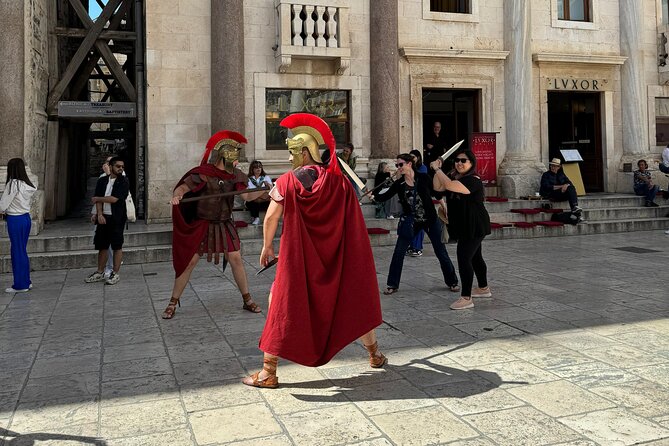
At $28 per person, the price is reasonable for a short, guided introduction to one of Croatia’s most important historic centers. You are paying for a licensed English-speaking guide, local interpretation, route planning, and the convenience of seeing the main sights in one organized walk.
The value is strongest if you are visiting Split for the first time. You get a framework for the old town, an explanation of the palace, and advice about which sites you may want to explore later. That can save time and prevent you from treating the entire center as one undifferentiated mass of old stone.
The price does not include entrance tickets to cultural or religious sites. I see that as a useful choice for a basic orientation tour, since not everyone wants the same interiors. Just remember that the $28 covers the guided walk, not additional visits afterward.
The tour also offers reserve-now-and-pay-later booking, and you can cancel up to 24 hours ahead for a full refund. If poor weather causes the activity to be canceled, you can reschedule or receive a full refund. Those terms help if your schedule is still shifting.
Practical details for a comfortable walk
Wear comfortable shoes. The route covers cobbled streets and several parts of the old center, so flimsy footwear can make a short tour feel longer than it is.
The tour operates in English and is suitable for most people, but it is not suitable for wheelchair users. Children must remain with an adult throughout the activity. The walk is also subject to weather conditions, so check the forecast and keep some flexibility in your plans.
Starting times vary, so you need to check availability when booking. Since the tour ends at the original meeting point, it is easy to plan another activity afterward. I would avoid booking a tight connection immediately after it, though. A walking tour can finish on time, but questions, weather, or the pace of the group may affect the exact finish.
Who should book this Split walking tour?
I would recommend it most strongly to first-time visitors who want a clear introduction before exploring alone. It is also a good match if you enjoy history but want local stories and modern context mixed in, rather than a purely academic explanation.
The tour suits couples, families with older children, and solo visitors who prefer a small group to wandering without a plan. Its 90-minute length makes it easy to fit around meals, ferry plans, or a longer independent visit to the palace.
You may want something else if you have already spent several days studying Diocletian’s Palace or if you want extended access to interiors. The short format cannot cover every detail. People who need step-free access should also look elsewhere because the activity is not suitable for wheelchair users.
Should you book it?
Book this tour if you want to understand Split quickly, hear the city from someone who grew up there, and see the main old-town sights without committing to a half-day program. Lucija’s local knowledge and the small-group format are the main reasons to choose it.
Skip it if you prefer to explore entirely alone, need wheelchair access, or want entrance tickets and long visits inside religious and cultural sites included. For most first-time visitors, though, $28 is a fair price for a compact introduction that leaves you free to return to the places that catch your interest.
FAQ
How long does the Split walking tour last?
The tour lasts 1.5 hours.
What language is the tour conducted in?
The tour operates in English with a live English-speaking guide.
Where does the tour start?
It starts at Obala Hrvatskog narodnog preporoda 22, next to the model of Split.
How will I recognize the guide?
Your guide will be holding a Tour4You sign beside the model of Split.
Where does the tour finish?
The activity ends back at the original meeting point at Obala Hrvatskog narodnog preporoda 22.
Are entrance tickets included?
No. Entrance tickets to cultural and religious sites are not included. The guide provides information so you can decide what to visit later.
Is the tour suitable for wheelchair users?
No. The activity is not suitable for wheelchair users.
Just added around Split
- Split Day Trip from Dubrovnik★ 4.0 · 59 reviews
- Dubrovnik to Split Private Transfer with Local Experienced Driver★ 5.0 · 52 reviews
- Private Transfer from Dubrovnik to Split★ 5.0 · 3 reviews
- Private Transfer from Dubrovnik to Split with 2 hours for sightseeing★ 5.0 · 50 reviews
- Private Transfer: Dubrovnik to Split★ 5.0 · 7 reviews
- Dubrovnik to Split Private Transfer with Mostar Town★ 5.0 · 38 reviews
- Private Tour: Split Day Trip from Dubrovnik★ 5.0 · 9 reviews
- Private Day Trip :Dubrovnik- Mostar- Split★ 5.0 · 3 reviews
Historical Tours, compared.


Walking Tour of Split with a ‘Magister’ of History
Read our review →


Split History and Gastro Small-Group Tour with Food and Drinks
Read our review →
SPLIT-PREMIUM Emperor’s Walking Tour for History Lovers + Museum
Read our review →Browse the lists this tour appears in