
Reviewed · WALKING TOURS
Šibenik: Medieval Night Walking Tour
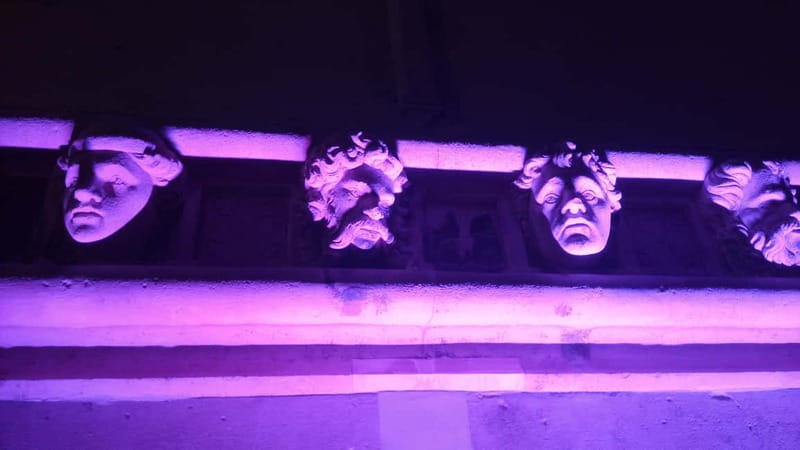
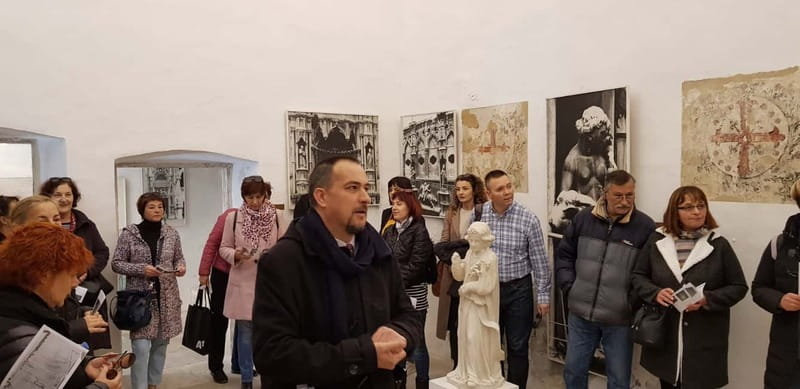
Šibenik feels different after sunset. Its narrow streets, covered passageways, steep stairs, and old stone walls take on a more mysterious character when you walk them as medieval people once did, without streetlights. Guide Dario Mikulandra leads you through this darker side of the city, mixing architecture with tales of plague, water, religion, craft, punishment, and local custom.
I like two things especially. First, the tour takes you beyond the Cathedral of St. James and into less obvious corners, including the medieval cistern, the oldest street, and a cave beside St. Lawrence Monastery. Second, Dario’s English, humor, and enthusiasm make the history easy to follow. The main limitation is the length: one hour is enough for an introduction, but not enough for a full visit inside Šibenik’s churches or museums.
Key points at a glance
- A city after dark: Walk narrow streets and covered passages that were not lit in the Middle Ages.
- The Four Wells cistern: See how people collected and stored water before modern plumbing.
- The Cathedral of St. James: Learn why this building mattered so much to the people of Šibenik.
- A cave in the old town: Visit the unusual cave beside the Monastery of St. Lawrence.
- Medieval life, not just monuments: Hear about the Pillar of Shame, fair cheats, nuns, plague, bells, and city crafts.
- A strong guide: Dario Mikulandra leads the tour in English, Croatian, or Serbo-Croatian.
Why Šibenik works so well at night
Many old towns are pretty after dark. Šibenik has something more unusual: its medieval core can feel genuinely shadowy.
The city’s narrow lanes were not designed for cars, broad sidewalks, or electric lighting. They twist between stone houses, pass beneath covered sections, and climb through stairways. At night, the lack of bright lights helps you notice the shape of the old town. You are not simply looking at a church facade from a busy square. You are walking through the kind of tight urban setting in which medieval life actually took place.
That setting gives the tour its main character. During the day, Šibenik can be hot and bright, especially in summer. An evening start offers a cooler way to see the center and avoids some of the harshest sun. The darkness also suits the stories, from plague and punishment to secretive religious life and the problems of finding clean water.
You should not expect a theatrical ghost walk. The focus is local history and the physical traces left in the city. The mood comes from the streets themselves, while Dario supplies the context.
More Walking Tours in Šibenik
- Private Sibenik Walking Historical Morning or Evening Tour
★ 5.0 · 93 reviews - Sibenik: Guided Evening Walking Tour
★ 4.9 · 62 reviews - From Sibenik: Private Walking Sibenik Sightseeing Tour
★ 4.9 · 15 reviews
Starting beneath the Cathedral of St. James
The meeting point is at the main entrance portal of the cathedral, facing west. This is not the cathedral doorway with the lions. Look instead for the entrance opposite the statue of sculptor Juraj Dalmatinac.
That detail matters because Šibenik’s cathedral has several recognizable features, and a first-time visitor could easily wait at the wrong door. The tour ends at the same place, so you can leave your day bag or evening plans organized around the cathedral square.
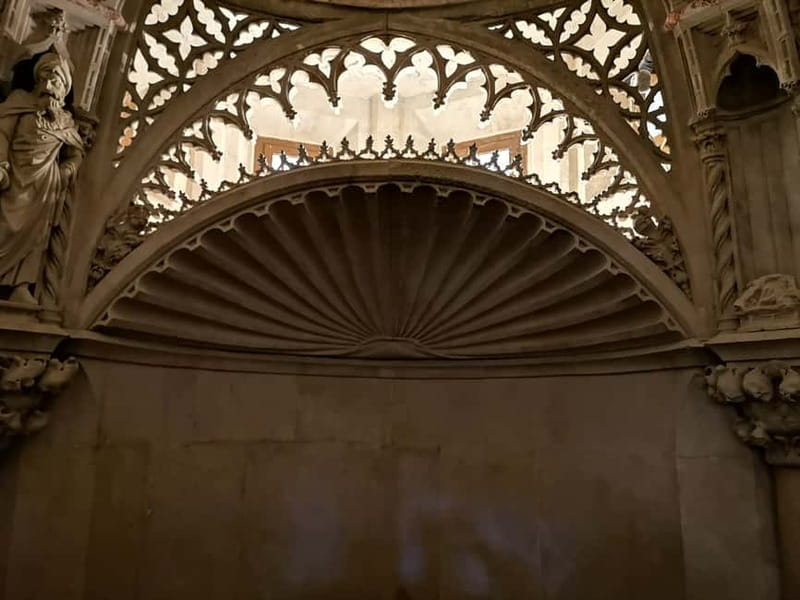
The opening stop centers on the Cathedral of St. James, often described as Croatia’s most beautiful cathedral. The tour explains how it was built and what its construction meant to the people of Šibenik. That second point is important. The cathedral was not only a religious building. It represented the city’s ambition, resources, faith, and place in the wider Adriatic world.
You will also hear about the role of light in the cathedral’s design. That gives you a useful way to look at the building. Instead of only admiring carved stone, you can consider how light was planned and what the cathedral communicated to people who entered or approached it.
The tour includes a story about the church of St. John and its reliefs, along with a square offering one of the best views of the cathedral. You will also see the first public lighting lamp from 1895. It makes a neat contrast with the medieval streets, which had no such illumination centuries earlier.
Do note the difference between seeing these places on a walking tour and visiting them independently in daylight. This is primarily an outdoor history walk. Since it takes place at night, entrance fees for churches and museums are not included because church and museum interiors are not part of the visit.
The Four Wells and Šibenik’s water problem

The medieval cistern is one of the most useful stops because it connects the city’s architecture with daily survival.
The Four Wells cistern shows how water was collected and stored in the old town. In a stone settlement with limited room and no modern water system, a dependable water supply was essential. The cistern was not a decorative feature. It helped the city function.
The tour explains what the cistern looked like inside and how water was gathered. This is the kind of detail that can change the way you see the surrounding houses. A medieval town was shaped by practical needs, including water storage, access routes, religious buildings, workshops, and defense.
For me, this is likely to be one of the most valuable stops for visitors who prefer everyday history to a simple list of dates. The cathedral may be the grand highlight, but the cistern shows how ordinary people managed life in the same old streets.
The stop also gives you a chance to ask questions about the city’s construction and housing. The tour discusses why and how houses were built inside the old core. In a dense medieval town, every stairway, wall, passage, and courtyard had a purpose. You begin to see the old center as a working community rather than a preserved backdrop.
The oldest street, stairways, and covered passages
Šibenik’s old town is not flat. You will walk through narrow streets and climb a number of stairs. The supplied details do not give a total distance or step count, so you should think of this as an active walking tour rather than an easy stroll on level ground.
The guide takes you to the oldest street in the city and through sections of the medieval core that are easy to miss when you simply follow the main route between sights. Covered passageways and tunnels add variety to the walk. They also show how people moved through a compact city before modern streets and lighting.
The route is short in time, but the setting can make it feel full. A one-hour walk through a maze of lanes may involve frequent stops for stories, explanations, and views. You are not racing from one monument to the next. The value comes from understanding how the parts connect.
You will also hear about the medieval sign associated with the Šibenik subway. The wording refers to a local feature or marker in the old city rather than a modern metro system. It is an example of the small, unusual details that make this tour different from a standard cathedral visit.
Because the route uses old streets and stairs, wear shoes that feel secure on stone. The tour information does not provide a specific accessibility rating, so anyone concerned about stairs or uneven surfaces should ask before booking.
Same stretch of coast, a completely different kind of day:
- Šibenik Riviera boat tour: Zlarin + Prvić + Tijat
★ 4.5 · 71 reviews - Zipline Šibenik – Čikola Canyon
★ 5.0 · 48 reviews - Sibenik Private Combined Food & Drink and Historical Tour
★ 5.0 · 36 reviews - Kayaking to the island Prvić
★ 5.0 · 31 reviews
A cave beside St. Lawrence Monastery
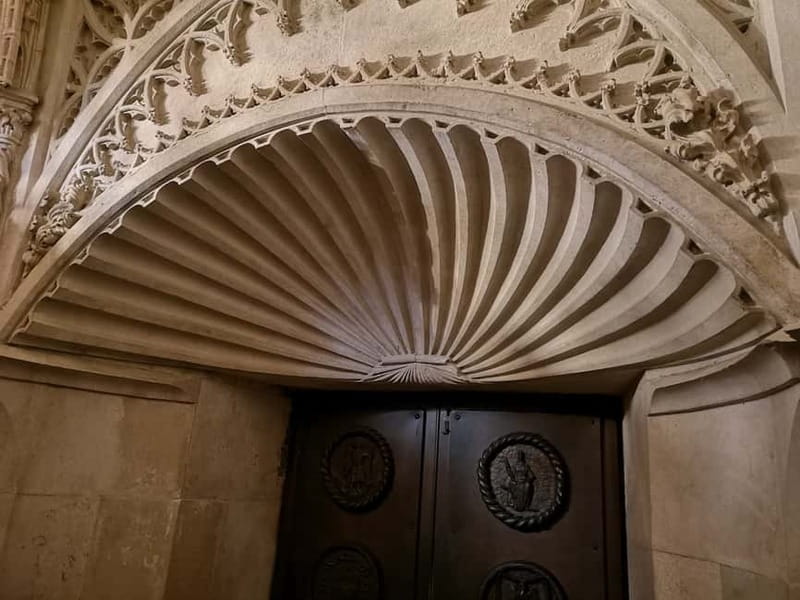
The cave next to the Monastery of St. Lawrence is one of the tour’s most surprising details. It is not the sort of sight you would necessarily expect in the center of an old Dalmatian town.
The stop helps you see how much vertical and hidden space exists within Šibenik’s historic core. The city is not only facades and public squares. It also includes passages, enclosed religious spaces, underground or rock-cut features, and places that have served practical or spiritual purposes over time.
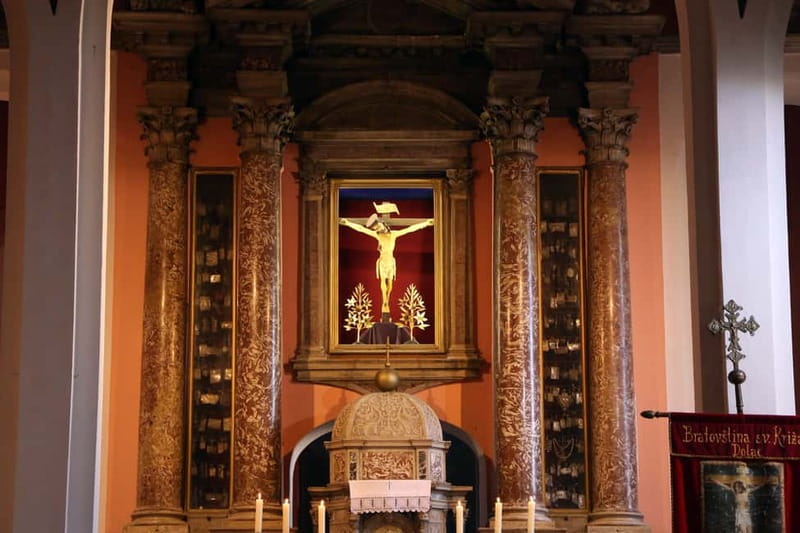
The monastery itself adds another side of medieval life. You will hear about nuns who prayed for the city in darkened monasteries. That story brings religious life into the same conversation as trade, punishment, water, and construction.
The experience here is more about atmosphere and explanation than a long interior visit. Since this is a one-hour night walk, do not expect extended time at every site. Still, the cave and monastery make the route feel less predictable than a conventional old-town tour.
Punishment, fairs, bells, and local customs
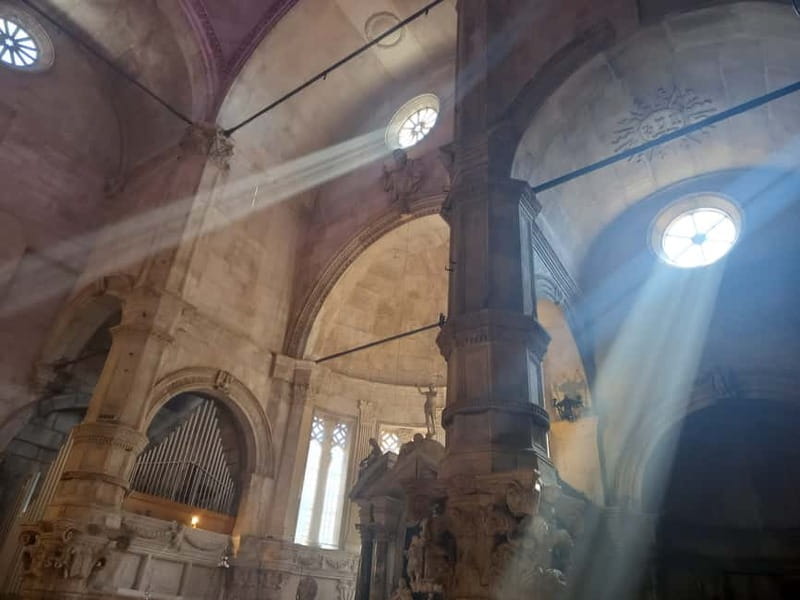
Dario’s stories also cover the less polished side of medieval Šibenik.
You will see where the Pillar of Shame once stood. This was a public symbol of punishment and humiliation, offering a sharp reminder that medieval town life included strict social control. The tour also explains where cheats escaped from the medieval fair, a detail that turns a market from a pleasant historical image into a place of arguments, fraud, and quick getaways.
There are stories about city crafts, too. These help fill in the space between major monuments. A cathedral tells you about religion and civic ambition. Crafts tell you about work, materials, and the people who made the city operate.
One unusual part of the tour explores why there are no weddings in Šibenik during May. You will also hear how midnight on December 17 was greeted and why all 72 bells of the city rang. These customs may seem strange without explanation, which is exactly why they work well on a guided walk. They give you memorable hooks for understanding local tradition.
The tour also addresses the plague that nearly destroyed Šibenik in 1649. This is not presented as an isolated disaster. It belongs to the wider story of how illness affected crowded old towns, religious practice, trade, and the survival of communities.
How the cathedral’s construction shaped the city
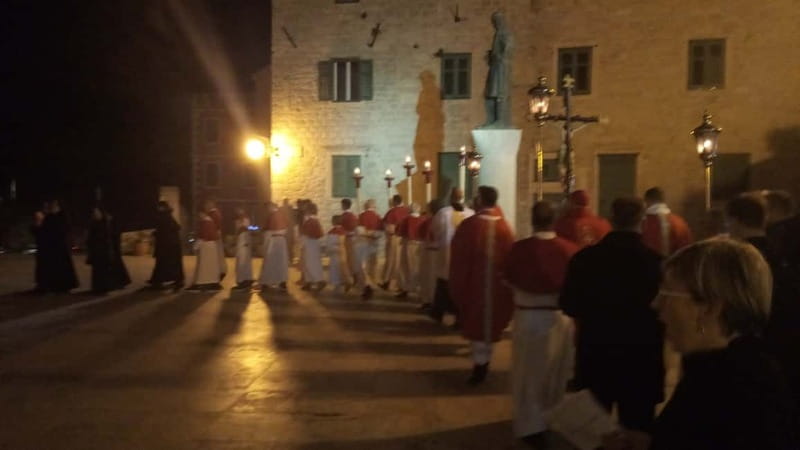
The cathedral receives the most attention, and rightly so. You will hear whether it was built over a long period or completed in an unusually short time, along with what the project represented to the people of Šibenik.
The exact building story matters because the cathedral is closely tied to the city’s identity. Its construction required skill, money, planning, and long-term civic commitment. It also links Šibenik to the work of Juraj Dalmatinac, whose statue helps identify the meeting point.
Rather than treating the cathedral as a single photo stop, the tour asks you to consider its meaning. Why build something so ambitious? Who wanted it? What did its scale say about the city? How did stone, light, reliefs, and bells shape the experience of approaching it?
A night tour cannot replace a daylight visit to the cathedral. You may want to return the next morning, when you can study the exterior more closely and visit the cathedral or other museums if they are open. The evening walk works best as a first layer, giving you questions and details to carry into a later independent visit.
What the guide adds

Dario Mikulandra is the named guide and the owner of Magnificat. The strongest feature of his approach is the mix of information, clear English, humor, and personal enthusiasm for Šibenik.
That combination matters on a short tour. In one hour, a guide needs to keep the pace moving while still making the details stick. Dario’s background as a specially trained member of one of the city’s medieval brotherhoods gives the walk a local connection, according to the tour description.
The available languages are English, Croatian, and Serbo-Croatian. The English-language experience has been praised for its clarity and strong command of the language, so English-speaking visitors should be able to follow the stories without difficulty.
You can also ask questions during the walk. That is useful because the tour covers a wide range of subjects, from a cistern to a plague outbreak to the bells of the city. If one topic catches your interest, a live guide can give the explanation more shape than a printed route.
Maps of the city and brochures in your own language are provided. Keep them. They can help you retrace the route the next day, especially if you want to return to St. Lawrence Monastery, the cathedral, or the old streets in daylight.
Is $49 a fair price for one hour?
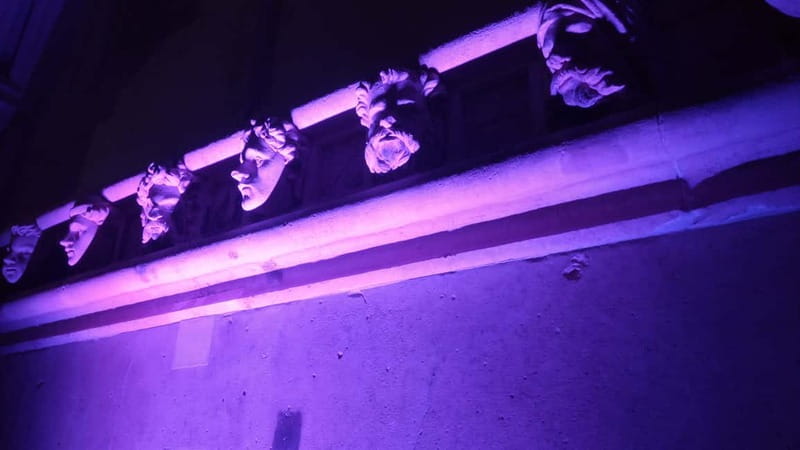
At $49 per person, this is not the cheapest way to spend an hour in Šibenik. You are paying for a private-feeling historical introduction led by a professional guide, not for admission to a collection of interiors or a long excursion outside the city.
The price makes more sense if you value interpretation. The tour connects many small places and stories that would be hard to assemble on your own: the Four Wells, the oldest street, the cave, the monastery, the Pillar of Shame, the cathedral square, the church of St. John, the old city crafts, and the first public lighting lamp.
It is also a good use of an evening when the heat has eased. One review describes returning the next morning to revisit places shown during the walk, including the medieval gardens of St. Lawrence and the Cathedral of St. James. That is a practical way to get more value: take the night tour first, then explore selected sites independently during daylight.
The price is less attractive if you want a long, slow visit inside monuments. There are no church or museum entrance fees during this night walk, and the one-hour duration limits the amount of time available at each stop. If your main goal is interior art, architecture, or museum displays, spend your money on those admissions instead or add them after the tour.
Free cancellation is available up to 24 hours before the start, and you can reserve now and pay later. Starting times vary, so check availability when choosing your date.
Who should book this Šibenik night walk?
I would recommend it to first-time visitors who want their first evening in Šibenik to have a clear shape. It gives you local orientation without requiring a full-day commitment.
Families can also manage the one-hour length. A family with two young children found the route enjoyable for different ages, and the cave, tunnels, stairs, bells, and tales of medieval mischief give younger children more to notice than a long lecture about dates.
It suits history fans, architecture lovers, and anyone who prefers small details to a standard checklist. It is especially useful if you want to understand why the old town is built as it is.
You should think twice if stairs, narrow lanes, or uneven historic streets are difficult for you. The route includes many stairs, and the tour information does not specify an accessible alternative. You should also skip it if you want a nightlife activity with food, drinks, or entertainment. This is a focused walking tour about Šibenik’s past.
Final call: book it if you want the city to make sense
Book this tour if you want to see Šibenik as a living medieval town rather than only a pretty cathedral square. Dario’s stories link grand architecture with water storage, punishment, religious devotion, plague, crafts, local customs, and the simple problem of moving through dark streets.
The strongest plan is to take the walk early in your stay, then return in daylight to the places that catch your attention. At $49, the tour is best value for curious visitors who want context and a strong local guide. It is less suited to anyone seeking extensive interior visits or a longer excursion.
For a short evening introduction, the route offers an unusually personal look at Šibenik, with enough odd corners and local stories to make the old town feel newly discovered.
FAQ
How long is the Šibenik Medieval Night Walking Tour?
The tour lasts one hour. Starting times vary, so check availability for the date you want.
Where does the tour begin?
It begins at the main entrance portal of the Cathedral of St. James, facing west. This is the entrance opposite the statue of sculptor Juraj Dalmatinac, not the cathedral doors with the lions.
Where does the tour end?
The walk ends back at the meeting point by the cathedral.
Which languages are available?
The live guide can conduct the tour in English, Croatian, or Serbo-Croatian.
What places are included during the walk?
The route includes the cathedral square, the Four Wells medieval cistern, the oldest street in the city, the Monastery of St. Lawrence, a cave beside the monastery, the church of St. John, the Pillar of Shame site, city craft areas, and the first public lighting lamp from 1895.
Are church and museum entrance fees included?
This is a night walking tour, so there are no entrance fees for churches or museums. The experience focuses on the streets, squares, exterior features, and historical stories along the route.
More Evening Experiences in Sibenik
- Split: Illuminated Evening Guided Kayaking Tour
★ 4.8 · 1,622 reviews - Split: Stand Up Paddleboard Night Glow Tour
★ 4.9 · 916 reviews - Poreč: Evening Boat Trip to Discover Dolphins
★ 4.7 · 909 reviews - Pula: Night-Time Sea Kayaking Tour in Transparent Kayak
★ 4.9 · 628 reviews
Just added around Sibenik
- The beauty of the Middle Ages-Šibenik★ 4.7 · 7 reviews
- Šibenik walking tour in one hour!★ 5.0 · 6 reviews
- Sibenik: Guided Walking Tour★ 5.0 · 8 reviews
- Panorama & Wine tour – Eco City Tour Šibenik★ 5.0 · 4 reviews
- Sibenik: Stunning views, History & Tasting – Croatia in day★ 4.9 · 9 reviews
- Fortresses Sightseeing – Eco City Tour Šibenik★ 4.8 · 9 reviews
- RIVIERA TOUR FROM ŠIBENIK, ZLARIN, PRVIĆ AND TIJAT★ 4.6 · 14 reviews
- Private Boat Trip – Swim and Chill in Crystal Blue Šibenik★ 4.5 · 16 reviews
Walking Tours, compared.
Split: Old Town and Diocletian Palace Walking Tour
Read our review →
Walking Tour of Split and Diocletian’s Palace
Read our review →

Krka Waterfalls tour with Trogir Walking tour and Krka panoramic boat cruise
Read our review →
Dubrovnik: City Walls Early Morning or Sunset Walking Tour
Read our review →Browse the lists this tour appears in