
Reviewed · WALKING TOURS
From Sibenik: Private Walking Sibenik Sightseeing Tour
Šibenik’s greatest surprise is its stonework. St. Jacob’s Cathedral was built entirely from stone, without binding material, over a century of effort. I like that this private tour brings you through the narrow lanes and staircases around it, not just to the usual postcard view. I also like the local stories about King Petar Krešimir, church bells, and the town’s strange main square.
The guide, Irena, is praised for her warm manner, strong German, humor, and care in the summer heat. She has stopped in the shade to explain details and suggested a good lunch spot afterward. The main drawback is time: 90 minutes goes quickly in a town with this many churches, stairs, and stories, and one booking ran for about an hour and 40 minutes after being arranged for two hours.
Key points to know before you book
- St. Jacob’s Cathedral is built entirely of stone, including its bold slabs and ribs with no binding material.
- The route uses narrow lanes and many stairs, so comfortable shoes matter.
- Irena leads in Croatian, English, or German, with a personal style suited to private groups.
- You cover several historic churches and civic buildings, including St. Francis, St. John the Baptist, St. Barbara, Four Wells, and the Croatian National Theater.
- The group price is $188 for up to 20 people, making it more attractive for families or larger parties than for one or two people.
- Religious sites require covered shoulders and knees, so dress with church visits in mind.
Šibenik’s stone heart, from the waterfront inland
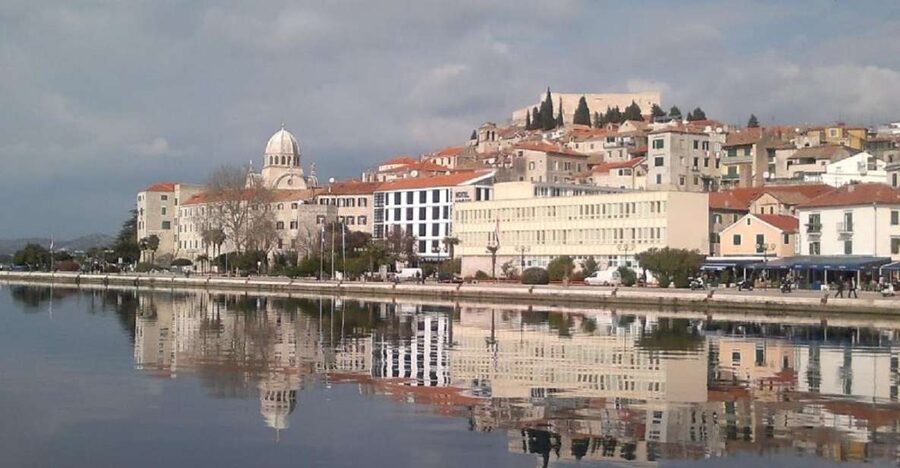
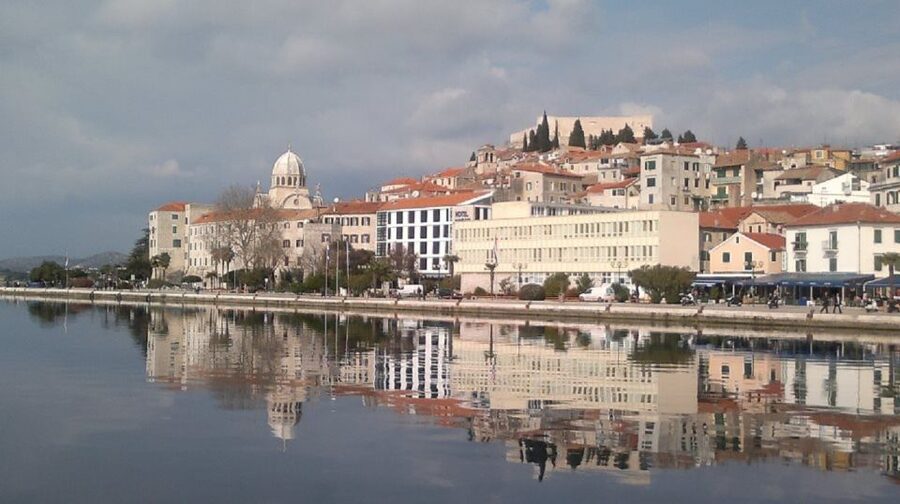
Šibenik sits on the Adriatic coast in one of the area’s most protected natural harbors. The town’s old center rises from the waterfront through lanes of pale stone, stairways, small squares, and traces of old defensive walls.
That setting gives the walk its character. You are not moving between isolated sights by vehicle. You are following the shape of the medieval town, where the route itself is part of the story.
The proposed meeting place is a waterfront parking lot beside a gas station. This is practical if you are arriving by car, though it is not the most atmospheric starting point. From there, your guide leads you toward the old town and its historic core.
I like the private format here. Your group can ask questions as they come up, and the guide can spend more time on a church, family story, or architectural detail that catches your attention. With a group of up to 20, the price works best when shared. At $188, two people are paying a steep per-person rate, while a family or larger group gets much better value.
More Walking Tours in Šibenik
- Private Sibenik Walking Historical Morning or Evening Tour
★ 5.0 · 93 reviews - Sibenik: Guided Evening Walking Tour
★ 4.9 · 62 reviews - Šibenik: Medieval Night Walking Tour
★ 5.0 · 19 reviews
The cathedral that changed European stone building
St. Jacob’s Cathedral is the anchor of the tour. Its construction lasted about a century, which tells you something about the scale of the work and the patience required to complete it.
The cathedral is made entirely of stone. Its builders used stone slabs and ribs without binding material, creating a daring structure that still feels unusual among European Renaissance churches. Its trefoil front facade is another distinctive feature, and the overall design has a calm balance despite the technical challenge.
Your guide can help you look past the broad outline and notice how the building works. Without that explanation, you may simply see a handsome cathedral. With context, you begin to see the risk in the construction and the long civic effort behind it.
This is also where the tour connects architecture to the people of Šibenik. The cathedral reflects generations of local labor, belief, sacrifice, and ambition. That human angle is more useful than a list of dates.
The cathedral is a religious venue, so remember that shoulders and knees must be covered when entering. Even if you are focused on architecture, you need to treat the space as an active place of worship.
Narrow lanes, old walls, and the rhythm of the town
After the cathedral, the walk continues through the old town’s narrow, winding streets. Expect stone houses, staircases, and lanes that can feel as if they belong to the 15th or 16th century.
The uneven route is part of the charm, but it is also the main physical consideration. Bring comfortable shoes. The tour does not read like a flat promenade along the waterfront. You will climb and descend through the historic center, with frequent stops for explanation.
The remains of the city walls add another layer. They show how the town was shaped by defense as well as trade, worship, and daily life. The old center feels compact, yet each turn can open onto an attractive square or a new view of the surrounding stone buildings.
I like this part because it gives you a sense of how Šibenik developed. You are not only checking off buildings. You are seeing how churches, homes, public spaces, and fortifications fit together.
King Petar Krešimir and the city’s identity
One of the useful local stories concerns King Petar Krešimir and his importance to Šibenik and its people. The tour uses this story to connect the town with Croatian identity and its early political past.
This kind of explanation is especially helpful if your knowledge of Croatian history is limited. You do not need to arrive with a long list of kings or dates. Irena explains why the figure matters locally, giving the name a place in the city rather than leaving it as a plaque you pass without context.
The tour also asks an intriguing question: why is the main city square not actually in the city? That unusual detail is exactly the sort of small puzzle that makes a walking tour memorable. It gives you a reason to look closely at Šibenik’s layout rather than simply admire it.
Same stretch of coast, a completely different kind of day:
- Šibenik Riviera boat tour: Zlarin + Prvić + Tijat
★ 4.5 · 71 reviews - Zipline Šibenik – Čikola Canyon
★ 5.0 · 48 reviews - Sibenik Private Combined Food & Drink and Historical Tour
★ 5.0 · 36 reviews - Kayaking to the island Prvić
★ 5.0 · 31 reviews
Churches with unusual stories
Šibenik has enough churches to blur together unless someone points out what makes each one different. This walk gives several of them a clear role.
The Church of St. Francis is presented as special among the city’s churches. The tour explains why, rather than treating it as another stop on a long architectural list. You will also hear about the Church of the Assumption of the Blessed Virgin Mary, including who uses it and who built its unusual bell tower.
The Church of St. John the Baptist had particular importance during the Middle Ages. Its patron saint later changed, and the story explains why. That change gives you a glimpse of how religious buildings can shift in meaning as a town changes.
The Church of St. Krševan is identified as the oldest church in town. Its age alone is interesting, but the value comes from placing it among the newer buildings around it. A short explanation helps you understand the layers of Šibenik rather than seeing the old center as one uniform block of stone.
At the Church of St. Barbara, the four bells provide another memorable detail. You will learn why there are four and when they ring. It is a small subject, but these are often the details that stay with you after the larger dates have faded.
The guide also shares a way to remember the name of the artist connected with the Church of the Assumption’s bell tower. That practical memory trick may sound minor, but it shows the tour’s conversational approach.
Four Wells and the problem of water
The public cistern called Four Wells explains an everyday concern that is easy to miss when looking only at grand churches. It was built during the Middle Ages to provide a public water supply.
Water access shaped old towns, and a cistern tells you something about ordinary life: where people collected water, how public works supported the community, and why a town needed shared infrastructure.
This stop also adds variety to the route. After grand religious architecture and royal associations, you get a practical piece of urban life. It is a reminder that Šibenik was not built only for ceremonies. It was a functioning town with basic needs to solve.
The Croatian National Theater and early electric light
The Croatian National Theater in Šibenik brings the tour into the 19th century. When it was built, it was described as the largest and most beautiful theater in southern Europe.
Its most striking detail is the electric lighting installed in 1896. The theater was among the first in the world to receive electric lighting, giving Šibenik a place in the early story of modern public entertainment and technology.
This stop helps break up the medieval focus. You move from stone churches and old wells to a civic building linked with culture, performance, and new technology. It shows that Šibenik did not stop developing after the Middle Ages.
The theater also helps explain why the town’s appeal is broader than its oldest lanes. You can find several centuries of building and public life within a short walk.
A guide who makes the route personal
The guide is listed as Irena, though some English-language bookings use Irene. She leads in Croatian, English, and German. The strongest feature of her style is the balance between facts and conversation.
She is praised for excellent German, warmth, humor, and close attention to the people in her group. One family specifically appreciated the way she included a small child. That matters on a private walk, since the pace and level of detail can suit your group better than a fixed public tour.
I also like the practical side of her guiding. In the summer sun, she has chosen shaded places for explanations rather than standing in full heat beside a monument. She has also recommended a restaurant for lunch afterward, giving you a useful next step instead of ending the experience with a quick goodbye.
A private guide can make Šibenik feel less like a museum route and more like a walk with someone who knows the town personally. You still get the architecture, but you also get local explanations about current life, food, and places worth considering after the tour.
Timing, pace, and the $188 group price
The advertised duration is 90 minutes. That is enough for a focused introduction to Šibenik’s historic center, but it is not enough for a slow examination of every building.
You will hear about the cathedral, several churches, Four Wells, the theater, the city square, King Petar Krešimir, and other local details. The tradeoff is pace. Expect a steady walk with stops, not a long sit-down lecture at each site.
One booking was arranged for two hours and lasted about one hour and 40 minutes, with the sense that more remained to see. Take that as a useful warning: confirm the duration you are booking and set expectations before you begin. The advertised option here is 90 minutes.
At $188 per private group of up to 20, the value depends on your party size. For a couple, it is a premium introduction. For a family reunion, cruise group, or larger party, the same price spreads well across the group and buys a guide focused only on you.
Meals, drinks, and gratuity are not included. The guide may offer restaurant suggestions, but you should plan to pay separately for lunch or refreshments.
Free cancellation is available up to 24 hours before the tour for a full refund, and you can reserve now and pay later. Those terms are useful if your Dalmatian schedule is still shifting.
Who will get the most from this walk
I would choose this tour if you want the old town explained in a personal way and have limited time in Šibenik. It suits first-time visitors who want an organized introduction without committing to a half-day experience.
It is also a good fit for families and mixed-age groups. The private setting allows the guide to respond to children’s questions and adjust the conversation. German speakers have a clear reason to consider it, since Irena’s German has been praised as excellent.
History and architecture fans will get the most from the cathedral, churches, old streets, walls, and theater. You should also enjoy small local facts, since much of the appeal comes from details such as the four bells, the city cistern, and the unusual main square.
I would think twice if you dislike stairs, uneven streets, or religious buildings. The route also may feel too brief if you want to enter every church, linger at each facade, and take photographs at a relaxed pace.
Should you book the Šibenik private walking tour?
Book it if you want a compact, personal introduction to Šibenik led by someone who can explain both the major monuments and the small local puzzles. The cathedral alone is worth serious attention, and the route adds churches, civic buildings, waterworks, and stories about the town’s identity.
The best value comes with a larger group sharing the $188 cost. Bring good shoes, dress properly for religious venues, and treat the 90-minute schedule as an overview rather than a full study of the old town.
For a first visit, I would book it early in your Šibenik stay. You will finish with a clearer sense of the city’s layout and several useful ideas for what to see, eat, or explore next.
FAQ
How long is the Šibenik sightseeing tour?
The advertised duration is 90 minutes. One booking arranged for two hours lasted about one hour and 40 minutes, so confirm the duration when booking.
How much does the private tour cost?
The price is $188 per group of up to 20 people.
Is the tour private?
Yes. The experience is for a private group.
Which languages does the guide speak?
The tour is available in Croatian, English, and German.
Where is the meeting point?
The proposed meeting point is a parking lot on the waterfront, next to a gas station.
What should I wear?
Wear comfortable shoes because the route includes narrow streets and many staircases. Shoulders and knees must be covered when entering religious venues.
Is food included?
No. Meals and drinks are not included.
Is gratuity included?
No. Gratuity is optional and not included in the price.
Can I cancel for a full refund?
Yes. You can cancel up to 24 hours in advance for a full refund.
Can I reserve now and pay later?
Yes. The tour allows you to reserve your place and pay later.
Just added around Sibenik
- The beauty of the Middle Ages-Šibenik★ 4.7 · 7 reviews
- Šibenik walking tour in one hour!★ 5.0 · 6 reviews
- Sibenik: Guided Walking Tour★ 5.0 · 8 reviews
- Panorama & Wine tour – Eco City Tour Šibenik★ 5.0 · 4 reviews
- Sibenik: Stunning views, History & Tasting – Croatia in day★ 4.9 · 9 reviews
- Fortresses Sightseeing – Eco City Tour Šibenik★ 4.8 · 9 reviews
- RIVIERA TOUR FROM ŠIBENIK, ZLARIN, PRVIĆ AND TIJAT★ 4.6 · 14 reviews
- Panorama Tour – Eco City Tour Šibenik★ 4.8 · 31 reviews
Walking Tours, compared.
Split: Old Town and Diocletian Palace Walking Tour
Read our review →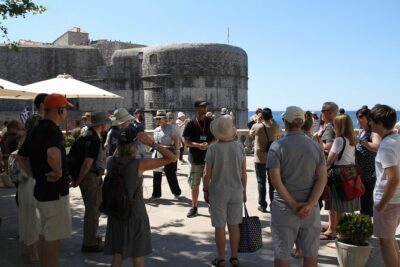
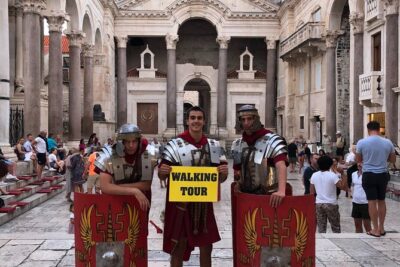
Walking Tour of Split and Diocletian’s Palace
Read our review →
Krka Waterfalls tour with Trogir Walking tour and Krka panoramic boat cruise
Read our review →
Dubrovnik: City Walls Early Morning or Sunset Walking Tour
Read our review →Browse the lists this tour appears in