
Reviewed · WALKING TOURS
Rovinj: Guided Walking Tour
Rovinj’s best stories are built into its streets. This 90-minute walk explains how a channel was filled a thousand years ago, how thousands of people lived on a small island, and why Bridge Square has no bridge today. It turns a pretty Adriatic view into a place you can understand.
I like the local starting point by the farmers’ market, where you get practical tips along with history. I also like the finish at Saint Euphemia Church, one of the finest places in town for sunset. Guides such as Goran are praised for clear English, humor, and useful advice on coffee, restaurants, gelato, and traditional food.
The main drawback is the footing. About half the route runs through the old town on cobblestones, followed by an uphill walk to the church. It is fairly easy for most walkers, but people with limited mobility may find it difficult.
Key points to know before you book
- See where Rovinj’s former channel and bridge once stood, then learn how the channel was filled and the island joined to the mainland.
- Walk Carera Street, the old commercial spine shaped by trade in olive oil, fish, and wine.
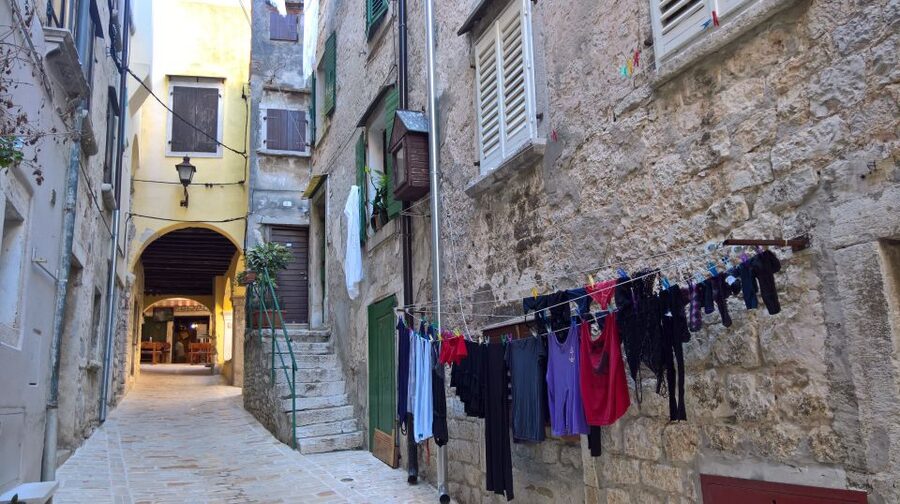
- Explore the old Jewish Ghetto and stables area, reached through a maze of narrow cobbled lanes.
- Follow the old city walls uphill to Saint Euphemia Church, the tour’s memorable finishing point.
- Get useful food and drink advice, including where to buy produce, sip coffee, eat cake, find gelato, and enjoy the waterfront.
- Meet a local guide in several languages, including English, Italian, Portuguese, French, and Croatian.
Why this walk is a smart first look at Rovinj
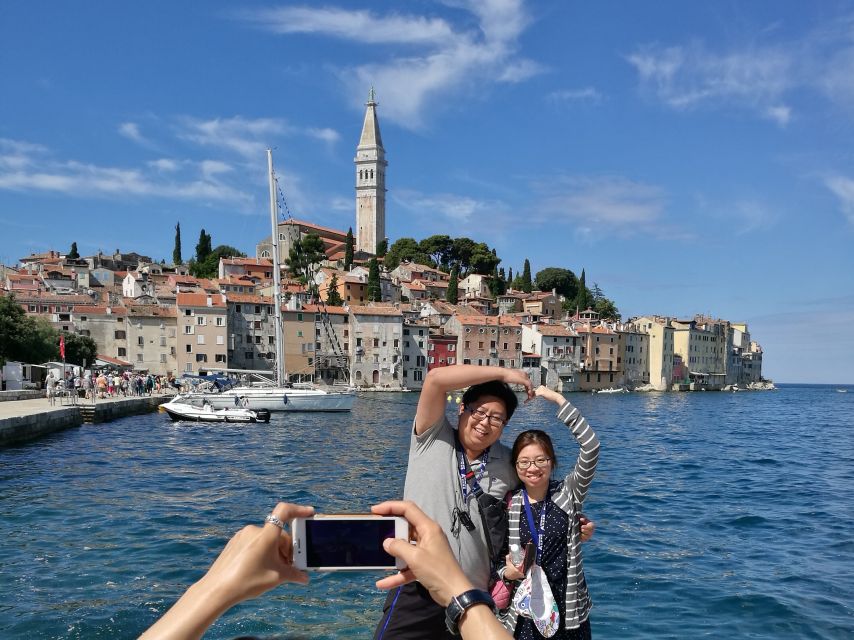
Rovinj can look simple at first glance: a hilltop church, orange roofs, a blue sea, and lanes that twist toward the water. The real pleasure comes when you understand why the town has that shape.
This tour gives you the town’s basic story in the right order. You begin in the lower town, see how Rovinj was linked to the mainland, pass through its commercial streets, then climb into the older core. By the end, you have a clearer sense of how geography, trade, religion, and daily life shaped the place.
I would take this walk early in a stay. The guide points out the farmers’ market, good coffee, cakes, gelato, restaurants, and beach areas. That advice is most useful when you still have time to use it.
The price is $32 per person. For 90 minutes, that is not the cheapest way to see a town, but it is fair if you want a live explanation rather than a quick walk past the sights. You are paying for a local professional guide and for the connections between places that are easy to miss on your own.
More Walking Tours in Rovinj:
- Romantic Rovinj – a private walking tour
★ 5.0 · 8 reviews - Dubrovnik: Old Town Walking Tour
★ 4.8 · 5,174 reviews - Split: Old Town and Diocletian Palace Walking Tour
★ 4.9 · 4,727 reviews
Meeting the guide beside the farmers’ market
The meeting point is in front of the white World War II memorial on Pietra Ive Street, just off the local farmers’ market. Look for the large rectangular whitewashed stone structure, near the ATM and Auro Domus.
This is a useful place to begin because it puts you in the lower town rather than immediately inside the tourist center. The market gives you a quick feel for local shopping, and the guide can explain where residents buy fruit and vegetables.
The guides are local people, and Goran is the name most often associated with this experience. His style, based on the many strong comments about the walk, is lively and direct. He explains the city and wider Croatian past in clear English, answers questions, and adds humor without turning the tour into a performance.
The tour is also offered in Italian, Portuguese, French, and Croatian. Check the selected language and starting time when you book, since availability can vary.
Valdibora Square and the missing bridge
The first major stop is Valdibora Square, the area people see when approaching Rovinj from the north. Here, the guide explains the former channel and the bridge that once connected the island to the mainland.
This is one of the most interesting parts of the walk because it changes how you see the town. Rovinj is now linked to the mainland, but its old island identity still explains the tight streets, compact buildings, and steep route toward the church.
You also learn why Bridge Square has no bridge. The channel was filled roughly a thousand years ago, changing Rovinj’s physical shape. Once you know that, the name becomes a small historical clue rather than a confusing sign.
The stop takes about 15 minutes. That is enough time to understand the change without getting buried in dates. I appreciate this sort of explanation because it answers a question you might not think to ask while taking photos of the skyline.
Carera Street and the money behind the old town
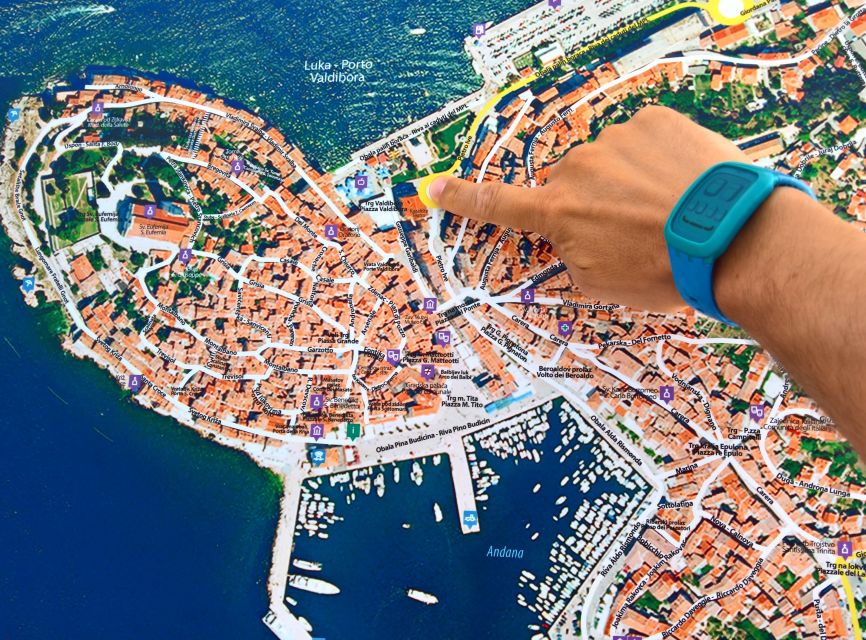
From the lower town, the walk continues along Carera Street. This is where the guide connects Rovinj’s attractive old buildings with the work that paid for them.
In the 18th century, trade in olive oil, fish, and wine helped create wealth in Rovinj. Carera Street gives you a way to picture that commercial past. Instead of seeing only painted shutters and stone walls, you begin to understand the businesses and goods that supported the town.
The tour does not treat history as a list of rulers and dates. It focuses on how people made a living and how that money affected the town. That practical angle makes the story easier to remember.
Allow about 10 to 15 minutes for this part. It is not a museum visit, and the attraction is the street itself, along with the guide’s explanation of its role.
A few more Rovinj half-days worth comparing
- Vrsar: Dolphin Watching Boat Tour including Drinks
★ 4.6 · 1,227 reviews - Rovinj: Sunset Cruise with Swim Stop, Drinks, and Fruits
★ 4.9 · 944 reviews - Rovinj: Sunset Boat Trip with Dolphin Watching
★ 4.6 · 644 reviews - Vrsar: Dolphin-Watching Sunset Adventure with Speedboat
★ 4.8 · 624 reviews
The waterfront, views, and the practical side of a stop
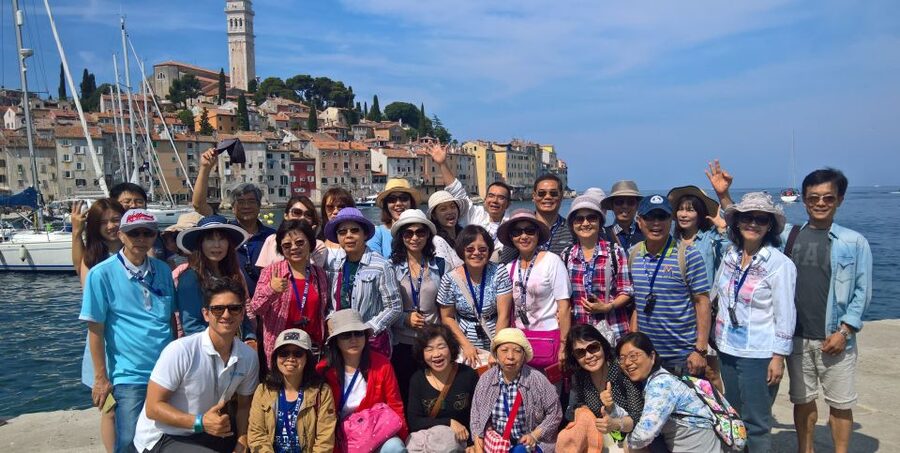
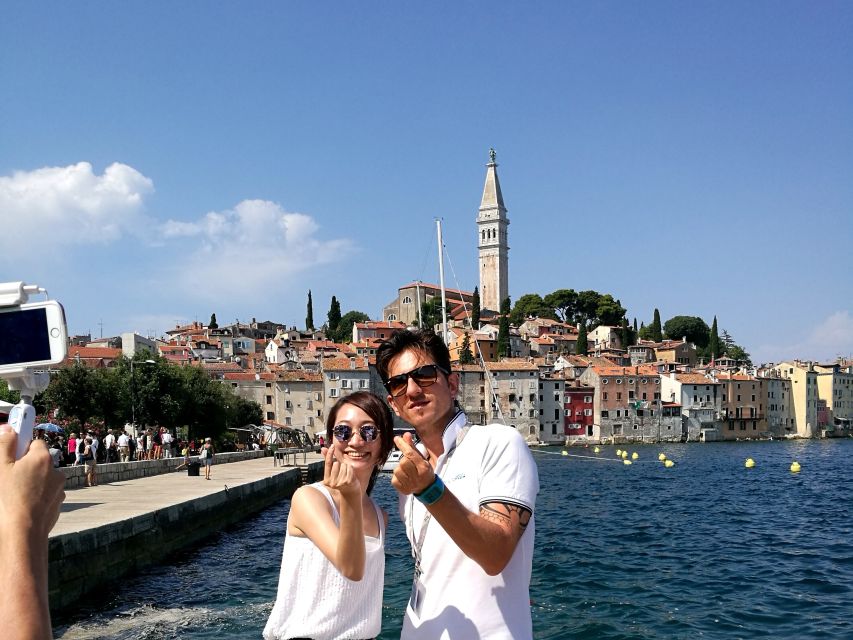
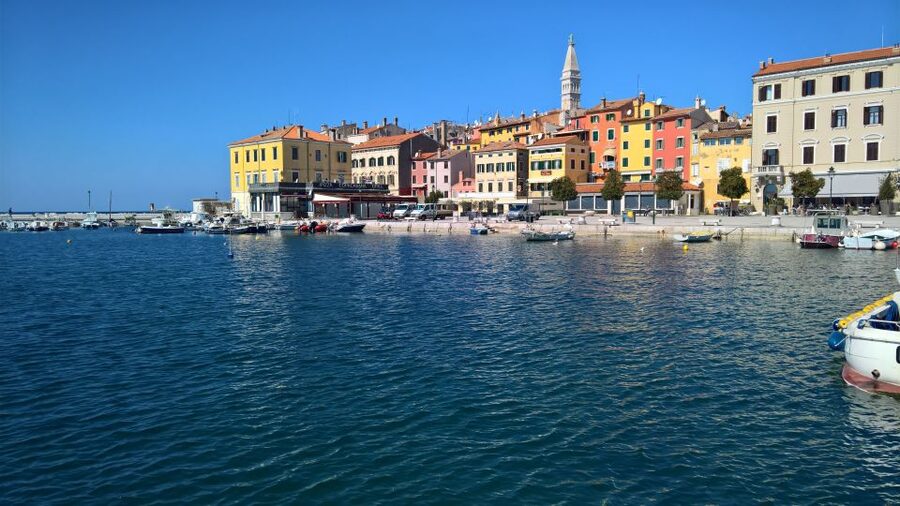
The waterfront is one of the tour’s natural pauses. You get a broad view toward the Adriatic, with Rovinj’s skyline rising behind or around you, depending on the direction of the walk.
This is also where the guide can point out a good place for an Aperol Spritz. Drinks are not included, so treat that as an optional stop rather than part of the tour. The advice is useful because the waterfront is tempting, but not every place with a view will suit your budget or mood.
I like the balance here. You get a scenic break, but the guide keeps the focus on how the waterfront fits into town life. It is a place to watch the harbor, orient yourself, and decide where you might return later.
The tour’s total route lasts 90 minutes, so do not expect a long sit-down break. Wear shoes that feel secure on uneven stone, and bring water in warm weather.
The old Jewish Ghetto and the stables area
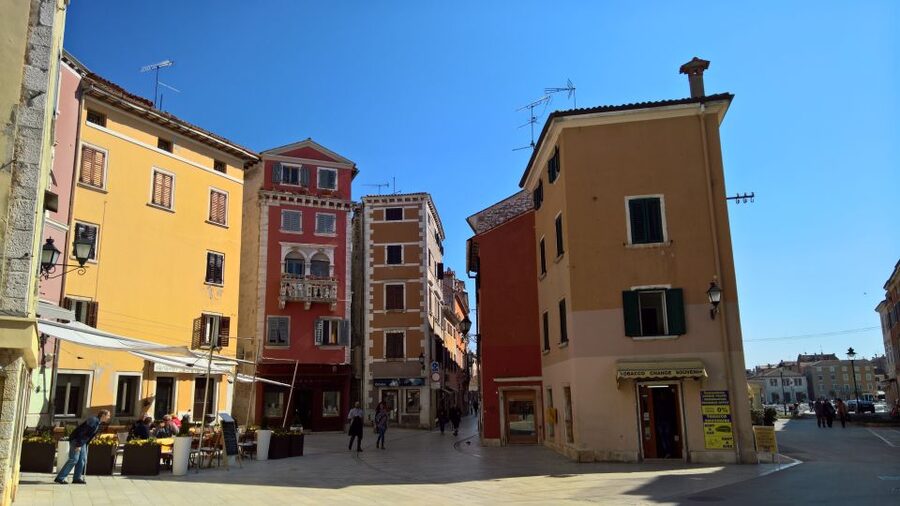
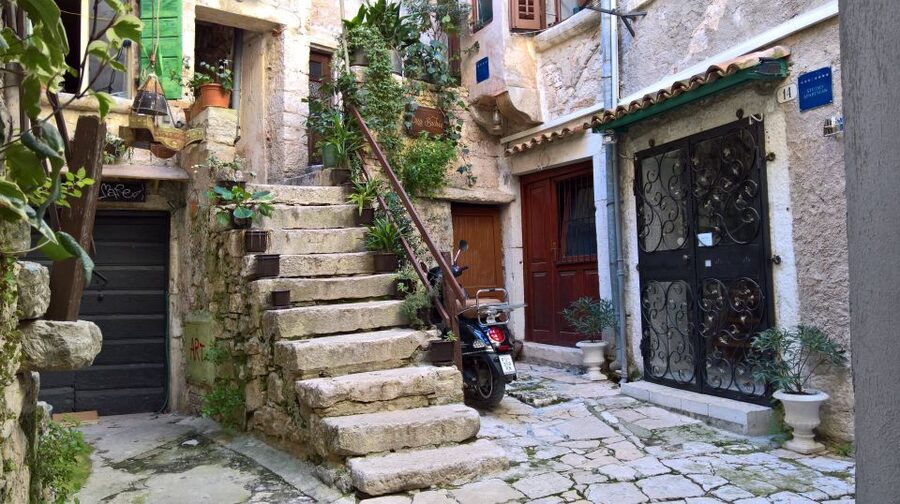
The route then turns into Rovinj’s older core. You move through narrow cobbled streets toward the area around the former Jewish Ghetto and the old stables, just off the Arch of the Bearded.
This section is less about grand monuments and more about the town’s texture. The lanes form a maze, and it is easy to lose your sense of direction. A local guide helps you see that the irregular pattern is part of the town’s past, not just a charming backdrop.
The old Jewish Ghetto is an important reminder that Rovinj’s story includes different communities and layers of urban life. The nearby stables area adds another everyday detail. You are not only seeing churches and views, but also spaces connected with work, movement, and ordinary routines.
About 20 minutes is allotted to this part of the route. That makes it long enough for context, but not so long that the walk becomes a slow architectural lecture. Ask questions here if you want more detail about local customs, recent Croatian history, or how the old center changed over time.
Climbing the old walls toward Saint Euphemia
The final section follows the ancient city walls uphill toward the Church of Saint Euphemia. This is the most physical part of the experience, though the climb is described as fairly easy.
The surface remains a concern. Cobblestones can be slippery or awkward, especially if you are not used to uneven historic streets. The walk is not suitable for people with mobility impairments, and anyone who dislikes hills should take that seriously before booking.
The effort pays off with a stronger view of Rovinj. From higher ground, the blue Adriatic and the town’s compact form make more sense. The earlier explanation about the former island is easier to picture when you can see how tightly the old center is grouped.
The church is the endpoint, not a guided interior visit. The tour finishes at one of the best spots for watching the sun go down over the Adriatic. If sunset matters to you, check the tour’s starting time carefully. A daytime departure will not automatically end at sunset.
What Goran adds to the experience
Goran receives repeated praise for three things: strong command of local history, an engaging sense of humor, and practical advice. His approach seems especially useful if you prefer a guide who talks with the group rather than simply reciting facts.
Clear English matters in a walking tour. You are moving, looking around, and often standing outdoors near traffic or other activity. The available feedback describes Goran’s English as easy to follow, which is valuable when the tour covers complicated changes in Rovinj’s geography and Croatian history.
His local suggestions are also a major part of the value. You can ask where to find the best coffee, which places serve good cakes and gelato, where to eat, and which beach areas are worth your time. These tips may save you from choosing a place only because it has a prominent location.
The group size is not specified, so I would not book this expecting a guaranteed private or very small-group experience. The tour has sometimes been taken by only a handful of people, but the actual size can vary.
Food, coffee, beaches, and local know-how
The final benefit is less visible in the formal route but very useful during a short stay. By the end, you should know where locals shop for produce, where to look for good coffee, and where to find cakes and gelato.
That kind of information helps you plan the rest of your time. Rovinj is a place where you may want a slow coffee, a sweet stop after walking, or a beach break away from the busiest streets. The guide can also point you toward places for traditional food and dinner.
Keep your expectations sensible. The tour does not include food or drinks, and it does not promise tastings. You receive recommendations, not a food tour.
Still, I consider the advice a real part of the $32 value. A guide who helps you choose your next meal or find a better coffee stop can be more useful than one who only names buildings.
Who will enjoy this walk most
I would recommend it to first-time visitors who want a clear introduction to Rovinj in a short period. It is also a good fit for anyone who likes history tied to ordinary life, trade, neighborhoods, and local habits.
The tour suits people who want to ask questions. The guides are described as willing to discuss the city, its people, Croatia’s past, and present-day life. That makes the experience more flexible than a fixed audio guide.
It works well for couples, families with older children, and small groups of friends who want to get oriented before exploring alone. It is less suited to anyone with limited mobility, anyone needing a fully smooth route, or anyone hoping for a long indoor visit to the church.
You should also avoid treating this as a full-day activity. Ninety minutes gives you a strong framework, but you will need separate time for museums, beaches, meals, and detailed church visits.
Practical details before booking
You can cancel up to 24 hours before the start for a full refund, and the reserve-now, pay-later option keeps your plans flexible. Those terms are useful in Istria, where weather and daily plans can change.
Arrive at the white memorial near the farmers’ market rather than waiting deep inside the old town. Wear shoes suited to cobblestones, carry water, and consider sun protection in summer.
The walk ends at Saint Euphemia Church, not back at the meeting point. Plan your next stop from there. You may want to stay for the view, continue exploring downhill, or find one of the cafés, restaurants, and sweet shops recommended by the guide.
Should you book the Rovinj Guided Walking Tour?
Book it if you want Rovinj to make sense, not just look beautiful. The best parts are the explanation of the former channel, the walk through Carera Street and the old Jewish Ghetto area, and the practical local advice that continues to help after the tour ends.
The strongest reason to choose it is the guide’s personal approach, especially if Goran leads your walk. His humor, clear explanations, and suggestions for food and coffee add warmth to a route that could otherwise feel like a quick sightseeing loop.
Skip it if you have serious mobility limits, dislike uneven streets, or prefer to explore without a set pace. For most first-time visitors who can manage cobblestones and a modest climb, the $32 fee is a reasonable price for a focused introduction to Rovinj.
FAQ
How long does the Rovinj Guided Walking Tour last?
The tour lasts 90 minutes.
Where does the tour meet?
Meet your guide in front of the white World War II memorial on Pietra Ive Street, just off the farmers’ market. The meeting point is near the ATM and Auro Domus.
Where does the tour finish?
The walk finishes at the Church of Saint Euphemia.
What languages are available?
The tour is available in English, Italian, Portuguese, French, and Croatian.
Is food or drink included?
No. Personal expenses, including food and drinks, are not included.
Is the walk suitable for people with mobility impairments?
No. About half the route uses cobblestone streets, and the walk up to the church may be challenging for people with limited mobility.
Can I cancel for a full refund?
Yes. You can cancel up to 24 hours in advance for a full refund. You can also reserve now and pay later.
Just added around Rovinj
- Rovinj: Shared Dolphin and Sunset Tour with Drinks★ 4.9 · 18 reviews
- Rovinj: Sunrise Dolphins & Fishermen at Work Speedboat Tour★ 4.8 · 32 reviews
- Rovinj Sunset kayaking tour★ 4.9 · 8 reviews
- Rovinj or Vrsar: Lim Fjord & Rovinj islands Speedboat Tour★ 4.9 · 10 reviews
- Rovinj: Rovinj Archipelago and South Coves Speedboat Tour★ 5.0 · 7 reviews
- Rovinj: Red Island and Pirate Cave speedboat tour★ 4.7 · 85 reviews
- Rovinj: Luxury Island Hopping with Swimming & Snorkeling★ 4.8 · 25 reviews
- Rovinj: Lim Fjord and Pirate Cave Boat Tour★ 4.5 · 133 reviews
Walking Tours, compared.
Split: Old Town and Diocletian Palace Walking Tour
Read our review →
Walking Tour of Split and Diocletian’s Palace
Read our review →
Krka Waterfalls tour with Trogir Walking tour and Krka panoramic boat cruise
Read our review →
Dubrovnik: City Walls Early Morning or Sunset Walking Tour
Read our review →Browse the lists this tour appears in