
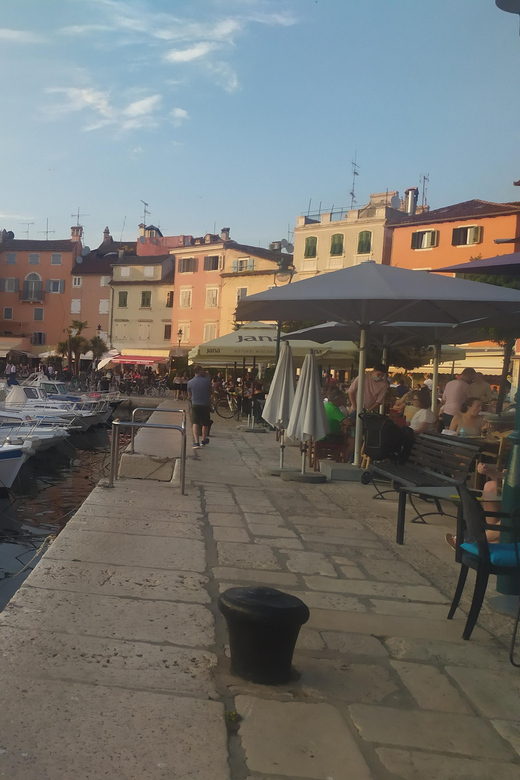
Reviewed · WALKING TOURS
Romantic Rovinj – a private walking tour
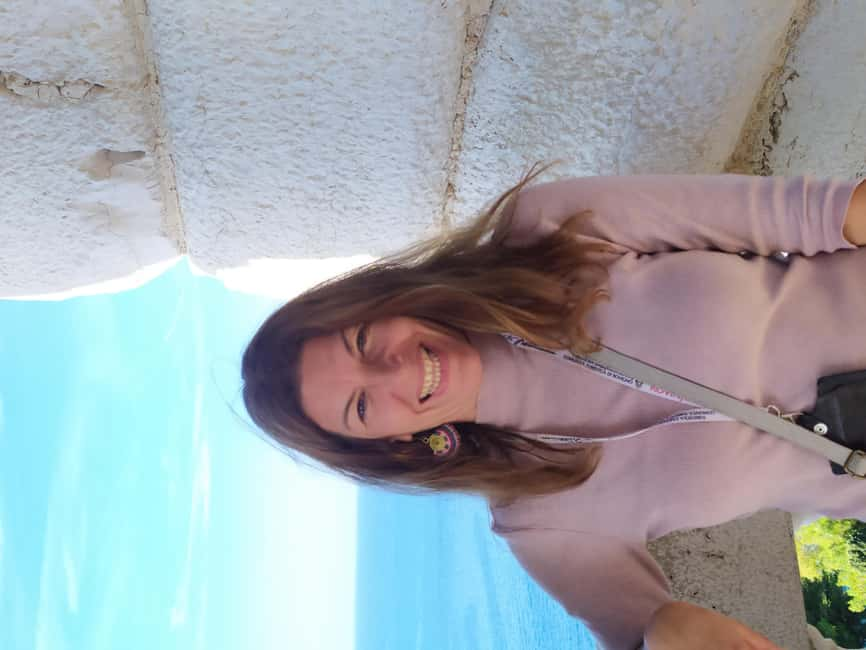
Rovinj reveals its best side on foot, where narrow stone lanes, old town squares, and sea views turn a short walk into a portrait of Istrian life. Romina, a local guide who calls Rovinj her hometown and soulmate, brings in personal stories alongside the town’s past.
I like the private format, which keeps the pace flexible for a group of up to six, and I like the mix of major sights with everyday details. The walk also includes Saint Euphemia Church, a meaningful stop that many quick visits to Rovinj skip. The main drawback is physical: steep, narrow streets and uneven surfaces make this a poor match for wheelchair users or anyone with limited mobility.
Key points
- A two-hour private walk with Romina, limited to your group of up to six.
- A clear route through Rovinj’s Old Town, from Trg na mostu to Carrera Street, Balbi’s Arch, and Saint Euphemia Church.
- A personal view of Istrian identity, where Croatian and Italian influences meet in food, language, streets, and local memory.
- Saint Euphemia Church is included, while the Batana Museum is not.
- Five guide languages are available: English, German, Italian, Spanish, and Portuguese.
- Best for curious walkers, not for wheelchair users, people with mobility impairments, or anyone who struggles with steep and uneven streets.
Rovinj’s former island entrance sets the tone
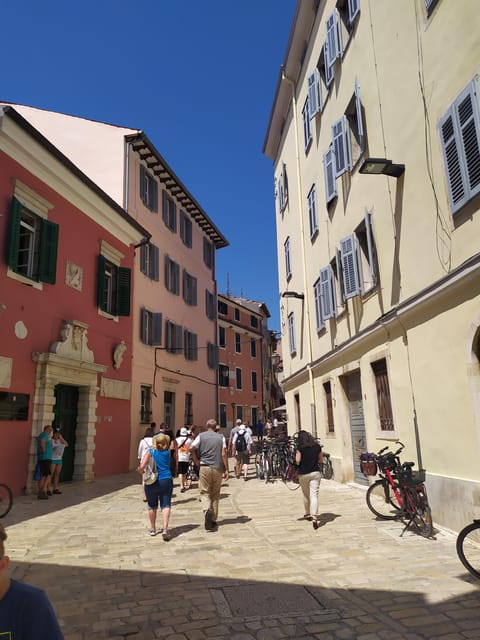
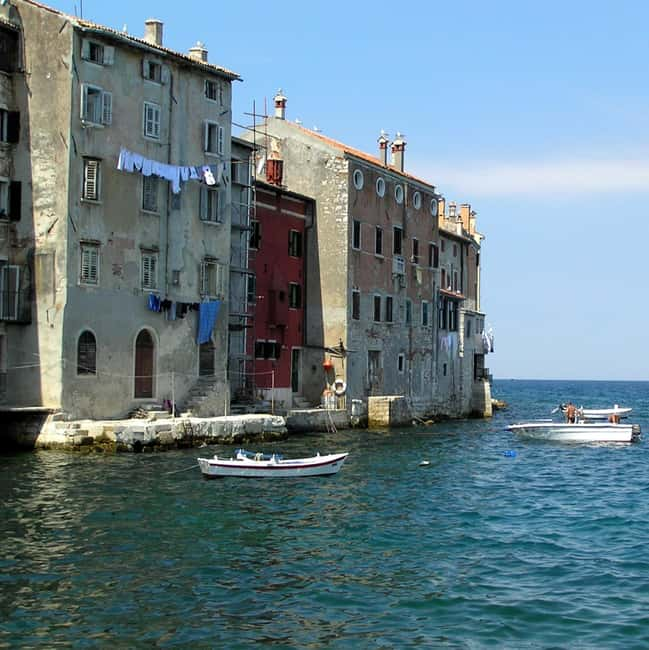
The meeting point is Trg na mostu, or Bridge Square, at the Tourist Board Information Office. This is a fitting place to begin because the square recalls the bridge that once separated Rovinj’s island Old Town from the mainland. Today, you can walk across without thinking about the water gap, but the old division helps explain why the historic center feels compact and distinct.
Romina starts with the town’s setting and identity rather than rushing straight to a checklist of sights. Rovinj is Croatian, Italian, and above all Istrian. Those layers matter. They help explain why the town can feel Mediterranean and Central European at the same time, with a local character that does not fit neatly into one national label.
I like this opening because it gives you a useful frame for the rest of the walk. You are not simply moving from one photo stop to another. You are learning why Rovinj developed as it did and how its island past still shapes the way the Old Town feels.
More Walking Tours in Rovinj:
- Rovinj: Guided Walking Tour
★ 4.8 · 113 reviews - Dubrovnik: Old Town Walking Tour
★ 4.8 · 5,174 reviews - Split: Old Town and Diocletian Palace Walking Tour
★ 4.9 · 4,727 reviews
Carrera Street shows Rovinj’s everyday face
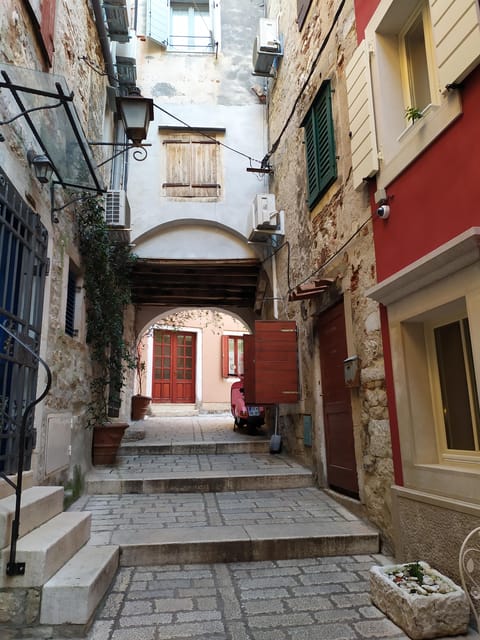
From the starting square, the route reaches Carrera Street, a shopping area and one of the town’s practical gathering places. It is not only a monument or scenic viewpoint. This is where you get a sense of Rovinj as a living town, with daily routines continuing inside an old setting.
Carrera helps balance the medieval mood of the Old Town. You can browse, take photographs, and watch local life unfold while Romina explains how the street fits into the town’s social and economic story. One of the strongest features of her approach is this connection between large historical changes and ordinary life.
The stop is also useful if you want time to get your bearings. Rovinj’s old streets can feel like a maze, and Carrera gives you a straightforward reference point before the route turns into tighter lanes and smaller squares.
Maršal Tito Square brings the town into focus
The walk continues to Maršal Tito Square, the main square. This is one of the natural centers of Rovinj, and it gives you a broader view of the town’s public life after the close lanes near the waterfront.
A private tour works well here because you can ask Romina to explain details that catch your attention. If you want to know more about the square’s role in local life, the town’s economy, or how different cultural influences shaped Rovinj, this is a good point to pause and ask.
The tour is designed around conversation rather than a fixed speech. That matters most in a place like Rovinj, where a building or street name may lead to a question about language, religion, trade, or local customs. You are encouraged to take part instead of simply following behind a guide.
Balbi’s Arch marks the turn into the Old Town
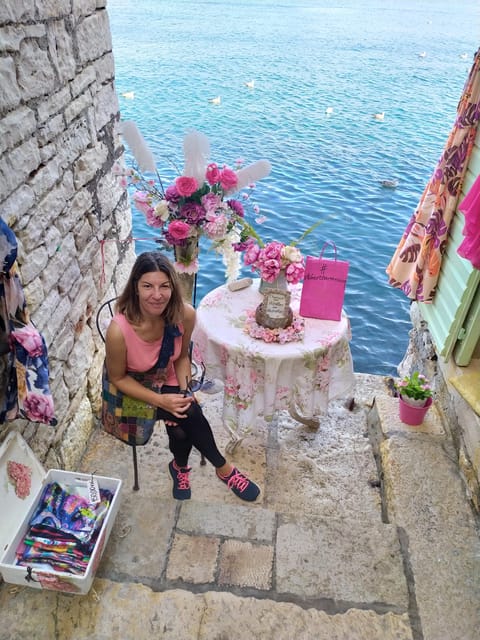
Balbi’s Arch is a key entrance into Rovinj’s historic center. It gives the walk a clear transition: from the more open public spaces into a maze of old and narrow streets.
The arch is also one of the route’s strongest photo stops. You can look for architectural details while Romina places the gateway in the story of the town. The value here is not just the arch itself. It is the way the stop helps you understand the Old Town as a connected place rather than a collection of unrelated lanes.
Once you pass through, expect a slower pace. The streets are narrow, and the route includes old stone surfaces and changes in level. I would wear firm, comfortable shoes and avoid bringing anything you do not want to carry through tight passages.
This part will appeal to you if you enjoy wandering without needing every corner to be polished or perfectly straight. It may frustrate you if you want broad paths, easy access, or a fast sightseeing schedule.
A few more Rovinj half-days worth comparing
- Vrsar: Dolphin Watching Boat Tour including Drinks
★ 4.6 · 1,227 reviews - Rovinj: Sunset Cruise with Swim Stop, Drinks, and Fruits
★ 4.9 · 944 reviews - Rovinj: Sunset Boat Trip with Dolphin Watching
★ 4.6 · 644 reviews - Vrsar: Dolphin-Watching Sunset Adventure with Speedboat
★ 4.8 · 624 reviews
The Old Town is where the personal storytelling matters
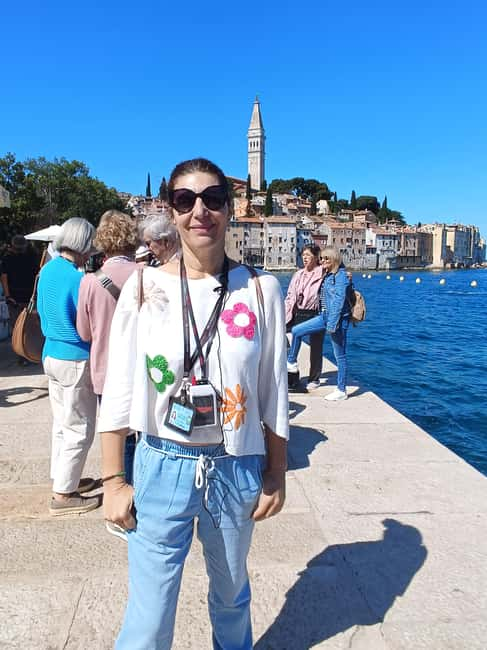
Rovinj’s Old Town is the heart of the experience. The streets hold traces of different periods, but Romina’s role is to connect those traces to life in the town today. She shares local stories, history, and personal memories, presenting herself as a local friend who wants you to feel at home abroad.
That personal angle is important. A guide can describe a place from the outside, or explain why it matters to the people who live there. This tour aims for the second approach. Romina’s hometown connection gives the walk a more intimate tone, and the experience is built around authentic, friendly conversation.
One group of three spent more than two hours walking with her and came away with a view of Rovinj shaped by history, economics, population changes, and personal experience. That detail tells you something useful about the pace: the advertised length is two hours, but a private walk may run a little longer if your conversation continues.
Romina also offered a dinner suggestion that evening. That does not make the tour a food tour, and food and drinks are not included. Still, a local recommendation can be useful after you have spent time discussing how the town lives beyond its postcard views.
Saint Euphemia Church gives the walk a strong finish
The Church of Saint Euphemia is included in the experience and is one of the most important stops on the route. It crowns the Old Town and gives the walk a religious and cultural focus after the streets and squares have established Rovinj’s civic side.
The church visit must take place at the time selected for the tour. That timing matters, so check the available start times carefully when booking. Entrance to the included places needs to match your chosen tour time.
The church is tied to Saint Euphemia, whose sarcophagus is associated with La Colonna, another stop on the route. Romina connects these places so the story does not end with a quick look inside a building. You get a sense of how faith, local identity, and the town’s physical shape are linked.
Church interiors can be quiet and atmospheric, but this is still an active religious site. Treat it as a place of worship, not only as a sightseeing stop. The exact experience can also vary with local conditions and opening arrangements.
La Colonna connects the town to Saint Euphemia
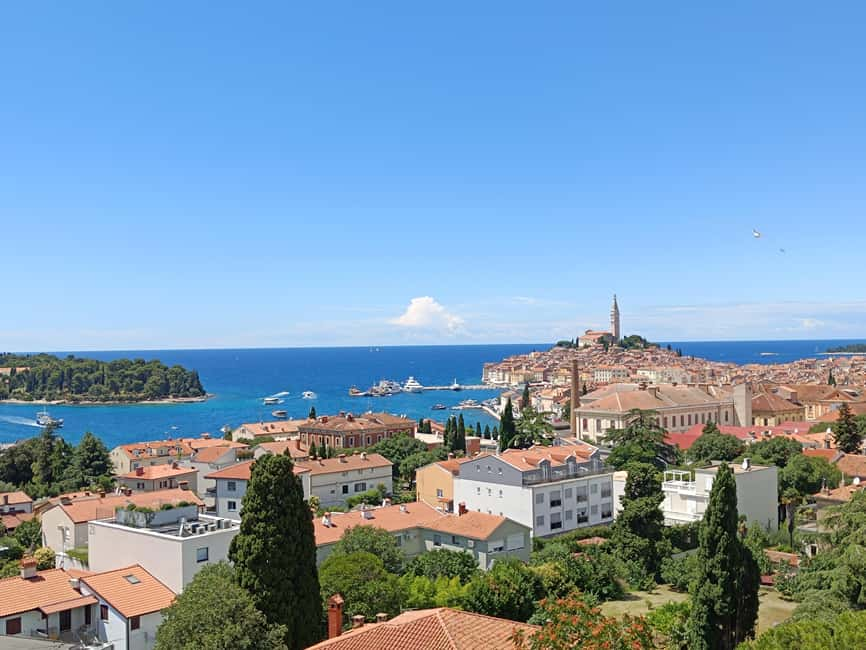
La Colonna is identified as the place where Saint Euphemia’s sarcophagus was found. It adds a specific local story to the church visit and gives you another point from which to understand Rovinj’s religious tradition.
This stop is especially useful if you prefer a story with a clear sense of place. Instead of hearing only broad facts about the saint or the church, you are shown a location tied to the tradition itself. Romina’s storytelling style is central here because the meaning of the site comes from the explanation around it.
The route keeps some details as a surprise, so not every part of the walk is spelled out in advance. That can be enjoyable if you like a little discovery. If you prefer to know every stop before booking, the stated route gives you the main landmarks but leaves room for additional moments along the way.
A private group changes the value of the price
The price is $170 for a group of up to six. That is not a low-cost walk for one person, but the calculation changes when you fill several places. Six people would pay about $28 per person, while two people would pay about $85 each.
For a couple, the tour is a more personal purchase. You are paying for a private guide and a flexible conversation, not only for access to sights. For a family or small group of friends, the price is easier to justify because you can share the cost and keep the experience among people you know.
The two-hour length also makes it practical. You can fit the walk into a morning or afternoon without giving up the rest of your day. At the same time, the route covers enough ground to give you a useful first understanding of Rovinj before you explore on your own.
Food, drinks, souvenirs, tips, and the Batana Museum are not included. The museum may interest you if you want to learn about Rovinj’s traditional fishing boats, but you will need to arrange that separately. Keep the extra cost in mind if you want a full program built around local maritime culture.
What the language choices mean for your group
The tour is offered in English, German, Italian, Spanish, and Portuguese. That is helpful for mixed-language groups or for anyone who understands a language better than English.
The strongest fit is a group that wants to ask questions and talk with the guide. If you only want a fast list of dates and names, a private storytelling walk may offer more personal attention than you need. If you want to discuss Rovinj’s identity, local life, and the details that catch your eye, the format makes better sense.
The experience is also a good choice for first-time visitors who want a local introduction before exploring alone. Romina can give you a sense of direction, point out the main landmarks, and help you see how the old streets connect.
Weather, access, and practical comfort
The tour runs in most weather, except during heavy showers. I would bring sensible footwear and prepare for sun, wind, or light rain rather than assuming perfect conditions.
This is not a suitable choice for wheelchair users or people with mobility impairments. The Old Town’s narrow streets and uneven surfaces are part of its character, but they also make access difficult. It is also listed as unsuitable for people with respiratory issues, babies under one year, and people over 95 years old.
Those age and health limits are worth taking seriously. A private booking does not remove the physical demands of the route. If someone in your group needs easy paths or frequent access accommodations, this may not be the right activity.
You can cancel up to 24 hours before the tour for a full refund, and reserve now while paying later. Those policies give you some useful flexibility, especially when your plans depend on weather or changing arrival times.
Who will get the most from Romina’s Rovinj walk
I would choose this tour if you want more than photographs of the waterfront. It suits couples, families, and small groups who prefer a conversation with one local guide rather than a large scheduled group.
You will likely get the most from it if you enjoy:
- Personal stories alongside historical context
- Old streets and slow walking
- Questions about local life and identity
- A private pace for your own group
- A clear introduction to the Old Town
- A church visit included in the price
I would look elsewhere if your main aim is the Batana Museum, a food tasting, or a fully accessible route. None of those is part of this experience. The walk is about Rovinj itself, told through its streets, landmarks, religious traditions, and Romina’s connection to the town.
The strongest praise centers on Romina’s passion, professionalism, and ability to explain Rovinj from several angles. One group found her discussion of the town’s history, economy, population, and personal life both engaging and entertaining. That combination is the real reason to book. You are not paying only to be led around. You are paying for a local interpretation of a place that can otherwise look like a collection of pretty walls.
Should you book this private Rovinj tour?
Book it if you want a warm, personal introduction to Rovinj and can comfortably manage two hours on old stone streets. The private format offers good value for a full group, and the route covers the main historic center, Saint Euphemia Church, and several places that help explain the town’s past and present.
For two people, the price is harder to justify unless personal attention matters to you. For four to six people, it becomes a stronger deal. Just remember that the Batana Museum, food, drinks, and souvenirs are separate, and that the tour is not designed for limited mobility.
If your ideal afternoon includes a local guide, a little mystery, strong stories, and a closer look at how Istrian life took shape in Rovinj, this is a sensible choice.
FAQ
Where does the tour start?
The tour starts at Trg na mostu, at the Tourist Board Information Office.
Where does the tour finish?
The tour returns to Trg na mostu.
How long does the walking tour last?
The scheduled duration is two hours.
How much does the private tour cost?
The price is $170 for a private group of up to six people.
Is the tour private?
Yes. The tour is for a private group.
Which languages are available?
The tour is available in English, German, Italian, Spanish, and Portuguese.
Is entry to Saint Euphemia Church included?
Yes. A visit to the Church of Saint Euphemia is included.
Is the Batana Museum included?
No. The Batana Museum is not included.
Does the tour run in bad weather?
The tour takes place in all weather conditions except heavy showers.
Can I cancel for a full refund?
Yes. You can cancel up to 24 hours in advance for a full refund.
Just added around Rovinj
- Rovinj: Shared Dolphin and Sunset Tour with Drinks★ 4.9 · 18 reviews
- Rovinj: Sunrise Dolphins & Fishermen at Work Speedboat Tour★ 4.8 · 32 reviews
- Rovinj Sunset kayaking tour★ 4.9 · 8 reviews
- Rovinj: Red Island and Pirate Cave speedboat tour★ 4.7 · 85 reviews
- Rovinj or Vrsar: Lim Fjord & Rovinj islands Speedboat Tour★ 4.9 · 10 reviews
- Rovinj: Rovinj Archipelago and South Coves Speedboat Tour★ 5.0 · 7 reviews
- Rovinj: Guided Walking Tour★ 4.8 · 113 reviews
- Rovinj: Lim Fjord and Pirate Cave Boat Tour★ 4.5 · 133 reviews
Walking Tours, compared.
Split: Old Town and Diocletian Palace Walking Tour
Read our review →
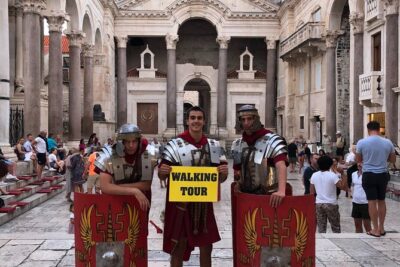
Walking Tour of Split and Diocletian’s Palace
Read our review →
Krka Waterfalls tour with Trogir Walking tour and Krka panoramic boat cruise
Read our review →
Dubrovnik: City Walls Early Morning or Sunset Walking Tour
Read our review →Browse the lists this tour appears in