
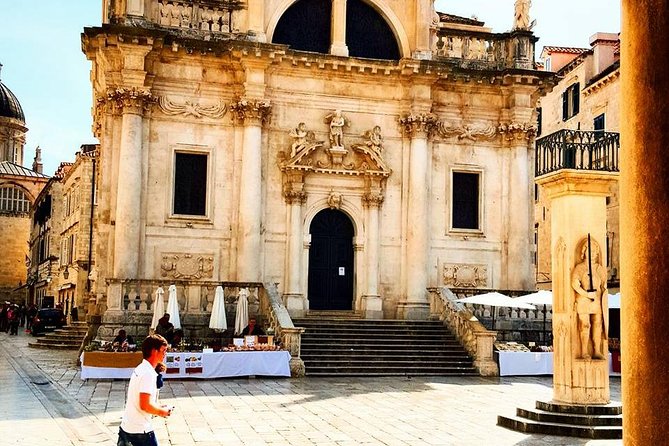
Reviewed · HISTORICAL TOURS
Dubrovnik walking history tour
Dubrovnik’s Old Town is easy to admire and surprisingly easy to misunderstand. This 90-minute walk gives you the political, religious, and practical story behind its stone streets, from the city’s water supply at Onofrio’s Fountain to the power once held inside the Rector’s Palace. Guide Ines is especially praised for clear English, local knowledge, and a relaxed manner.
I like the route for two reasons: it covers the main sights without turning into a forced march, and it adds useful context to details you might otherwise pass without noticing. The main catch is that City Walls tickets are not included, so you will need to budget another €35 per person if you want to add that experience yourself.
Key points to know before you book
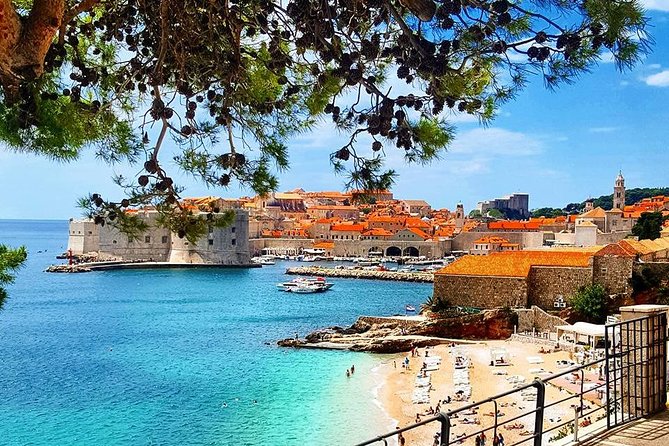
- Onofrio’s Fountain explains Dubrovnik’s water system: You learn how a 12-kilometer aqueduct supplied the city in the 15th century.
- Ines receives especially warm praise: Her style combines history, local advice, personal stories, and a friendly pace.
- The route includes the Old Town’s major landmarks: Expect Sponza Palace, the Rector’s Palace, Orlando’s Column, the Franciscan Monastery, Onofrio’s Fountain, and the Cathedral.
- The tour lasts about 1.5 hours: That is enough for orientation and context, but not enough for a full visit inside every attraction.
- The group can reach 30 people: That maximum is manageable, though the experience may feel less personal when fully booked.
- City Walls admission is extra: The listed additional cost is €35 per person.
Why this short walk works well in Dubrovnik
Dubrovnik rewards slow looking, but the Old Town can feel like a stone maze when you first arrive. A guided walk helps you connect the monuments instead of treating them as a series of pretty façades.
The route focuses on the Republic of Dubrovnik and the institutions that shaped daily life. You hear about government, religion, water, defense, trade, and the damage caused by the earthquake of 1667. That mix gives the tour more purpose than a simple stroll from one photo stop to another.
I also like the length. Ninety minutes is long enough to get your bearings but short enough to fit around lunch, a museum visit, or a later walk along the walls. If you have only one day in Dubrovnik, this is a sensible first activity. It can help you decide which buildings deserve more of your own time afterward.
The tour is offered in English and includes a licensed guide. The maximum group size is 30, so it is not a private walk, but the cap keeps it from becoming an enormous street procession. The pace has been described as comfortable, with time for photos and questions rather than a breathless rush between landmarks.
More Historical Tours in Dubrovnik
- Dubrovnik Old Town History Walking Tour
★ 5.0 · 1,684 reviews - Game of Thrones & History of Dubrovnik Tour
★ 5.0 · 628 reviews - Dubrovnik: Old Town History Walking Tour
★ 4.9 · 474 reviews
Meeting at Pile Gate and entering the Old Town
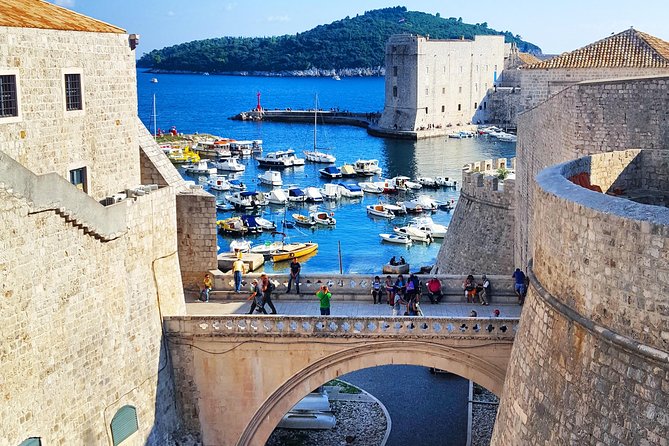
The meeting point is at Art Go’den, Brsalje ul. 1, near Pile Gate. The tour ends back at the meeting point, which makes the plan simple if you are arranging transport or have another booking afterward.
Pile Gate is a useful place to begin because it is one of the clearest entrances into Dubrovnik’s Old Town. From here, you move into the historic center with the guide setting the scene for the Republic of Dubrovnik and its monuments.
This part of the walk is also practical. The Old Town is a pedestrian area with polished stone underfoot, and the first minutes help you understand where you are in relation to the main streets and sights. You should wear comfortable shoes and bring water, especially in hot weather. The tour itself includes a chance to drink from Onofrio’s Fountain, but that comes later.
One important point: the provided meeting information describes the start as near Pile Gate, while the address gives the specific location. Check your confirmation carefully so you are standing at the right spot before the group sets off.
The Franciscan Monastery and the first layers of the city
The Franciscan Monastery is one of the early major sights on the route. The tour’s value here is not just the building itself, but the way the guide connects it to the wider life of Dubrovnik.
You can expect the explanation to focus on why religious institutions mattered in the Old Town and how the monastery fits into the city’s long development. The stop also gives you a chance to slow down and take in the surrounding stonework before moving on to the civic monuments.
The precise entry arrangements are not specified, so do not assume that the tour includes admission to every interior. This is primarily a guided walk through the Old Town, with the guide explaining the sights along the way. If you want to spend serious time inside a particular building, ask the guide what can be visited independently after the tour.
That distinction matters. A 90-minute walk can introduce you to many places, but it cannot provide a full museum visit at every stop. I see that as a strength for a first outing, as long as you book it for orientation rather than a detailed architectural study.
Orlando’s Column and Dubrovnik’s idea of freedom
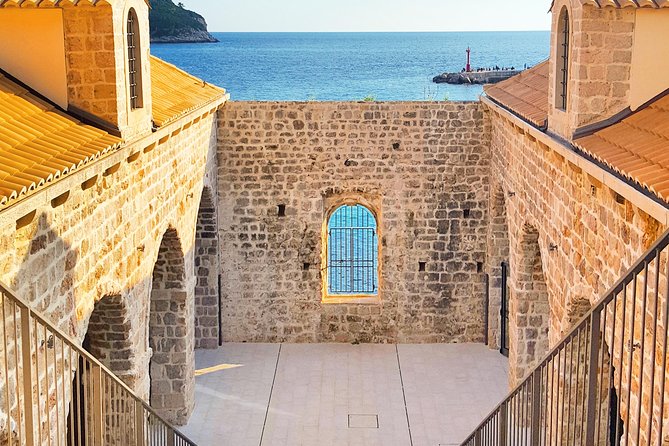
Orlando’s Column offers one of the tour’s most useful civic stops. It is described as a monument connected with the city’s freedom, so the guide can use it to explain how Dubrovnik saw itself as a self-governing republic.
This is the sort of detail that can transform a landmark from a quick photograph into a clue about the city’s political identity. The column sits in a public space where you can see how monuments, ceremonies, and daily movement overlap.
I like this part of the tour because Dubrovnik’s story is not only about walls and scenery. Its public symbols point to the city’s independence and the way it managed its affairs. A guide can make that idea easier to grasp in a few minutes than a plaque sometimes can.
The stop should also suit visitors who enjoy a mixture of broad history and small details. The tour is not limited to dates. It aims to explain why the monuments mattered, which is more helpful when you later explore on your own.
More Walking Tours in Dubrovnik
- Dubrovnik: Old Town Walking Tour
★ 4.8 · 5,174 reviews - Dubrovnik Discovery Old Town Walking Tour
★ 5.0 · 4,458 reviews - Dubrovnik: Game of Thrones Walking Tour
★ 5.0 · 1,732 reviews - Dubrovnik: City Walls Early Morning or Sunset Walking Tour
★ 4.8 · 1,523 reviews
Onofrio’s Fountain and a 12-kilometer aqueduct

Onofrio’s Fountain is one of the strongest stops on the route because it explains a practical problem: how Dubrovnik got drinking water.
The fountain was built in the 15th century at the end of a 12-kilometer aqueduct. That fact gives the Old Town a different feel. You are no longer looking only at grand palaces and churches. You are seeing the public infrastructure that allowed the city to function.
You will have the chance to refresh yourself and drink water from the fountain. That is a small but welcome feature, especially during Dubrovnik’s hot months. Still, use ordinary judgment and follow any local guidance about drinking from public fountains.
This stop is also a good example of why a guide adds value. On your own, you may notice the fountain’s size and decoration. With an explanation, you understand its place in the city’s survival and growth. I would pay close attention here because it is one of the most memorable pieces of practical history on the walk.
Sponza Palace and Dubrovnik’s civic power
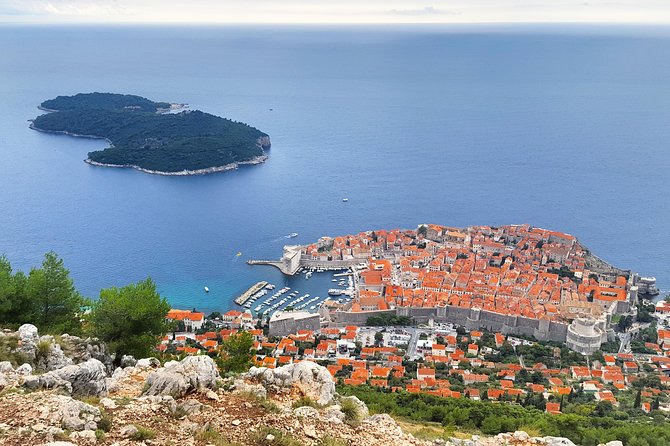
Sponza Palace is the named itinerary stop and one of the tour’s central landmarks. Its importance comes from its connection with the administrative and commercial life of the old republic.
The walk gives you a chance to see the palace and hear why it mattered, rather than simply passing its façade. The building helps show how Dubrovnik organized public affairs and protected the business of the city.
Because the experience is short, the stop is best viewed as an introduction. You may not have time for an extended interior visit, and the supplied information does not promise admission. If Sponza Palace is high on your list, use the tour to learn what you are looking at, then decide if you want to return afterward.
I find that a useful way to handle Dubrovnik. The city has many important buildings packed into a small area, and a good guide helps you sort them by importance. Sponza Palace becomes part of a larger story about government, trade, and civic order.
The Rector’s Palace and the Cathedral of the Assumption
The Rector’s Palace adds another layer to the city’s government. Its name points to the rector, the official who represented Dubrovnik’s political authority. The guide’s role here is to explain how the building fits into the republic’s system and what its presence tells you about the city.
The Cathedral of the Assumption shifts the focus from civic power to religious life and rebuilding. It is a Baroque church built after the devastating earthquake of 1667. That detail gives you a clear way to understand the Old Town as a place that has been damaged, repaired, and reshaped over time.
Together, the palace and cathedral make a good pair. One helps explain how the city was governed; the other shows how it recovered and expressed its faith after disaster. You get a more balanced view of Dubrovnik than you would from a tour focused only on the famous defensive walls.
Again, admission details are not promised for every interior. Think of these as guided exterior visits and historical explanations unless your confirmation states otherwise. That expectation will help you avoid disappointment.
What the guides add to the experience
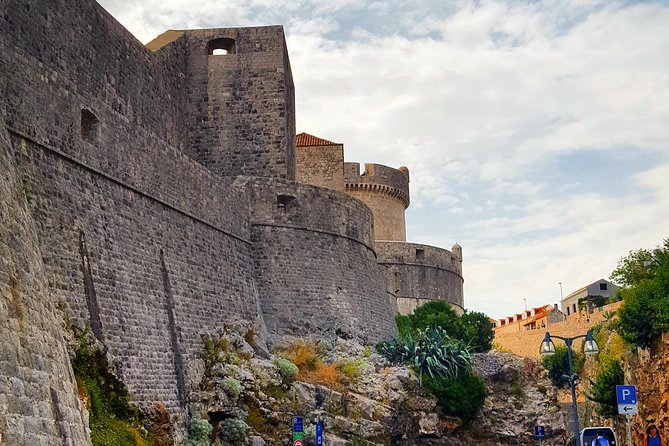
The strongest praise is aimed at the guides, especially Ines. She is described as easygoing, helpful, and strong on the history of Dubrovnik, Croatia, and the former Yugoslavia. One comment spells her name as Ynez, but the repeated name is Ines.
The guide style appears to be conversational rather than purely academic. You can expect a mix of historical facts, local recommendations, personal stories, and legends. That combination suits Dubrovnik well because the city’s past can otherwise feel like a long list of rulers, earthquakes, and buildings.
Clear English is important on a walking tour, and the available feedback points to strong communication. The pace is another plus. You should have time to take photographs and absorb the sights without feeling pushed along.
Of course, guide quality can vary on any scheduled tour. The guide is licensed, which provides a useful level of professional assurance, but the experience is still shaped by the person leading your particular departure. The most consistently praised qualities are Ines’s warmth, clarity, and ability to make the city’s story easy to follow.
Price, group size, and what you actually receive
At $33.61 per person, the tour sits in a reasonable range for a guided introduction to Dubrovnik. You are paying for a licensed English-speaking guide and about 90 minutes of focused explanation in one of Croatia’s most expensive and heavily visited historic centers.
The value is strongest if you are new to Dubrovnik. Instead of spending your first hours guessing which monument matters, you get a planned route and a framework for later exploration. The price is less compelling if you already know the Old Town well or prefer to read signs and wander alone.
The group can include up to 30 people. That is worth considering if you prefer close, highly personal guiding. A group of that size may make questions harder to ask and can be slower around crowded streets. On the other hand, it keeps the cost well below a private tour.
City Walls tickets are not included and cost €35 per person. This is a major budget point. The walking tour may introduce you to Dubrovnik’s defensive story, but it does not cover admission to the walls. If walking the walls is a priority, add that cost before comparing the total price with other options.
The tour is frequently reserved well ahead of time, with an average booking lead time of 48 days. That suggests you should not leave it until the last minute during a busy visit, especially if your schedule is fixed.
Who should book this Dubrovnik walk?
I would choose this tour for a first visit, a short stay, or a cruise day when you want a clear introduction without committing half a day. It also suits anyone who enjoys history but wants it explained in plain language and tied to real buildings.
Families may find the 90-minute length easier than a much longer historical walk, though the group size and Old Town paving are worth keeping in mind. Most people can participate, and service animals are allowed. The tour is near public transportation, which helps if you are not staying inside the Old Town.
You should consider another plan if your main goal is to walk the City Walls with a guide. Wall admission is separate, and the walk described here concentrates on the Old Town streets and monuments. It is also not the right choice if you want long interior visits at several palaces and churches.
The cancellation terms are practical: you can cancel for a full refund up to 24 hours before the start time. Cancellations or changes made less than 24 hours ahead are not accepted for a refund. One scheduled departure was cancelled after the guide became ill in extreme heat and the payment was refunded, but that incident also shows why it is wise to keep a little flexibility in a tightly planned day.
Should you book it?
Book this tour if you want a short, well-paced introduction to Dubrovnik’s Old Town, with special attention to its government, water supply, monuments, and recovery after the 1667 earthquake. Ines is a strong reason to choose it when she is leading the walk, thanks to her clear English, friendly manner, and broad grasp of local history.
Do not book it expecting City Walls admission or a full tour inside every landmark. Add €35 per person for the walls, and treat the walk as an orientation that helps you make better choices afterward.
At $33.61, it is a fair buy for a first look at Dubrovnik. The best fit is someone who wants the city to make sense, not just look beautiful.
FAQ
How long does the Dubrovnik walking history tour last?
The tour lasts approximately 1 hour and 30 minutes.
Where does the tour start?
It starts at Art Go’den, Brsalje ul. 1, 20000 Dubrovnik, near Pile Gate.
Where does the tour end?
The activity ends back at the meeting point.
What language is the tour offered in?
The tour is offered in English.
Is a licensed guide included?
Yes. A licensed tour guide is included in the price.
Are City Walls tickets included?
No. City Walls tickets are not included and are listed at €35 per person.
How many people can join the tour?
The activity has a maximum group size of 30 people.
Can I cancel for a full refund?
Yes. You can cancel at least 24 hours before the start time for a full refund.
Are service animals allowed?
Yes. Service animals are allowed on the tour.
Just added around Dubrovnik
- Welcome to Dubrovnik Walking Tour★ 5.0 · 36 reviews
- Walls Of Dubrovnik: Small-Group Walking Tour With A Local★ 5.0 · 67 reviews
- Dubrovnik at War 1991-1992 Private Walking Tour★ 5.0 · 4 reviews
- Olive farm & village★ 5.0 · 41 reviews
- City Walls of Dubrovnik★ 5.0 · 70 reviews
- Walls of Liberty: A Self-Guided Audio Tour of Dubrovnik★ 3.5 · 3 reviews
- Try Scuba Diving Discovery in Dubrovnik★ 5.0 · 43 reviews
- Dubrovnik Game of Thrones Walking Tour: Filming Locations&Stories★ 5.0 · 30 reviews
Historical Tours, compared.
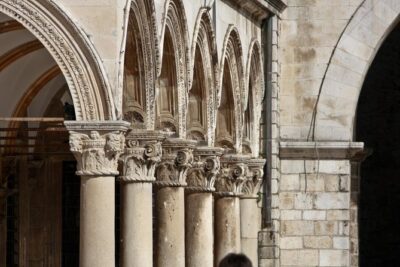
Walking Tour of Split with a ‘Magister’ of History
Read our review →



Split History and Gastro Small-Group Tour with Food and Drinks
Read our review →
SPLIT-PREMIUM Emperor’s Walking Tour for History Lovers + Museum
Read our review →Browse the lists this tour appears in