
Reviewed · HISTORICAL TOURS
Split Walking Tour with Professor of History
Split’s old center is a living Roman palace, not a museum behind velvet ropes. This walking tour makes that clear as you move from the harbor into Diocletian’s Palace, through lanes where modern homes, shops, cafés, and ancient stone share the same walls. Guides such as Mario and Anita bring a teacher’s care to the walk, with history, local life, humor, and useful tips along the way.
I like the small maximum group of 17, which gives the guide room to answer questions and keep people together in crowded lanes. I also like the way the route joins major sights with smaller details, from the polished toe of Gregory of Nin to the narrow Let Me Pass Street. The main consideration is pace: the tour is listed at about 2 hours 20 minutes, but a particularly detailed guide may run closer to three hours.
Key things to know before you go
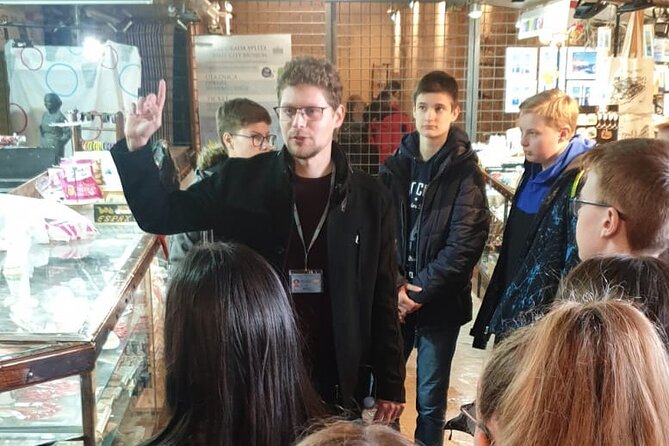
- A history professor leads the walk: Expect more than a list of dates, with context about Roman rule, Croatian culture, religion, architecture, and modern Split.
- Diocletian’s Palace is part of daily life: You’ll see the Peristyle, Vestibule, substructures, temples, and gates while walking through a working city.
- The route covers Split’s main historic center: It begins at the Brass Gate and ends there after visiting Riva, Fruit Square, Prokurative, Marmontova Street, and more.
- Mario is especially good for lively storytelling: His tours combine historical detail, trivia, humor, food advice, and practical suggestions for exploring on your own.
- The tour is best for first-time visitors: It gives you a useful map of the old center before you return to places that deserve a closer look.
- Some interiors are not included: The Cathedral of Saint Domnius and Temple of Jupiter are viewed from outside, with entry advice provided for later.
Why a professor-led walk works so well in Split
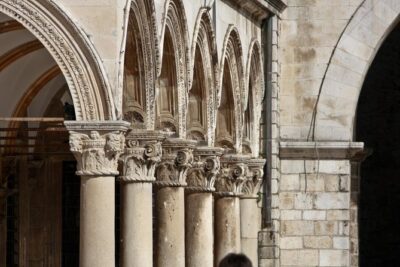
Split can feel confusing at first. The old town grew inside and around a Roman emperor’s retirement palace, so a narrow medieval lane may run through a wall built in the fourth century. A café table can sit beside a column that once belonged to an imperial courtyard. Without context, you may notice the stone but miss the story.
That is where this tour earns its price. At $24.19 per person, it costs less than many paid attractions and gives you a guided framework for the entire center. You are not simply shown a palace. You are helped to understand how Roman, medieval, Venetian, Napoleonic, Yugoslav, and modern Croatian layers meet in a compact area.
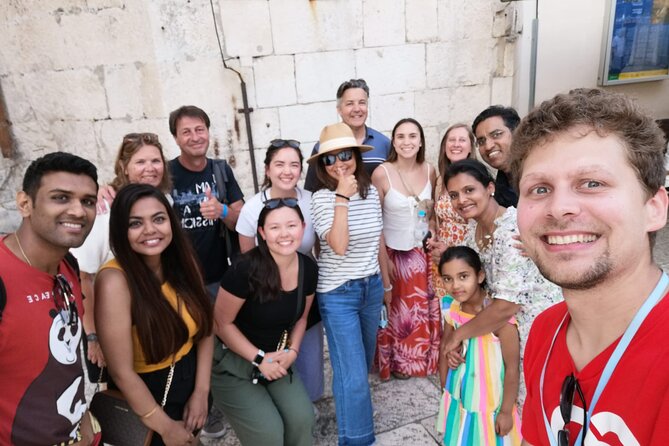
The best guides here do not treat history as a speech. Mario, in particular, is described as funny, warm, and deeply prepared, with a talent for mixing facts with trivia and questions. Anita is noted for her care with the group and her pride in Croatian culture. The tone sounds academic without being stiff.
The walk is offered in English and usually runs with a maximum of 17 people. That is not a private tour, but it is small enough to make questions practical. A private upgrade is also available if you want more control over the pace or a more personal format.
More Historical Tours in Split
- Walking Tour of Split with a ‘Magister’ of History
★ 5.0 · 1,122 reviews - Split: History and Heritage Walking Tour
★ 4.9 · 650 reviews - Split History and Gastro Small-Group Tour with Food and Drinks
★ 5.0 · 375 reviews
Starting on Riva beside the Brass Gate
The meeting point is the Brass Gate, or Porta Aenea, at Obala Hrvatskog narodnog preporoda 22. The tour begins beside the model of Diocletian’s Palace on the Riva promenade, Split’s broad waterfront walkway.
Riva is a smart place to begin because it introduces the city as it is now. Local people come here for coffee, sunshine, conversation, and public life. You get your first view of Split as a social city before turning toward its Roman core.
The opening stop lasts about 15 minutes. Use it to listen for the basic layout of the palace and the relationship between the waterfront and the imperial complex. The starting area can be active, so arrive with enough time to find the guide and avoid a rushed beginning.
Below the palace in the substructures
From the waterfront, the walk enters the substructures of Diocletian’s Palace. These basement halls are among the best-preserved ancient complexes of their kind, and they help explain why Split’s historic center received UNESCO World Heritage status in 1979.
The substructures are not just an underground curiosity. They show the palace’s original plan and give you a sense of how the imperial rooms above were supported. In later centuries, parts of the lower level were used and altered, but the layout still gives a strong impression of the Roman building project.
The scheduled visit lasts around 15 minutes. That is enough for a clear introduction, though not a long archaeological study. If you have a strong interest in Roman construction, you may want to return later and spend more time here.
The Peristyle and the emperor’s public theater
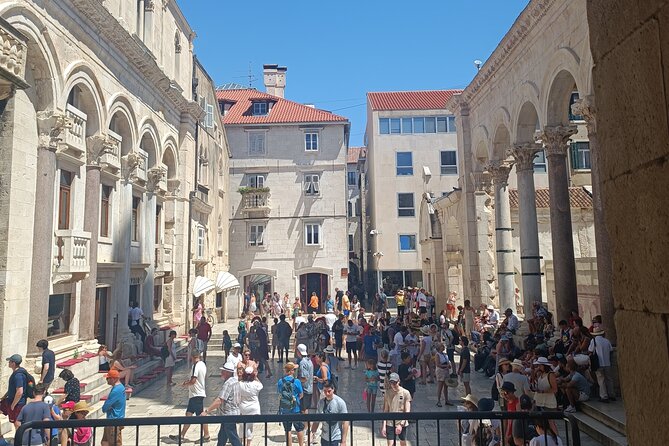
The Peristyle is the palace’s central square and one of Split’s most memorable spaces. Here, the emperor Diocletian presented himself as the living son of Jupiter. The setting was designed to make visitors feel small and the emperor feel almost divine.
The guide explains how subjects approached the emperor, kneeling or bowing before the hem of his scarlet cloak. This is where the tour’s storytelling matters. The stones are impressive, but the political theater makes them meaningful.
The stop lasts about 10 minutes. Expect to stand in an open public space that may have other people moving through it. A good guide will help you focus on the architectural details while explaining how this square worked as a stage of power.
More Walking Tours in Split
- Split: Old Town and Diocletian Palace Walking Tour
★ 4.9 · 4,727 reviews - Walking Tour of Split and Diocletian’s Palace
★ 5.0 · 2,588 reviews - Split & Diocletian’s Palace Walking Tour
★ 5.0 · 1,125 reviews - Split: Diocletian Palace & Old Town Guided Walking Tour
★ 4.7 · 882 reviews
The Vestibule, a circular entrance to imperial rooms
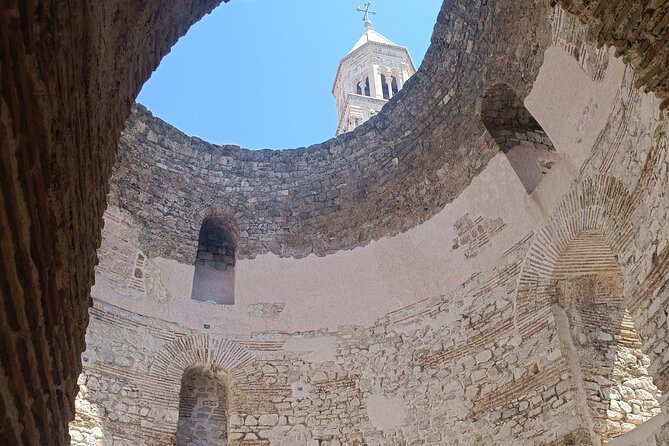
A short walk brings you to the Vestibule, also known as the Rotonda. It was the first section of the imperial corridor leading from the Peristyle toward the emperor’s apartments.
The original hall rose about 17 meters high and measured roughly 12 meters across. It once had a dome and served as a formal meeting place for selected audiences, including ambassadors. That purpose gives the room a different feeling from the open Peristyle. This was controlled access, ceremony, and careful presentation.
The tour allows about 10 minutes here. Look upward and pay attention to the scale of the circular space. You may find the stop brief, but the guide’s explanation helps you understand why this was more than a passageway.
Cathedral of Saint Domnius from the outside
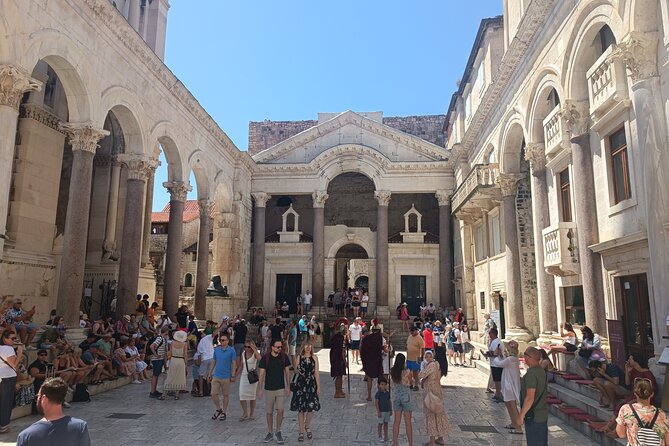
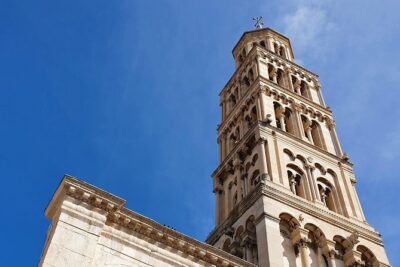
The Cathedral of Saint Domnius is a perfect example of Split’s layered identity. It began as a Roman mausoleum, was later connected with Christian worship, and now serves as a cathedral. Depending on how you look at it, it is a Roman monument, a church, and both at once.
The tour views the cathedral from outside. Admission is not included, but the guide gives information for anyone who wants to return and pay for entry after the walk. That arrangement keeps the group moving and keeps the basic tour price low.
About 20 minutes are scheduled here, making it one of the longer stops. You will get the historical background and a chance to decide if the interior or related areas deserve another visit. If religious art, Roman architecture, or church history matter to you, note this location for later.
Temple of Jupiter and Let Me Pass Street
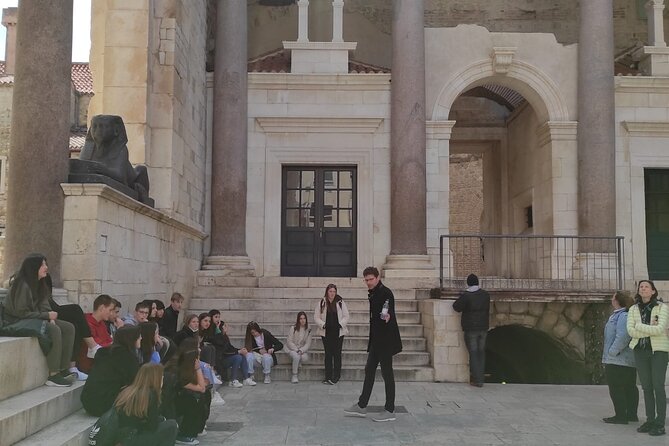
The Temple of Jupiter was dedicated to the supreme Roman god of the sky and thunder. In later centuries, it became a baptistery dedicated to Saint John the Baptist, another clear example of how Split’s buildings changed purpose without losing their earlier layers.
This stop is viewed from outside, and entry is not included. The guide explains what you are seeing before leading the group through the small lane between the ancient temple and a medieval building.
The lane is called Let Me Pass Street. Local people consider it the narrowest street in the world. You do not need to treat that claim as a scientific measurement to enjoy the moment. It is a good example of Split’s local humor and the way everyday life fits into the old stone fabric.
The stop takes about 10 minutes. This is a small detail, but it helps break up the larger imperial story with something playful and distinctly local.
The Golden Gate and the northern entrance
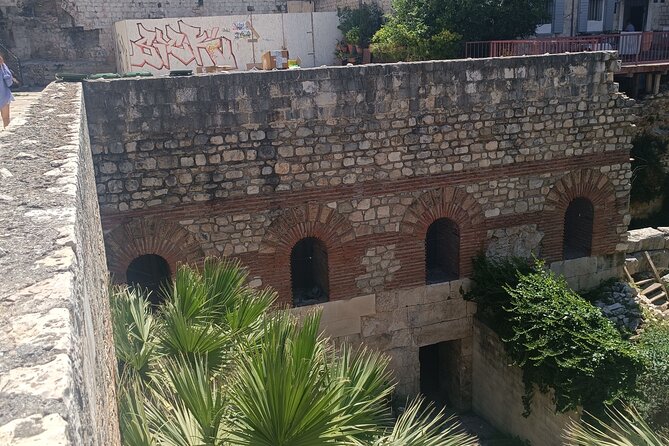
The Golden Gate, or Northern Gate, was one of the four main entrances to Diocletian’s Palace. It was the principal route for the emperor entering the complex and received more decoration than a routine doorway would need.
The gate changed over time. During the Middle Ages it was sealed, and its columns and statues disappeared. Later repairs reopened it, turning the structure into one of Split’s most recognizable sights.
The group spends about 15 minutes here. Listen for the difference between the gate’s original purpose and its modern role. It was once a controlled imperial entrance. Today, people pass through it as part of a normal walk across town.
Gregory of Nin and the polished toe
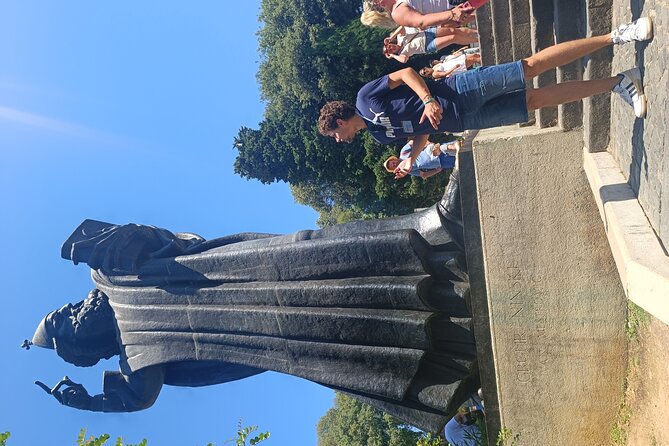
The huge statue of Gregory of Nin was made by Croatian sculptor Ivan Meštrović. At about 8.5 meters tall, it is hard to miss. The statue’s toe has been rubbed smooth and shiny because touching it is said to bring good luck.
This is one of the tour’s easiest moments. You get a piece of local tradition, a work by an important Croatian artist, and a memorable photo opportunity without needing a long explanation. The stop lasts about 10 minutes.
I also like what this says about Split. The city’s identity is not limited to Roman emperors. Croatian writers, artists, church figures, and modern residents all belong in the story.
Marmontova Street and French-era city planning
Marmontova Ulica carries the name of Napoleon’s marshal Marmont. Though he was a conqueror, he also played a role in the urban development of Dalmatian cities. Split’s residents named one of their most attractive streets after him.
The scheduled stop is about 10 minutes. This part of the walk shifts the focus away from antiquity and toward the city’s later development. You see how streets, public spaces, and civic improvements reflect political change.
It is a useful reminder not to view Split only through Roman eyes. The city continued to change long after Diocletian’s palace was built.
Prokurative and the city’s open squares
The walk continues to Prokurative, officially Republic Square. This broad open space is surrounded on three sides by elaborate neo-Renaissance buildings.
Prokurative offers a different visual rhythm from the tight lanes inside the palace. The open layout and decorative façades show a later idea of civic pride and public space. The guide connects the square with Split’s wider urban story rather than treating it as just another photo stop.
About 10 minutes are planned here. It is a good place to take a breath, look across the square, and compare this nineteenth-century setting with the Roman spaces visited earlier.
Fruit Square and the end of the route
The final stop is Fruit Square, or Trg Braće Radić. Its name recalls the women who once sold fruit there. The square is small and attractive, with monuments including a statue of Marko Marulić, often called the father of Croatian literature.
This is a fitting end because the conversation turns toward Croatian culture, food, and daily life. The guide can connect the monuments with local stories and gastronomy, then offer practical ideas for what to do next.
The tour ends back at the meeting point. Guides such as Mario may also suggest places to eat, useful banks or ATMs, and onward travel ideas. Those tips can be worth plenty on your first day, especially if you want to avoid wasting time on poor choices.
Time, group size, and physical demands
The stated duration is about 2 hours 20 minutes. In practice, the tour may run longer if the guide gives extra context or answers questions. One account places the walk closer to three hours, so do not schedule a tight lunch reservation, ferry departure, or museum entry immediately afterward.
The route includes regular walking and periods of standing. Most people can take part, and service animals are allowed. The tour is near public transportation, which makes the Brass Gate meeting point fairly practical for reaching from elsewhere in Split.
Weather matters because this is an outdoor walking experience. If poor weather causes cancellation, you are offered another date or a full refund. For your own comfort, consider sun protection and water during hot weather, though those items are not specified as part of the tour.
What the $24.19 price gives you
At $24.19, the tour is good value if you want a clear introduction to Split rather than a series of disconnected photo stops. You receive a guided walk through the city’s key historic areas, with taxes and fees included for the tour itself.
The important limitation is that entry to the Cathedral of Saint Domnius and Temple of Jupiter is not included. Both are viewed from outside, and you can decide later if you want to pay for access. Alcoholic drinks are also not included.
The real value lies in the explanation. You could walk past the Peristyle, Golden Gate, and Temple of Jupiter on your own, but the connections between imperial ceremony, Christian reuse, medieval growth, French-era planning, and Croatian culture would be harder to see.
Who will get the most from this walk
I would choose this tour for a first visit to Split, especially if you want history presented with humor rather than a dry recital. It suits people who like asking questions, learning how places changed, and getting practical suggestions for the rest of the stay.
It is also a strong choice if you have only one day in town. The route covers enough ground to help you set priorities, then you can return to the substructures, cathedral, or other locations at your own pace.
You may prefer the private upgrade if your group wants a custom rhythm or more direct time with the guide. The standard format is still fairly intimate at no more than 17 people, but it is not designed as a silent, self-paced visit.
Should you book the Split history walk?
Book it if you want Split’s old center to make sense quickly. The route covers the essential Roman and later landmarks, while guides such as Mario and Anita add humor, Croatian context, food suggestions, and practical help.
Skip it if you want to enter every major monument during one outing or dislike standing and walking for several hours. The cathedral and Temple of Jupiter are outside-only on this tour, and a detailed guide may run longer than the advertised time.
For most first-time visitors, I would book it near the start of a Split stay. You will leave with a clearer map, a better sense of the city’s layers, and several places worth revisiting on your own.
FAQ
How long does the Split walking tour last?
The advertised duration is approximately 2 hours 20 minutes. It may run longer, with one account describing a tour of about three hours.
How much does the tour cost?
The listed price is $24.19 per person.
What language is the tour offered in?
The tour is offered in English.
Where does the tour begin?
It begins at the Brass Gate, also called Porta Aenea, at Obala Hrvatskog narodnog preporoda 22 in Split.
Where does the tour end?
The activity ends back at the meeting point.
How many people can join the standard tour?
The maximum group size is 17 people.
Is a private tour available?
Yes. You can upgrade to a private tour for a more personal experience.
Are entrance fees included?
All tour fees and taxes are included, but entry to the Cathedral of Saint Domnius and Temple of Jupiter is not included. Both are visited from outside.
What happens if bad weather cancels the tour?
You are offered a different date or a full refund if the experience is canceled because of poor weather. Free cancellation is available up to 24 hours before the start time.
Just added around Split
- Split Day Trip from Dubrovnik★ 4.0 · 59 reviews
- Dubrovnik to Split Private Transfer with Local Experienced Driver★ 5.0 · 52 reviews
- Private Transfer from Dubrovnik to Split★ 5.0 · 3 reviews
- Private Transfer from Dubrovnik to Split with 2 hours for sightseeing★ 5.0 · 50 reviews
- Private Transfer: Dubrovnik to Split★ 5.0 · 7 reviews
- Dubrovnik to Split Private Transfer with Mostar Town★ 5.0 · 38 reviews
- Private Tour: Split Day Trip from Dubrovnik★ 5.0 · 9 reviews
- Private Day Trip :Dubrovnik- Mostar- Split★ 5.0 · 3 reviews
Historical Tours, compared.
Walking Tour of Split with a ‘Magister’ of History
Read our review →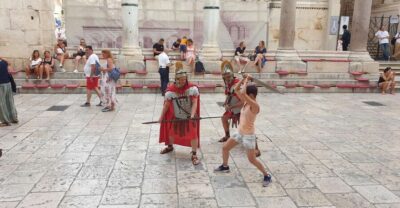

Split History and Gastro Small-Group Tour with Food and Drinks
Read our review →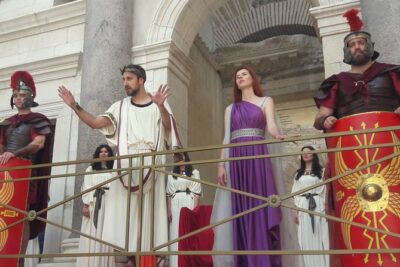
SPLIT-PREMIUM Emperor’s Walking Tour for History Lovers + Museum
Read our review →
Browse the lists this tour appears in