
Reviewed · WALKING TOURS
Pula walking tour
Pula’s Roman past is not locked away in one museum. It sits right in the streets, from the enormous Arena to ancient arches, temples, mosaics, and city gates. This 90-minute walking tour gives you a quick, well-shaped introduction, with a local guide adding the stories that signs and guidebooks often miss.
I like the route for two clear reasons: it covers the main sights without eating up half your day, and it connects Roman ruins with later chapters of Pula’s story. Guides such as Sini are praised for clear English, humor, and useful local suggestions. The main drawback is just as clear: you do not enter the Arena or most buildings, so you’ll need separate admission if you want a closer look inside.
Key points at a glance
- Starts beside Pula Arena: Meet at the entrance on Flavijevska ulica, a practical landmark that is hard to miss.
- Eight central stops: The route takes in the Arena, Kastel, cathedral, Temple of Augustus, Sergii Arch, market, Hercules Gate, and Twin Gates.
- History from Rome to modern Pula: Your guide links Roman, Byzantine, Venetian, Austro-Hungarian, and Croatian influences.
- Good use of a short visit: The tour lasts about an hour and a half, leaving time for lunch or independent sightseeing.
- Mostly an outside tour: Entry fees are not included, and the Arena is explained from outside.
- Small maximum group: The tour accepts up to 15 people, with group discounts available.
Why this short walk works in Pula
Pula is easy to underestimate. Many visitors arrive for the Arena, take a few photos, and move on. That misses the point of the city. Roman remains appear beside later churches, a Venetian-style fortress overlooks the harbor, and the market still gives you a sense of daily life rather than only ancient stones.
This tour is built as an orientation walk. You move from the Arena through the old center, up to Kastel, and onward through a cluster of Roman and later landmarks. The route ends at the Twin Gates, so you finish near another important piece of the old city rather than returning to the starting point.
I especially like the timing. Ninety minutes is long enough to hear the major stories but short enough for a family with children or a visitor fitting Pula between a morning arrival and an afternoon departure. It also works well as your first activity in town, since the guide can point out places to return to later.
The pace is described as easy, though you should still expect regular walking and some movement around historic streets. A moderate level of fitness is advised. Wear sensible shoes, and remember that the tour runs in all weather, so sun protection or rain gear may matter.
More Walking Tours in Pula
- Pula: Historic Walking Tour with Local Guide & City Views
★ 4.8 · 143 reviews - Pula: Historic Sites Guided Walking Tour
★ 4.8 · 78 reviews - Pula Essentials Walking Tour
★ 4.8 · 64 reviews
Meeting at the Arena, Pula’s great Roman landmark
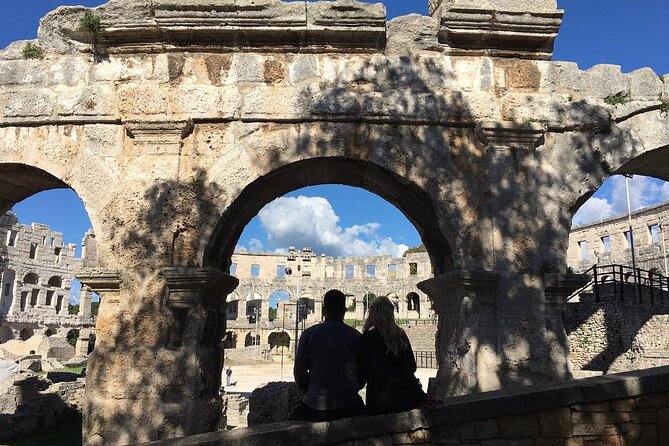
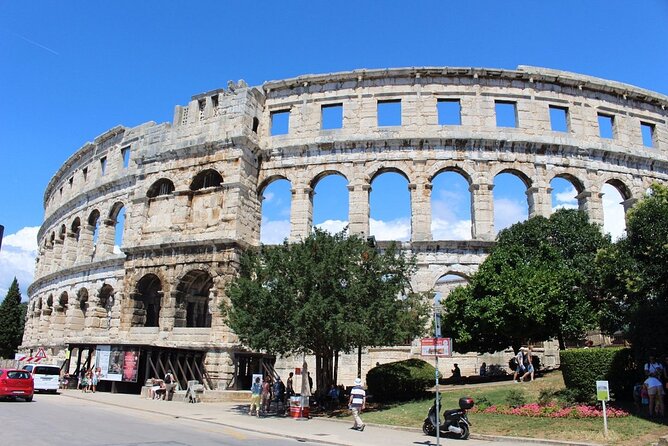
The tour begins at Pula Arena on Flavijevska ulica. This is the strongest possible starting point. The amphitheater is Pula’s most famous sight and one of the clearest reminders that this was an important Roman city.
Your guide explains the Arena from outside for about 20 minutes. That gives you time to understand its scale, purpose, and place in the city before deciding if you want to pay for entry separately. The exterior alone is impressive, but this is also the point where the tour’s main limitation appears: admission is not included.
If entering the Arena is high on your list, plan another visit or purchase entry separately. The walking tour provides context, not an interior visit. For many people, that arrangement is useful because you can decide how much time and money to spend inside rather than having the guide’s schedule determine it.
The Arena also sets up the wider story. You are not just looking at one isolated Roman building. The rest of the walk shows how Pula grew around and beyond its Roman foundations.
Kastel and the harbor view
From the Arena, the route continues to Kastel, the fortress at the center of Pula. The guide explains the fortification from outside and gives you a view toward the harbor. This short stop lasts about 10 minutes.
Kastel adds a different layer to the walk. The Arena represents Roman public life and spectacle. The fortress points to Pula’s later military importance and its position on the coast. That shift helps you see why the city developed as it did.
The view is part of the appeal. You are not simply moving from one ruin to the next. The fortress gives you a chance to look outward and understand Pula’s setting, including the harbor that helped shape its history.
Entry to Kastel is not included. If you want to go inside, you’ll need to arrange that separately. The tour’s outside explanation is enough for a first look, especially if your main goal is to get your bearings.
Pula Cathedral and the possibility of stepping inside
The next stop is Pula Cathedral, explained from outside in about five minutes. If the church is open, the group may enter at no extra charge.
This is a brief stop, but it helps prevent the tour from becoming a simple parade of Roman monuments. Pula’s story continued long after the imperial period, and the cathedral shows how the city’s religious life became part of its historic center.
Because entry depends on whether the church is open, do not count on an interior visit. The guide can still explain the building from outside, and the short timing keeps the walk moving.
Same stretch of coast, a completely different kind of day:
- Pula: Arena Entrance Ticket
★ 4.3 · 2,590 reviews - Medulin -Kamenjak 5h boat trip with lunch & drinks on Sandra Boat
★ 5.0 · 1,621 reviews - Full-Day Boat Tour of the Medulin Archipelago from Medulin
★ 5.0 · 1,389 reviews - 3hours all inclusive Sunset&Dolphin Tour from Medulin on Sandra
★ 5.0 · 1,130 reviews
Temple of Augustus and the heart of the old forum

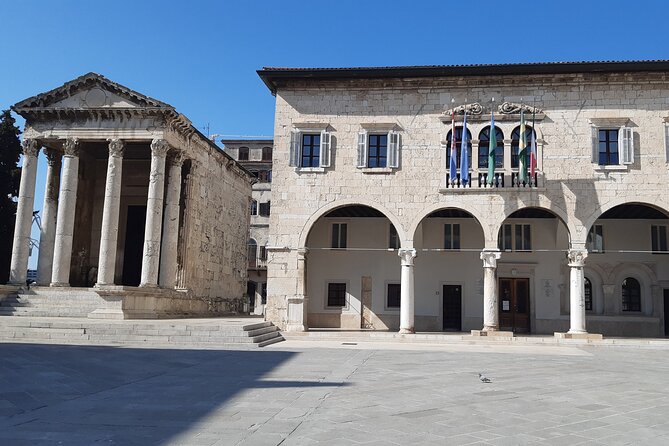
The Temple of Augustus is another 10-minute stop. Your guide explains it from outside, with no entry included.
This is one of the most useful moments for understanding Pula as a Roman city. The temple sits in the historic center, where ancient public life once focused. Seeing it after the Arena gives you two different sides of Roman Pula: a huge entertainment venue and a formal civic and religious space.
The tour does not turn this into a long archaeological lecture. Instead, the guide supplies the basic context and answers questions. That makes the stop approachable for families and for anyone who wants history without a full academic lesson.
You may want extra time here after the tour. The itinerary allows around 10 minutes, which is enough for an explanation and photographs but not for lingering over every architectural detail.
Sergii Arch and Roman Pula in the streets

The Arco dei Sergi, also called the Sergii Arch, receives another 10-minute explanation from outside. The arch is one of the places where Pula’s Roman past feels integrated into the modern city rather than separated behind a ticket barrier.
The route between major stops matters here. You walk through ordinary streets and public spaces while the guide points out how old and new layers sit together. That is one reason a guided walk can be more useful than a list of sights: you learn how to read the city around you.
There is no admission charge for the stop. You can pause for photographs, ask questions, and continue at the group’s pace.
The city market and present-day Pula
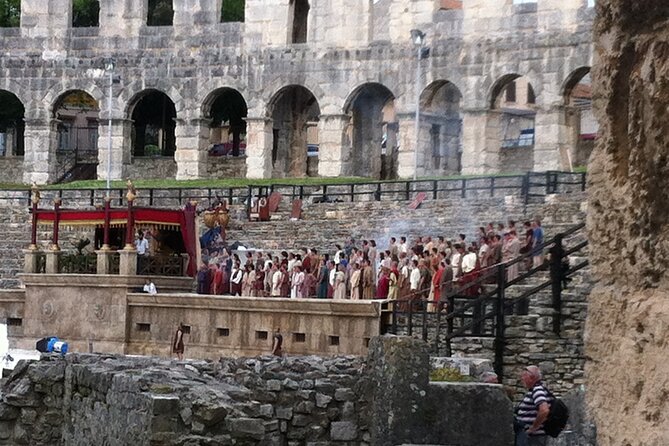
Gradska Tržnica Pula, the city market, is explained from outside for about 10 minutes. This is a welcome change from temples, arches, and fortifications.
The market gives the tour a connection to daily Pula. You see the center not only as an archaeological site but also as a place where people shop, meet, and go about ordinary business. The guide can also point you toward lunch options afterward, which is useful if you want to turn the walk into a half-day plan.
Food and drinks are not included, so allow extra money and time if you want to eat at the market or elsewhere. The tour is best viewed as a history and orientation walk, not a food tour.
I find this stop especially useful for first-time visitors. After hearing about Roman and military Pula, you get a glimpse of the city as it functions today.
Hercules Gate and the Twin Gates
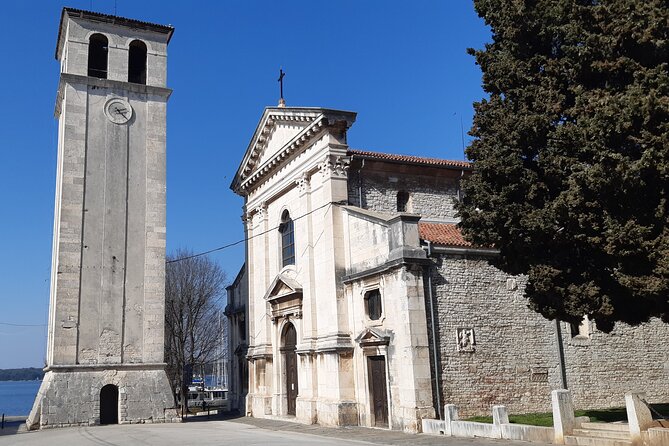
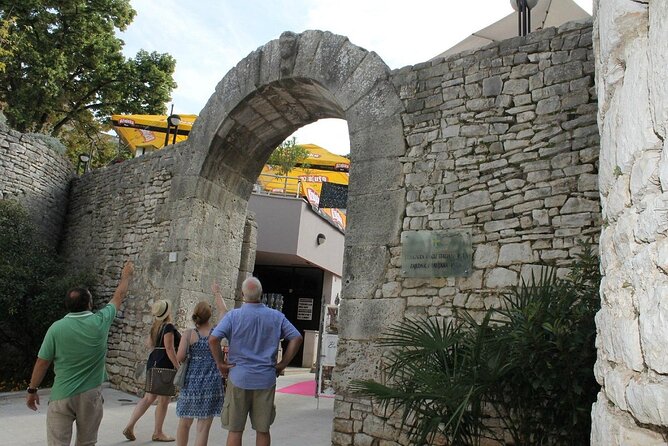
The Gate of Hercules is a quick five-minute stop. Your guide explains it from outside, keeping the focus on the old city’s Roman remains and defensive layout.
The final stop is the Twin Gates of Pula, also explained from outside in about five minutes. The tour ends here on Carrarina ulica, close to another clear marker of the ancient city.
Ending at the Twin Gates makes practical sense. You do not finish back at the Arena, so you’ll want to note the ending point before setting off. From there, you can continue exploring on your own, return toward the center, or follow the guide’s suggestions for food and further sights.
The route’s sequence is also sensible. You begin with Pula’s largest landmark, move through the fortress and religious center, then pass Roman arches, the market, and the old gates. It feels like a compact loop through the city’s main layers, even though the start and finish are at different points.
What the guide adds to the experience
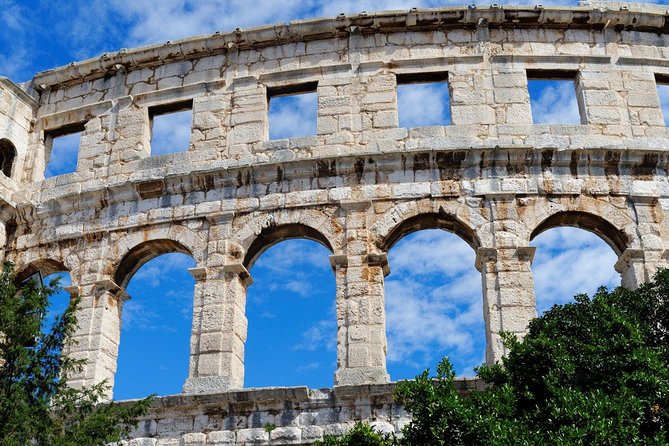
The greatest value here comes from the person leading the walk. The guide is a professional local guide, and the tour is offered in English. Guides including Sini have been praised for clear communication, humor, and the ability to keep both adults and teenagers interested.
You can expect the history to stretch from roughly 3,000 years ago through the Roman period and into modern Croatia. The discussion may include Pula’s Roman monuments, Venetian influence, Austro-Hungarian traces, Byzantine remains, and the city’s Croatian and Italian cultural connections.
That range is important. A weaker city walk might explain the Arena and stop there. This one aims to show how Pula changed over time. You hear about gladiators and ancient buildings, but you also get a sense of the city’s later wars, languages, and regional identity.
The guide’s local knowledge is also useful for questions that a guidebook cannot answer as quickly. Ask about lunch, places to return to, or what deserves more time after the tour. The tour is at its best when you treat it as a conversation rather than a rigid lecture.
Price, group size, and what you actually receive
At about $20.16 per person, the tour is reasonably priced for a 90-minute private or small-group introduction, depending on how your departure is arranged. The maximum group size is 15 people, and group discounts are available.
The price covers the professional local guide. It does not cover food, drinks, or entry tickets. That distinction matters most at the Arena and Kastel, where you may want to go inside after hearing the introduction.
You are paying for structure, local explanation, and saved planning time. If you would otherwise walk past the monuments with only a few lines from a guidebook, the fee can be worthwhile. If you mainly want interior access, this tour will not replace individual admission tickets.
The tour is also a good value for a short port or cruise stop, but be careful with timing. No refund is provided if you miss the activity because your cruise ship arrives late or fails to arrive. Leave a generous buffer between your ship’s arrival and the meeting time.
Who will enjoy this Pula walking tour?
I would recommend it most strongly to first-time visitors, families, and anyone with only part of a day in Pula. The route covers the city’s major sights without demanding a full-day commitment.
It also suits families with older children and teenagers. The pace is manageable, and the combination of Arena, fortress, gates, market, and stories about gladiators gives the walk more variety than a string of church facades.
History fans should book it if they want a broad introduction before choosing which sites to enter. The tour gives you a map in your head, which makes later independent sightseeing easier.
You may want something else if you prefer long interior visits, extensive archaeological detail, or a food-focused experience. The outside explanations are the core of the tour, not a substitute for museum time.
Practical advice before you book
Meet at the Arena entrance, not simply somewhere near the amphitheater. A map application can sometimes place you at the wrong spot, so check that the meeting point is at the entrance on Flavijevska ulica.
Wear shoes suited to city walking. The route is not described as strenuous, but it includes several stops across the historic center and calls for a moderate fitness level.
Dress for the forecast, but prepare for a change. The tour operates in all weather. A hat and water help on a sunny day, while a light rain layer matters on a wet one.
Book ahead if your schedule is fixed. The activity is often reserved about 28 days in advance, and confirmation is sent within 48 hours, subject to availability. Free cancellation is available until 24 hours before the start time. Changes or cancellations inside that 24-hour window are not accepted.
Should you book this Pula walking tour?
Book it if you want a clear, friendly introduction to Pula in about an hour and a half. The strongest features are the well-chosen route, the local perspective, and the way the guide connects Roman monuments with later Croatian, Venetian, and Austro-Hungarian chapters.
Go in with the right expectation. You will see the Arena, Kastel, cathedral, Temple of Augustus, Sergii Arch, market, Hercules Gate, and Twin Gates, but most stops are viewed from outside. Add separate entry tickets if you want to explore interiors.
For a first morning in Pula, this is a smart use of time. It helps you understand the city quickly, leaves room for your own discoveries, and gives you practical ideas for what to see and eat next.
FAQ
How long does the Pula walking tour last?
The tour lasts approximately 1 hour and 30 minutes.
What language is the tour offered in?
The tour is offered in English.
Where does the tour begin?
It begins at Pula Arena, at Flavijevska ulica, 52100 Pula, Croatia. Meet at the Arena entrance.
Where does the tour end?
The tour ends at the Twin Gates at Carrarina ulica 8, 52100 Pula, Croatia.
Is admission to the Pula Arena included?
No. The guide explains the amphitheater from outside, and admission is not included.
Does the tour enter the cathedral?
The guide explains the cathedral from outside. If the church is open, the group may enter, and admission is free.
What is the maximum group size?
The tour can have a maximum of 15 travelers. Group discounts are available.
Can I cancel for a full refund?
Yes. You can cancel at least 24 hours before the local start time for a full refund. Cancellations or changes made less than 24 hours before the start are not accepted.
Just added around Pula
- Pula: SUP Yoga Classes at Morning & Sunset★ 5.0 · 10 reviews
- Pula:Sunset Kayak tour with glowing transparent kayak★ 5.0 · 13 reviews
- Pula:Kayak Tour-Cliff jumping,snorkeling&free GoPro pictures★ 4.7 · 95 reviews
- Pula: Kayaking and Snorkeling Self-Guided Tour★ 4.4 · 55 reviews
- Pula: Private Dolphins & Sunset Tour With Dinner & Drinks★ 4.9 · 11 reviews
- Pula: Private Introduction to Scuba Diving★ 5.0 · 10 reviews
- Pula: Kamenjak Bike Tour with Blue Cave and Cliffs Visit★ 5.0 · 7 reviews
- Pula: Old Town Walking Tour for Foodies with Dinner and Wine★ 4.6 · 18 reviews
Walking Tours, compared.
Split: Old Town and Diocletian Palace Walking Tour
Read our review →
Walking Tour of Split and Diocletian’s Palace
Read our review →
Krka Waterfalls tour with Trogir Walking tour and Krka panoramic boat cruise
Read our review →
Dubrovnik: City Walls Early Morning or Sunset Walking Tour
Read our review →Browse the lists this tour appears in