
Reviewed · HISTORICAL TOURS
Split Walking Tour with History Professor
Split’s best walking tours do more than point at Roman stones. This one follows Mario, a local history professor, through Roman, medieval, Venetian, Ottoman, Napoleonic, and modern Split. You see Diocletian’s Palace, but you also learn how later generations built a living city inside and around it.
I like the small-group format and the way the tour links famous sights to local stories, legends, and Game of Thrones locations. The main consideration is that admission to the Cathedral of Saint Domnius and the Temple of Jupiter is not included, and the route is not suitable for wheelchair users.
Key points to know before booking
- A history professor leads the walk: Mario explains the city with academic depth, humor, and questions that keep the group involved.
- The route goes beyond Diocletian’s Palace: You also see medieval, modern, Venetian, Ottoman, and Napoleonic traces around central Split.
- Major sights fit into about two hours: The route runs from the Riva and Brass Gate to Fruit Square, with several focused stops.
- Small groups make a difference: You have a better chance to ask questions and follow the guide’s explanations than on a large city tour.
- Budget carefully for two admissions: Entry to the Cathedral of Saint Domnius and Temple of Jupiter costs extra.
- Comfortable shoes are essential: This is a walking tour through historic streets, and the route is not wheelchair accessible.
Why this Split walk feels different
Many visitors come to Split for Diocletian’s Palace and stop there. That gives you the Roman centerpiece, but it leaves out much of the city’s later story. This tour treats the palace as the starting point, then traces how Split changed as different powers and generations left their mark.
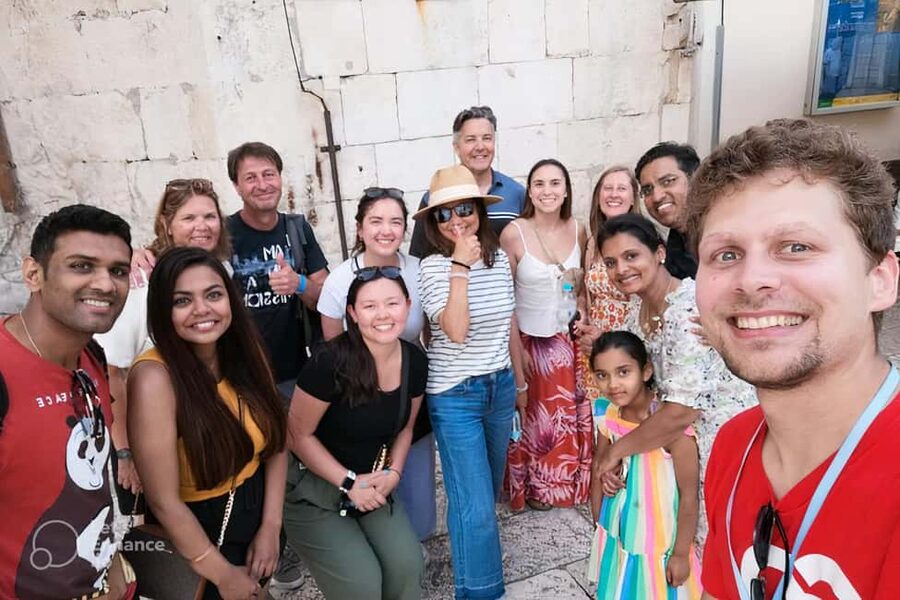
Mario’s role matters here. He is described as a history professor, and his approach is more like an informal outdoor class than a quick list of dates. He asks questions, invites participation, and uses humor to keep the information moving. That balance is important in Split, where a guide can easily bury you under Roman names and architectural terms.
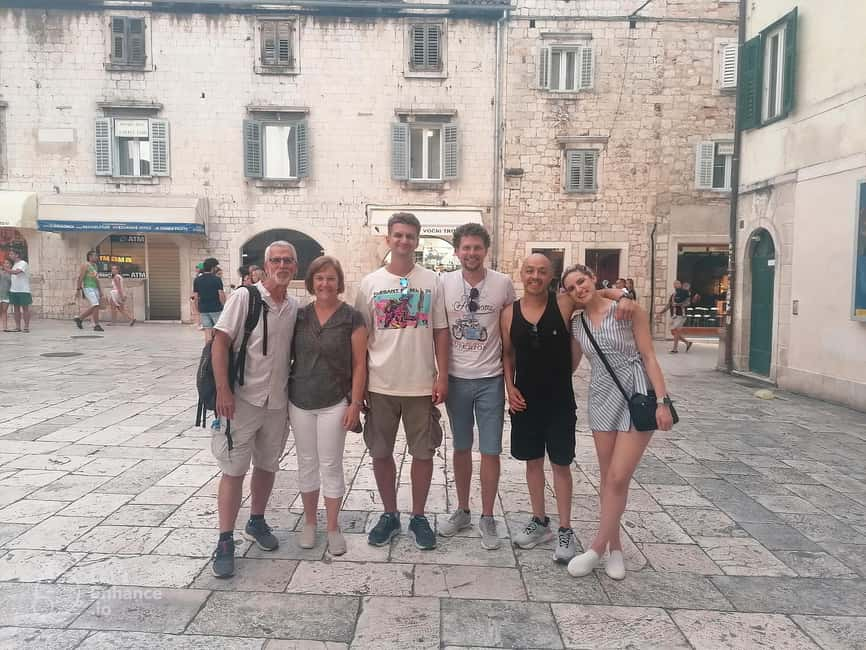
The strongest praise for Mario centers on three things: his command of the subject, his friendly manner, and his ability to make a lot of information easy to follow. One particularly useful feature is the question-and-answer style. You are not expected to listen silently while the guide recites a script. You can take part and ask about the details that catch your attention.
The tour is advertised as two hours, while the highlights describe roughly two hours and 15 minutes. The listed stops add up to about 115 minutes, before walking between them and allowing for the group to gather. I would plan on around two hours, with a little flexibility if the walk runs longer.
More Historical Tours in Split
- Walking Tour of Split with a ‘Magister’ of History
★ 5.0 · 1,122 reviews - Split Walking Tour with Professor of History
★ 5.0 · 926 reviews - Split: History and Heritage Walking Tour
★ 4.9 · 650 reviews
Begin at the Riva and the city model
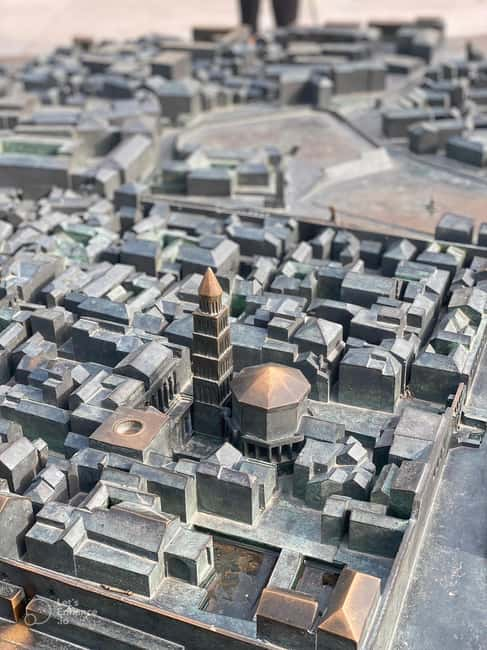
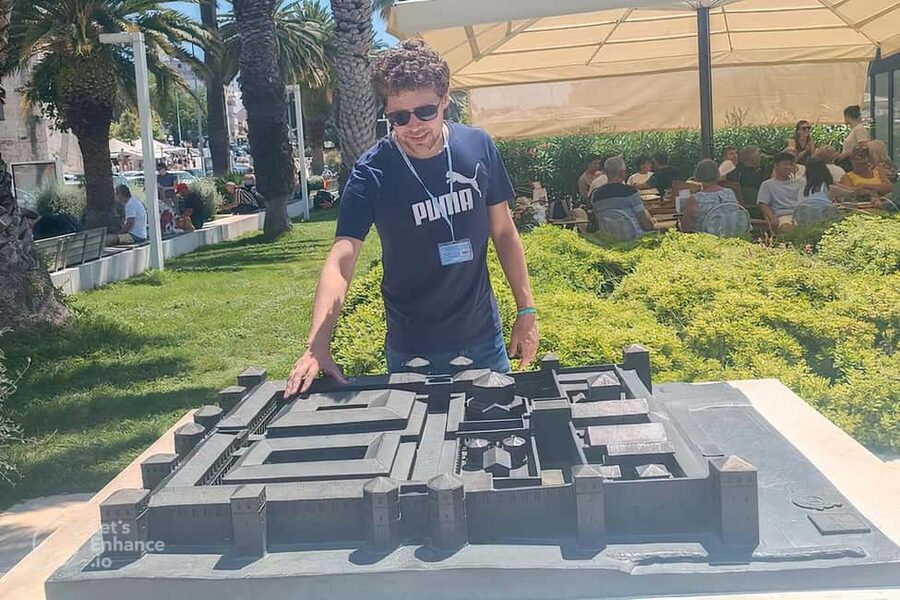
The meeting point is beside the Brass Gate of Diocletian’s Palace. The tour begins at a model of Split’s historic core near the Riva harbor, with about 10 minutes to get oriented.
This is a smart opening. Split’s center can seem like a jumble of narrow lanes, palace walls, squares, and later buildings. A model gives you the basic shape before you enter it. You can see how the Roman palace fit into the old city and how modern Split grew around it.
The Riva is also the right place to start thinking about Split as a living port, not just an archaeological site. You get the broad city picture first, then move into the tighter spaces of the palace. I like this progression because it helps you understand the streets before you begin inspecting individual monuments.
See the palace from below
The next stop is the substructures of Diocletian’s Palace, with about five minutes devoted to them. These underground spaces helped support the palace above and now offer a clear sense of the Roman building plan.
The lower level is useful because the upper palace has been altered by centuries of use. Stonework, shops, homes, and later buildings can make the original arrangement hard to read. Below ground, the structure gives you a stronger clue to the scale and layout of the imperial residence.
Five minutes is not long, so expect an introduction rather than an exhaustive visit. If you want to study the substructures in detail, you may need to return later. The tour’s purpose is to connect this space with the rest of the city, not keep you underground for the entire morning.
The Peristyle and Vestibule reveal imperial theater
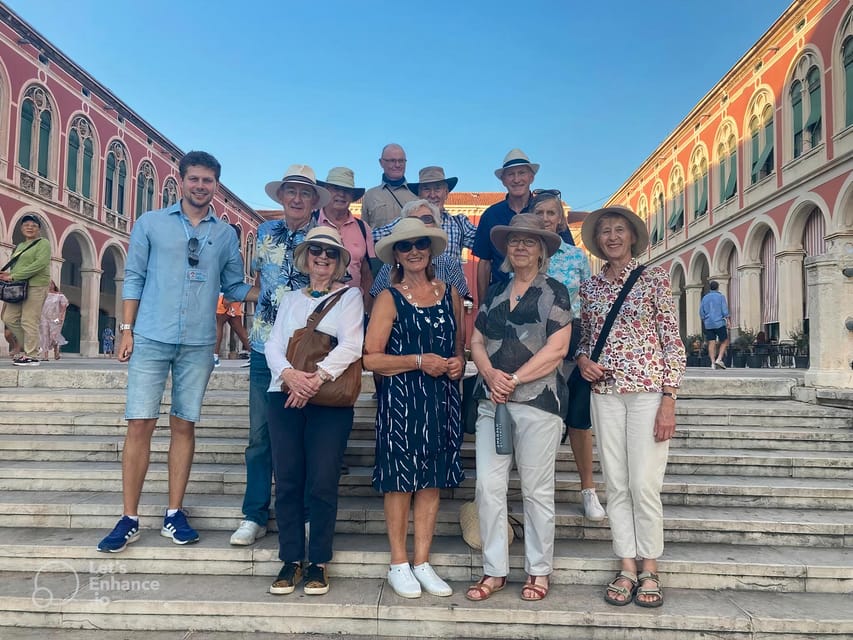
At the Peristyle, the tour stops for about 10 minutes. This is one of the most important open spaces in the palace, and it helps explain how Roman power was presented through architecture, movement, and ceremony.
Here, I would pay close attention to how the guide explains the relationship between the palace buildings and the public space. The Peristyle is not just a pretty square for photographs. It was designed to make the emperor’s presence feel formal and overwhelming.
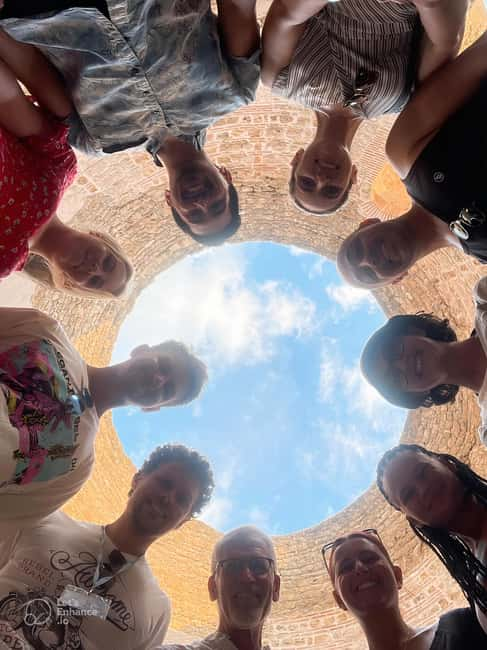
The Vestibule gets another 10 minutes. Its unusual circular form and strong architectural character make it one of the most memorable parts of the route. Mario’s historical approach should help you connect the physical space with the people who used it, rather than treating it as a decorative stop.
Because the tour is in a small group, this is a good place to ask questions. If Mario points out a detail you would otherwise miss, you can stop and ask why it matters. That kind of exchange is one of the main advantages of booking a professor-led walk rather than using a self-guided route.
More Walking Tours in Split
- Split: Old Town and Diocletian Palace Walking Tour
★ 4.9 · 4,727 reviews - Walking Tour of Split and Diocletian’s Palace
★ 5.0 · 2,588 reviews - Split & Diocletian’s Palace Walking Tour
★ 5.0 · 1,125 reviews - Split: Diocletian Palace & Old Town Guided Walking Tour
★ 4.7 · 882 reviews
The Cathedral and Temple of Jupiter add later layers
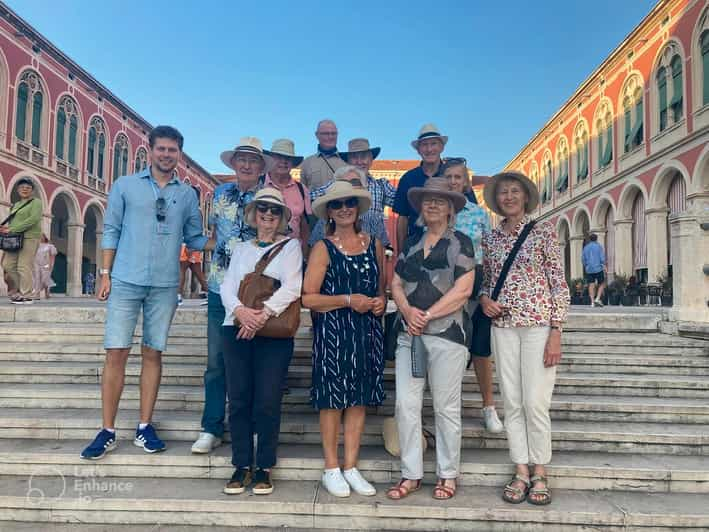
The Cathedral of Saint Domnius receives about 20 minutes, the longest single stop listed on the route. Admission is not included, so you should be ready to pay separately if the group enters.
The cathedral is especially interesting because Split’s religious history is tied closely to the Roman palace. The building’s location within the former imperial complex shows how later residents reused and reshaped older structures. You are not looking at an isolated church, but at one stage in the city’s long change.
The Temple of Jupiter gets about 10 minutes, and admission is also excluded. This stop gives you another chance to see how Roman religious architecture fits into the palace plan and how the city’s later life developed around it.
The extra entry fees are a small but important detail when you compare the tour with other walking options. At $23 per person, the tour is reasonably priced for a guided history walk, but the advertised price does not cover these two admissions. Ask at the start how the entry portions will work so you know what to expect.
The Golden Gate and Grgur Ninski connect history with city life
The Golden Gate receives about 10 minutes. It was one of the main entrances to the palace and remains one of the clearest places to understand the defensive and ceremonial side of the Roman complex.
A gate can seem like a quick photo stop, but this is where the palace connects to the streets beyond its walls. Mario can help you read the gate as part of a larger urban plan, not just as an impressive stone opening.
The route then continues to the statue of Grgur Ninski for another 10 minutes. This is one of the tour’s more modern and local-feeling moments. The statue is tied to Croatian cultural identity, and its presence shows that Split’s story is not only about emperors and ancient monuments.
This stop should also break up the Roman focus. I appreciate that the itinerary does not keep repeating the same kind of archaeological explanation. You move from imperial architecture to medieval and national memory, which makes the city feel more complete.
Marmontova Street and Prokurative show modern Split
Marmontova Ulica gets about 10 minutes. The name points to the Napoleonic period, one of several later influences included in the walk. This is where the tour makes a useful shift from ancient history to the forces that shaped Split in more recent centuries.
The route also discusses Venetian, Ottoman, and Napoleonic influence. You may not get a long lecture on each period, but you should come away with a clearer idea of how Split changed after the Roman era. That wider frame is one of the tour’s best features.
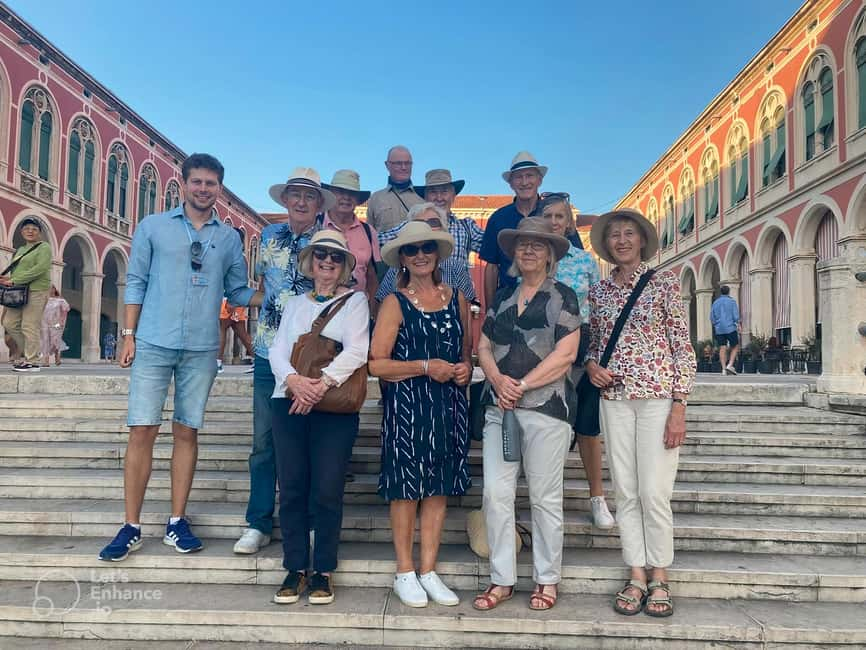
Prokurative receives another 10 minutes. The square offers a different architectural mood from the palace and helps show how Split expanded beyond its original Roman core. It is a useful reminder that the city did not freeze in antiquity. It kept adding new public spaces and new connections to the wider Adriatic world.
For me, this portion of the walk is what separates a palace tour from a Split tour. You still get the famous ancient sights, but you also see how modern urban life grew around them.
Finish at Fruit Square with stories of local Split
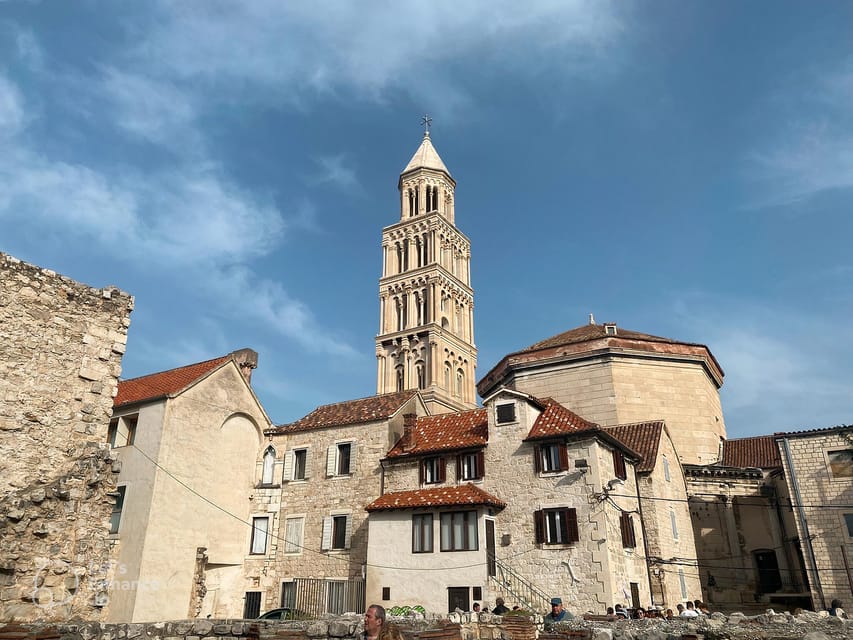
The final stop is Fruit Square, or Trg Brace Radic, with about 15 minutes. The square is a fitting end because it brings the walk back to everyday city life. After the formal spaces of the palace and the large historical themes, you finish in a place connected to Split’s ordinary streets and social rhythm.
The tour also includes local legends and Game of Thrones locations. Those elements are not the main point, and that is a good thing. They add a lighter layer for fans and give you some fun connections to notice, while the historical structure remains the backbone of the walk.
If you are visiting Split with someone who might tire of Roman architecture, these stories can keep the route varied. If you are a serious history fan, Mario’s broader discussion of the city’s periods should provide more substance than a television-location tour.
What the $23 price gives you
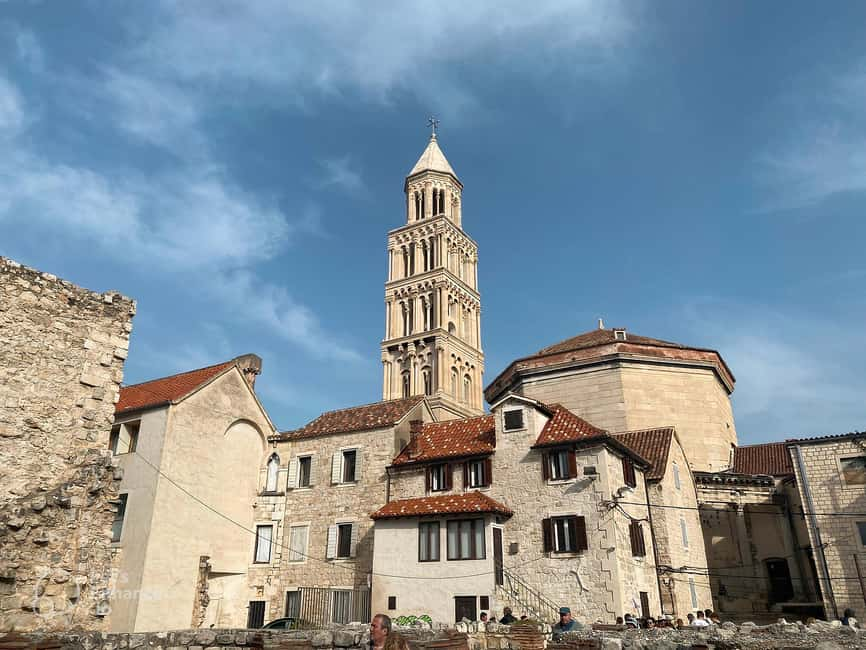
At $23 per person, this tour offers good value if you want a guide who can place the major sights in context. You are paying for a small-group walking experience, an English-speaking history professor, and a route that covers much more than the palace’s most famous corners.
The value is strongest for a first visit. You see the city’s main landmarks in one organized walk, learn how they relate to each other, and finish with a better sense of where to return on your own.
The price is less attractive if you want long interior visits or museum-style detail at every stop. The schedule is fairly full, and some locations receive only five or 10 minutes. Remember that the Cathedral of Saint Domnius and Temple of Jupiter require separate admission.
Free cancellation up to 24 hours before the tour gives you some flexibility, and you can reserve now and pay later. The tour is offered in English. Private tours are available on request through the provider, which may suit you if you want a slower pace or a more personal itinerary.
Who should book this walk?
I would choose this tour for first-time visitors who want the main Roman sights but also want to understand medieval and modern Split. It is a particularly good fit for people who enjoy history presented through conversation rather than a dry recital.
Families can book it because the tour is listed as suitable for all ages. The guide’s humor and questions may help younger members stay engaged, though the amount of historical information will suit children best when an adult helps connect it to their interests.
It also suits fans of Game of Thrones, as long as you understand that the show references are part of a broader history tour. You will not be booking a film-location walk alone.
I would think twice if you use a wheelchair, since the activity is not suitable for wheelchair users. I would also choose another option if you dislike walking, want a very slow photography schedule, or prefer to explore interiors at length.
Wear comfortable shoes and comfortable clothes. The route covers historic streets and several separate areas of central Split, so practical clothing matters more than dressing for a formal sightseeing event.
Should you book the Split Walking Tour with History Professor?
Book it if you want a clear, lively explanation of Split’s many eras, not just a quick tour of Diocletian’s Palace. Mario’s mix of professor-level history, humor, questions, and local stories is the main reason this $23 walk earns its place on a Split itinerary.
Skip it if you need wheelchair access, want admission fees included, or prefer a short tour focused only on Roman architecture. For everyone else, the route gives you a strong first look at the Riva, palace substructures, Peristyle, Vestibule, cathedral, Golden Gate, Marmontova Street, Prokurative, and Fruit Square, with enough wider context to make the city easier to understand afterward.
FAQ
Where does the tour meet?
The guide waits next to the Brass Gate of Diocletian’s Palace.
How long does the walking tour last?
The activity is listed as lasting two hours. The highlights describe about two hours and 15 minutes, so allow a little flexibility around the stated duration.
What language is the tour offered in?
The live tour guide leads the experience in English.
Who leads the tour?
Mario, a local history professor, leads the walk. The experience provider is Lanterna.
What sights are included?
The route includes the historic-core model at Riva Harbor, Diocletian’s Palace substructures, the Peristyle, Vestibule, Cathedral of Saint Domnius, Temple of Jupiter, Golden Gate, Grgur Ninski Statue, Marmontova Ulica, Prokurative, and Fruit Square.
Are entrance tickets included?
Admission to the Cathedral of Saint Domnius and the Temple of Jupiter is excluded.
Is the tour suitable for children?
Yes. The tour is listed as appropriate for all ages.
Can wheelchair users join the tour?
No. The activity is not suitable for wheelchair users.
Just added around Split
- Split Day Trip from Dubrovnik★ 4.0 · 59 reviews
- Dubrovnik to Split Private Transfer with Local Experienced Driver★ 5.0 · 52 reviews
- Private Transfer from Dubrovnik to Split with 2 hours for sightseeing★ 5.0 · 50 reviews
- Private Transfer from Dubrovnik to Split★ 5.0 · 3 reviews
- Private Transfer: Dubrovnik to Split★ 5.0 · 7 reviews
- Dubrovnik to Split Private Transfer with Mostar Town★ 5.0 · 38 reviews
- Private Tour: Split Day Trip from Dubrovnik★ 5.0 · 9 reviews
- Private Day Trip :Dubrovnik- Mostar- Split★ 5.0 · 3 reviews
Historical Tours, compared.


Walking Tour of Split with a ‘Magister’ of History
Read our review →


Split History and Gastro Small-Group Tour with Food and Drinks
Read our review →
SPLIT-PREMIUM Emperor’s Walking Tour for History Lovers + Museum
Read our review →Browse the lists this tour appears in