
Reviewed · MUSEUMS
Split: Museum of Illusions Entrance Ticket
Split’s Museum of Illusions turns ordinary rooms into a playground for your eyes and brain. Water appears to flow uphill, friends seem to grow or shrink, and a ceiling becomes a floor. The best part is that you do not just look at displays. You take part in them.
I like the hands-on photo opportunities and the way the exhibits explain vision, perception, and the human brain. I also like that the playrooms give children something to do beyond posing for pictures. The main drawback is language: captions are available in English, German, Italian, and Croatian, but not French.
Key points to know
- Gravity tricks and shrinking-room effects create the most memorable photo opportunities.
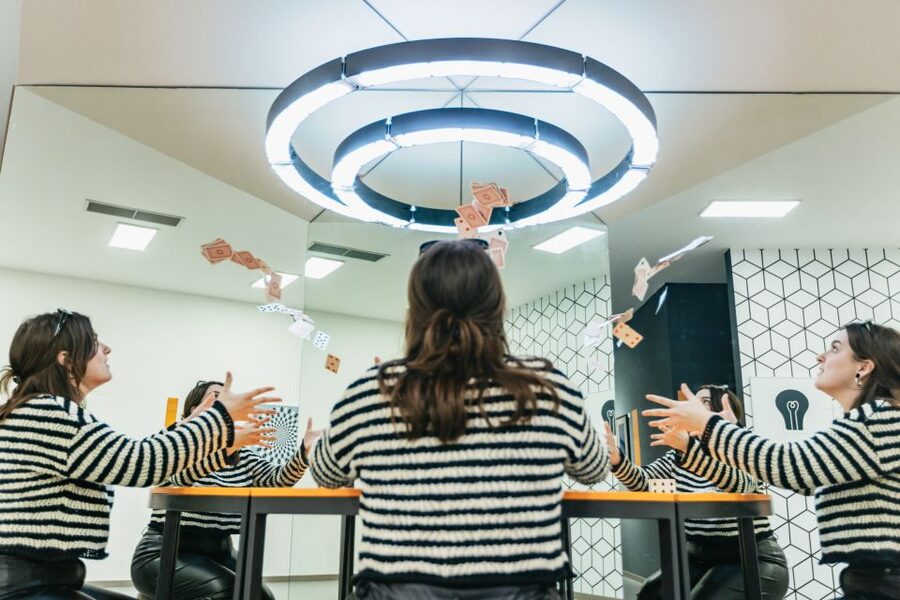
- Mirror mazes and interactive installations make this more than a standard museum visit.
- Playrooms with puzzles add an educational side for children and curious adults.
- A camera is worth bringing, since many exhibits work best through photographs.
- English and Croatian hosts are available, with captions in four languages.
- The $14 ticket is good for one day, with free cancellation up to 24 hours before your visit.
Why this museum works so well in Split
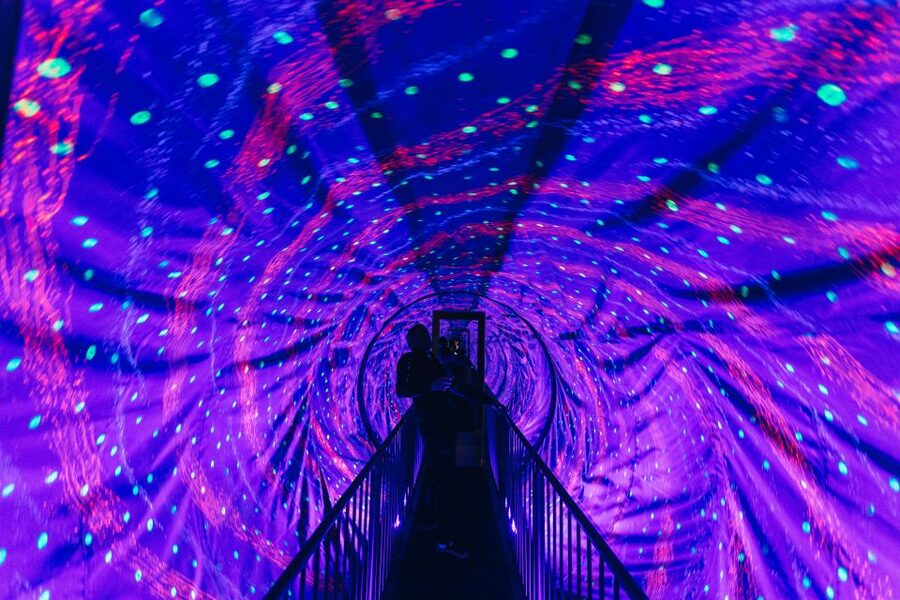
Split is full of old stone streets, Roman remains, waterfront walks, and seaside views. The Museum of Illusions offers a very different kind of stop. It is compact, playful, and built around the simple shock of seeing something that cannot be true.
I like the way the museum uses familiar objects and spaces to expose the limits of your senses. You may trust your eyes completely, but an installation can make a person appear tiny, place a head on a serving tray, or make a room look as if gravity has gone wrong.
That makes the visit useful for families, but it is not only a children’s attraction. Adults often enjoy the exhibits because the illusions ask you to question what you see. The museum also connects each trick to basic ideas about perception and the brain, so the fun has a small science lesson attached.
The ticket is priced at $14 per person. That is fair if you enjoy interactive attractions and plan to take photographs, especially with children or a group of friends. It is less compelling if you prefer traditional museums with a large collection of historical objects. This is a short, active experience rather than a long cultural institution.
More Museums and Galleries in Split
- Blue Lagoon & Underwater Museum from Split with Lunch & Drinks
★ 4.5 · 1,122 reviews - Split: Game of Thrones Museum Entrance Ticket
★ 3.8 · 385 reviews - SPLIT-PREMIUM Emperor’s Walking Tour for History Lovers + Museum
★ 5.0 · 333 reviews
Entering with a one-day ticket
Your voucher is shown at the museum’s main entrance. The ticket is valid for one day, and you check available starting times when booking. The information does not give a fixed visit length, so you should treat the museum as a flexible stop rather than a tightly timed tour.
That flexibility matters in Split. You can fit the museum between sightseeing stops, use it as a break during a hot afternoon, or visit when the weather is poor. Since the ticket is not tied to a multi-day program, you do not need to build your whole day around it.
The activity is self-guided in its basic format, with hosts or greeters available in English and Croatian. Do not expect a long guided lecture at every display. Instead, you move from installation to installation, read the captions, try the effect, and work out why your senses are being fooled.
Testing gravity in a room that makes no sense
One of the strongest reasons to visit is the room where water appears to flow uphill. The point is not simply to see an unusual setup. It is to watch your brain try to explain something that conflicts with normal experience.
These exhibits work best when you slow down and inspect the installation carefully. A quick glance gives you the surprise, but a closer look helps you understand how perspective, positioning, and visual information shape your judgment.
You might find yourself checking the walls, floor, and angles several times. That is part of the fun. The museum encourages you to notice how easily your eyes accept a false impression when the surrounding room supports it.
For children, this can be a lively introduction to basic science. For adults, it is a reminder that clear vision does not always lead to a correct conclusion.
Growing and shrinking in the photo room
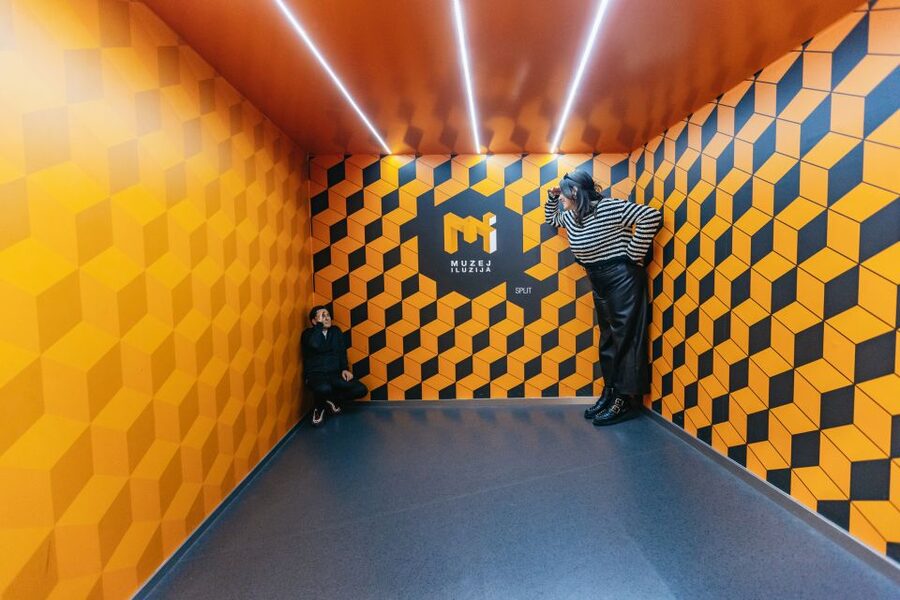
The room that makes one person look very large and another look very small is likely to be a favorite for groups. The effect is easy to understand once you see it, but the photograph still looks wonderfully strange.
This is where your camera becomes useful. The experience is not only about looking at the illusion in the room. It is about creating a picture that captures the false scale and sharing it later with friends who were not there.
If you are visiting with children, let them try different positions and poses. If you are with adults, the setup is still good for playful group photographs. The display received especially strong praise from one French visitor, who singled out the large-and-small photo room as a highlight.
One practical point is worth noting: the museum does not offer French captions. If French is important to you, the visual effects remain easy to enjoy, but the written explanations may be less useful.
Same stretch of coast, a completely different kind of day:
- Blue Lagoon & 3 Islands Cruise with Lunch from Split
★ 4.5 · 5,756 reviews - Split: Old Town and Diocletian Palace Walking Tour
★ 4.9 · 4,727 reviews - Split: Blue Lagoon Boat Party with DJs, Shots & After Party
★ 4.9 · 4,610 reviews - Split: Blue Lagoon and 3 Islands Speedboat Tour
★ 4.8 · 3,406 reviews
Mirror mazes and sensory confusion
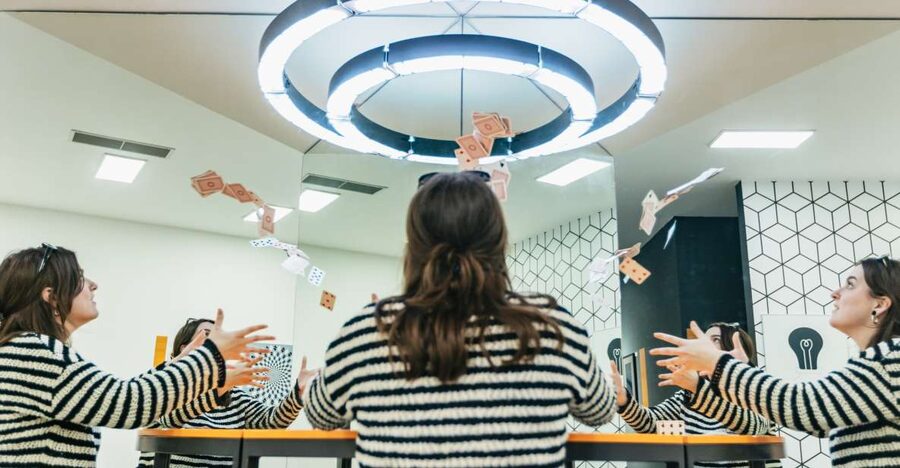
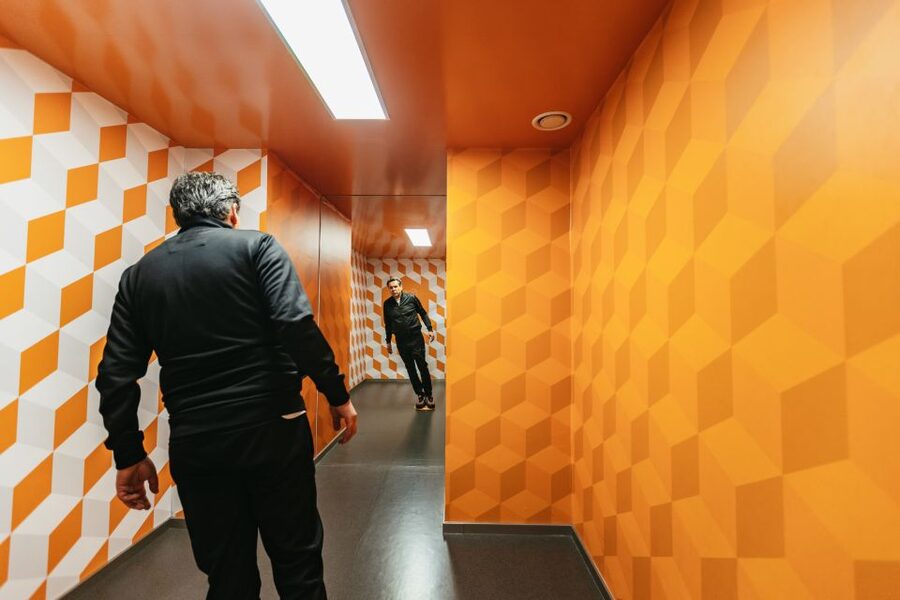
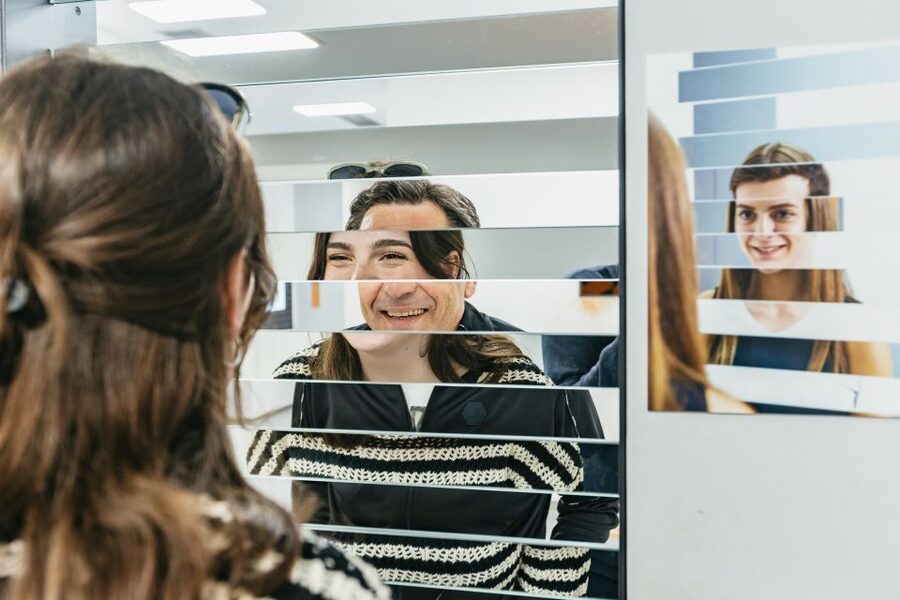
A maze of mirrors changes the pace of the visit. Instead of looking at one fixed trick, you must work out where you are going while repeated reflections make the space difficult to read.
Mirror attractions can be exciting, but they may also feel confusing for visitors who are sensitive to visual overload. Take your time and follow the layout carefully. The experience depends on the contrast between what your eyes report and what your body knows about the room.
This is a good example of why the museum is more than a collection of novelty photographs. The maze lets you feel how perception can be disrupted. You do not need a science background to understand the effect. Your own hesitation does the explaining.
The head-on-a-tray display
The exhibit that makes it look as if someone’s head is being served on a tray is built for a photograph and a laugh. It also shows how much a familiar object can change when the rest of the body is hidden from view.
This type of illusion is simple, direct, and easy for children to understand. It does not require a long explanation. You see the setup, frame the image, and watch the scene turn into something absurd.
I would place this among the museum’s quick-hit displays. It may not hold your attention for long, but it adds variety between the more demanding optical tricks. The best visit has room for both kinds: installations that make you think and installations that simply make you smile.
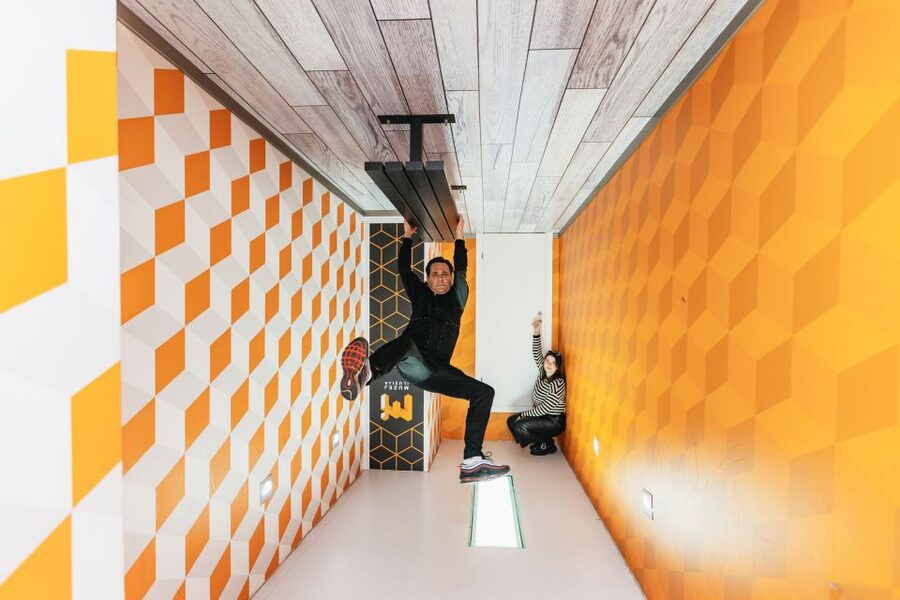
Walking on the ceiling
The ceiling illusion reverses the normal rules of a room. You climb into position and use the camera angle to make it appear that you are standing above everyone else.
Again, the photograph is a major part of the experience. If you are visiting with friends, take turns helping one another find a pose that makes the image look convincing. The attraction gives you a reason to interact instead of moving quietly from one glass case to the next.
You should also inspect the installation before taking the picture. The museum’s broader lesson is that a photograph can preserve a false viewpoint. Your eyes and camera work together, but neither one tells the whole story without context.
Playrooms that add a science lesson
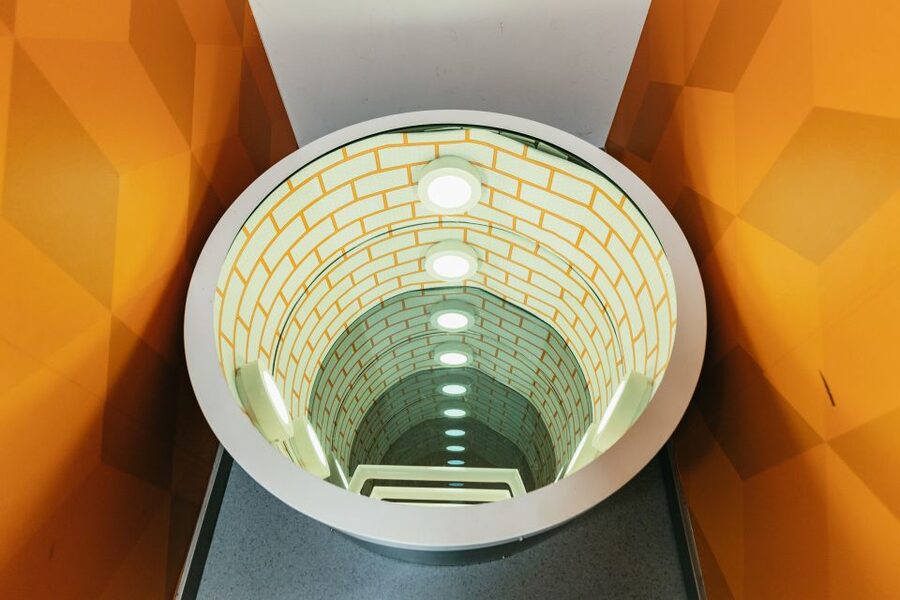
The playrooms contain games and puzzles aimed at children and the young at heart. This is important for families because it gives the museum more variety than a series of photo stations.
Puzzles let children test ideas through trial and error. They can compare what they expect to happen with what actually happens, then try again. That process helps explain why perception and logic do not always agree.
I also see value here for adults who enjoy problem-solving. The museum does not demand that you already understand optics or neuroscience. It gives you a visual challenge first, then lets you think about the reason behind it.
Parents should expect an active visit. Children will want to touch, move, pose, and try the games. That is the intended format, but it also means the museum may feel less appealing if you want a quiet, contemplative hour.
How the language and explanations work
Hosts or greeters speak English and Croatian. Captions are available in English, German, Italian, and Croatian, which covers many visitors but not every language.
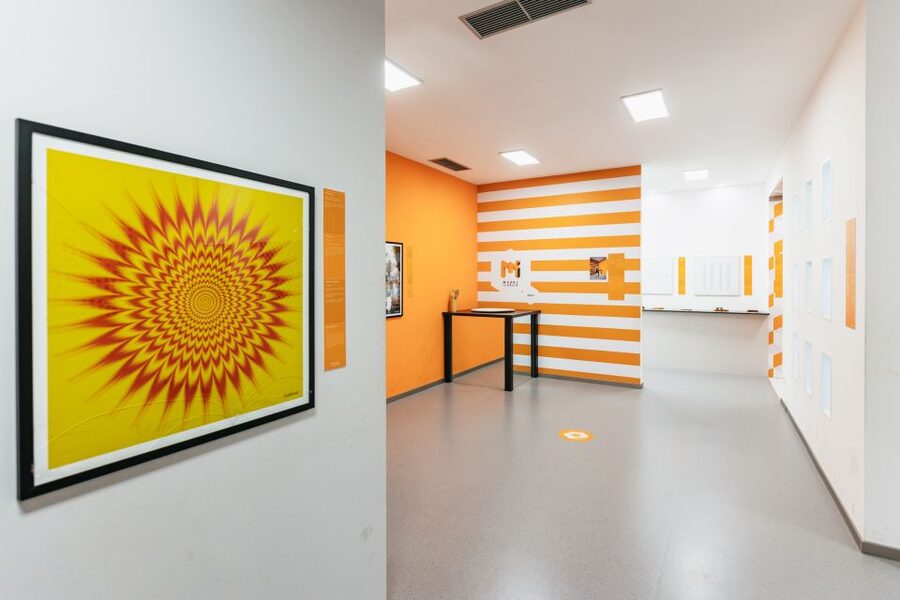
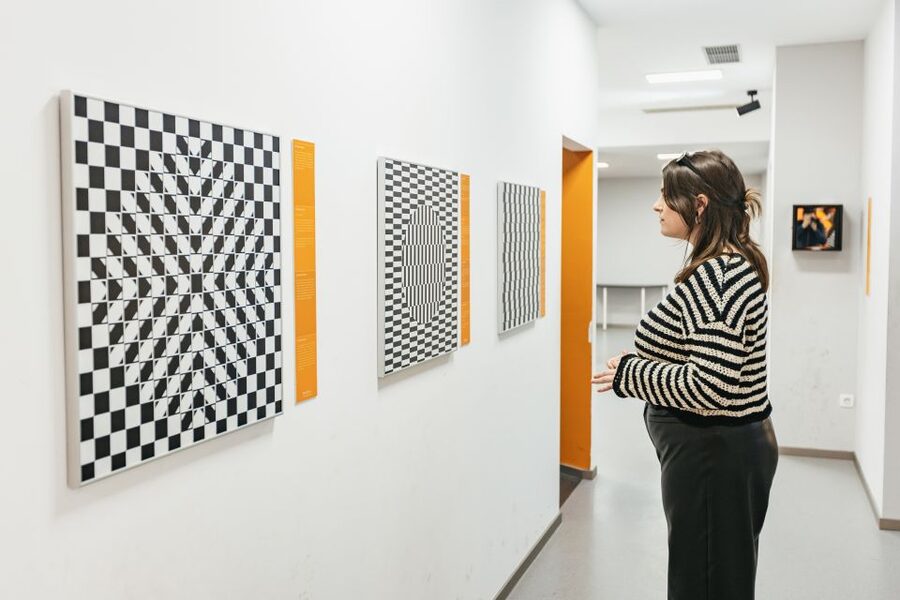
The written explanations are useful because the exhibits are not only tricks. They point toward vision, perception, the human brain, and science. Reading them helps turn a quick photo opportunity into a better understanding of why the effect works.
If you are comfortable with one of the caption languages, take a moment at each installation. The museum’s strongest idea is that your eyes can report one thing while your brain struggles to make sense of it.
If you are not comfortable with those languages, the displays remain largely visual. Still, you may get less from the educational side, so keep the language limits in mind before paying for admission.
Is $14 good value?
At $14 per person, the ticket offers reasonable value for the right kind of visitor. I would choose it for a family, a group of friends, or anyone who enjoys taking unusual photographs and trying hands-on exhibits.
The price feels less attractive if you expect a large museum with many rooms of historical artifacts. You are paying for interactive setups, visual tricks, puzzles, and the chance to create photographs. The quality of your visit depends on how much you participate.
The one-day validity helps. You can fit the museum into a larger day in Split without committing to a lengthy schedule. You can also reserve now and pay later, which is useful when you are planning several stops and want to keep your choices flexible.
Free cancellation is available up to 24 hours in advance for a full refund. That gives you some protection if your plans change, though you should check the exact available time before booking.
Who should visit the Museum of Illusions?
Families with children will find the mix of puzzles, rooms, and photographs easy to enjoy. The attraction also suits teenagers, couples, and groups of adults who want a light break from more serious sightseeing.
You should bring a camera. A phone works perfectly well for most of the photo effects, and the museum specifically advises visitors to bring one.
The museum is wheelchair accessible, and service animals are permitted. Unaccompanied minors are not allowed, so children must visit with an adult.
I would be more cautious about recommending it to someone who dislikes optical tricks, mirror spaces, or active participation. The museum asks you to experiment. It is not a place where you simply walk through and look at objects from a distance.
Practical tips for a better visit
Read each caption before moving on. The visual surprise is immediate, but the explanation gives you the point of the exhibit.
Take several photographs from different angles. Some effects look convincing only when the camera is placed in the right position, and a rushed picture may miss the illusion.
Visit with someone who is willing to take turns. Many installations are more fun when one person poses and another frames the shot.
Keep the language options in mind. English, German, Italian, and Croatian captions are available, while hosts or greeters use English and Croatian.
Use the flexible booking terms to match the museum with your Split plans. The ticket is valid for one day, and the activity can work well as a short indoor stop rather than the main event of your day.
Should you book it?
Book the Museum of Illusions if you want an interactive attraction with unusual photographs, simple science lessons, and games that work for both children and adults. The gravity room, mirror maze, shrinking-room effect, and ceiling illusion give the visit plenty of visual variety.
Skip it if you are looking for ancient artifacts, detailed local history, or a long guided tour. At $14, the ticket is best value when you take part fully, bring a camera, and enjoy the playful side of Split. Keep the lack of French captions in mind, but for English, German, Italian, or Croatian readers, the explanations add useful context to the fun.
FAQ
Where do I enter the Museum of Illusions in Split?
Show your voucher at the museum’s main entrance.
How much does admission cost?
The entrance ticket costs $14 per person.
How long is the ticket valid?
The ticket is valid for one day. Available starting times can be checked when you book.
Can I cancel for a full refund?
Yes. You can cancel up to 24 hours in advance for a full refund.
Can I reserve now and pay later?
Yes. The booking option allows you to reserve your spot and pay nothing at the time of booking.
What languages are available?
Hosts or greeters are available in English and Croatian. Captions are provided in English, German, Italian, and Croatian.
Is the museum wheelchair accessible, and are service animals allowed?
Yes. The museum is wheelchair accessible, and service animals are permitted. Unaccompanied minors are not allowed.
Just added around Split
- Split Day Trip from Dubrovnik★ 4.0 · 59 reviews
- Dubrovnik to Split Private Transfer with Local Experienced Driver★ 5.0 · 52 reviews
- Private Transfer from Dubrovnik to Split★ 5.0 · 3 reviews
- Private Transfer from Dubrovnik to Split with 2 hours for sightseeing★ 5.0 · 50 reviews
- Private Transfer: Dubrovnik to Split★ 5.0 · 7 reviews
- Dubrovnik to Split Private Transfer with Mostar Town★ 5.0 · 38 reviews
- Private Tour: Split Day Trip from Dubrovnik★ 5.0 · 9 reviews
- Private Day Trip :Dubrovnik- Mostar- Split★ 5.0 · 3 reviews
Museums, compared.
Blue Lagoon & Underwater Museum from Split with Lunch & Drinks
Read our review →
Zagreb: Skip-the-Ticket-Line Museum of Broken Relationships
Read our review →
SPLIT-PREMIUM Emperor’s Walking Tour for History Lovers + Museum
Read our review →
Split: Klis Fortress GOT and Olive Museum Entry Tickets
Read our review →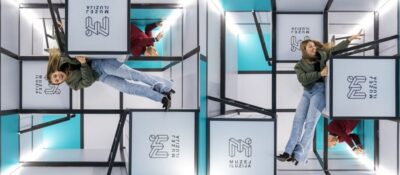
Browse the lists this tour appears in