
Reviewed · HISTORICAL TOURS
Split: History Walking Tour of the Old Town
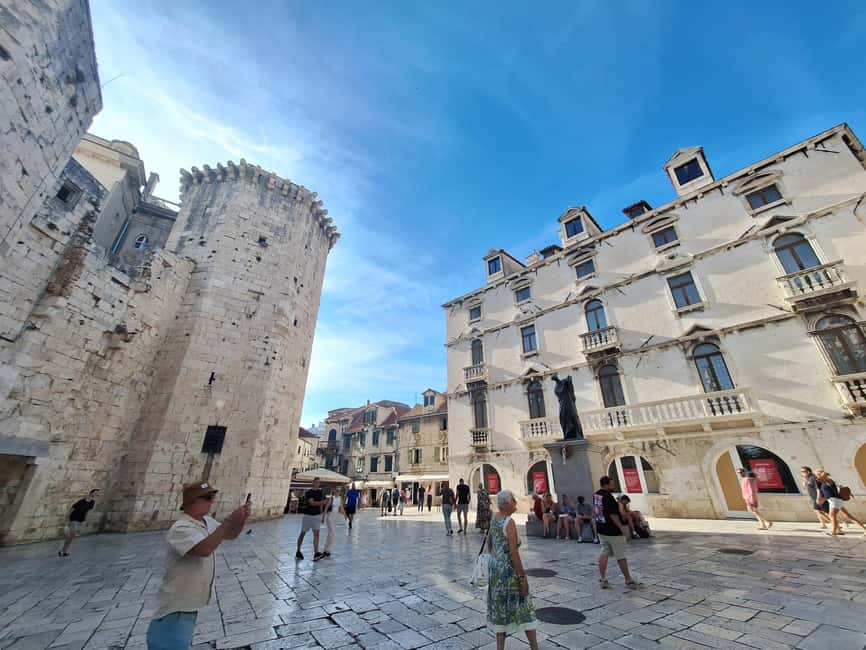
Split’s most surprising sight is not a single monument. It is the way daily life carries on inside Diocletian’s 1,700-year-old palace. You walk through Roman gates, past an ancient mausoleum and temple, then find cafés, shops, homes, and busy lanes tucked into the same stone complex.
I like the way this tour connects famous sights to memorable stories, from the headless Sphinx guarding Jupiter’s Temple to the cellars where Daenerys Targaryen’s dragons were chained. I also like the practical help at the end, including food advice, beach ideas, island suggestions, and tips on local habits.
The main consideration is pace. Ninety minutes is enough for a smart introduction, but not enough for a slow look at every corner or a long visit inside each place. Summer heat and crowds can also make comfortable shoes, water, a hat, and sunscreen essential.
Key points to know before booking
- The Roman palace is still a living city: You are not touring an isolated ruin, but a working old town built inside and around Diocletian’s palace.
- The cellars add a strong pop-culture angle: The underground rooms were used for scenes involving Daenerys’s dragons and the Unsullied.
- Guides make the history lively: Maya has used photos and maps, while Nina, Marc, and Marko have led tours praised for clear explanations, humor, and answers to questions.
- The route covers Split’s essential core: Expect the Golden Gate, Peristyle, Mausoleum, Jupiter’s Temple, Vestibule, People’s Square, Fruit Square, and the Riva.
- The tour ends with useful local advice: You can ask about Dalmatian food, beaches, islands, and how to spend the rest of your day.
- The price is reasonable for a small or private experience: At $41 per person, the value depends on group size, but personal attention can make the cost worthwhile.
Why Split’s palace is the real attraction
Split is often introduced as a Roman city, but that description can mislead you. The old town is not simply a group of ruins preserved behind ropes. Much of the historic center grew inside the palace built for Emperor Diocletian, so ancient walls and modern life share the same narrow streets.
That is why a guide helps. Without context, you may see a grand gate, a column-lined square, and a dark underground passage without understanding how they fit together. The tour gives you the basic plan of the palace and explains how Split’s people made use of it over centuries.
The route also moves between grand public spaces and small details. One moment you are looking at imperial architecture. The next, you are hearing about a fresh-water fountain fed by an aqueduct that is about 2,000 years old. Those links between Roman engineering and everyday city life are what make the walk useful.
The guide-led format also gives you a chance to ask questions. Marc was singled out for answering questions during a solo walk, while Marko used riddles and jokes to keep the history moving. Maya has brought a folder with photographs and maps, a simple touch that can help you picture how the palace and city changed over time.
More Historical Tours in Split
- Walking Tour of Split with a ‘Magister’ of History
★ 5.0 · 1,122 reviews - Split Walking Tour with Professor of History
★ 5.0 · 926 reviews - Split: History and Heritage Walking Tour
★ 4.9 · 650 reviews
Starting at the Golden Gate and Đardin Park
The walk begins at or near the Golden Gate, depending on the option you choose. This is a practical starting point because the gate gives you an immediate sense of the palace’s scale and defensive design.
Your guide explains the role of the gate and helps you read the surrounding remains. The nearby Đardin Park offers a change of mood before the route heads into the denser old town. It is worth paying attention here rather than treating the gate as a quick photo stop. The palace had a formal plan, and the first part of the walk helps you understand that plan.
Your exact meeting place can vary. If you choose an option with pickup, you can provide the name and street of your hotel, or note that you are arriving by ship. Confirm the meeting details when you book, especially if you are joining from a cruise vessel.
Peristyle and the Mausoleum: Split’s grand Roman center
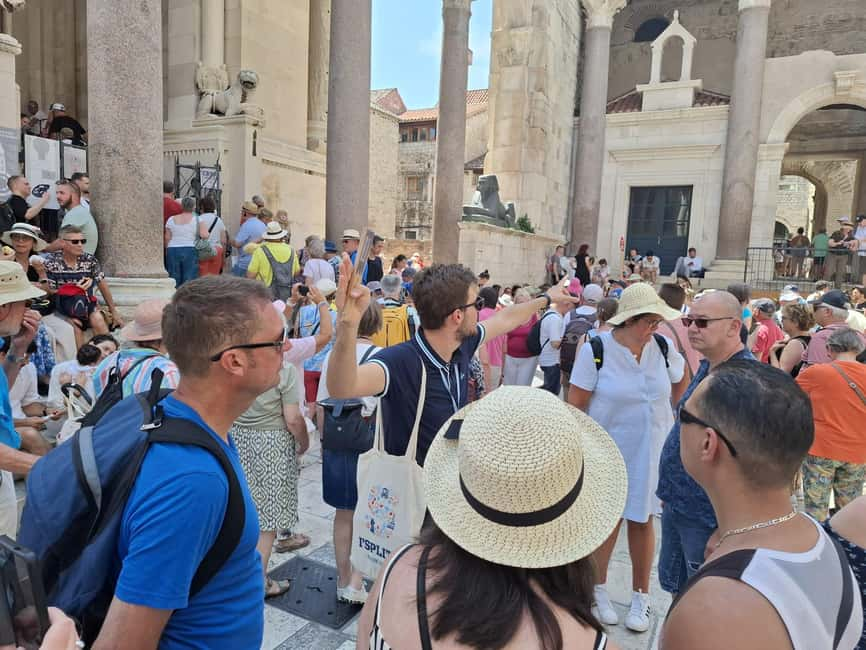
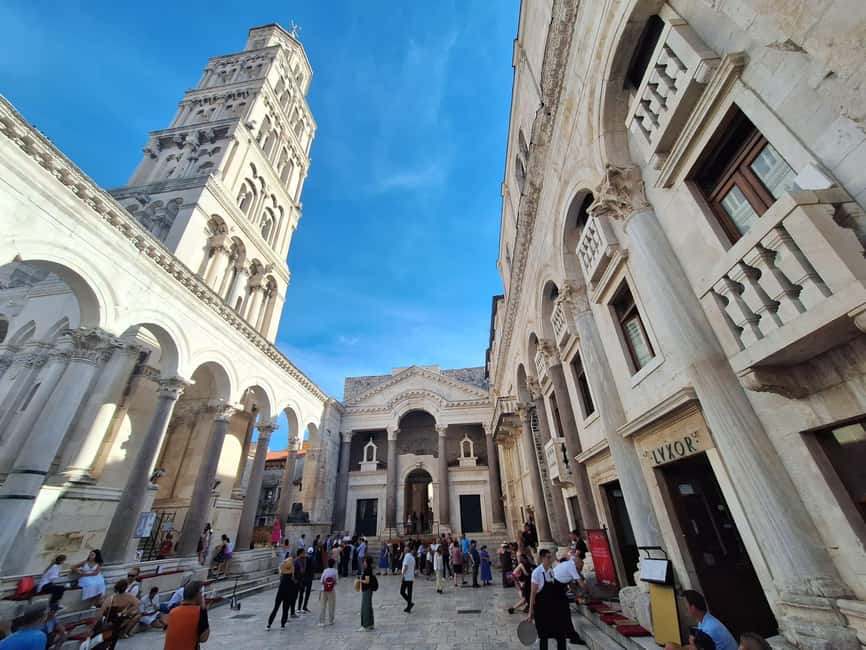
The Peristyle is the visual centerpiece of the walk. Its columns and stone paving make it easy to picture the public heart of the Roman palace. Your guide spends about 15 minutes here, explaining the space and its connection to Diocletian.
This is also where the tour’s storytelling pays off. Diocletian is presented not only as a retired emperor who built a palace, but as the major persecutor of Christians described in the tour’s history. You also hear the odd personal detail about why he vomited after dinner. Such stories may sound comic, but they give you a human handle on a ruler who can otherwise feel distant and abstract.
The Mausoleum is another key stop. The tour points out the impressive cathedral and bell tower associated with this area, described as the oldest cathedral in the world. You get a short explanation rather than a long interior visit, so you should not book this walk expecting an in-depth cathedral tour.
Still, the stop matters because it shows the reversal of Diocletian’s legacy. A palace built by an emperor hostile to Christians later became part of a Christian center. That change is easier to grasp when you stand in the same compact space and hear the story in sequence.
Jupiter’s Temple and the headless Sphinx
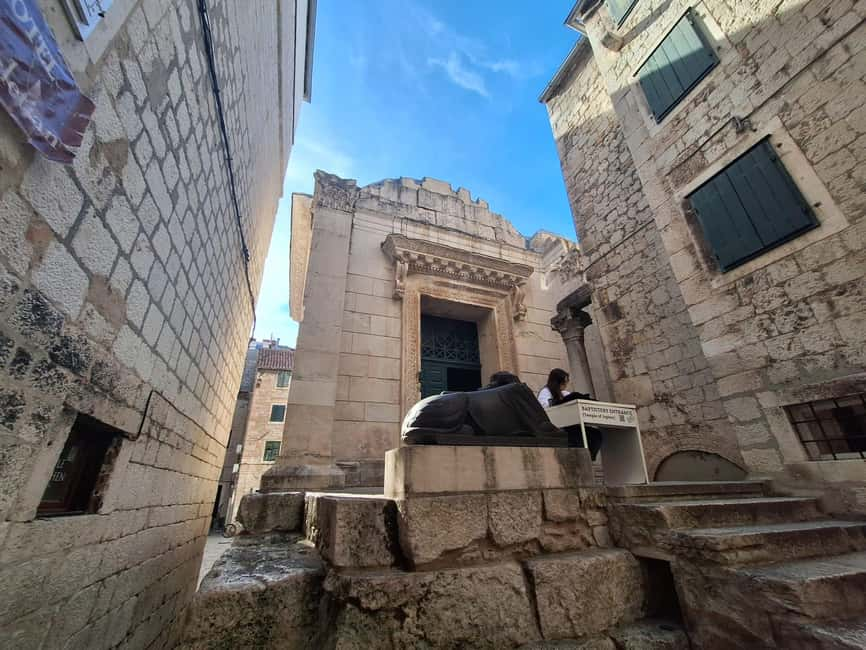
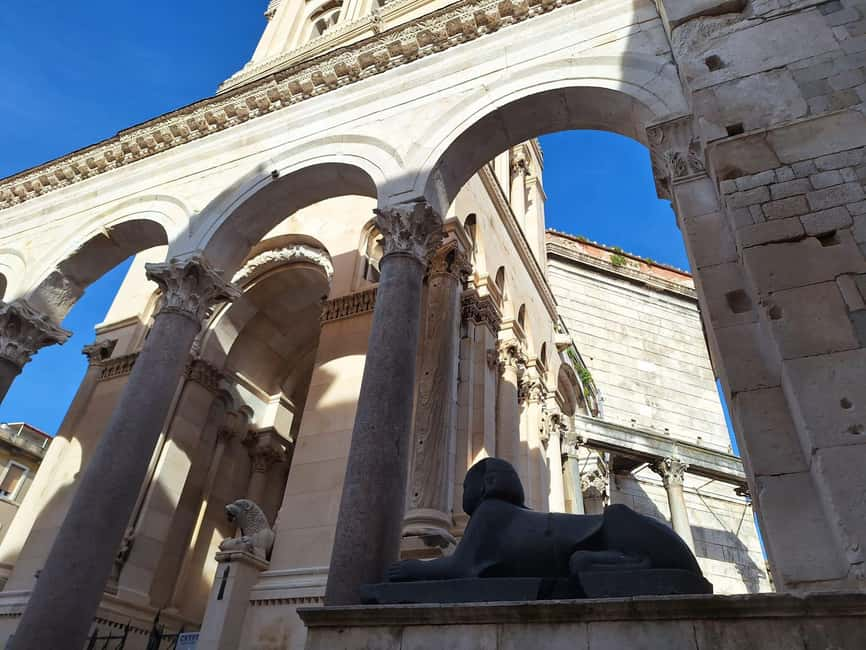
Jupiter’s Temple is a brief stop, listed at about five minutes. The time is short, but the site is memorable. A headless Sphinx guards the entrance, which gives the guide an easy opening to explain the unusual objects and influences brought into the palace.
This is a good example of why the tour is more than a route between photo spots. The temple is small, and its history can be easy to miss if you walk past without explanation. Your guide also uses questions and riddles, including the Sphinx’s riddle, to keep you involved instead of giving one long speech.
Do not expect a lengthy archaeological lecture here. The stop is compact and works best as part of the larger story of imperial power, religion, and reuse. If you want extra time for photographs, say so, but remember that lingering at one site may shorten time elsewhere.
More Walking Tours in Split
- Split: Old Town and Diocletian Palace Walking Tour
★ 4.9 · 4,727 reviews - Walking Tour of Split and Diocletian’s Palace
★ 5.0 · 2,588 reviews - Split & Diocletian’s Palace Walking Tour
★ 5.0 · 1,125 reviews - Split: Diocletian Palace & Old Town Guided Walking Tour
★ 4.7 · 882 reviews
The Vestibule and the palace’s clever layout

The Vestibule is a rounded space that once helped connect the palace’s public and private areas. The tour allows around 10 minutes here, enough to hear how the palace was organized and why the route between rooms mattered.
The description of a human mousetrap adds a playful edge to the explanation. It is the kind of phrase that helps you remember the layout after the tour ends. Rather than memorizing architectural terms, you begin to understand how entrances, passages, and controlled movement shaped the imperial residence.
The Vestibule also helps explain the palace as a whole. Diocletian’s home was not only a retreat. It was a fortified complex with ceremonial spaces, religious buildings, and service areas. The walking route connects those parts without asking you to study a map first.
Diocletian’s Cellars and the Game of Thrones connection
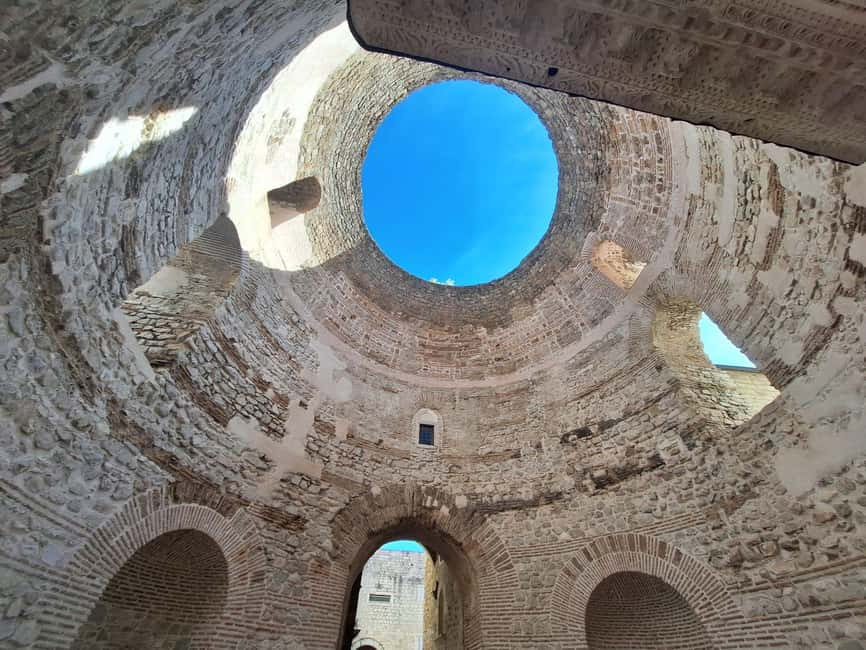
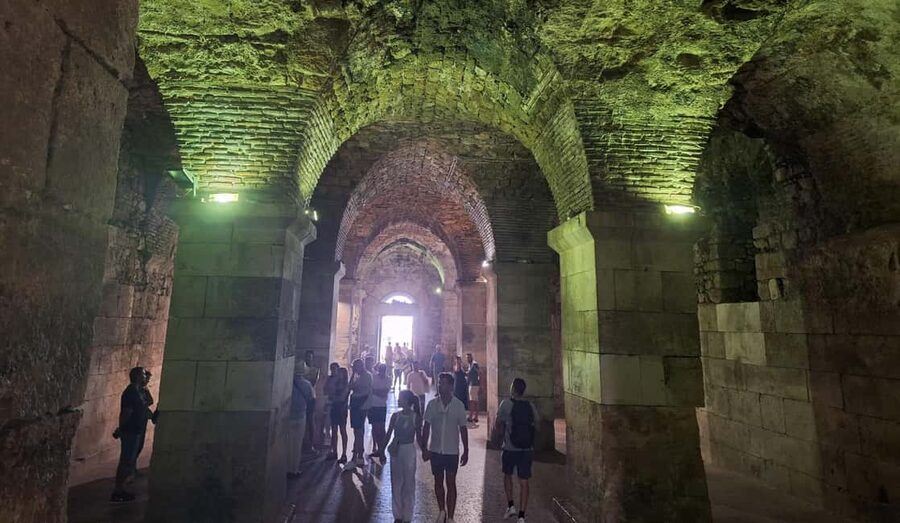
The cellars are one of the strongest parts of the tour, particularly if you know the Game of Thrones connection. These underground rooms were used as the setting where Daenerys’s dragons were chained, and where the Unsullied fought the Sons of the Harpy.
The cellars also have value beyond television. They show how the palace was supported below ground and give you a break from the heat. Marko’s group found the cooler underground route especially helpful during a hot day. If you are visiting in summer, this part of the walk may feel like both sightseeing and relief.
The GoT references make the rooms easier to picture, but the guide does not rely on the show alone. You also hear about the palace’s original use and its later role in Split. That balance matters. Fans get familiar scenes, while people who have never watched the series still get a useful look at Roman construction and the city’s changing life.
The cellars can be dark and uneven compared with the open squares. Wear shoes with a firm grip and watch your step. Your guide will manage the route, but comfortable footwear is still your responsibility.
People’s Square and Fruit Square
After the palace core, the walk moves into People’s Square, also called Pjaca, and Fruit Square, or Voćni trg. These spaces show how Split extends beyond the Roman plan while remaining closely tied to it.
People’s Square gives you a sense of the later city. It is a useful contrast to the Peristyle because the scale and feel change as the route moves away from the imperial center. Your guide places the squares within the story of Split and its people, rather than treating them as isolated landmarks.
Fruit Square offers another chance to hear about local life. The tour includes advice on Dalmatian specialties, local eating habits, and where to find food. That is a real benefit if this is your first day in Split and you want more than a list of monuments.
The guide may also explain how much the Venetians paid for Split, another detail that connects the city to wider Adriatic politics. The story gives you a better sense of why control of Split mattered and how outside powers shaped the town.
Finishing on the palm-lined Riva
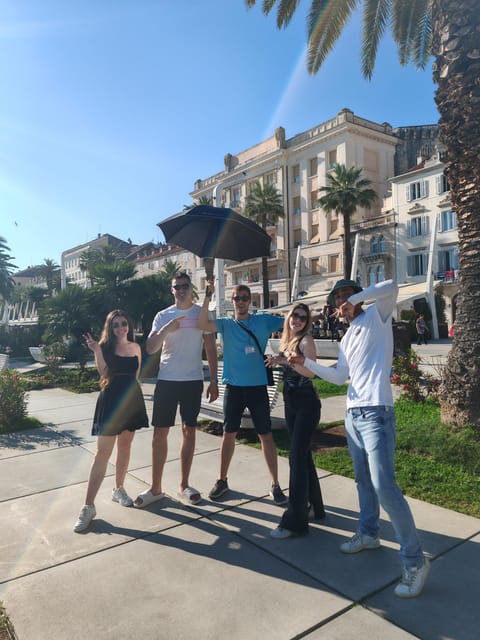
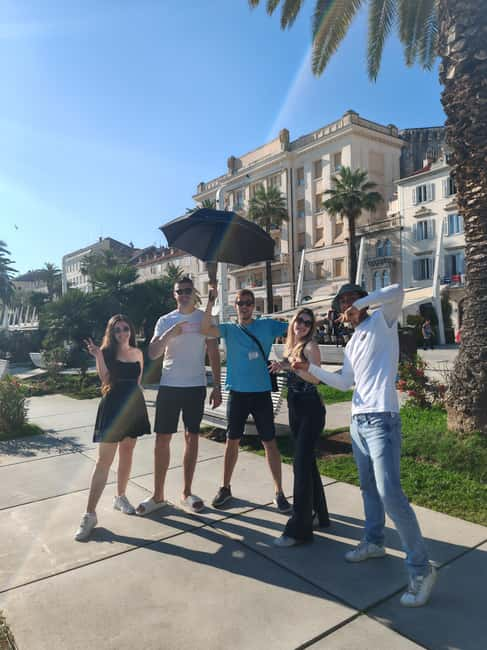
The walk ends on the Riva, Split’s seafront promenade lined with tall palm trees. This is a smart finish because you move from Roman stone and enclosed lanes to an open waterfront setting.
The Riva is also where the tour becomes especially practical. You can ask your guide how to spend the rest of the day, which islands to visit, where to find Dalmatian specialties, and what local food to try. The advice is more useful at this point because you have already seen the main old-town route and can plan around your remaining time.
The final drop-off can be at the historic core or Split Riva, depending on the selected option. No transport is needed during the walk itself. You should expect a pedestrian route through old streets, squares, underground rooms, and waterfront paths.
What $41 buys you
At $41 per person, this is not the cheapest way to stroll through Split. You can walk past several of these sights without paying anything. The question is what you want from the visit.
The fee makes better sense if your group is small, you want a licensed guide, or you prefer to understand the buildings rather than simply photograph them. A solo booking can result in very personal attention, while a private group option gives you more control over the pace and questions.
The value is also stronger for first-time visitors. The tour covers the essential old town in 90 minutes, then leaves you at the Riva with suggestions for the rest of your stay. If you already know Split well, the experience may feel less necessary unless you want the historical stories or the Game of Thrones locations.
The available feedback gives a clear picture of what the guides do well. Maya has explained the city in Spanish and used maps and photos. Nina has been praised for making the history fun and offering tips on food, beaches, and ice cream. Marc has handled questions well, and Marko has used humor, riddles, and the cooler cellars to keep the walk engaging.
The tour has a listed rating of 5 from 12 reviews, with praise centered on clear explanations, local knowledge, humor, language skills, and practical advice. Those details matter more than the number alone because they point to the experience you are actually buying: a guided introduction with personality, not a silent march past monuments.
Who will get the most from this walk
I would choose this tour for a first visit to Split, especially if you have only part of a day. The route covers the core sights quickly and gives you a framework for exploring on your own afterward.
It also suits people who like history with a human angle. The stories about Diocletian, the Sphinx, the Venetians, and local customs make the old stones easier to remember. Game of Thrones fans get an added reason to visit the cellars, but you do not need to know the show to enjoy that section.
Families and mixed-age groups may appreciate the riddles, jokes, and short stops. Spanish speakers can book a Spanish-language guide, while English is also available. A private group may be worth considering if you want to ask many questions or keep the walk focused on your interests.
I would hesitate only if you want a slow archaeological study, a long cathedral visit, or extensive time at each landmark. The 90-minute format is designed to orient you, not cover every historical detail.
Practical advice for a comfortable visit
Wear comfortable shoes. The route includes old-town streets and underground cellars, and you will get more from the walk if you are not thinking about sore feet.
Bring water, a hat, and sunscreen, particularly in summer. One useful advantage of the route is the time in the cellars, where you can escape the heat briefly, but much of the experience takes place outdoors.
Ask questions as you go. The guides have handled everything from basic city history to specific questions about food, beaches, islands, and local life. The walk is more useful when you treat it as a conversation rather than a one-way lecture.
You can cancel up to 24 hours before the activity for a full refund, and the reserve-now, pay-later option lets you keep your plans flexible. Starting times depend on availability, so check the schedule that suits your arrival.
Should you book the Split Old Town walking tour?
Book it if you want a compact, story-driven introduction to Split’s Roman palace and old town. The strongest reasons are the guide-led context, the cellars, the unusual details about Diocletian and the Sphinx, and the useful advice at the Riva.
At $41, the price is easiest to justify with a small group or private option. If you are happy to wander without explanations, you can see many of the same areas on your own. But if you want to understand why modern Split lives inside an ancient palace, this walk gives you a strong start in 90 minutes.
FAQ
How long does the Split history walking tour last?
The tour lasts 90 minutes.
How much does the tour cost?
The listed price is $41 per person.
Which languages are available?
The live tour is available in English and Spanish.
Where does the tour meet?
The meeting point depends on the option you book. Private tours include a private meeting point.
Is pickup available?
Optional pickup is available. You can provide your hotel name and street, or note that you are arriving by cruise ship.
Is a private group option available?
Yes, a private group is available.
Which sights are included?
The route includes the Golden Gate, Đardin Park, Peristyle, Mausoleum, Jupiter’s Temple, Vestibule, Diocletian’s Cellars, People’s Square, Fruit Square, and the Riva.
What should you bring?
Bring comfortable shoes, a hat, sunscreen, and water.
Can you cancel for a full refund?
Yes. You can cancel up to 24 hours in advance for a full refund.
Just added around Split
- Split Day Trip from Dubrovnik★ 4.0 · 59 reviews
- Dubrovnik to Split Private Transfer with Local Experienced Driver★ 5.0 · 52 reviews
- Private Transfer from Dubrovnik to Split★ 5.0 · 3 reviews
- Private Transfer from Dubrovnik to Split with 2 hours for sightseeing★ 5.0 · 50 reviews
- Private Transfer: Dubrovnik to Split★ 5.0 · 7 reviews
- Dubrovnik to Split Private Transfer with Mostar Town★ 5.0 · 38 reviews
- Private Tour: Split Day Trip from Dubrovnik★ 5.0 · 9 reviews
- Private Day Trip :Dubrovnik- Mostar- Split★ 5.0 · 3 reviews
Historical Tours, compared.


Walking Tour of Split with a ‘Magister’ of History
Read our review →


Split History and Gastro Small-Group Tour with Food and Drinks
Read our review →
SPLIT-PREMIUM Emperor’s Walking Tour for History Lovers + Museum
Read our review →Browse the lists this tour appears in