
Reviewed · HISTORICAL TOURS
Split: Private Roman History & Market Tour
Split’s Roman palace is not a quiet ruin. It is the old center of daily life, with homes, cafés, shops, laundry, and ancient stone all packed into the same walls. This private tour makes that mix easier to understand, pairing Diocletian’s Palace with a stop at the Green Market, where seasonal food helps explain how locals live.
I like the market tastings and the chance to hear local customs from a guide born and raised in Split. I also like the small private format, which gives you room to ask about the golden toe of Gregory of Nin, Hajduk, or the palace’s odd corners. The main drawback is the price: at $280 per person for two hours, it is a costly introduction, especially since several major palace sights require separate entrance fees.
Key Points

- Roman history inside a living neighborhood: Explore Peristil, the Vestibule, Golden Gates, and a private section of Diocletian’s Palace while residents still go about their day.
- A real food stop: Taste seasonal fruit, vegetables, olive oil, rakija, cheese, or dried figs at Split’s Green Market.
- Local customs with ancient roots: Learn about rituals Dalmatians still respect from Illyrian times and how food shapes local hospitality.
- Personal guiding: Guides such as Ted and Ivan have led this experience, with past tours praised for clear English, good pacing, and useful anecdotes.
- A private two-hour visit: You get a focused introduction rather than an all-day history lesson, but the short time means some sights remain outside the tour.
- Carbon-neutral operation: The experience is run by a B Corp certified company that presents travel as a force for good.
Why Split’s Palace Makes a Good First Walk
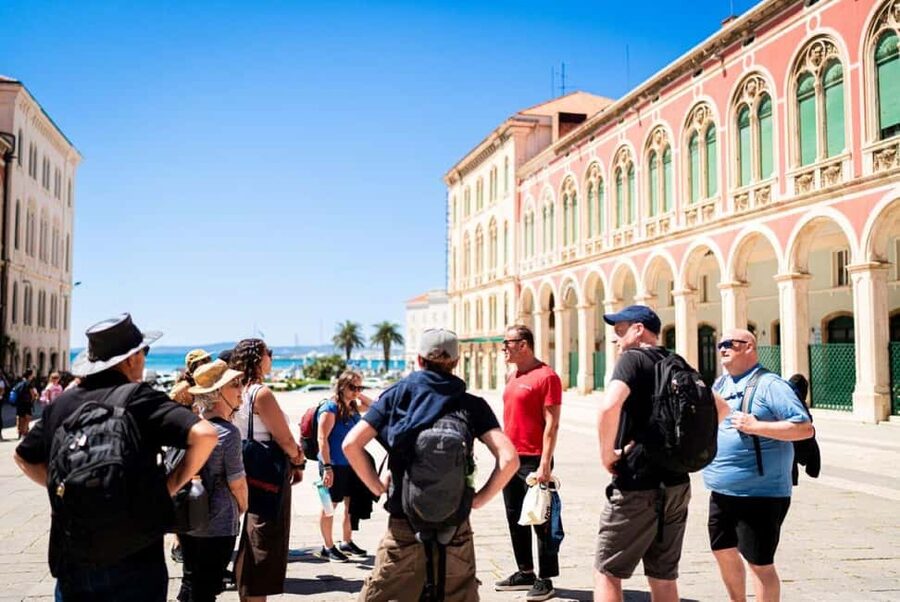
Split can feel confusing at first. Streets twist through Roman walls, medieval buildings, and modern homes, and the line between archaeological site and ordinary neighborhood is easy to miss. This tour gives you a guide to that puzzle.
Diocletian’s Palace was built for the Roman emperor Diocletian, who retired there after ruling the empire. More than 1,700 years later, the palace area remains part of the city rather than a fenced-off monument. That is the central appeal. You are not just looking at columns from a distance. You are walking along paths used by residents and, long before them, by the emperor and his household.
The experience begins near the start of the Riva promenade, beside the iron map and model of the city. This is a practical meeting point because the Riva is easy to find, though you should allow a little time to locate the exact model before the start.
A private tour works well here. Split’s old center has narrow passages and many small details, so a guide can stop without holding up a large group. You can also ask direct questions about modern Split, not only Roman dates and building methods.
More Historical Tours in Split
- Walking Tour of Split with a ‘Magister’ of History
★ 5.0 · 1,122 reviews - Split Walking Tour with Professor of History
★ 5.0 · 926 reviews - Split: History and Heritage Walking Tour
★ 4.9 · 650 reviews
The Green Market: Let Food Explain Dalmatia
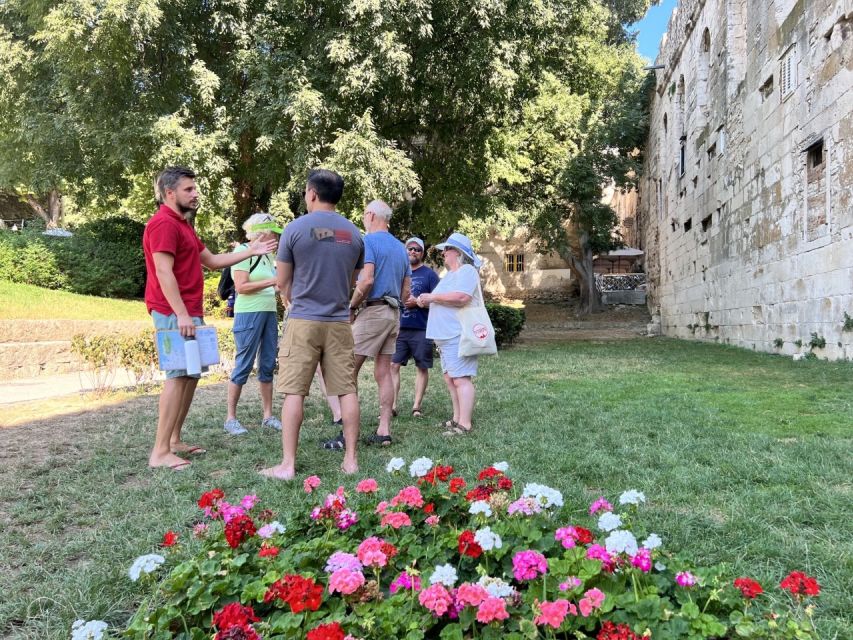
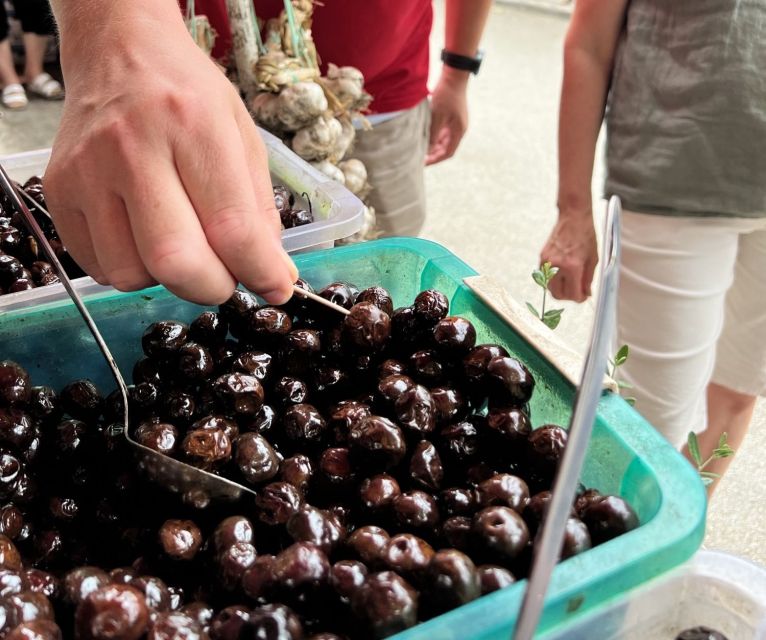
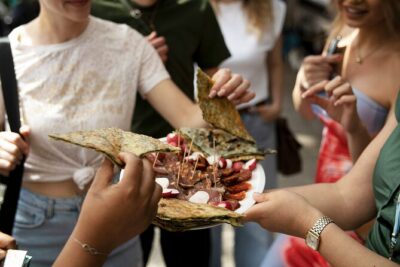
The Green Market is one of the smartest stops on this tour because it gives you a sense of Split beyond its monuments. Your guide introduces local vendors and explains how residents shop for produce and everyday food. The experience includes tastings, with possibilities such as seasonal fruit, vegetables, olive oil, rakija, cheese, and dried figs.
The exact selection can change with the season. That is a plus, not a flaw. You are not being served a fixed display designed only for tourists. Instead, the food reflects what is available at the market when you visit.
I especially like the way this stop connects food with local manners. The tour explains the Dalmatian idea that the way to a person’s heart is through the stomach. That saying is more useful than a list of dishes because it helps you understand why food plays such a large role in social life.
Expect samples rather than a full meal. Additional food and drinks are not included, so bring a little extra money if something catches your eye. One past booking described the lunch as very good, but the official plan here is a tasting stop, not a guaranteed sit-down lunch. Keep that distinction in mind when comparing this tour with a dedicated food walk.
The market is also a good place to ask questions about olive oil, dried fruit, cheese, and rakija. Your guide can explain how these products fit into local habits, though the exact level of detail will depend on the person leading your tour. Guides named in past bookings include Ted and Ivan, and the feedback about both focused on clear explanations and strong local knowledge.
Entering Diocletian’s Palace Through the Golden Gates
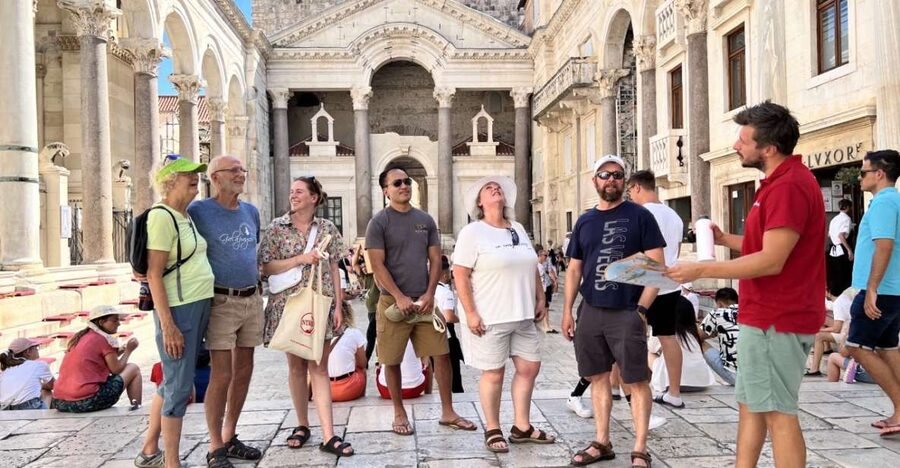
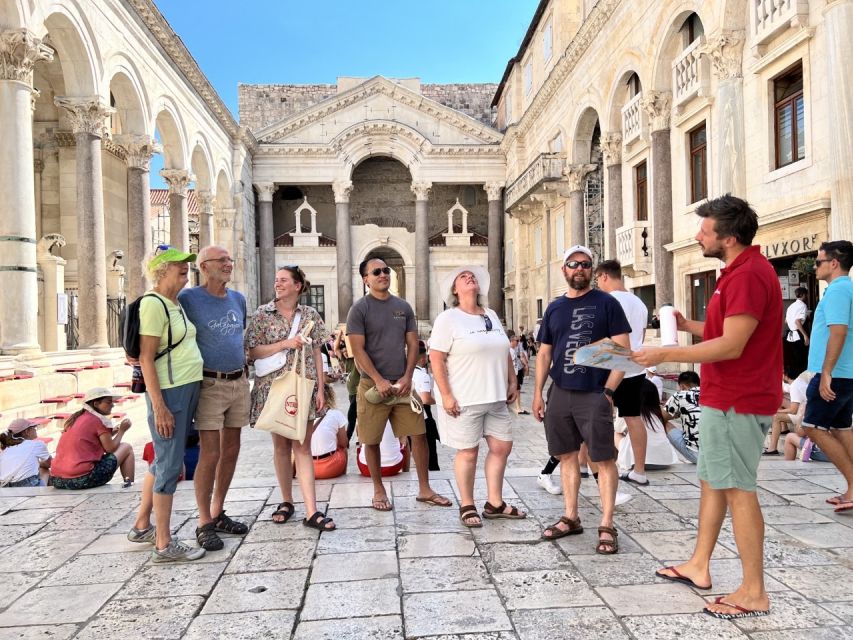
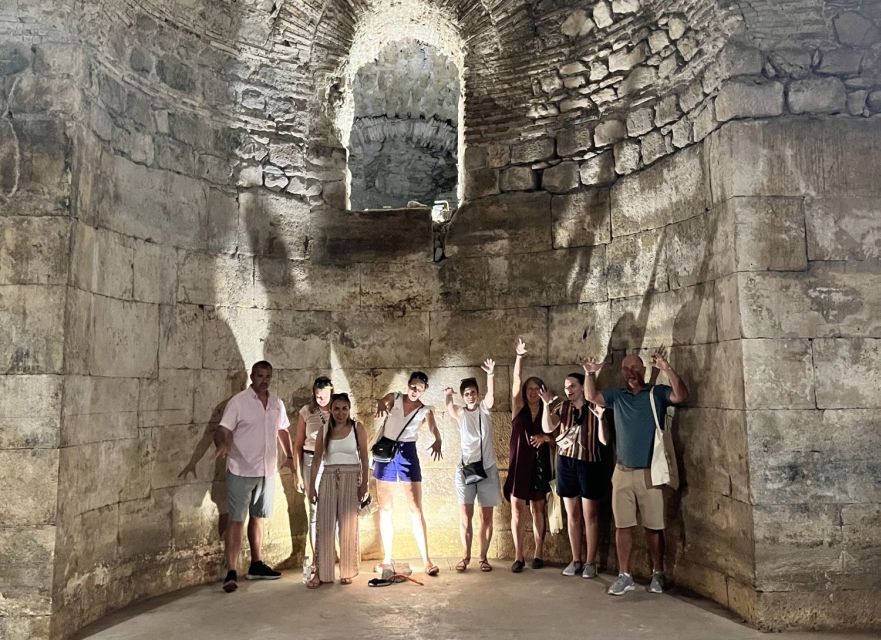
After the market, the tour turns toward the palace. You visit the Golden Gates, the main square within the palace walls, the Vestibule, and a private section of the palace. These stops give you the broad shape of the complex without requiring a full day underground or in museums.
The Golden Gates were one of the palace’s main entrances. From here, the guide can help you see how the Roman plan shaped later Split. The palace was not simply a grand house. It was a fortified complex with ceremonial areas, religious spaces, living quarters, and routes for movement.
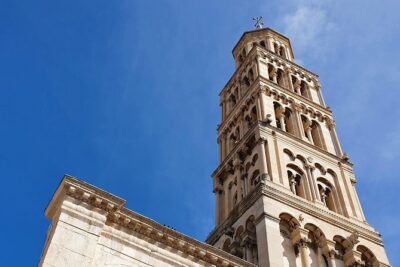
The Vestibule is one of the more memorable spaces because its shape and scale hint at the emperor’s status. This was an approach to the imperial apartments, and the design makes the visitor feel the transition from public space to royal space. Your guide also points out smaller clues in the walls, where centuries of changes have left an unusual blend of Roman, medieval, and modern details.
Peristil, the palace’s main square, is the natural heart of the visit. Here you can picture imperial ceremonies while also watching present-day Split use the same space. The contrast is the point. A Roman emperor once controlled access to this area, but modern residents and local businesses now make it part of everyday life.
The tour also explores stories hidden in the palace walls. You may hear why Diocletian loved salad and why a piece of the legendary White Stone is connected with happiness. These details keep the history human. They also give you small stories to remember after dates and architectural terms have faded.
The palace has a strong connection with popular culture, too. It was used as a setting for The Game of Thrones. That may interest fans, but the tour does not rely on screen trivia. The more useful lesson is how the palace remains a real part of Split rather than a set built for visitors.
Roman, Medieval, and Modern Split in One Block
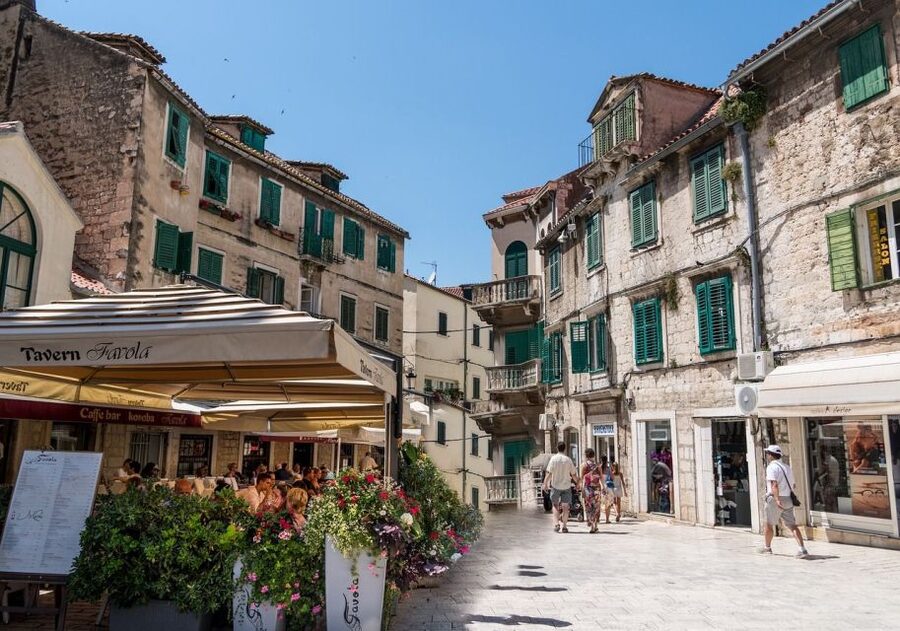
The most valuable part of this tour is the way it joins several periods in one short walk. Roman stone sits beside medieval construction, newer apartments, cafés, and streets used by local people. A guide can show you how the layers fit together instead of treating each period as a separate lecture.
You also hear about rituals Dalmatians still respect from Illyrian times. The supplied details do not specify every ritual, so you should think of this as a chance to learn local customs in context rather than a fixed catalogue of ancient practices. Ask follow-up questions if a tradition interests you.
The stop at the statue of Gregory of Nin adds another piece of local life. You can make a wish at the statue’s golden toe. It is a small act, but it shows how a monument becomes part of the city’s daily habits. The guide may also explain why the toe is polished while the rest of the statue is not.
Hajduk is another important local reference. You will hear why the name appears throughout Split, from the suburbs to the old town. This helps explain local identity, which can be harder to understand than Roman architecture. You do not need to be a football fan to see that Hajduk matters deeply to the city.
A practical tip: approach Split with some admiration for the place. Local pride is strong, and the tour description openly reflects that feeling. You do not need to pretend that Split is perfect, but showing interest in what residents love will make conversations warmer and more rewarding.
More market and shopping walks in Split:
- Split: Historical & Gastro Treasures Tour with Green Market
★ 4.9 · 144 reviews
Finishing on the Riva
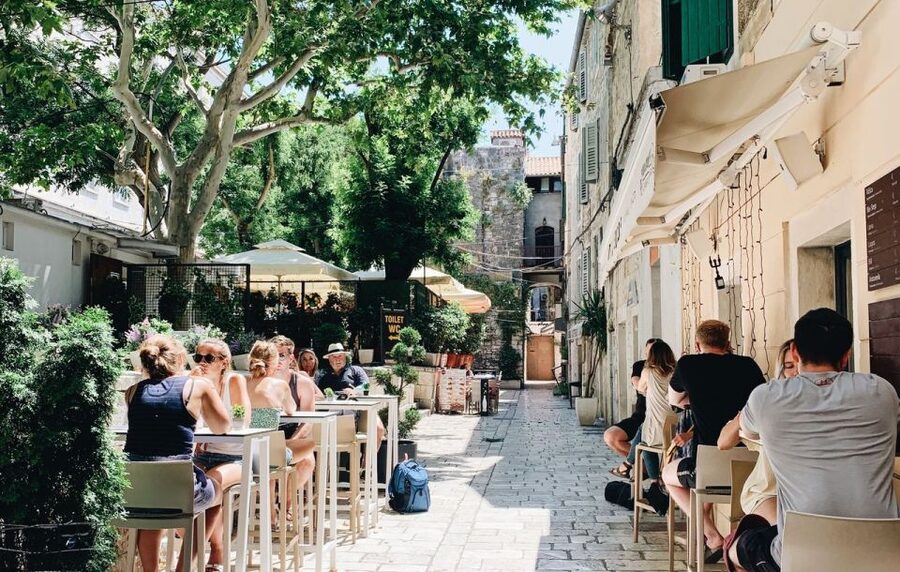
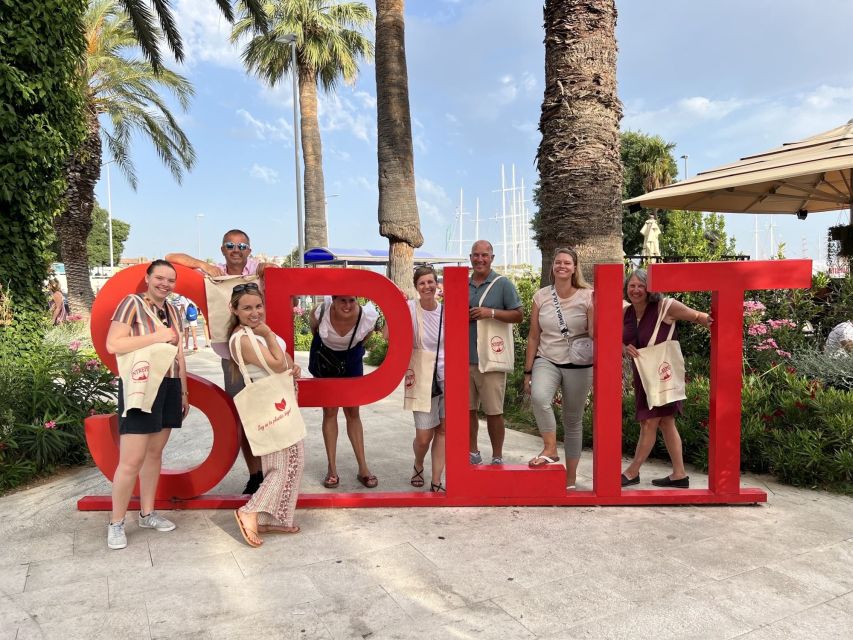
The tour ends on the Riva promenade. This waterfront walkway is a useful final point because you are left in the middle of Split’s social life, not at an isolated attraction. Your guide can point you toward favorite coffee shops and places for evening Dalmatian food and entertainment.
That final advice may be more useful than it sounds. Split’s center is compact, but the best choice for a coffee or evening meal is not always obvious during a first visit. A local guide can help you decide how to use the rest of your day.
The two-hour length keeps the tour manageable. You can fit it before lunch, after arriving by ferry, or at the start of a longer day in the old town. The tradeoff is that you will not have time to explore every major paid attraction. Cathedral and former mausoleum tickets, the underground area, Bell Tower, museums, and Temple of Jupiter are not included.
If you want to visit those places, plan them separately. This experience is better understood as an orientation to Split’s living center, with selected palace highlights and food tastings, rather than a complete archaeological tour.
Is $280 Per Person Good Value?
At $280 per person, this is an expensive two-hour activity. The price is easier to justify for a private group that values personal attention, flexible conversation, and a local guide. It is harder to justify if you mainly want basic facts about Diocletian’s Palace or a quick walk through the old town.
The included tastings improve the value. So does the private section of the palace and the ability to ask questions without a large group setting the pace. The carbon-neutral format and B Corp certification may also matter to you if responsible tourism is part of your booking decision.
Still, compare the cost with your priorities. If you are visiting Split for only a short time and want a polished introduction that combines food, history, and local customs, the price may be acceptable. If you have several days, you could explore the public streets independently and spend your money on palace admission, meals, or another guided activity.
The strongest value here is not the number of sights. It is the connection between them. The market explains food and hospitality. The palace explains the city’s physical form. Gregory of Nin and Hajduk add local identity. The Riva gives you a place to continue exploring.
Who Should Book This Split Tour?
I would recommend this experience to first-time visitors who want a quick but personal introduction to Split. It suits couples, families, and private groups who prefer an English-speaking guide rather than a large scheduled walk.
Families should note that children under six can join free of charge, but you must inform the operator in advance. The tour is also child-friendly in subject matter because the food stop, statue, palace stories, and short duration offer variety.
History fans who want every major Roman site will probably find the plan too limited unless they add separate visits. Food-focused visitors should also know that this is a tasting stop within a history tour, not a full meal or a dedicated cooking experience.
Past bookings repeatedly praised the guides’ clear English, good pacing, and engaging anecdotes. One French booking described a female guide who showed beautiful corners of the city and ended with an especially enjoyable aperitif. The published inclusions do not promise a specific aperitif, so treat that as a possible touch rather than a guaranteed part of every departure.
Booking is flexible: you can cancel up to 24 hours before the start for a full refund, and you can reserve now and pay later. Check the available start times when choosing your date.
Final Verdict: A Personal Introduction, Not a Complete Palace Tour
Book this tour if you want Split explained through both its stones and its food. The market tastings, local customs, palace stories, and Riva recommendations give you a useful first look at how the city works.
Skip it if $280 per person feels too high for two hours, or if your main goal is a full visit to the cathedral, underground palace, museums, Bell Tower, and Temple of Jupiter. You will need separate tickets and more time for those.
For the right visitor, this is a friendly, focused way to begin in Split. You leave with a clearer map, a few local food ideas, stories about Diocletian, and better context for the city’s proud modern identity.
FAQ
How long does the Split Roman History and Market Tour last?
The tour lasts two hours.
Where does the tour begin?
It begins at the start of the Riva promenade, near the mock-up model and iron map of the city.
What food is included?
The Green Market stop includes tastings that may include seasonal fruits, vegetables, olive oil, rakija, cheese, or dried figs.
Is the tour private?
Yes. It is offered as a private group experience with a live English-speaking guide.
Are palace admission fees included?
No. Entrance fees for the cathedral and former mausoleum, palace underground, Bell Tower, museums, and Temple of Jupiter are not included.
Can children join the tour?
Yes. The tour is child-friendly, and children under six may join free of charge. You must inform the operator if you are bringing a child under six.
Just added around Split
- Split Day Trip from Dubrovnik★ 4.0 · 59 reviews
- Dubrovnik to Split Private Transfer with Local Experienced Driver★ 5.0 · 52 reviews
- Private Transfer from Dubrovnik to Split★ 5.0 · 3 reviews
- Private Transfer from Dubrovnik to Split with 2 hours for sightseeing★ 5.0 · 50 reviews
- Private Transfer: Dubrovnik to Split★ 5.0 · 7 reviews
- Dubrovnik to Split Private Transfer with Mostar Town★ 5.0 · 38 reviews
- Private Tour: Split Day Trip from Dubrovnik★ 5.0 · 9 reviews
- Private Day Trip :Dubrovnik- Mostar- Split★ 5.0 · 3 reviews
Historical Tours, compared.

Walking Tour of Split with a ‘Magister’ of History
Read our review →
Split History and Gastro Small-Group Tour with Food and Drinks
Read our review →
SPLIT-PREMIUM Emperor’s Walking Tour for History Lovers + Museum
Read our review →Browse the lists this tour appears in