
Reviewed · HISTORICAL TOURS
Pula: Historic Walking Tour with Local Guide & City Views
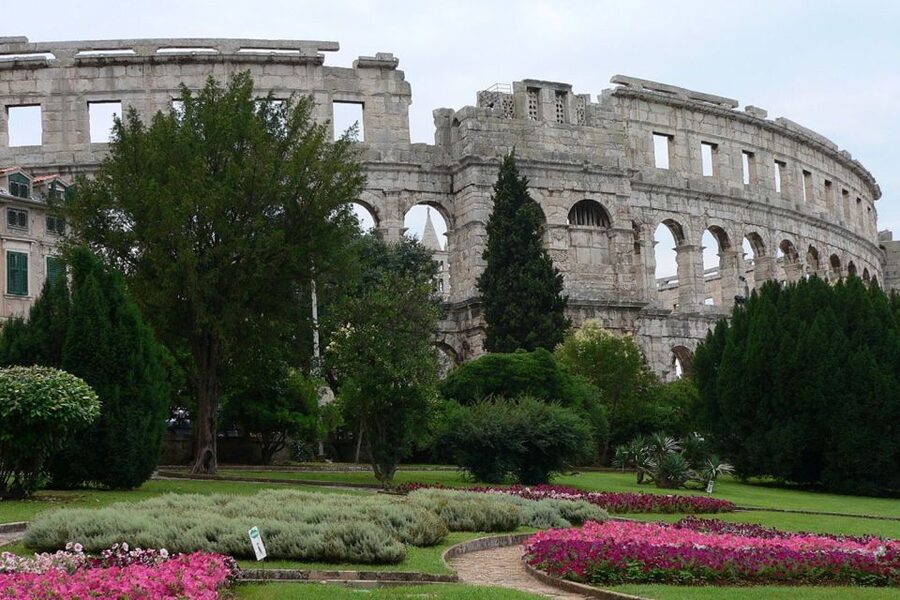
Pula’s Roman Amphitheatre is only the beginning. On this 1.5-hour walk, local guide Marina connects the arena to Roman gates, a working market, the Forum, and the curious goat on Istria’s flag. You get more than a parade of old stones: you get the city’s story from someone born here.
I like the personal local angle, especially Marina’s focus on daily life, food, culture, and the changes she has seen herself. I also like the compact route, which covers major sights without taking half a day. The main consideration is that the tour is in German, and entrance fees are not included.
Key points at a glance
- Meet beneath the wooden roof at the Amphitheatre entrance, then begin with Pula’s most famous Roman monument.
- Hear why the arena served purposes beyond gladiator games, giving the site a broader place in Pula’s story.
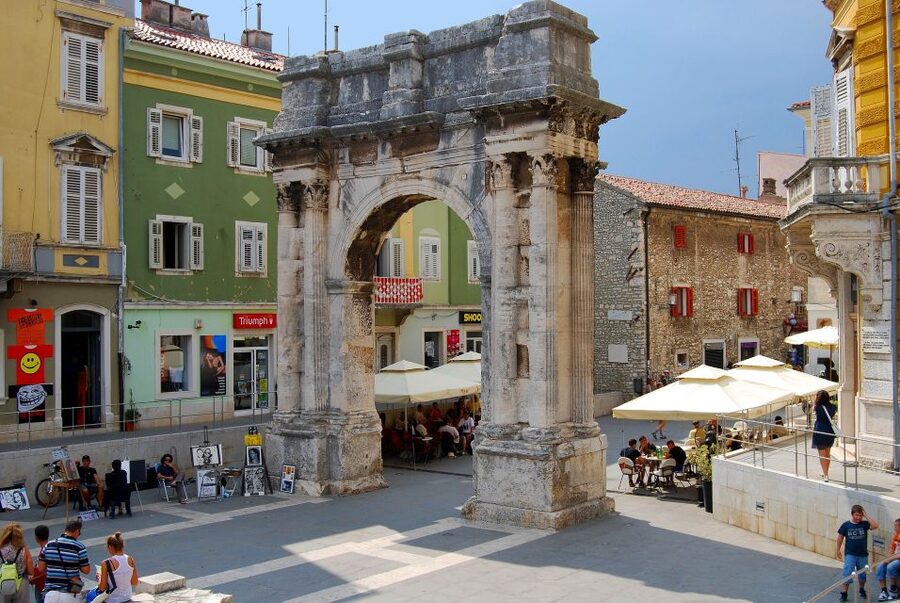
- See three surviving Roman gates, the Twin, Hercules, and Sergii gates, with attention to their preserved details.
- Stop at the farmer’s market, where local products offer a look at Istrian food and everyday life.
- Finish at Forum square, with the August Temple, Venetian city hall, and the story behind the goat on Istria’s regional flag.
- Tour in German with Marina, a licensed Istrian guide born in Pula and working in the field for more than 18 years.
Starting beneath Pula’s Roman Amphitheatre
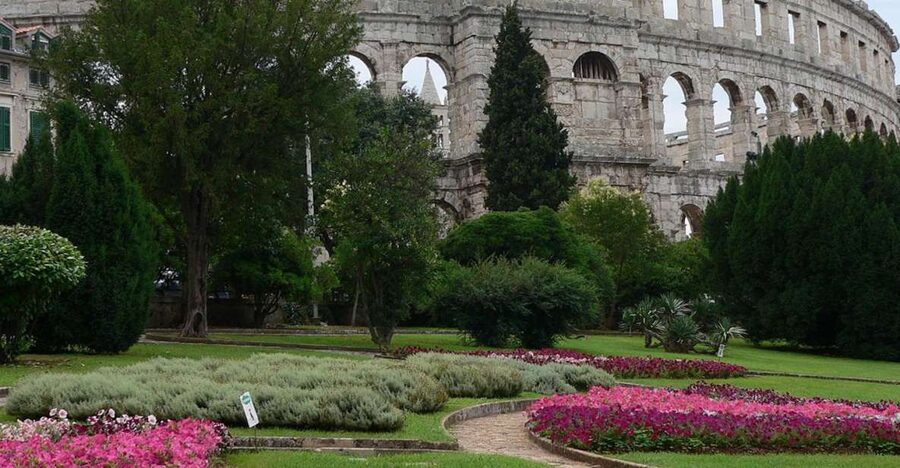
The tour begins at the entrance to the Arena, under the wooden roof. This is a practical meeting point because Pula’s most famous sight is impossible to miss, and you can orient yourself before walking into the older center.
The Amphitheatre is a powerful first stop. Its scale gives you an immediate sense of Pula’s importance in Roman times, but Marina’s approach goes beyond the familiar gladiator story. You learn what the building was constructed for and how it was used in other ways, which gives the monument more meaning than a quick photograph from outside.
The tour is described as a walking visit rather than an interior sightseeing program. Entrance fees are not included, so you should not assume that the ticket to the Amphitheatre is part of the $28 price. If you want to tour the inside separately, check the current admission arrangements before booking or plan to do it before or after the walk.
I like beginning here because the Arena provides a clear reference point for everything that follows. Once you understand Pula as a Roman city, the gates, Forum, and street plan make more sense.
More Walking Tours in Pula
- Pula walking tour
★ 5.0 · 96 reviews - Pula: Historic Sites Guided Walking Tour
★ 4.8 · 78 reviews - Pula Essentials Walking Tour
★ 4.8 · 64 reviews
Roman gates hidden in the city streets
From the Amphitheatre, the route leads toward other antique parts of Pula. Three Roman gates still survive: the Twin Gate, Hercules Gate, and Sergii Gate. Each one gives you a different way to read the old city.
The Twin Gate is known for its paired opening and preserved architectural details. The Hercules Gate is especially useful for seeing how a much older city can appear in ordinary urban surroundings. The Sergii Gate, also called the Golden Gate, is one of Pula’s better-known landmarks and helps show the city’s connection to Roman public life and local families.
The value here is not simply counting monuments. A guide can point out the small details that are easy to miss when you walk alone: carved decoration, the shape of an arch, or the relationship between an old gate and the surrounding streets. Marina’s long experience in Istria matters most at moments like these, when a short explanation can turn a weathered stone structure into a piece of the city’s story.
The walk passes through streets shaped by several cultures over many centuries. That layered character is one of Pula’s pleasures. You are not visiting a museum isolated from modern life. You are walking through a living city where Roman remains, later buildings, shops, and local routines occupy the same compact center.
The farmer’s market and the taste of local life
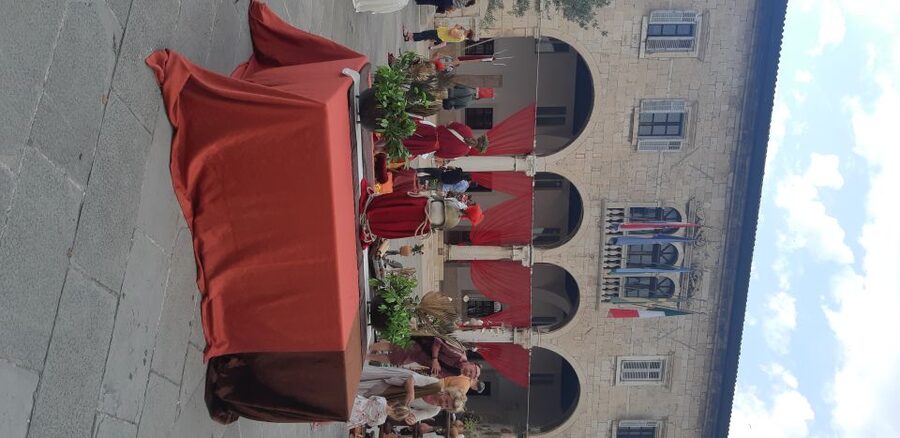
The stop at Pula’s farmer’s market gives the tour a welcome change of pace. After Roman architecture, you see the place where people buy and sell products tied to Istrian soil.
This is one of the most useful parts of the route if you want to understand Pula beyond its monuments. Markets show what a place eats, grows, and values. Marina is a passionate cook and can talk about local cuisine, so the stop is not just a pass through a food hall or produce area. It opens the door to conversation about the region’s ingredients and daily habits.
The exact products available can change with the season, so you should not expect a fixed tasting menu or a guaranteed food sample. The tour includes a guided visit, not a meal. Still, the market adds something that many short city walks miss: a connection to present-day Pula.
I would pay attention here if you are planning meals later in your trip. Marina can offer local tips, and the tour description makes clear that food is one of the subjects she enjoys discussing. Since the walk can focus on local lifestyle, culture, nature, or food, you may also be able to steer the conversation toward the subjects that matter most to you.
Forum square, the August Temple, and a Venetian city hall
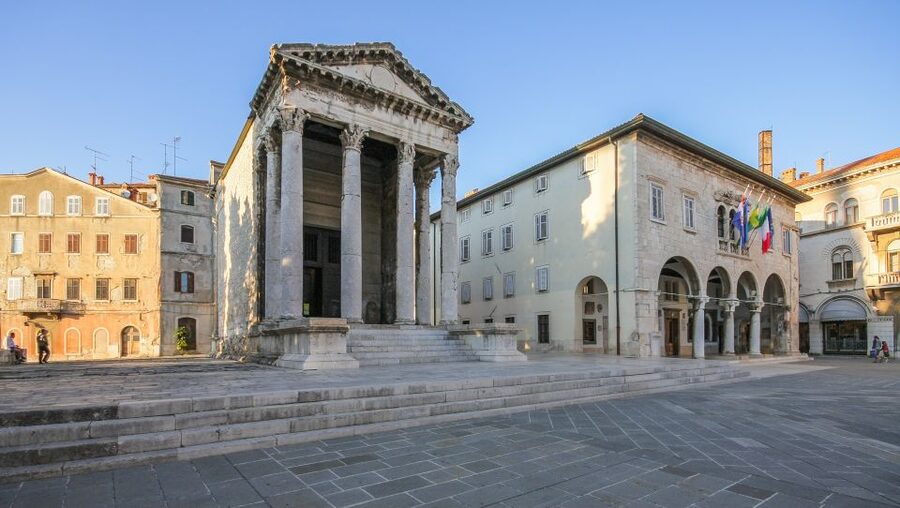
The route continues to Forum square, the traditional heart of Pula. In Roman times, the Forum served as a center for public life and trade. Today, the square brings together remains from antiquity and later Venetian architecture.
You see the remains of the August Temple, one of the clearest reminders of the Roman period in this part of the city. Marina explains the role of the Forum in Roman urban life, helping you connect the square to the larger pattern of Roman cities.
The Venetian city hall adds another layer. Pula was shaped by more than one ruling power and cultural period, and this building shows how the city continued to change after Roman times. The contrast between the August Temple and the later city hall makes the square especially effective as a final stop.
Then comes the local flag question: why is there a goat on Istria’s regional flag? This is exactly the sort of detail that makes a short tour memorable. It may not appear in a standard list of major sights, but it gives you a local symbol to recognize during the rest of your time in Istria.
More Historical Tours in Pula:
- Dubrovnik Old Town History Walking Tour
★ 5.0 · 1,684 reviews - Walking Tour of Split with a ‘Magister’ of History
★ 5.0 · 1,122 reviews - Split Walking Tour with Professor of History
★ 5.0 · 926 reviews - Split: History and Heritage Walking Tour
★ 4.9 · 650 reviews
Marina’s local perspective and flexible conversation
Marina is a licensed guide who was born in Pula and has worked as a guide in Istria for more than 18 years. She specializes in German-language tours, which makes this experience a clear choice for German-speaking visitors who want to ask questions without relying on translated explanations.
Her local background is important because the tour is not limited to dates and building names. She has lived through changes in the city and can discuss both its past and its present. The strongest part of this approach is the chance to hear about people, habits, food, and local life alongside the famous monuments.
The tour is presented as individualized, with room to focus on subjects that interest you. That does not mean every stop can be changed or that the route is entirely private. It means the conversation can be shaped around local lifestyle, culture, nature, or food instead of following a rigid script.
The experience is especially well suited to you if you enjoy asking questions. A guide-led walk can be less useful if you prefer to move quickly and read information alone, but it can change your view of a city when you want context and local interpretation. The strongest praise for this tour centers on how much people learn about Pula and its residents, and how those details can make the city look different afterward.
What $28 buys you
At $28 per person, the tour offers a reasonably focused introduction to Pula. You are paying for 1.5 hours with a licensed local guide, not for admission to the Amphitheatre or any other paid attraction.
The value is strongest if you want a clear first look at the city and would otherwise spend time trying to connect separate sights on your own. The route covers the Arena, three Roman gates, the farmer’s market, and Forum square. That is a good amount for 90 minutes, provided you are comfortable with a steady urban walk.
The price is less attractive if you only want access to the Amphitheatre itself. In that case, an entry ticket and self-guided visit may better match your plans. This tour earns its cost through explanation, local tips, and the chance to ask about subjects that a signboard will not cover.
You should also factor in the tour language. Since the live guide speaks German, the experience is best value when you understand German well enough to follow historical explanations and take part in conversation. The listed tour language is German, so it is not the right booking for an English-only visit.
Timing, comfort, and practical details
The walk lasts 1.5 hours, and starting times vary, so check availability for the date you want. The tour ends back at the meeting point, which makes it easy to continue sightseeing afterward or return to the Amphitheatre if you have arranged a separate visit.
The activity is listed as wheelchair accessible. Even so, a historic center can include old paving and uneven surfaces, so you may want to confirm any personal access needs when booking. The supplied information confirms accessibility, but it does not describe the exact street surfaces or restroom arrangements.
Wear comfortable shoes and leave room for pauses at the gates, market, and Forum. The distance may not be the main issue; the setting is an old city center, where stopping, turning, and looking closely are part of the experience.
Free cancellation is available up to 24 hours in advance for a full refund. You can also reserve now and pay later, which helps if your Istria plans are still shifting.
Who will enjoy this Pula walk most
I would recommend this tour to German-speaking visitors who want a short, personal introduction before exploring Pula on their own. It is also a good fit if you have limited time and want the main Roman and civic sights connected in one route.
Food lovers have a reason to choose it, too. The market stop and Marina’s interest in cooking give you a natural opening to ask about Istrian products and meals. If you are curious about local life rather than only ancient architecture, this focus adds real value.
Families and mixed-age groups may appreciate the 90-minute length. The tour is long enough to provide context but short enough to fit around other plans. The accessible designation may also help visitors who need a wheelchair-friendly activity, though individual access questions should be checked in advance.
You may want a different option if you require English, want extensive time inside the Amphitheatre, or prefer a tour devoted only to Roman archaeology. This walk covers several periods and subjects, so its strength is variety rather than specialist depth in one monument.
Should you book this tour?
Book it if you want Pula explained by someone who was born there, speaks German confidently, and can connect Roman remains with food, local life, and later Venetian rule. Marina’s route gives you the essential landmarks, but the small details, including the story of the goat on Istria’s flag, are what make the visit feel local.
Skip it if you need an English tour, want entrance fees included, or plan to spend most of your time inside the Arena. For everyone else, $28 is a fair price for a compact orientation with a licensed guide, useful local conversation, and a route that helps you see Pula as more than an ancient monument.
FAQ
Where does the Pula walking tour begin?
It begins at the entrance to Pula’s Roman Amphitheatre, under the wooden roof.
Where does the tour end?
The activity ends back at the meeting point at the Amphitheatre.
How long does the tour last?
The walking tour lasts 1.5 hours.
What language is the tour in?
The live tour is conducted in German.
Who guides the tour?
The guide is Marina, a licensed guide born in Pula who has worked in Istria for more than 18 years.
Is the Amphitheatre admission included?
No. Entrance fees are not included in the tour price.
What places are covered?
The route includes Pula’s Roman Amphitheatre, the Twin Gate, Hercules Gate, Sergii Gate, the farmer’s market, Forum square, the August Temple, and the Venetian city hall.
Is the tour wheelchair accessible?
Yes, the activity is listed as wheelchair accessible.
Can I cancel the booking for a refund?
Yes. You can cancel up to 24 hours in advance for a full refund.
Can I reserve now and pay later?
Yes. You can reserve your place and pay later.
Just added around Pula
- Pula: SUP Yoga Classes at Morning & Sunset★ 5.0 · 10 reviews
- Pula:Sunset Kayak tour with glowing transparent kayak★ 5.0 · 13 reviews
- Pula:Kayak Tour-Cliff jumping,snorkeling&free GoPro pictures★ 4.7 · 95 reviews
- Pula: Kayaking and Snorkeling Self-Guided Tour★ 4.4 · 55 reviews
- Pula: Private Dolphins & Sunset Tour With Dinner & Drinks★ 4.9 · 11 reviews
- Pula: Private Introduction to Scuba Diving★ 5.0 · 10 reviews
- Pula: Old Town Walking Tour for Foodies with Dinner and Wine★ 4.6 · 18 reviews
- Pula: Kamenjak Bike Tour with Blue Cave and Cliffs Visit★ 5.0 · 7 reviews
Historical Tours, compared.
Walking Tour of Split with a ‘Magister’ of History
Read our review →
Split History and Gastro Small-Group Tour with Food and Drinks
Read our review →
SPLIT-PREMIUM Emperor’s Walking Tour for History Lovers + Museum
Read our review →Browse the lists this tour appears in