
Reviewed · WALKING TOURS
Split: Cultural Walking Tour with Anthropologist Guide
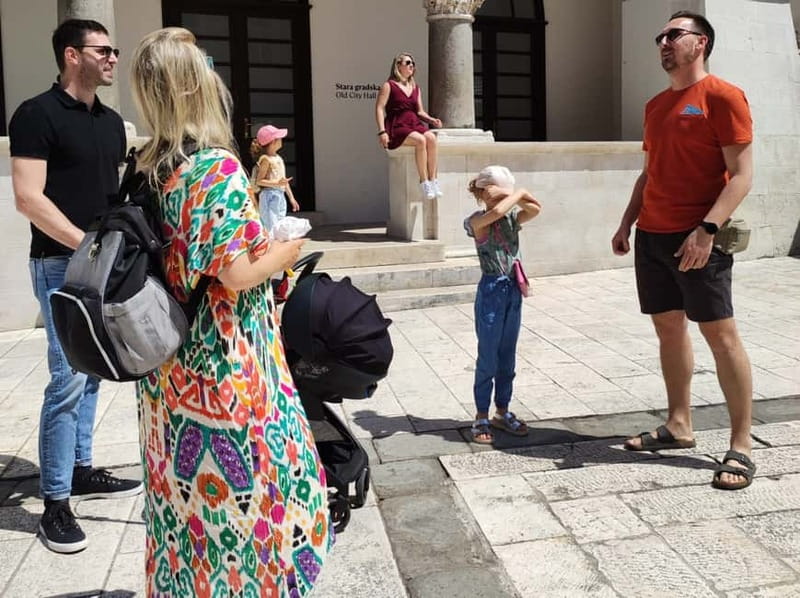
Split’s old center is more than a handsome collection of Roman stones. It is also a place where questions about Croatian identity, religion, war, politics, ethnicity, sexuality, and economic change are still very much alive. This two-hour cultural walk uses the main sights of central Split to discuss those subjects without smoothing away the difficult parts.
I like two things right away: Marin’s anthropological approach, which connects buildings to the people who use them, and the tour’s willingness to address contested subjects directly. The additional audio-visual material should also help turn abstract history into something easier to follow. The main consideration is that this is not a light sightseeing stroll. If you want only dates, legends, and postcard views, the subject matter may feel heavier than expected.
Key points to know
- Controversial subjects are central: Expect discussion of politics, religion, identity, demographics, sexuality, economics, and disputed history.
- Marin leads the walk: He works as a cultural anthropologist and school teacher, bringing both academic context and clear explanations.
- The route covers Split’s core sights: Golden Gate, Peristil, Diocletian’s Cellars, People’s Square, Židovski prolaz, Fruit Square, the Riva, and Republic Square.
- The tour links past and present: Ancient and medieval sites become starting points for understanding modern Croatian society.
- It suits curious first-time visitors: You see the central monuments while gaining context that a standard sightseeing tour may skip.
- The price is $33: For two hours with an English-speaking live guide and extra audio-visual material, it offers solid value if you want interpretation rather than a quick photo walk.
Why this Split walk takes a different path
Many city tours use monuments as endpoints. You hear when a gate was built, who occupied a palace, and which square is oldest, then move on. This experience uses those same places as evidence in a larger discussion about how people in Split and Croatia understand themselves.
That difference matters. A Roman palace is not only an ancient structure. A square is not only a place for coffee. A religious passage, a waterfront, or a public monument can reveal who has been remembered, who has been left out, and how political ideas have changed over time.
The tour was designed for people interested in contested history and contested contemporary issues. You do not need a specialist background. One review describes the material as suitable for anyone over 15, and that seems a fair guide to the tone: accessible, but not simplified into a string of easy answers.
Marin’s background helps shape the experience. As a cultural anthropologist and school teacher, he brings together social research, history, and teaching skill. The focus is not technical archaeology. Instead, you should expect a guided conversation about how monuments, communities, and political choices connect.
More Walking Tours in Split
- Split: Old Town and Diocletian Palace Walking Tour
★ 4.9 · 4,727 reviews - Walking Tour of Split and Diocletian’s Palace
★ 5.0 · 2,588 reviews - Split & Diocletian’s Palace Walking Tour
★ 5.0 · 1,125 reviews
Starting at Strossmayer Park
The walk begins at Park Josipa Jurja Strossmayera, at Ul. kralja Tomislava 12. Look for the fountain in the middle of the large park. This is a useful starting point because it places you close to Split’s historic center without throwing you straight into the busiest monument.
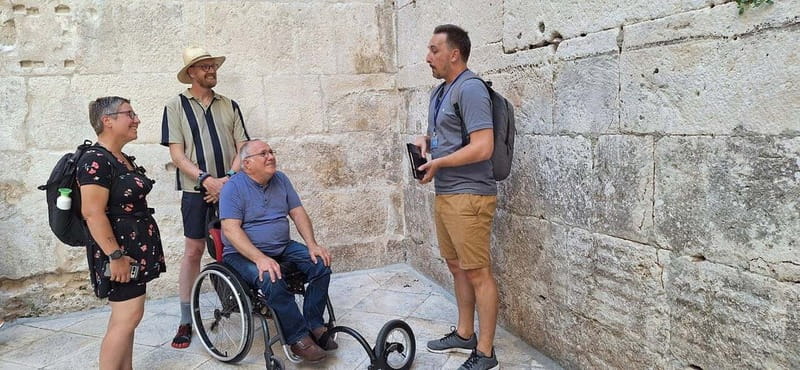
Arrive with comfortable shoes and an open mind. The route is a walking circuit through the center, and the listed stops involve several short discussions rather than one long lecture in a single place. The tour is marked as wheelchair accessible, though you may still want to confirm current conditions if you need specific assistance with surfaces or access.
The English-language format is helpful for visitors who want more than a memorized sightseeing script. Marin’s role is to explain how people and institutions think about the past, not simply to recite it.
Golden Gate and Peristil: power in stone
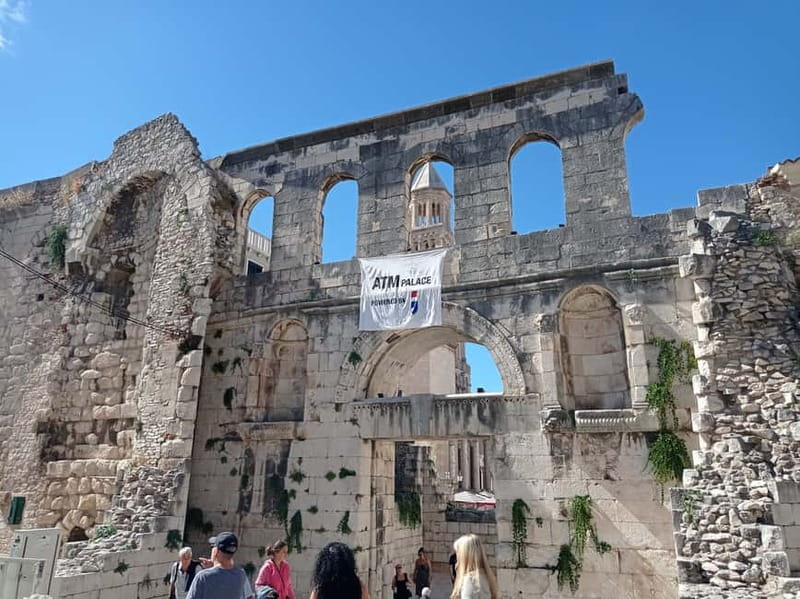
The first major stop is the Golden Gate, where the guide spends about 15 minutes. This is one of the clearest places to introduce the relationship between architecture and power. A monumental entrance tells you who built a city, how that power wanted to be seen, and which parts of the past later generations chose to preserve.
From there, the walk continues to Peristil for another 15-minute discussion. This is the visual heart of Diocletian’s Palace, and it gives Marin room to connect Roman rule with later ideas about authority, religion, and public identity.
You will likely spend enough time looking closely at the setting, but the emphasis is not on architectural labels alone. The value comes from asking what the space has meant at different points in history and how modern Croatia relates to older layers of rule and belonging.
If you have already taken a standard palace tour, this section can still add something new. You are not simply repeating construction dates. You are being encouraged to think about how a society turns old structures into symbols.
Diocletian’s Cellars and the problem with simple stories
The Cellars receive about 10 minutes. That may sound brief, but the tour moves at a quick pace and gives each location a specific job in the larger story.
Underground spaces often invite tidy tales about ancient life. Here, the focus is broader. The Cellars can help explain how the palace has been used, interpreted, and presented across time. They also offer a practical reminder that Split is not one historical period preserved under glass. Its old center is part of daily life, and different eras sit on top of one another.
The short stop means you should not expect a full archaeological tour of every chamber. If your main goal is architectural detail, another specialist visit may serve you better. If your goal is to understand how physical places shape public memory, the Cellars fit this tour well.
Same stretch of coast, a completely different kind of day:
- Blue Lagoon & 3 Islands Cruise with Lunch from Split
★ 4.5 · 5,756 reviews - Split: Blue Lagoon Boat Party with DJs, Shots & After Party
★ 4.9 · 4,610 reviews - Split: Blue Lagoon and 3 Islands Speedboat Tour
★ 4.8 · 3,406 reviews - Blue Cave & 6 Islands Speedboat Tour From Split or Podstrana
★ 5.0 · 3,195 reviews
People’s Square and Jewish Passage
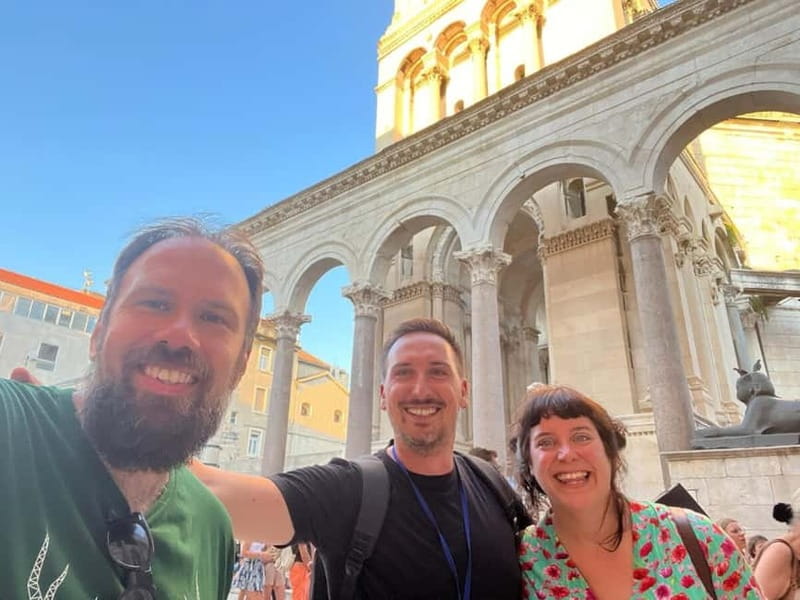
At People’s Square, the guide spends around 15 minutes. This is a chance to move from palace history into the social life of the city. Public squares can reveal who gathers, who trades, who governs, and how different groups share the same urban space.
The tour then reaches Židovski prolaz, or Jewish Passage, for about 10 minutes. This is one of the more distinctive stops because it opens a path into local Jewish heritage and questions of minority identity. The subject is not treated as a decorative footnote. It forms part of the tour’s wider look at religion, ethnicity, memory, and the ways communities are represented.
This stop may be especially valuable if you have noticed that many city tours focus heavily on rulers and famous buildings while giving less attention to smaller communities. The route does not claim that one tradition explains Split. Instead, it places different identities within the same city story.
Fruit Square and the Riva
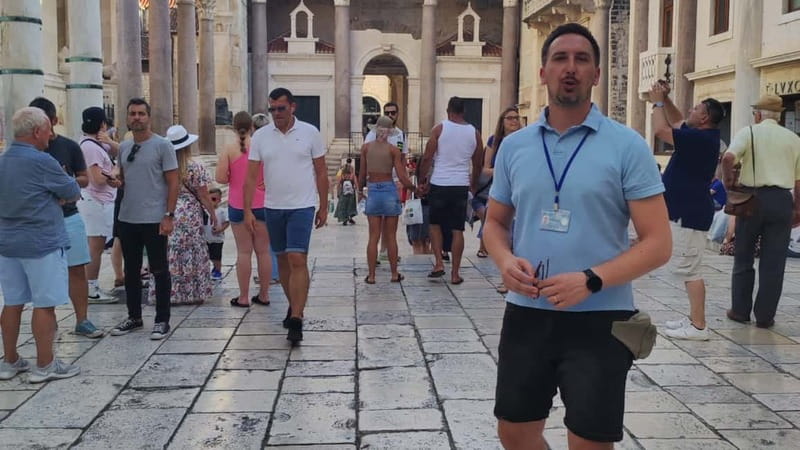
Fruit Square gets about 15 minutes of guided explanation. Like People’s Square, it provides a setting for discussing urban change and the connection between everyday public places and larger political or economic forces.
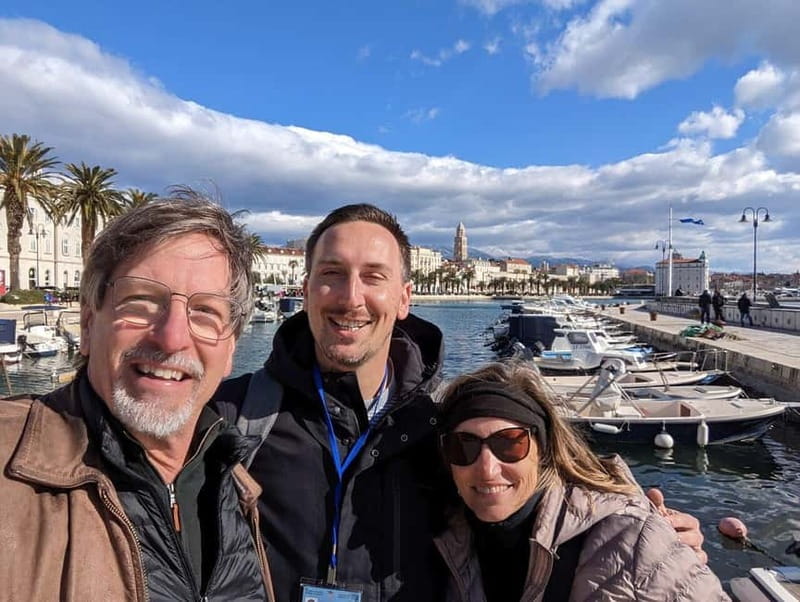
The route then passes along the Riva for about five minutes. This is a pass-by rather than a full guided stop, so do not expect a long waterfront talk. Even so, the Riva helps shift the pace. After several concentrated discussions in the old center, you get a brief look at Split’s public waterfront and its role in the modern city.
The contrast is useful. The palace and narrow passages encourage close attention to old layers. The waterfront gives you a broader sense of how Split presents itself today. The tour’s method is to place these settings side by side rather than treat them as unrelated sights.
Republic Square and the final stretch

Republic Square is the last listed guided stop, with about 15 minutes of discussion. By this point, the tour has moved through ancient power, religious and minority identity, public space, and modern social questions. The square gives Marin a final platform for drawing those strands together.
The tour is listed as finishing at Trumbićeva obala. The meeting information also says the activity ends back at the meeting point, so you should confirm the exact end location when booking. That small inconsistency is worth checking if you have a ferry, meal reservation, or another timed activity immediately afterward.
The full route takes two hours. That is long enough to build a connected argument, but short enough to fit comfortably into a first day in Split. One useful strategy is to schedule it early in your stay. The background can help you read the city differently during later walks, museum visits, and conversations.
What the controversial approach adds
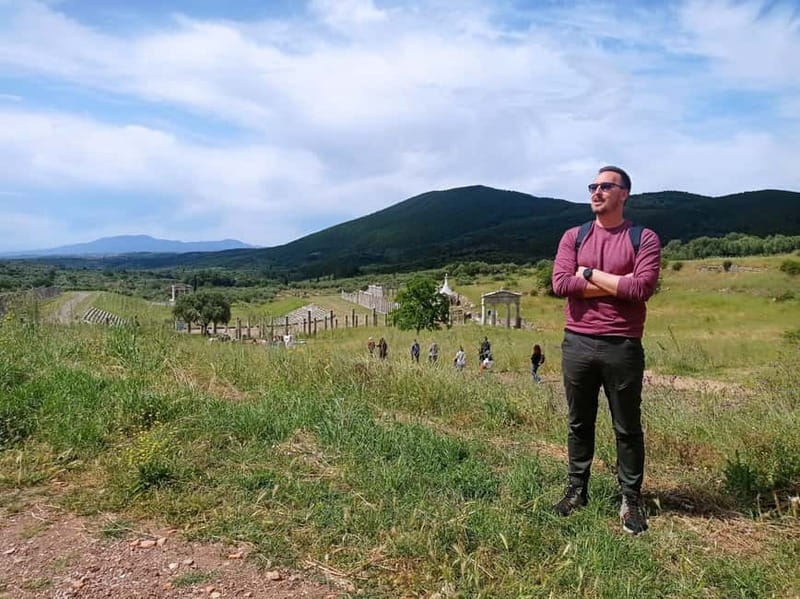
The strongest feature here is not simply the number of stops. It is the choice to place difficult issues at the center of a city tour.
You can expect discussion connected to:
- Croatian history from ancient periods to the present
- Politics and geopolitics
- Religion and religious identity
- Ethnicity and demographics
- Sexuality
- Economics and social change
- The way Croatians understand and debate their own past
That range is ambitious for two hours. The tour cannot give a full course in every subject, and it should not be judged as one. Its purpose is to give you a framework, point out tensions, and show how those questions appear in real places.
I especially like the promise of a no gloves on approach, provided you are comfortable with a guide who does not avoid sensitive material. The benefit is a clearer view of the forces shaping modern Croatia. The trade-off is that some subjects may remain open-ended. Contested history rarely ends with one clean answer.
The extra audio-visual material is another practical advantage. The supplied information does not specify exactly what appears at each stop, so you should not assume a particular format. Still, having supporting material for each topic can make political or social discussion easier to grasp, especially when the setting itself does not immediately explain the point.
The guide makes or breaks this experience

Marin is the named guide associated with the tour, and the descriptions of his approach point to a strong teaching style. He is presented as both an anthropologist and a school teacher, which is a useful combination for this kind of walk.
You can expect him to engage participants rather than speak at them for two straight hours. He relates the social context to architecture, makes complex issues understandable, and allows time for interpretation. The tour has also been adapted in practice to include a deaf participant, with time allowed for interpretation. That suggests a degree of care in how the material is delivered.
Still, the experience depends heavily on your guide and your own interest. A cultural anthropologist will not lead the same kind of tour as a traditional city guide. You may hear fewer entertaining legends and more discussion of social structures, national identity, and political memory.
That is a strength for the right person. It is also the clearest reason not to book blindly. Read the description of the subject matter before reserving. If terms such as contested history, geopolitics, and demographics appeal to you, this is likely a good match. If they sound like homework on holiday, choose a lighter route.
Is $33 a fair price?
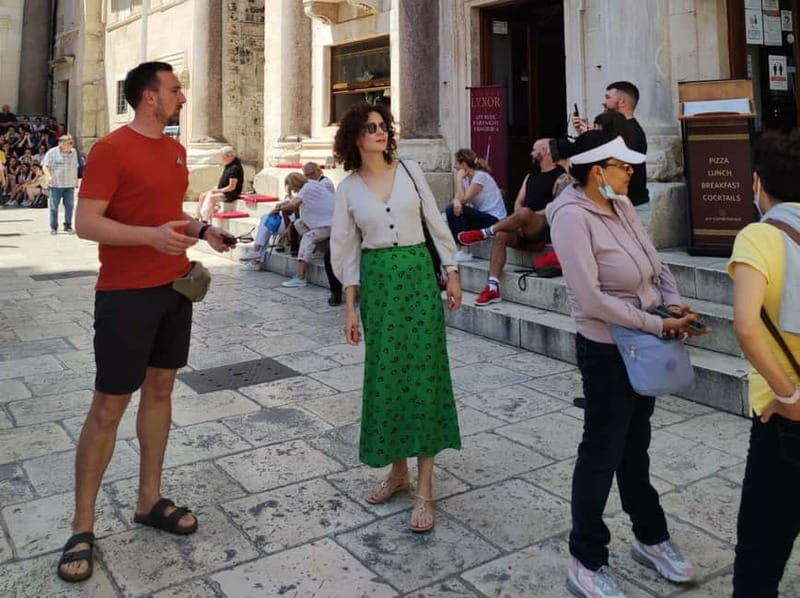
At $33 per person, the tour is priced above a basic orientation walk but below the cost of many private specialist experiences. The value comes from the guide’s particular background and the interpretation of modern issues, not from the number of monuments alone.
You are getting two hours, a live English-speaking guide, coverage of several major central sights, and additional audio-visual material. There are no extra costs listed. Since the route includes places you would probably visit on your own anyway, the real question is whether Marin’s explanations add enough to justify paying for the walk.
For me, the answer is yes if you want context. A free stroll can show you Golden Gate, Peristil, the Riva, and the squares. It cannot easily give you a coherent discussion of how history, religion, identity, and politics connect in Croatia today.
The tour also has practical booking flexibility. You can cancel up to 24 hours in advance for a full refund, and you can reserve now and pay later. Starting times vary, so check availability before planning the rest of your day.
Who should book this Split tour?
I would recommend it to:
- First-time visitors who want an informed introduction to Split
- People interested in modern Croatian society, not only ancient monuments
- Students, educators, and intellectually curious adults
- Anyone who prefers social and political context to a standard monument script
- Visitors aged about 15 and older who can engage with serious subjects
- People who want to understand how local identity is shaped by history
I would hesitate to recommend it to very young children or anyone seeking a purely entertaining walk. The tour brings in sexuality, religion, ethnicity, politics, and disputed history. Those themes are not side notes. They are the point.
Should you book it?
Book this tour if you want Split to make more sense after you leave the old center. The route gives you the city’s key sights, but the lasting value is the way Marin connects stone, memory, identity, and present-day debate.
Skip it if you want a fast introduction with little discussion, or if your time in Split is so tight that you cannot spare two focused hours. For everyone else, $33 is a reasonable price for a thoughtful English-language walk that goes beyond the usual Roman palace story.
FAQ
How long does the tour last?
The tour lasts two hours.
What language is the tour in?
The live tour is conducted in English.
Who leads the tour?
The guide is Marin, a cultural anthropologist and school teacher.
Where does the tour start?
It starts at Park Josipa Jurja Strossmayera, at Ul. kralja Tomislava 12, near the fountain in the middle of the park.
Which Split sights are included?
The route includes the Golden Gate, Peristil, Diocletian’s Cellars, People’s Square, Židovski prolaz, Fruit Square, the Riva, and Republic Square.
What subjects does the tour cover?
It covers history, politics, geopolitics, religion, identity, demographics, sexuality, and economics, with links between Croatia’s past and present.
Is the tour suitable for first-time visitors to Split?
Yes. It covers the main central sights while adding social and political context, so it can work as an introduction to the city.
Is the tour wheelchair accessible?
The activity is listed as wheelchair accessible.
Can I cancel or pay later?
You can cancel up to 24 hours in advance for a full refund. You can also reserve your place and pay later.
Just added around Split
- Split Day Trip from Dubrovnik★ 4.0 · 59 reviews
- Dubrovnik to Split Private Transfer with Local Experienced Driver★ 5.0 · 52 reviews
- Private Transfer from Dubrovnik to Split★ 5.0 · 3 reviews
- Private Transfer from Dubrovnik to Split with 2 hours for sightseeing★ 5.0 · 50 reviews
- Private Transfer: Dubrovnik to Split★ 5.0 · 7 reviews
- Dubrovnik to Split Private Transfer with Mostar Town★ 5.0 · 38 reviews
- Private Tour: Split Day Trip from Dubrovnik★ 5.0 · 9 reviews
- Private Day Trip :Dubrovnik- Mostar- Split★ 5.0 · 3 reviews
Walking Tours, compared.
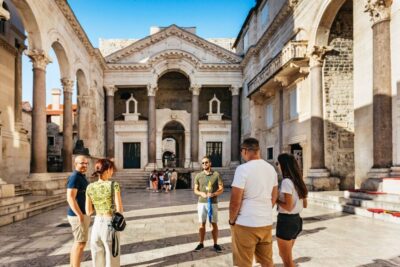
Split: Old Town and Diocletian Palace Walking Tour
Read our review →
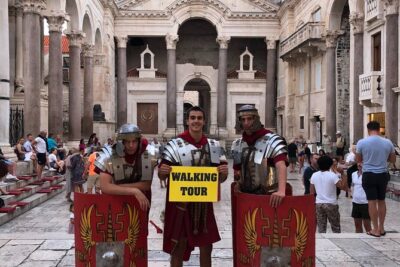
Walking Tour of Split and Diocletian’s Palace
Read our review →

Krka Waterfalls tour with Trogir Walking tour and Krka panoramic boat cruise
Read our review →
Dubrovnik: City Walls Early Morning or Sunset Walking Tour
Read our review →Browse the lists this tour appears in