
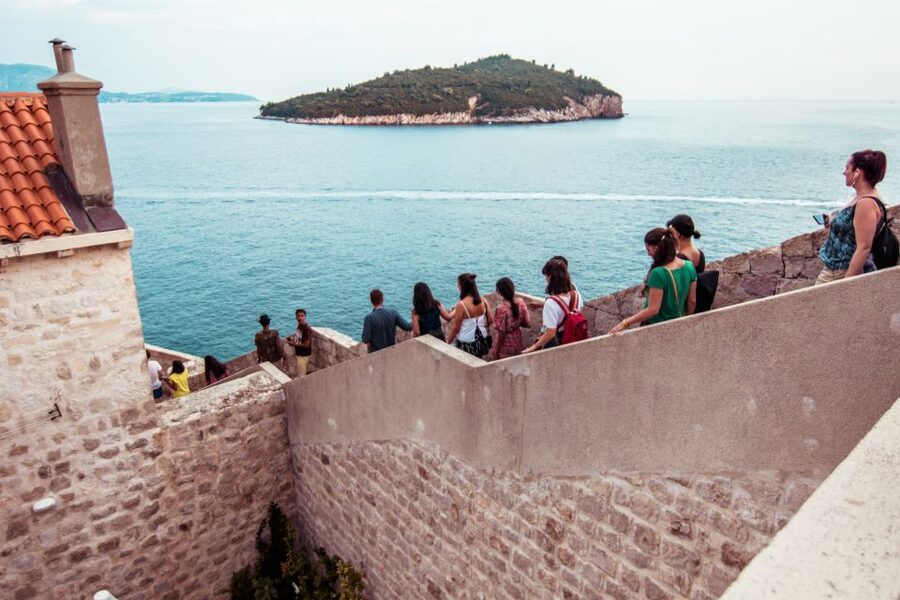
Reviewed · WALKING TOURS
Dubrovnik: Walls and Wars Walking Tour
Dubrovnik’s city walls are far more than a pretty walkway above terracotta roofs. They explain how a small maritime republic survived beside larger powers, and this tour connects the stonework to the diplomacy, sieges, earthquakes, and modern war that shaped the city. I especially like the clear political and military context and the chance to hear recent Croatian history from local guides with personal ties to it.
The views are superb, but the tour is not gentle. You may climb around 1,150 steps, with little shade and a few exposed stretches. The biggest catch is financial: the advertised price is $29, but your mandatory wall ticket costs an additional €40 per adult and €15 for children ages 7 to 18.
Key points before you book
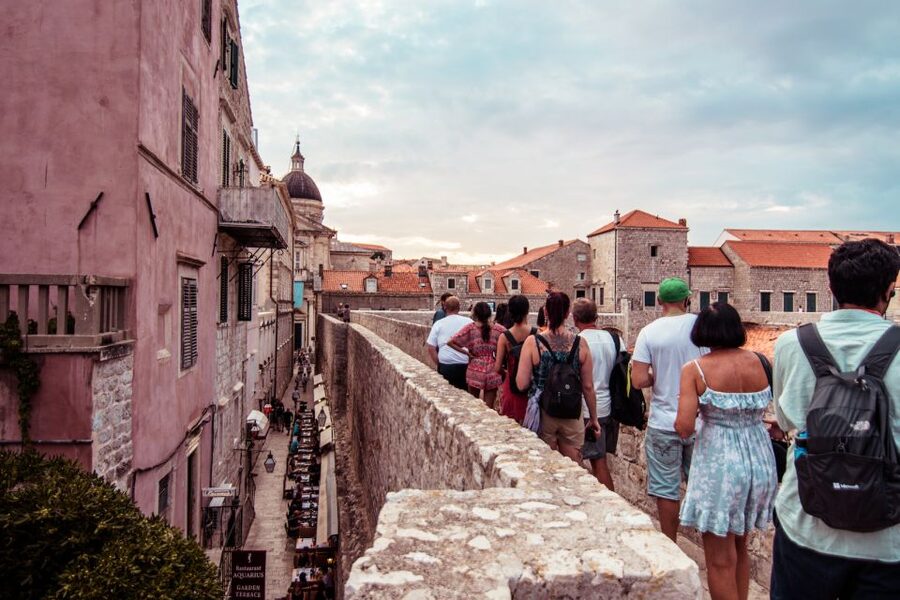
- The ticket costs extra: Buy the Dubrovnik City Walls ticket at the entrance, in advance, or through the Dubrovnik Pass.
- The walk is steep: Expect many stairs, narrow wall paths, and little shade. Comfortable shoes and water are essential.
- The guides add real context: Davor, Goran, Andreja, Darko, and others explain medieval defenses as well as Croatia’s 1991 Homeland War.
- Headsets help: The included audio devices make it easier to follow the guide when the group stretches along the wall.
- The views keep changing: You look across the Old Town, harbor, fortresses, sea, and rooftops from several angles.
- Evening can be smarter: A 6 pm departure may bring cooler temperatures and fewer people, although availability depends on the day.
Starting at Pile Gate with the orange umbrella
The meeting point is easy to identify once you know what to look for. Go to Brsalje 8, beside the Pile local bus stop, the final stop before Dubrovnik’s Old Town. Look for the Dubrovnik Walks staff holding orange umbrellas.
This location matters because Pile Gate is one of the main approaches to the Old Town. It can feel crowded, especially when buses and cruise passengers arrive, so give yourself enough time to find the orange umbrella rather than wandering through the gate looking for the group.
The tour is conducted in English and lasts two hours. It is led by a licensed local guide approved by Croatia’s Ministry of Tourism. Guide quality is a major part of the experience, and the named guides have included Davor, Goran, Andreja, Darko, Mara, Alex, and Branko.
The guides bring different strengths. Goran is often praised for clear explanations and humor. Davor is especially good at mixing local knowledge with personal stories. Andreja has been attentive to rest breaks and questions, while Branko has shared direct memories connected with the Croatian wars. Your guide may be someone else, but the format gives you a strong chance to hear both the old story of Dubrovnik and its recent past.
More Walking Tours in Dubrovnik
- Dubrovnik: Old Town Walking Tour
★ 4.8 · 5,174 reviews - Dubrovnik Discovery Old Town Walking Tour
★ 5.0 · 4,458 reviews - Dubrovnik: Game of Thrones Walking Tour
★ 5.0 · 1,732 reviews
Paying to enter the walls
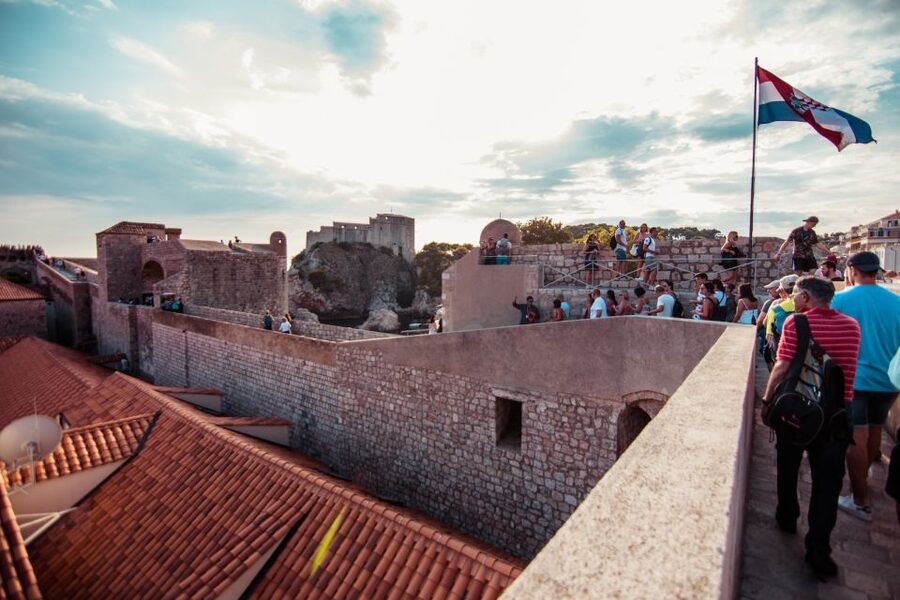
The tour price covers the guide, the walking tour, and the headset. It does not cover entry to the city walls.
The required ticket costs €40 per adult and €15 per child ages 7 to 18. That changes the value calculation. At $29, the guided portion looks like a good deal, but an adult couple will spend another €80 on wall admission before the tour has even begun.
The ticket price feels high, especially if you have already paid for other Dubrovnik sights. Still, the walls are one of the city’s main historic attractions, and the admission can be purchased separately at the entrance, ahead of time, or with the Dubrovnik Pass. Check the pass terms before buying anything, since the pass may make better financial sense if you plan to visit several included sites.
One useful point: the wall ticket can also provide access to other heritage attractions through the relevant ticket or pass arrangement. Confirm the current details when you buy, since admission rules and prices can change.
My advice is simple: do not book this tour until you have added the wall ticket to your budget. The extra cost is the main surprise in an otherwise straightforward booking.
Climbing the fortifications
Once inside, the tour becomes a steady walk along Dubrovnik’s defensive circuit. The guide explains how the walls protected a small independent republic whose survival depended on both stone defenses and careful diplomacy.
The fortifications helped protect the port, homes, government, and trade. Their value becomes clearer as you look down toward the harbor and across the Old Town. From above, you can see how tightly packed the settlement was and why control of the approaches mattered.
The route includes stairs, changing levels, and narrow passages. One guide estimated about 1,150 steps during the walk, though the exact effort will depend on the group and route. This is not a casual flat stroll. I would compare it to a sustained city hike with frequent stops for explanation and photographs.
The headset is a useful inclusion. On a long, narrow wall, the group naturally stretches out. Without a headset, you might miss a point while stopping for a photograph or waiting on a stairway. The system is not perfect, though. If you fall too far behind, reception can weaken, so keep moving with the group and catch up when needed.
Revelin Fortress and the eastern defenses

Revelin Fortress helps show how Dubrovnik adapted its defenses as weapons and threats changed. Your guide explains its role within the larger system of walls, gates, towers, and harbor defenses.
This is one of the tour’s strongest features: you are not simply told the names of buildings. You learn why they were placed where they were and what problem each one helped solve. The location near the eastern approach and port makes the defensive logic easier to understand.
The guide also helps connect the fortifications to Dubrovnik’s political choices. The republic did not survive by relying on walls alone. Its leaders used diplomacy to avoid destruction when possible, while the defenses made the city harder to attack when diplomacy failed.
That combination gives the walk more substance than a simple architectural tour. You are looking at masonry, but you are also learning how a small state managed pressure from powerful neighbors.
Same stretch of coast, a completely different kind of day:
- Blue Cave Small-Group Boat Tour from Dubrovnik
★ 5.0 · 9,360 reviews - Dubrovnik: Epic Game of Thrones Tour + Lokrum & Saver Option
★ 4.9 · 5,995 reviews - Dubrovnik: The Original Game of Thrones Tour & Lokrum Option
★ 4.8 · 5,064 reviews - Dubrovnik Game of Thrones Tour & Optional Lokrum Island Visit
★ 5.0 · 4,702 reviews
Minceta Tower and the high views

Minceta Tower is one of the most memorable defensive structures on the circuit. Its height and position offer a strong sense of how Dubrovnik watched over its landward side.
As you climb and move around the walls, the views change constantly. One moment you look over the Old Town’s roofs, and the next you see the harbor, fortifications, and open water. The panorama is the obvious reward, but the guide gives it meaning by showing how the same viewpoints once served a military purpose.
Bring a hat, water, and sunscreen. Large sections of the walls have little shade, and the pale stone can feel harsh under summer sun. In July and August, heat is a serious concern. A 34°C day proved difficult for some people, and even fit walkers may want to choose an early or late departure.
Wind can also affect the walk. It may cool you down, but it can make exposed sections feel uncomfortable and make it harder to hear if you move too far from the group. A windy or rainy day does not automatically ruin the experience, but good shoes and a light layer will help.
Lovrijenac Fortress and Dubrovnik’s survival
Lovrijenac Fortress is central to the story of Dubrovnik’s defense. The guide explains why this strong position mattered and how the fortifications worked together rather than acting as isolated monuments.
The tour’s title includes wars for good reason. You hear about medieval threats, changing powers, earthquakes, and the Croatian Homeland War. The modern section is one of the most valuable parts because local guides can explain the 1991 conflict in human terms, not just as a date in a textbook.
Some guides have lived through that period or grew up in families directly affected by it. Davor and Goran, for example, have been praised for giving personal context to the war and its effect on Dubrovnik. Andreja has also been noted for her thoughtful handling of questions about Croatia’s recent past.
The tone can vary by guide. One guide was described as offering an honest perspective that felt somewhat jaded. I see that as a possible strength if you want something more than a polished tourist story, but it may not suit anyone looking for a light sightseeing walk.
The views over the Old Town and port
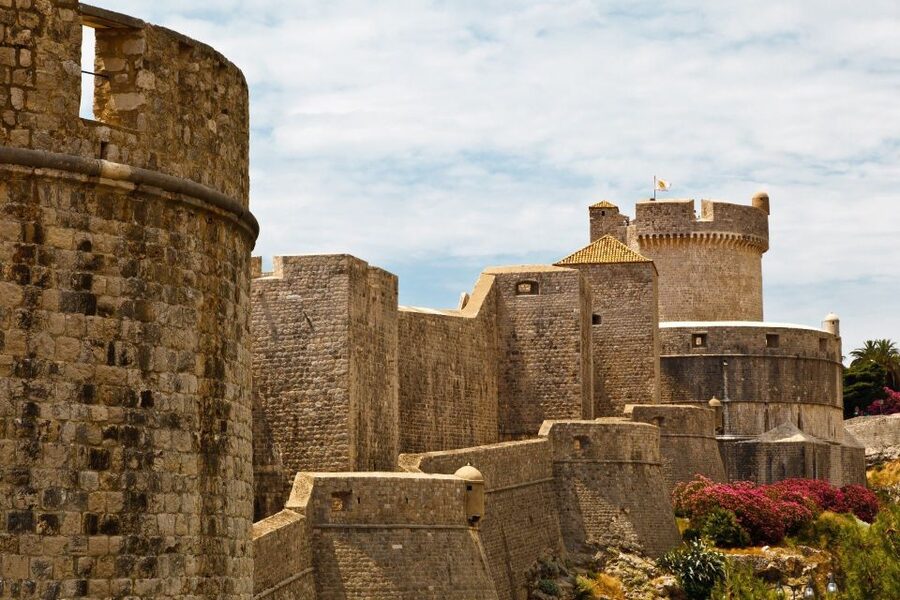
The wall walk gives you the classic Dubrovnik photographs, but you should expect more than one postcard angle. The Old Town appears from above and outside, while the port shows why the city’s location mattered for trade and defense.
The views are especially useful for getting your bearings. From street level, Dubrovnik’s lanes can feel enclosed and confusing. From the walls, you can see the pattern of the town, the relationship between the fortifications and the water, and the way the city fits against the surrounding terrain.
Plan to take photographs during the walk, but do not let the camera turn the experience into a race. The guide’s explanations make the admission fee feel more worthwhile. You can always return to a viewpoint later, but you cannot easily recreate the full story on your own.
The tour ends near the Old Town port. That is convenient if you plan to continue sightseeing, eat nearby, or connect the walk with another activity. It also means you do not need to retrace the full route back to Pile.
How demanding is the two-hour walk?
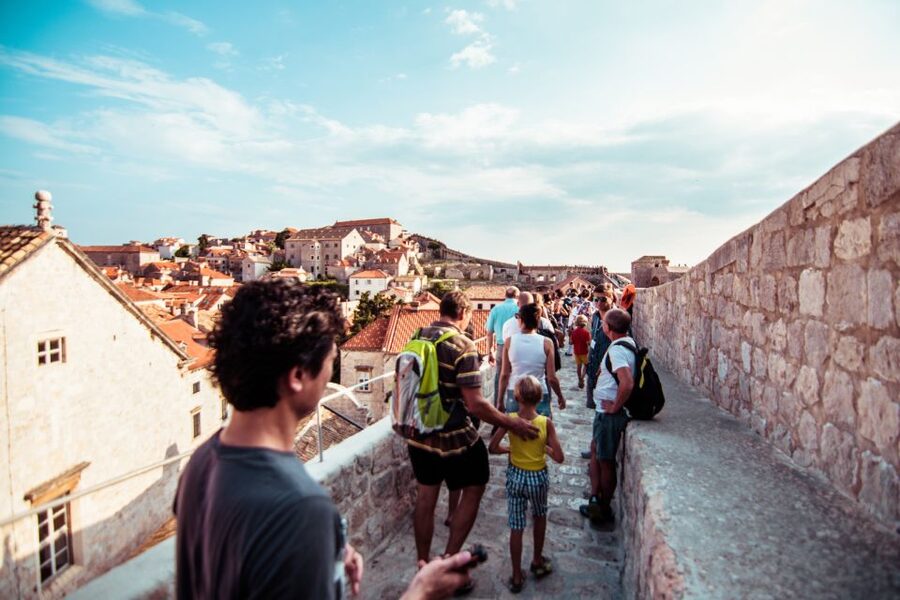
The physical demands deserve plain talk. This tour is not suitable for wheelchair users, people with mobility impairments, people with vertigo or a fear of heights, or anyone with serious heart or respiratory problems. It is also not recommended for pregnant women, people with a low level of fitness, or people over 80.
Baby strollers are not allowed, and the stairs can be steep. If you are unsure about your ability to complete the route, ask the operator before booking. One person who could not manage the wall stairs was moved to an Old Town tour instead, but you should not count on that as a guaranteed alternative.
Wear shoes with a firm grip. Bring a hat, water, and a credit card. The credit card is useful for the entrance ticket and any purchases during the day. Video recording is not allowed, so plan on still photographs rather than filming the guide.
Rest stops depend on the guide and the group. Andreja was especially attentive to breaks, and other guides have paused in shaded places when possible. Still, there is little shade overall, so your comfort depends partly on timing and weather.
Is $29 good value with the extra ticket?
The guided fee is reasonable for two hours with a licensed local guide and audio equipment. The total cost is much less attractive once you add the €40 adult wall admission.
I still think the guided option earns its place for most first-time visitors who want to understand Dubrovnik. Walking the walls alone gives you the scenery, but not necessarily the reasons behind the towers, gates, and sight lines. The guide turns the route into a connected story.
The value is strongest if you care about military history, local politics, architecture, or the Croatian Homeland War. It is weaker if you only want photographs and would rather move at your own pace. A self-guided walk may suit you better if you dislike group schedules or want to stop frequently.
The 4.8 rating from 501 reviews reflects a consistent pattern of strong guide performance, especially for humor, clear explanations, personal stories, and willingness to answer questions. The main complaints are practical rather than about the teaching: the wall ticket is expensive, summer heat is intense, and large groups can stretch the headset connection.
Choosing the best time and pace
A morning departure may help you avoid the worst heat, although the exact conditions depend on the day. A late afternoon departure can be appealing because the light is softer and the temperature may ease. One 6 pm walk was still hot but offered more shade and fewer crowds.
Do not choose a late time solely for sunset photography. The tour schedule and seasonal light will determine what you see, and the supplied information does not promise a sunset route. Choose based on heat, your schedule, and how much time you want afterward near the port.
Keep close to the group. The wall is long and narrow, and a large group can become strung out. The headset lets you hear from a little distance, but reception may drop if you lag too far behind.
Who should book the Walls and Wars tour?
I would book this for an active visitor making a first or second visit to Dubrovnik, especially anyone who wants the fortifications explained rather than simply photographed. It suits people who enjoy military sites, political history, local stories, and strong views in equal measure.
Families with older children may enjoy it, provided everyone can handle the stairs and heat. The €15 child ticket helps, though the physical demands remain the same.
I would skip it if you have mobility limits, vertigo, low fitness, or a serious medical condition. I would also skip it if the €40 adult ticket pushes your budget too far. The wall experience is important, but it is not a good bargain if you will be worried about the price throughout the walk.
Final call: book it if the stairs and ticket fit
Book the Dubrovnik: Walls and Wars Walking Tour if you want the city’s defenses explained by a local guide and you can manage a steep, exposed two-hour walk. Davor, Goran, Andreja, and the other guides bring the fortifications to life, especially when they connect medieval strategy with the 1991 war.
Before paying, add the separate wall admission to the advertised $29 price. If the full cost works for you, the guide adds real value to one of Dubrovnik’s essential sights. If not, consider a lower-cost Old Town walk and enjoy the walls at another time.
FAQ
How long does the Walls and Wars Walking Tour last?
The tour lasts two hours.
What language is the tour conducted in?
The live tour is conducted in English.
Is the Dubrovnik City Walls ticket included?
No. The mandatory ticket costs €40 per adult and €15 per child ages 7 to 18.
Where is the meeting point?
Meet at Brsalje 8, beside the Pile local bus stop, the final stop before the Old Town. Look for Dubrovnik Walks representatives with orange umbrellas.
Where does the tour finish?
The tour ends near the Old Town port in Dubrovnik.
Are headsets provided?
Yes. Headset devices are included so you can hear the guide more clearly while walking.
What should I bring?
Bring comfortable shoes, a hat, water, and a credit card.
Is the tour suitable for people with mobility problems or vertigo?
No. The walk includes many stairs and is not suitable for wheelchair users, people with mobility impairments, people with vertigo, or people afraid of heights.
Just added around Dubrovnik
- Welcome to Dubrovnik Walking Tour★ 5.0 · 36 reviews
- Walls Of Dubrovnik: Small-Group Walking Tour With A Local★ 5.0 · 67 reviews
- Dubrovnik at War 1991-1992 Private Walking Tour★ 5.0 · 4 reviews
- City Walls of Dubrovnik★ 5.0 · 70 reviews
- Walls of Liberty: A Self-Guided Audio Tour of Dubrovnik★ 3.5 · 3 reviews
- Olive farm & village★ 5.0 · 41 reviews
- Trebinje Gastro Tour From Dubrovnik★ 4.5 · 12 reviews
- Try Scuba Diving Discovery in Dubrovnik★ 5.0 · 43 reviews
Walking Tours, compared.

Split: Old Town and Diocletian Palace Walking Tour
Read our review →
Walking Tour of Split and Diocletian’s Palace
Read our review →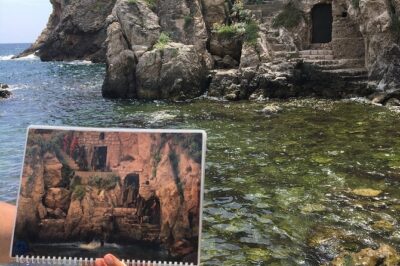

Krka Waterfalls tour with Trogir Walking tour and Krka panoramic boat cruise
Read our review →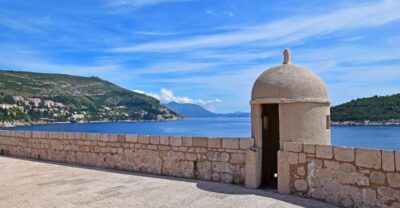
Dubrovnik: City Walls Early Morning or Sunset Walking Tour
Read our review →Browse the lists this tour appears in