
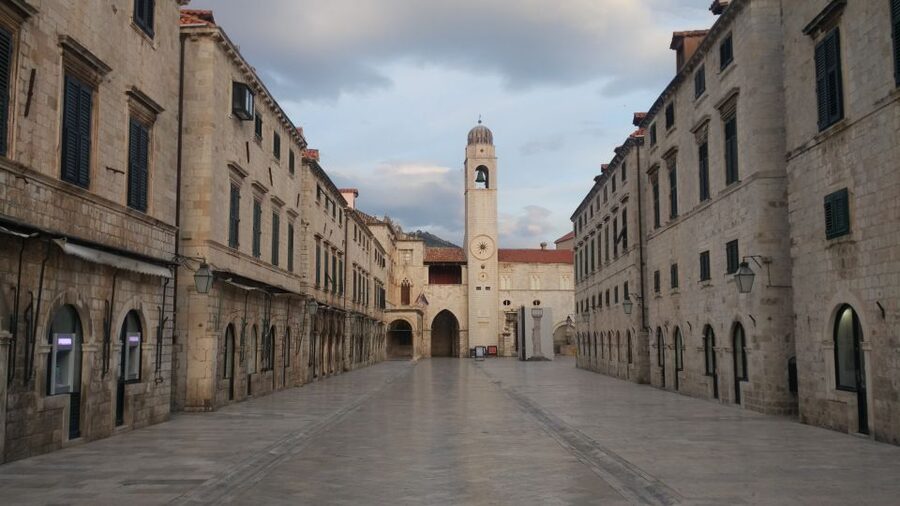
Reviewed · WALKING TOURS
Dubrovnik: Insider 90-Minute Walking Tour With a Local
Dubrovnik makes more sense when someone connects its stone streets to the old Republic of Ragusa, its trading wealth, and its hard-won independence. This 90-minute walk with a Dubrovnik-born guide does that while taking you past the Cathedral, Rector’s Palace, Old Port, and other center-stage sights.
I like the small maximum of eight people, which gives you a real chance to ask questions. I also like the local angle: guides such as Marko, Bruno, and Lucy bring in modern Dubrovnik, restaurant advice, Croatian pronunciation, and stories about daily life. The main consideration is pace. You cover many stops in 90 minutes, so some landmarks receive only a short explanation rather than a full museum visit.
Key points at a glance
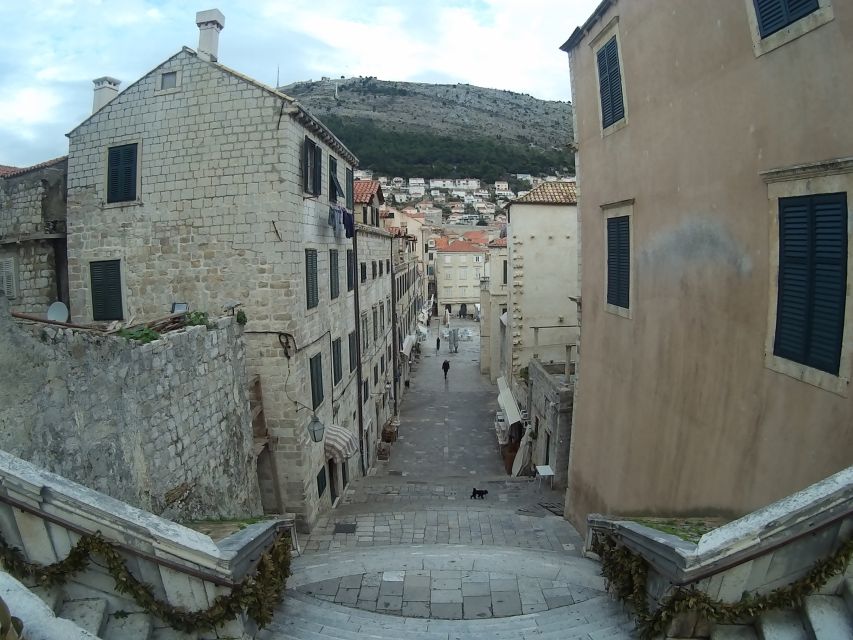
- A born-and-bred local guide: Learn about Dubrovnik from people who know both its older traditions and present-day life.
- Eight people maximum: The small group makes questions and conversation easier.
- Ragusa explained through the city: The Old Port, palaces, churches, and streets show how the former republic worked.
- A playful Saint Blaise challenge: Look for statues of Dubrovnik’s patron saint around the Old Town.
- Useful food advice: Your guide points out places for lunch, dinner, snacks, and drinks.
- Good first orientation: The route covers many major sights before you explore farther on your own.
Why this short Dubrovnik walk works
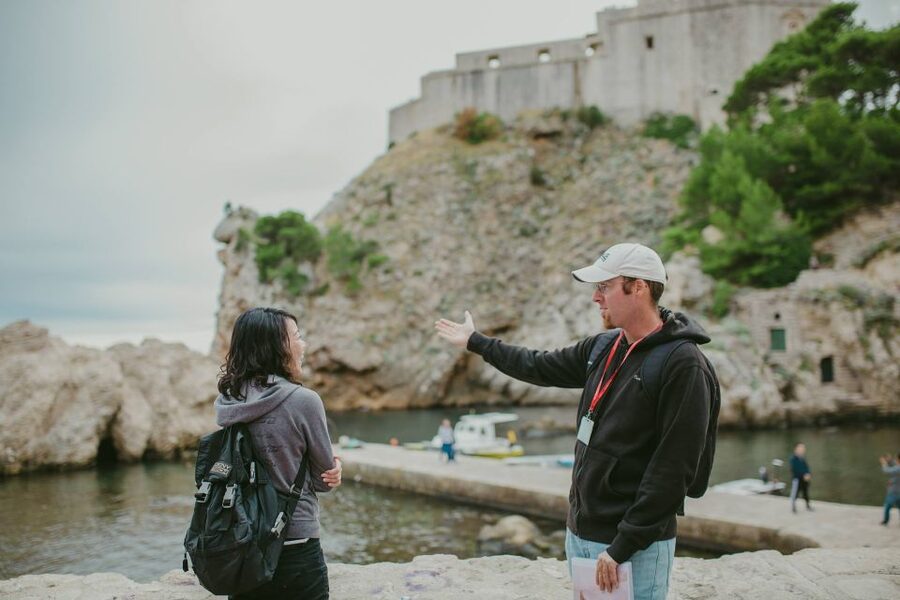
Dubrovnik’s Old Town is compact, but its story is not. A church may reflect a rebuilding after an earthquake. A palace may reveal how a small maritime republic governed itself. A harbor may look peaceful now, yet once connected Dubrovnik with traders moving between the eastern Mediterranean and western Europe.
That is why I see this tour as an introduction rather than a complete history course. In 90 minutes, you get the basic map and the main ideas. You learn why the Republic of Ragusa mattered, how trade supported the city, and how architecture records different periods of Dubrovnik’s past.
The route also makes room for lighter details. You may count churches inside the Old Town, try to pronounce Croatian names, and spot Saint Blaise statues. Dubrovnik’s famously relaxed cats also get a role when you reach the Rector’s Palace. These touches keep the walk from becoming a string of dates and building names.
The strongest feature is the guide. Marko is described as especially good at linking architecture with political history and explaining complicated events in clear terms. Lucy, also called Lucija, is noted for patient answers and for covering the Homeland War and recent history. Bruno brings local knowledge and a friendly manner.
The experience may vary with the guide assigned to your departure. One rating described the history as a set of separate fun facts rather than one connected story. That is a fair warning. If you want a tightly structured academic lecture, this may feel light. If you want a friendly orientation with room for questions, it is better suited to you.
More Walking Tours in Dubrovnik
- Dubrovnik: Old Town Walking Tour
★ 4.8 · 5,174 reviews - Dubrovnik Discovery Old Town Walking Tour
★ 5.0 · 4,458 reviews - Dubrovnik: Game of Thrones Walking Tour
★ 5.0 · 1,732 reviews
Meeting by Ploče Gate and Revelin Fortress
The meeting point is just inside Ploče Gate, the eastern entrance to the Old Town. Look for the corner of the square in front of Revelin Fortress, near the cannon. Your guide will hold a red and white flag.
The supplied route also identifies Harbour Viewpoint as the starting location, so pay attention to the exact meeting instructions sent with your booking. The key practical detail is the eastern gate and the area by Revelin Fortress, not a hotel pickup or a transport connection.
Arrive ready to walk on stone streets. Dubrovnik’s Old Town route includes slopes and steps in places, especially around the churches and upper streets. The tour is only 90 minutes, but comfortable shoes will make the experience much easier.
Starting near Ploče Gate is useful. You enter directly into the historic core and begin with the city’s defensive and commercial story instead of spending time on a bus or in a transfer. For a first morning in Dubrovnik, this can help you understand where everything sits.
Ploče Gate, the Dominican Monastery, and the Old Port
Ploče Gate gives you an immediate sense of Dubrovnik as a protected city. From here, the walk moves toward the Dominican Monastery and its museum, then down to the Old Port.
The Dominican stop is brief, about five minutes in the planned route. Do not expect a long museum visit. Instead, use it as part of the larger picture: Dubrovnik’s religious buildings were not isolated sights, but active parts of civic life and the city’s defenses.
The Old Port is one of the most useful stops for understanding Ragusa. Your guide explains how the old republic made money from seaborne trade while operating between major powers such as Venice and the Ottoman Empire. You can picture galleys leaving with goods and returning with products from across the region.
This is more than a scenic waterfront pause. It explains why a relatively small city could hold political weight. Dubrovnik had to protect its independence through trade, diplomacy, and careful decisions about larger powers around it.
The harbor is also a good place to ask questions. If you want context about the republic’s role in the Adriatic, this is the moment to speak up. The small group helps because the guide can respond without stopping a large crowd.
Dubrovnik Cathedral and the Saint Blaise game
The Dubrovnik Cathedral brings the story into architectural focus. The current Baroque building was rebuilt after devastating earthquakes, and the guide uses it to show how Dubrovnik recovered and reshaped itself.
The stop is designed for exterior explanation rather than an extended interior visit. You will hear about the building’s details, its rebuilding, and Saint Blaise, the city’s patron saint. Saint Blaise appears throughout Dubrovnik, and the guide turns that into a simple challenge: see how many of his statues you can find as you continue.
I like this small game because it gives you something to notice after the tour ends. Instead of passing every carved figure as background decoration, you start looking at the city’s symbols. It also gives children and adults a reason to stay involved when the history becomes dense.
The cathedral area can be crowded, and the 90-minute format means the guide cannot linger over every feature. Still, the stop works well as a lesson in how disasters, faith, and civic identity shaped the Old Town.
Same stretch of coast, a completely different kind of day:
- Blue Cave Small-Group Boat Tour from Dubrovnik
★ 5.0 · 9,360 reviews - Dubrovnik: Epic Game of Thrones Tour + Lokrum & Saver Option
★ 4.9 · 5,995 reviews - Dubrovnik: The Original Game of Thrones Tour & Lokrum Option
★ 4.8 · 5,064 reviews - Dubrovnik Game of Thrones Tour & Optional Lokrum Island Visit
★ 5.0 · 4,702 reviews
Gundulić Square and the everyday side of Dubrovnik
Gundulić Square changes the mood. The square has a market with local produce and souvenirs, giving you a glimpse of the Old Town as a place where people still shop and meet, not just a historic setting.
Here you learn about Ivan Gundulić, one of Dubrovnik’s best-known poets and playwrights. You may also get a short Croatian pronunciation exercise. It is a modest detail, but it helps break down the distance between you and the place you are visiting.
The market can be busy, and stalls may attract your attention in several directions. That is part of the appeal, but it also means you should listen closely when the guide gathers the group. The stop is short, so you will not have time for an extended shopping session.
This is also where the local advice becomes practical. Your guide can recommend places for lunch, dinner, drinks, and snacks. Those suggestions may be especially helpful in Dubrovnik, where a restaurant on the most obvious street can be chosen for its setting rather than its value.
The tour does not promise tastings or a meal, so think of the square as a place for orientation and recommendations. You will need to make your own purchases and return later if something catches your eye.
Quiet streets, churches, and local life
Between the major sights, the route uses lesser-known streets that still show signs of ordinary life. This is valuable because Dubrovnik can feel like a stage set when you only follow the busiest paths.
The guide points out churches and explains their place in the Old Town. You may be asked to guess how many churches are inside the city walls. The exact answer is presented as a surprise during the walk, so the point is less about memorizing a number and more about noticing how much religious architecture is packed into a small area.
One stop is the Church of Saint Ignatius, reached by a short walk through the older streets. Its setting adds variety to the route and shows how the city rises and changes as you move away from the harbor.
You should expect sightseeing and explanation, not private access or long interior visits. This is a walking overview. If a particular church or museum interests you, make a note and return later with more time.
Rector’s Palace and the cats of Ragusa
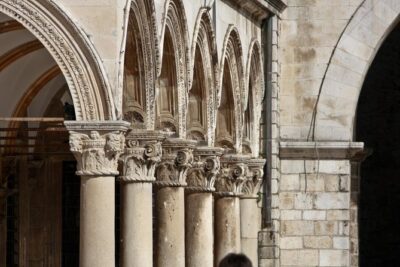
The Rector’s Palace is one of the most important political stops. It was once the seat of the Republic of Ragusa, where aristocrats met to decide matters affecting the city-state.
That political role gives the building more weight than its handsome façade alone suggests. You are standing where the republic managed its affairs, balancing trade, security, and diplomacy in a difficult part of Europe.
The guide also brings the story into the present with Dubrovnik’s cats. The palace area and nearby streets are known for lazy, well-fed cats, and they add a bit of humor to a place once occupied by serious officials. It is an easy detail to remember, especially if you are walking with children.
The palace receives a short guided visit on the route. If you want a detailed look at its rooms and collections, you would need separate time. Here, the value comes from understanding its role in Dubrovnik’s government.
Sponza Palace, Saint Blaise, and Onofrio’s Fountain
Sponza Palace continues the story of Dubrovnik’s commercial and civic life. Its position among the Old Town’s major buildings helps show how trade, administration, and religion operated close together.
The Church of Saint Blaise returns you to the city’s patron saint. By this point, the earlier statue challenge should make the church feel more connected to the streets around it rather than like another stop on a checklist.
The route finishes at the Large Onofrio’s Fountain. This is a useful ending because fountains in historic cities often point to the practical systems that allowed urban life to function. Here, it also gives the group a recognizable place to finish in the center of the Old Town.
Several additional sightseeing points appear between the named buildings. Their exact details are not specified, so expect short guided pauses rather than a separate major attraction at every point. The route is built to keep you moving through the historic core.
What the $32 price buys you
At $32 per person, the tour is priced as a short guided orientation, not as a full-day cultural program. You are paying for a licensed English-speaking guide, a maximum group of eight, and local context across many central sights.
The small group is the biggest value factor. A large walking group can make it hard to hear, ask questions, or stay close in narrow streets. With eight people or fewer, you have a better chance to ask about food, recent events, architecture, or places you pass after the formal stop.
You also save planning time. Instead of researching the Old Port, Cathedral, palaces, churches, and city-state history separately, the guide gives you a usable framework in one session.
The price is less compelling if you want long interior visits. Most stops are brief, around five minutes in the planned schedule, and the tour does not include entry tickets, food, or drinks. You are buying interpretation and orientation.
Free cancellation up to 24 hours before the start gives you some flexibility, and the reserve-now, pay-later option can help if your Dubrovnik schedule is still shifting.
Who should book this walk
I would choose this tour near the start of a Dubrovnik stay. It gives you a map of the Old Town and helps you decide which churches, museums, streets, and restaurants deserve a second look.
It suits you especially well if you:
- Want a local English-speaking guide
- Prefer a small group over a large city walk
- Like history explained through buildings and streets
- Want current restaurant and drink suggestions
- Enjoy questions, games, and informal conversation
- Have only a short time in Dubrovnik
Families may appreciate the Saint Blaise statue challenge and the cat stories. History-minded visitors will value the discussion of Ragusa, trade, architecture, and government, though you should not expect a long lecture on each subject.
You may want something else if your main goal is the city walls, a museum interior, or a detailed study of the Homeland War. The walk touches the recent past through local insight, especially with guides such as Lucy, but its main focus is the Old Town and its older architecture.
Practical details before you go
The tour lasts 90 minutes and operates in English. Group size is capped at eight people, and starting times depend on availability.
Wear shoes suited to stone streets and be prepared to walk continuously between stops. The guide carries a red and white flag, which should make the meeting point near Revelin Fortress easier to identify.
The exact guide can vary. Marko, Bruno, and Lucy are among the guides associated with the experience, and each brings a slightly different strength. Marko is particularly good at connecting architecture, politics, and the city’s past. Lucy brings patient answers and recent-history context. Bruno offers local insight and an easy manner.
The overall rating is 4.9 from 16 ratings, a strong result for a short city tour. One less positive assessment points to a possible difference in guiding style: you may receive a more fact-based presentation rather than a single flowing story. Asking questions can help shape the walk around what interests you most.
Should you book the Dubrovnik local walk?
Book it if you want a friendly, efficient first look at Dubrovnik led by someone from the city. The combination of eight-person groups, local food advice, Ragusa history, architecture, and small interactive touches gives the walk more personality than a basic landmark checklist.
I would not book it as your only cultural experience in Dubrovnik. Use it as a starting point, then return to the Cathedral, Rector’s Palace, Sponza Palace, or another church if you want more time inside. At $32, it offers good value for orientation and conversation, especially if your guide is as engaging as Marko, Bruno, or Lucy.
FAQ
How long is the Dubrovnik walking tour?
The tour lasts 90 minutes.
What language is the tour conducted in?
The tour is conducted in English with a live English-speaking guide.
How many people can join the group?
The group is limited to a maximum of eight participants.
Where is the meeting point?
Meet just inside Ploče Gate, the eastern entrance to the Old Town, at the corner of the square in front of Revelin Fortress. The guide will be near the cannon and will hold a red and white flag.
What sights does the tour include?
The route includes Ploče Gate, the Dominican Monastery and Museum, the Old Port, Dubrovnik Cathedral, Saint Ignatius Church, Gundulić Square, Rector’s Palace, Sponza Palace, the Church of Saint Blaise, and Large Onofrio’s Fountain.
Does the tour visit the Old Port?
Yes. The Old Port is one of the guided sightseeing stops.
Will the guide discuss the Republic of Ragusa?
Yes. The tour explains the old Republic of Ragusa, its maritime trade, its position between Venice and the Ottoman Empire, and its political center.
Does the tour include food or drinks?
No food or drinks are included. The guide does provide recommendations for lunch, dinner, snacks, and drinks.
Is an English-speaking guide included?
Yes. A professional licensed English-speaking guide is included.
Can I cancel and receive a full refund?
You can cancel up to 24 hours in advance for a full refund. You can also reserve now and pay later.
Just added around Dubrovnik
- Welcome to Dubrovnik Walking Tour★ 5.0 · 36 reviews
- Walls Of Dubrovnik: Small-Group Walking Tour With A Local★ 5.0 · 67 reviews
- Dubrovnik at War 1991-1992 Private Walking Tour★ 5.0 · 4 reviews
- Walls of Liberty: A Self-Guided Audio Tour of Dubrovnik★ 3.5 · 3 reviews
- Olive farm & village★ 5.0 · 41 reviews
- City Walls of Dubrovnik★ 5.0 · 70 reviews
- Trebinje Gastro Tour From Dubrovnik★ 4.5 · 12 reviews
- Try Scuba Diving Discovery in Dubrovnik★ 5.0 · 43 reviews
Walking Tours, compared.
Split: Old Town and Diocletian Palace Walking Tour
Read our review →
Walking Tour of Split and Diocletian’s Palace
Read our review →

Krka Waterfalls tour with Trogir Walking tour and Krka panoramic boat cruise
Read our review →
Dubrovnik: City Walls Early Morning or Sunset Walking Tour
Read our review →Browse the lists this tour appears in