

Reviewed · WALKING TOURS
Dubrovnik: Early Bird Walking Tour
Dubrovnik is at its most graceful before the cruise crowds arrive. This 90-minute early morning walk takes you through empty lanes, across a quiet Stradun, and past the city’s major landmarks while shop doors are still closed and the stone streets are cool.
I like the calm pace and the chance to see Dubrovnik as a working town, not just a famous photo stop. I also like the local angle: guides such as Mihaela, Daniela, Davor, and Jelena explain both the city’s past and daily life today. The main drawback is the early start, and the tour gives you an overview rather than time inside every monument.
Key points at a glance
- See Stradun nearly empty: The main street is far more pleasant before the day’s crowds gather.
- Start beside Pile Gate: Meet at Amerling Fountain, next to Dubravka restaurant, where the guide carries a blue umbrella or Early Bird sign.
- Cover the essential Old Town: The route includes Onofrio’s Fountain, Orlando’s Column, Sponza Palace, Rector’s Palace, Dubrovnik Cathedral, and St Blaise’s Church.
- Hear local stories, not just dates: Guides add legends, quirky details, cultural context, and suggestions for places to eat or visit later.
- Finish before the city fills: The timing leaves you with most of the day for the city walls, museums, beaches, or a return visit to places that caught your eye.
- Pay $23 for a short orientation: That is fair value if you want a useful first look and a guide’s perspective before exploring alone.
Why an early start changes Dubrovnik
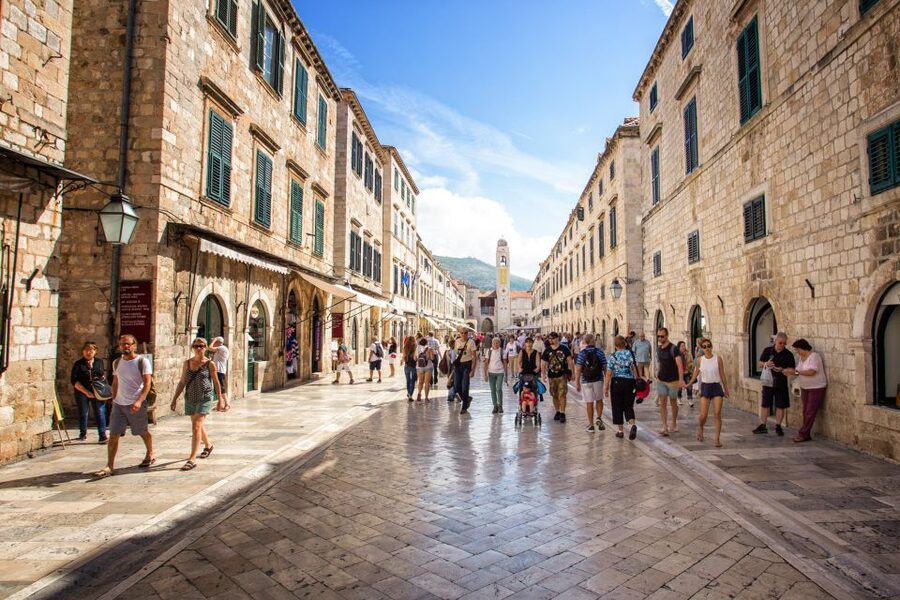
Dubrovnik’s Old Town is compact, but it can feel crowded once tour groups and day visitors arrive. Narrow lanes amplify every footstep, and Stradun, the polished limestone street at the center of town, loses some of its calm when people are stopping every few yards for photos.
This tour uses the quietest part of the day to your advantage. You walk through the maze of streets while the town is still waking up, then finish around the time the first larger groups begin appearing. That timing is the central reason to book it.
The early hour also helps in summer. Several guides have been praised for stopping in shaded spots during hot weather, and an early walk is simply easier on the legs than a midday tour. You still need comfortable shoes, since the route is on foot over hard stone.
Do not expect a private tour of every landmark. The focus is on exterior views, orientation, stories, and the character of the streets. You get a clear framework for the Old Town, then you can decide which places deserve a closer look.
More Walking Tours in Dubrovnik
- Dubrovnik: Old Town Walking Tour
★ 4.8 · 5,174 reviews - Dubrovnik Discovery Old Town Walking Tour
★ 5.0 · 4,458 reviews - Dubrovnik: Game of Thrones Walking Tour
★ 5.0 · 1,732 reviews
Meeting at Amerling Fountain beside Pile Gate

The meeting point is Amerling Fountain next to Dubravka restaurant, just outside the main entrance area at Pile Gate. Look for a guide with a blue umbrella or an Early Bird sign.
This is a useful starting point because Pile Gate is one of the most recognizable entrances to the Old Town. It also puts you close to the first viewpoint toward Fort Lovrijenac. Arrive ready to walk rather than expecting hotel pickup, since transportation to the meeting point is not included.
The tour is offered in English and is wheelchair accessible. The supplied details do not describe the exact street conditions or whether every stop is equally easy for all mobility needs, so anyone with specific accessibility concerns should confirm the route before booking.
Fort Lovrijenac and the first view
The first stop is a view toward Fort Lovrijenac, the fortress perched outside the western side of the Old Town. Your guide introduces its place in Dubrovnik’s story before leading you through Pile Gate.
Starting with the fort gives the walk a strong visual opening. You see how Dubrovnik’s defenses used the sea, cliffs, walls, and elevated positions to protect the city. It also provides an early chance to ask questions and get a sense of how the Old Town is arranged.
The stop is mainly a guided view and introduction, not a separate visit inside the fort. If you want to explore Fort Lovrijenac in detail, plan that for another time.
Pile Gate and Large Onofrio’s Fountain

From Pile Gate, the route moves into the Old Town and stops at Large Onofrio’s Fountain for about ten minutes. This is one of those places where a guide adds value because the object is easy to photograph but less easy to understand at a glance.
The fountain connects to Dubrovnik’s old water system and gives you a practical glimpse into how the medieval city supported daily life. Your guide can also point out the way people move through this part of town, where the entrance, fountain, and main street form a natural arrival sequence.
Because the streets are quiet early, you should have a better chance to hear the explanation without competing with a large group nearby. That is a small benefit, but it matters in a stone city where sound carries.
Same stretch of coast, a completely different kind of day:
- Blue Cave Small-Group Boat Tour from Dubrovnik
★ 5.0 · 9,360 reviews - Dubrovnik: Epic Game of Thrones Tour + Lokrum & Saver Option
★ 4.9 · 5,995 reviews - Dubrovnik: The Original Game of Thrones Tour & Lokrum Option
★ 4.8 · 5,064 reviews - Dubrovnik Game of Thrones Tour & Optional Lokrum Island Visit
★ 5.0 · 4,702 reviews
Walking the empty Stradun

Stradun is the heart of the walk. The route allows about fifteen minutes along the main street, which is enough to discuss its design, role, and stories without rushing past it.
Early in the morning, the long limestone surface can look almost theatrical. You see the full line of the street rather than a series of gaps between people. The tour uses that quiet to explain legends and curiosities that make Dubrovnik’s past easier to picture.
This is also a good place to learn how the Old Town works today. Stradun is not only a historic postcard. It is the city’s main public corridor, and the contrast between quiet morning streets and later crowds helps you understand why timing matters so much here.
If photography is important to you, bring a camera or phone, but do not let the empty street distract you from listening. The guide’s stories are part of what makes this stop useful.
Orlando’s Column and the ceremonial center
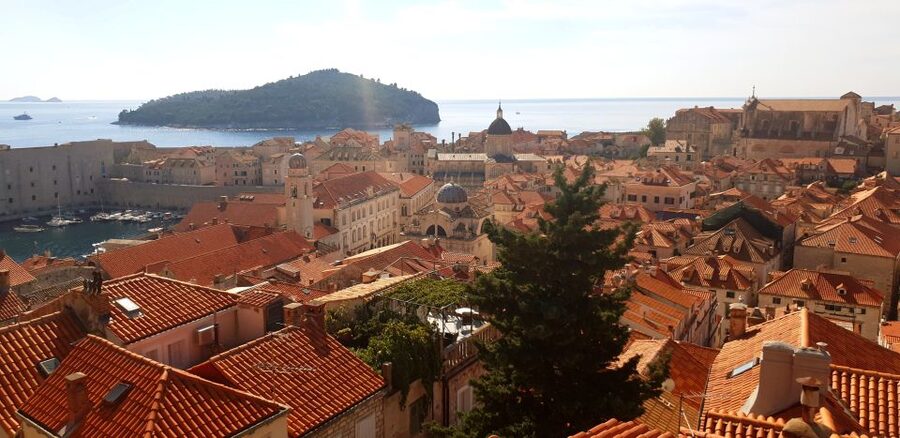
The next stop is Orlando’s Column, with about five minutes of guided sightseeing. It sits in one of the Old Town’s key public spaces and helps explain Dubrovnik’s civic identity.
A short stop is appropriate here. The column is a landmark to understand in context, not a place that requires a long lecture. Your guide may connect it with the city’s traditions, public life, and the symbols that appear throughout Dubrovnik.
This is one reason the tour works best as an introduction. You are not left with a pile of disconnected buildings. The stops build a picture of a small, carefully organized republic shaped by trade, defense, religion, and local government.
Sponza Palace and Rector’s Palace
The route then gives roughly ten minutes each to Sponza Palace and Rector’s Palace. These are among the Old Town’s most important civic buildings, and they show the city’s polished public face.
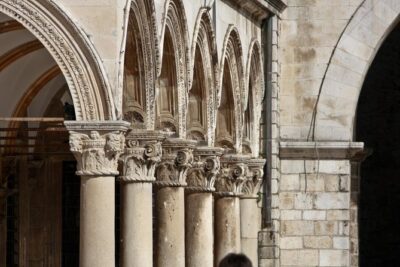
Sponza Palace is notable for its elegant architecture and its role in the city’s commercial and administrative life. Rector’s Palace brings the story closer to government and power. The guide explains how Dubrovnik was run and how public buildings reflected the city’s priorities.
The stop at Rector’s Palace is particularly useful if you plan to visit the building later. You will already know why it matters and what details to watch for. At the same time, do not expect an interior visit as part of this 90-minute walk. The focus is on seeing the sites and understanding their place in the city.
Guides have been praised for adding personal stories and anecdotal details instead of simply reciting dates. Davor, in particular, has been noted for presenting events from the viewpoint of Dubrovnik’s citizens. That approach can make the city feel less like a set of monuments and more like a place shaped by ordinary lives.
Dubrovnik Cathedral and St Blaise’s Church
The walk continues to Dubrovnik Cathedral, with about ten minutes for the guided stop. Churches are central to the Old Town’s identity, and the cathedral gives you a chance to consider the role of faith, art, and community in city life.
The tour also includes St Blaise’s Church among the Old Town highlights. St Blaise is Dubrovnik’s patron saint, so the church offers an important piece of local identity rather than simply another attractive facade.
The guide’s job here is to give you the basic story and point out details you might otherwise pass without noticing. If you want to study the interiors, artwork, or religious history in depth, you will need to return independently.
The balance is sensible for a first walk. You see the main religious landmarks, hear why they matter, and keep moving through the streets rather than spending the whole morning inside one building.
Gundulić Square and Ulica od Puča
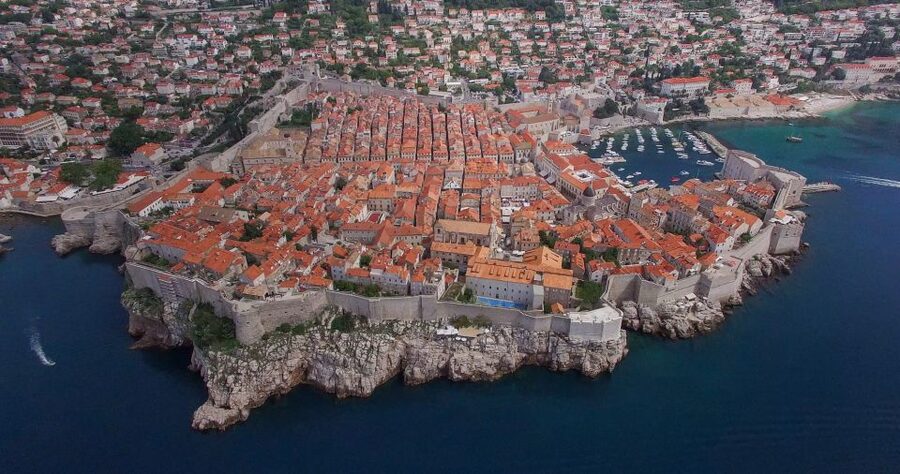
The Monument to Ivan Gundulić receives one of the longer stops, about fifteen minutes. This part of the walk shifts attention from grand buildings to Croatian culture and public life.
Gundulić was an important Croatian poet, and the monument helps show that Dubrovnik’s identity is not only about stone walls and sea views. A good guide can use this stop to explain local traditions, language, literature, and the way residents connect with the Old Town.
The final portion follows Ulica od Puča, a side street known mainly by locals. This is one of the most appealing parts for anyone who wants more than the standard postcard route. You see how the Old Town’s smaller lanes fit together and get a sense of the places where residents live, work, and pass through their day.
Several guides have also offered suggestions for restaurants and later activities. That can be useful because you finish with a mental map of the city, not just a list of famous buildings.
What the 90-minute format does well
Ninety minutes is enough to cover a lot without taking over your day. You see the main street, major civic buildings, religious landmarks, a fortress view, and a local side street. That makes the tour a strong first activity, especially if you have only a short stay.
The compact format also gives you flexibility afterward. You can walk the city walls, return to Rector’s Palace or the cathedral, find lunch, or follow up on a guide’s suggestions. One useful strategy is to note which places interest you most, then revisit them after the group walk.
The limitation is depth. A single stop may last only five or ten minutes, and a 90-minute route cannot explain every building, war, ruler, legend, and architectural detail. One person specifically wanted a longer tour with more sightseeing. If you prefer a slow, highly detailed historical walk, this may feel brief.
What guides add to the experience
The guides are the main variable in any walking tour, but the supplied information gives a clear pattern. Mihaela has been praised for combining local knowledge with history and politics, while Daniela is noted for encouraging questions and explaining the city in an approachable way.
Davor is described as especially passionate about Dubrovnik, and Jelena has been praised for pointing out small quirks, churches, fortresses, and places worth exploring. Andreja has also been noted for spending a few extra minutes with her group and sharing modern-day suggestions.
These details matter because the tour is not built around audio devices or a printed route. You are paying for a human explanation of the city. Ask questions as you go. The guides are specifically described as welcoming questions, and that is where you can get the most personal value.
The overall rating is 4.9 from 123 reviews, with repeated praise for the guides’ local perspective, clear storytelling, and ability to make history interesting. The strongest pattern is not one single landmark. It is the combination of a quiet city and a good guide.
Price, timing, and practical value
At $23 per person, the tour is reasonably priced for a licensed local guide and a focused 90-minute introduction. I would consider it good value if you are new to Dubrovnik, want help getting oriented, or hope to avoid the busiest part of the day.
The value is weaker if you already know the Old Town well or prefer exploring alone. You can walk past many of these sites without paying, but you will miss the organized context, local stories, and chance to ask questions.
Food, drinks, and hotel pickup are not included. Bring comfortable shoes and plan your route to Amerling Fountain yourself. You can cancel up to 24 hours in advance for a full refund, and the reserve-now, pay-later option keeps your plans flexible.
Check the exact starting time when you book. The experience is designed as an early morning tour, and many comments refer to 8 a.m., but available start times should be confirmed rather than assumed.
Who should book the Early Bird Walking Tour?
Book it if you want to see Dubrovnik before the crowds, prefer a short overview to a long lecture, and like asking a local guide about history and daily life. It is also a smart first-morning choice for a longer stay because it helps you decide where to spend the rest of your time.
It suits couples, solo visitors, families who can manage an early start, and anyone arriving during hot weather. The quiet streets and shaded pauses can make the walk much more comfortable than a later departure.
Skip it if you strongly dislike early mornings, need extensive time inside each monument, or want hotel pickup and refreshments included. You should also choose another format if your main goal is a dedicated city-walls tour, since this route focuses on the Old Town streets and landmarks rather than a full wall circuit.
For $23, I would book this as an orientation walk, not as the complete Dubrovnik experience. Start early, listen closely, then use the rest of the day to return to the places that caught your attention.
FAQ
How long is the Dubrovnik Early Bird Walking Tour?
The tour lasts 90 minutes.
What is the price?
The price is $23 per person.
Where does the tour meet?
The meeting point is Amerling Fountain next to Dubravka restaurant, near the main entrance at Pile Gate.
How will I recognize the guide?
The guide will have a blue umbrella or a sign marked Early Bird.
What language is the tour offered in?
The live guided tour is offered in English.
Is the tour wheelchair accessible?
Yes, the activity is listed as wheelchair accessible.
What landmarks does the route include?
The walk includes Fort Lovrijenac views, Pile Gate, Large Onofrio’s Fountain, Stradun, Orlando’s Column, Sponza Palace, Rector’s Palace, Dubrovnik Cathedral, the Monument to Ivan Gundulić, and Ulica od Puča. St Blaise’s Church is also included among the Old Town highlights.
Is hotel pickup included?
No. You need to make your own way to Amerling Fountain.
Can I cancel or pay later?
You can cancel up to 24 hours in advance for a full refund. The reserve-now, pay-later option lets you book without paying immediately.
Just added around Dubrovnik
- Welcome to Dubrovnik Walking Tour★ 5.0 · 36 reviews
- Walls Of Dubrovnik: Small-Group Walking Tour With A Local★ 5.0 · 67 reviews
- Dubrovnik at War 1991-1992 Private Walking Tour★ 5.0 · 4 reviews
- Olive farm & village★ 5.0 · 41 reviews
- City Walls of Dubrovnik★ 5.0 · 70 reviews
- Walls of Liberty: A Self-Guided Audio Tour of Dubrovnik★ 3.5 · 3 reviews
- Trebinje Gastro Tour From Dubrovnik★ 4.5 · 12 reviews
- Try Scuba Diving Discovery in Dubrovnik★ 5.0 · 43 reviews
Walking Tours, compared.
Split: Old Town and Diocletian Palace Walking Tour
Read our review →
Walking Tour of Split and Diocletian’s Palace
Read our review →

Krka Waterfalls tour with Trogir Walking tour and Krka panoramic boat cruise
Read our review →
Dubrovnik: City Walls Early Morning or Sunset Walking Tour
Read our review →Browse the lists this tour appears in