
Reviewed · CYCLING TOURS
Classic Zagreb Bike Tour
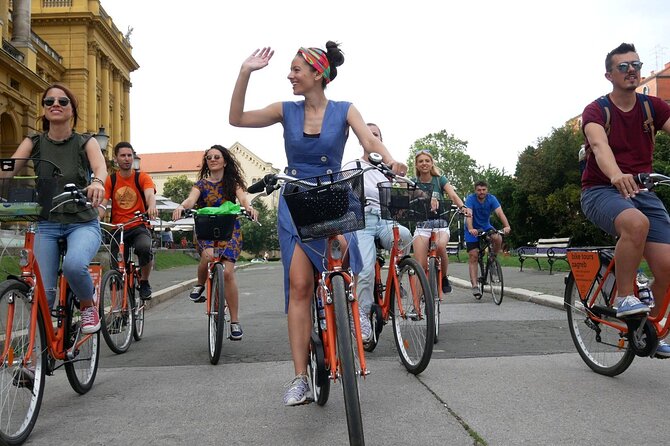
Zagreb makes sense from a bicycle seat. In roughly three hours, you move from the medieval core around the Cathedral and Stone Gate to grand lower-city squares, parks, and the Croatian National Theatre. The route gives you a useful first look at the city without trapping you indoors or tiring your feet.
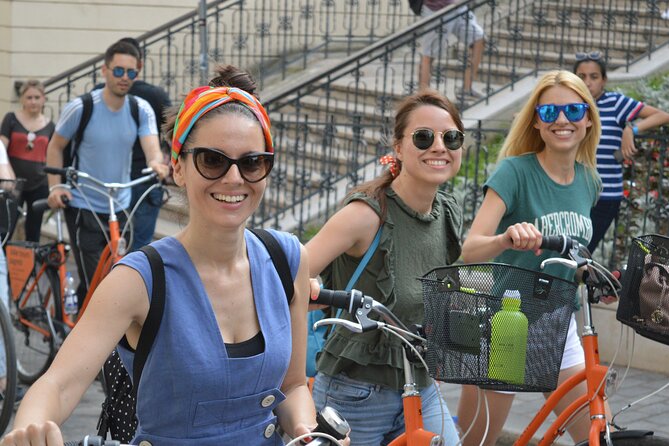
I like the small maximum of 12 riders, which gives guides such as Filip, Iva, Eva, and Sandro room to answer questions and adjust the pace. I also like the included stop for coffee, a cold drink, or ice-cream. It breaks up the ride and gives you a chance to ask where to eat next.
The main caution is the equipment and street conditions. Most riders find the pace easy, but you’ll encounter cobblestones, pedestrians, public transport, and one steeper hill. Bike quality has been uneven, so inspect your brakes, saddle, and helmet before setting off.
Why This Three-Hour Ride Works So Well
- You cover both Upper and Lower Zagreb, rather than seeing only the central squares.
- The route is mostly easy and fairly flat, but includes cobblestones, crowded areas, and one real climb.
- Guides add local context, from medieval disputes to sports, food, culture, and everyday city life.
- A café or ice-cream pause is included, along with a photo from the tour.
- The group is limited to 12 people, a useful size for questions and personal attention.
- The $54.44 price includes the bike, helmet, guide, refreshment, and photo, but not alcoholic drinks or the funicular ticket.
Starting on Jurišićeva Street
You meet at Jurišićeva ul. 19, close to public transportation in central Zagreb. The tour returns to this same point, which makes it easy to continue sightseeing afterward or head back to your hotel.
The ride is offered in English and lasts about three hours. That is a good length for an introduction. You get enough time to understand Zagreb’s layout, but not so much time that the ride becomes a test of endurance.
Before you leave, take a moment to check the bicycle yourself. Squeeze both brake levers, test the saddle height, and make sure the helmet fits. One rider had a bike replaced quickly after hitting a bump, while another reported concerns about brakes and bike condition. The operator disputed that account and says bikes are checked before departure, but a quick personal check is still sensible.
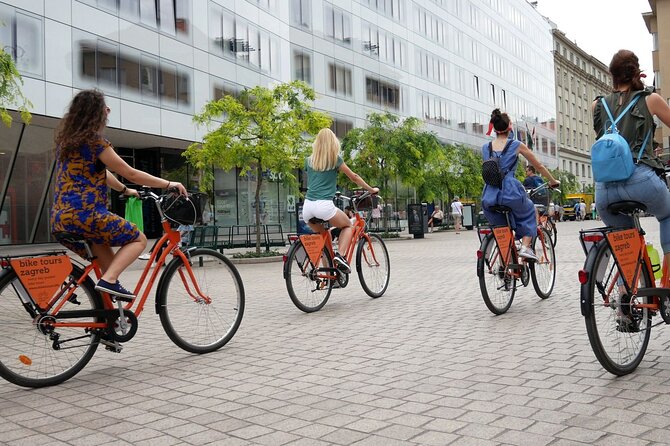
The equipment includes standard bicycles and helmets. Some riders describe the bikes as comfortable eight-speed models, while others found them older or in need of attention. For most people, the bigger challenge is not the gears. It is steering around pedestrians, trams, buses, and uneven paving in the center.
More Bike Tours in Zagreb
- Zagreb Highlights Bike Tour
★ 5.0 · 208 reviews - Zagreb: 3–Hour Classic Bike Tour
★ 4.6 · 139 reviews - All of Zagreb Bike Tour
★ 5.0 · 97 reviews
Zagreb Cathedral and the City’s Starting Point
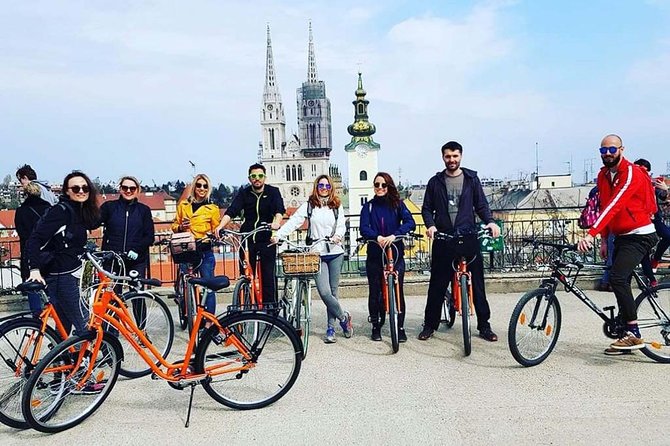
The first stop is Zagreb Cathedral, where the city’s church history reaches back to 1093. That was the year the Hungarian king Ladislav founded the Diocese of Zagreb in the Kaptol area and raised the church to cathedral status.
You have about ten minutes here. That is enough to orient yourself and hear why Kaptol became one of the two historic halves of the old city. This is a photo and context stop rather than a long interior visit. Admission is free, but the tour does not promise an extended look inside.
Starting here is smart because the Cathedral gives you a clear reference point. As you ride on, the guide can explain how Zagreb grew outward from its medieval settlements into the orderly lower city.
Dolac Market, Zagreb’s Everyday Center
From the Cathedral, you reach Dolac Market, often called the belly of Zagreb. It is the city’s main farmers market, and the ten-minute stop gives you a glimpse of an active local meeting place rather than a monument built only for sightseeing.
I would pay attention to the produce, stalls, and movement around the market. Even a short visit helps explain how central Zagreb connects daily shopping with its historic core. You may also want to return here later, when you have more time to look around at your own pace.
The bicycle is useful in this part of town because the stops are close together but spread across streets where walking can feel slow. You cover more ground while still stopping often enough for the guide to explain what you are seeing.
Tkalciceva Street and Krvavi Most
The ride continues to Tkalciceva Street, a lively downtown road lined with cafés and nightlife. Its earlier identity was very different. From the late 19th century into the 1930s, it was Zagreb’s equivalent of an Amsterdam red-light district.
You get about 15 minutes here. The useful detail is not just the street’s present-day restaurant scene, but the way its past reflects Zagreb’s changing social life. A good guide can connect the old reputation with the modern café culture without turning the stop into a dry lecture.
Next comes Krvavi Most, or Bloody Bridge. It marked the boundary between Gradec and Kaptol across the Medveščak stream. The name points to repeated clashes between residents of the two settlements.
This ten-minute stop helps you picture a city that was once divided by local loyalties and physical boundaries. Today, the setting is part of a connected center, so the bicycle makes the old division feel especially clear. You can cross between the historic areas in minutes, while the guide explains why that was not always peaceful.
Same stretch of coast, a completely different kind of day:
- Communism & Croatian Homeland War Tour
★ 5.0 · 1,355 reviews - Best of Zagreb with the WW2 Tunnels
★ 5.0 · 973 reviews - Zagreb: Small Group Walking Tour City Center and WW2 Tunnels
★ 4.9 · 895 reviews - Zagreb: Skip-the-Ticket-Line Museum of Broken Relationships
★ 4.5 · 847 reviews
Stone Gate and St. Mark’s Church
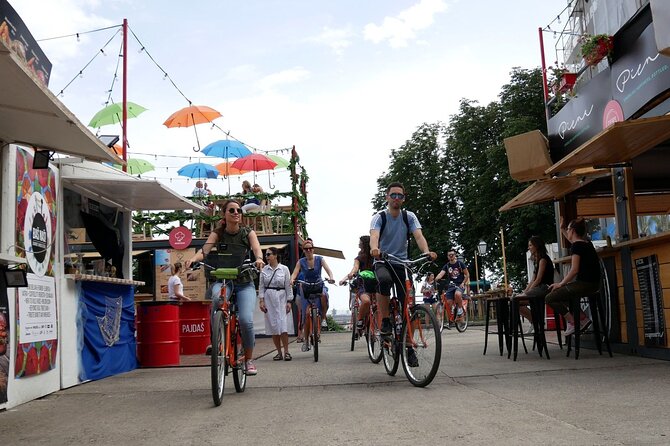
Petrini Pyli refers to the Stone Gate, one of Zagreb’s most important religious sites. The gate has housed a shrine to Our Lady of the Stone Gate for centuries, and she is regarded as the city’s patron saint.
The ten-minute stop is brief, but it is one of the more personal moments on the route. You are not only looking at old masonry. You are seeing a working place of devotion that still matters to people in Zagreb.
From there, you ride to St. Mark’s Church in the Upper Town. The church is one of the city’s oldest buildings and a major Zagreb symbol. It appears in the 1334 Kaptol Statute, which gives the guide a useful starting point for explaining its age and role.
You have about 15 minutes here. This part of the route also brings the most demanding riding conditions. The old streets can include cobblestones, and one hill is noticeably steeper than the rest. You can walk the bicycle up if needed. Several riders who do not consider themselves athletic found the pace manageable, but you should be comfortable handling a bike at low speed around uneven surfaces and pedestrians.
The Upper Town is where the guide’s storytelling matters most. Filip is praised for mixing humor with local history, while Iva, Eva, Zeljka, and Sandro are also described as warm, engaging, and ready with practical suggestions. Guide quality can vary by departure, but the repeated strength is the personal commentary rather than a rushed list of dates.
The Funicular and the View Between Two Towns
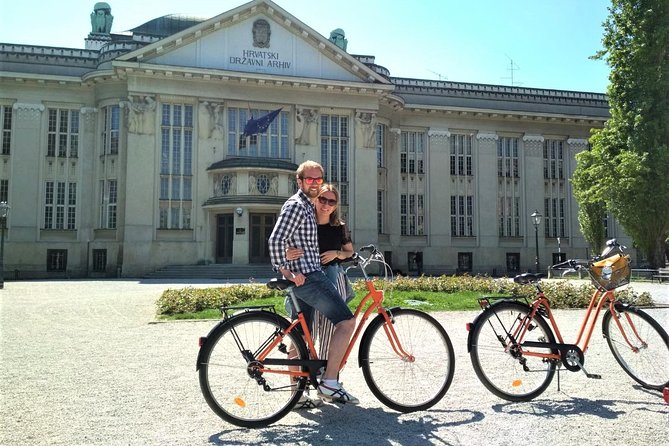
The tour pauses at Zagreb’s funicular railway for about 15 minutes. Built in 1892, it is considered the oldest passenger public transport in Zagreb and links the Upper and Lower Town areas.
The funicular ticket is not included, so do not assume that this stop means you will ride it. Treat it as a landmark and a chance to understand the city’s vertical layout. The Upper Town sits above the broad lower streets, and the funicular makes that connection visible.
This is also a useful place to judge your energy. By this stage, you have crossed the oldest sections, negotiated tighter streets, and handled the hill. The rest of the route moves into wider spaces and is generally easier.
Coffee, Cold Drink, or Ice-Cream Break
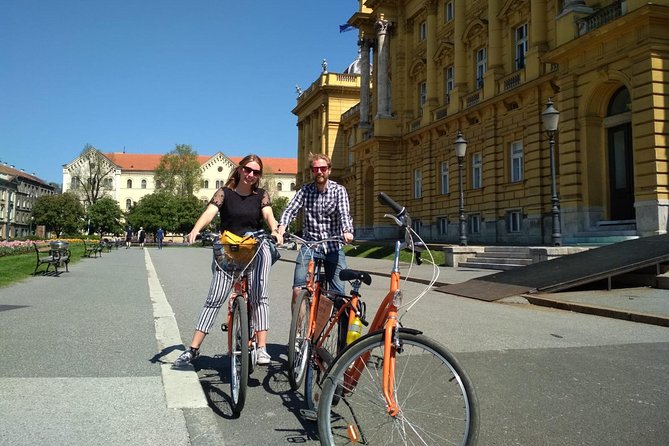
The included refreshment is one of the tour’s nicest practical touches. You can choose coffee, a soft drink, or ice-cream, and the break usually takes place at a local café or casual stop along the route.
This is more than a snack. You can cool down, meet the other riders, and ask the guide about restaurants or foods to try. Several riders received useful dining suggestions, and one later followed a guide’s recommendation to a local restaurant.
Alcohol is not included. The break is also not designed as a full meal, so eat beforehand if you need more than a drink or sweet treat. On a warm day, the stop gives you welcome time out of the saddle.
Croatian National Theatre and King Tomislav Square
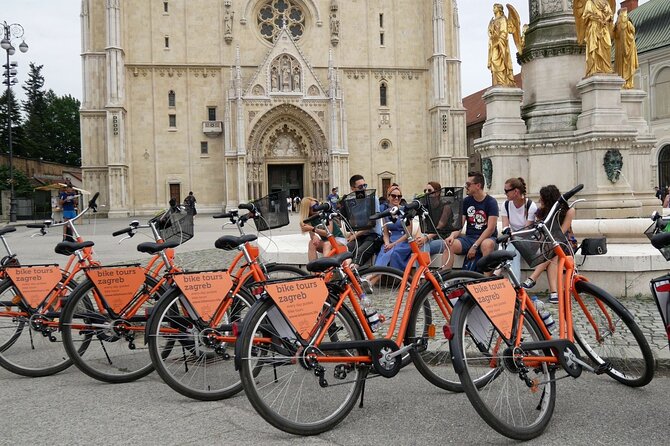
After the old center, the route heads toward the Croatian National Theatre. Founded in 1860, the theatre represented the long-held goal of creating a Croatian institution performing in the Croatian language.
You have about 20 minutes here, the longest stop on the published route. That gives the guide time to explain the theatre’s place in national culture and the political ambitions tied to its creation. The building also helps you see how Zagreb changes character as you leave the medieval streets behind.
The next stop is King Tomislav Square, named for the first Croatian king, who ruled from 925 to 928 after earlier ruling the Croatian principality. The ten-minute visit gives you another piece of national history, this time in a broad public square rather than a tightly packed old lane.
The square is part of the lower city’s grander plan. After the Upper Town, the open space feels like a change in rhythm. You can ride more comfortably, take in the surrounding buildings, and understand how Zagreb developed beyond its medieval hill.
Zrinjevac and the Lower City Finish
The final major stop is Zrinjevac, with about 20 minutes to explore and hear the story behind Zagreb’s lower-city design. In 1876, an urban plan proposed linking the lower-city squares into one framework.
This is a fitting final stop because it ties the whole ride together. Earlier, you saw the separate worlds of Kaptol and Gradec. Here, you see the planned city that grew around them. The parks and squares give Zagreb a more spacious, formal feel than the old town.
The route then returns to Jurišićeva Street. You finish near the same central area where you began, with the main city layout now much easier to understand. You may still want to revisit the market, enter a museum, or return to a church, since this bicycle tour focuses on exterior sights and commentary rather than long indoor visits.
What $54.44 Buys You
At $54.44 per person, this is not the cheapest way to move around Zagreb, but the price covers several useful pieces: bicycle rental, helmet, an English-speaking local guide, a coffee, cold drink, or ice-cream, and a tour photo.
The value comes from the amount of ground covered and the time saved between sights. A walking tour can show you the old center well, but the bicycle lets you connect the Upper Town with the National Theatre, King Tomislav Square, and Zrinjevac without spending much of the morning on foot.
The price is easier to justify if this is your first day in Zagreb. You get a city orientation, a list of places to revisit, and practical food suggestions. If you already know the center well, or prefer to explore slowly inside museums and churches, the value is less compelling.
The group limit of 12 is important. You are not paying for a private tour, but you are also less likely to disappear into a large crowd. A smaller group allows a guide to answer questions and notice when someone needs to slow down or walk a hill.
Who Will Enjoy This Ride Most
I would choose this tour if you want an active introduction to Zagreb and can ride a bicycle with confidence in city conditions. Families can do well with it if children are confident riders. One family brought three ten-year-olds, and the guide kept them involved with questions and a lively pace.
You do not need to be highly athletic. The route is described as mostly flat and relaxed, and riders have walked their bikes up the steeper sections. You do need to manage cobblestones, crowded pedestrian areas, and occasional public transport traffic.
This is less suitable if you dislike riding near people, need a very small bicycle, or expect polished modern equipment. The feedback on bike condition is mixed, and shorter riders may want to ask about available frame sizes before departure.
The tour is also a good match for solo visitors and couples. The group setting makes the included café stop sociable without requiring you to spend a full day with strangers. Service animals are allowed, the meeting point is near public transportation, and most people can participate.
Final Decision: Book It If You Want Zagreb in One Morning
I would book the Classic Zagreb Bike Tour as a first or second activity in the city. Its strongest points are the route, the local storytelling, the manageable length, and the chance to see both historic Zagreb and the lower-city squares in one outing.
Go in with realistic expectations. This is not a protected cycle path from start to finish, and the bikes may not feel new. Check your equipment, follow the guide closely, and be ready to walk one hill. If you want an efficient city overview with room for humor, food advice, and a refreshment break, the $54.44 price is fair.
The experience has a 4.9 rating from 193 ratings, with 98% recommending it. Those numbers fit the main pattern: strong guides and an easy pace are the tour’s best assets, while bicycle condition and road safety deserve your attention before you set off.
FAQ
How long does the Classic Zagreb Bike Tour last?
The tour lasts approximately three hours and finishes back at the meeting point on Jurišićeva ul. 19.
What language is the tour offered in?
The tour is offered in English.
What is included in the price?
The price includes use of a bicycle and helmet, a local guide, coffee, a refreshing drink or ice-cream during the break, and a photo from the tour.
Is the funicular railway ticket included?
No. Admission to the funicular is not included.
What places does the tour visit?
Stops include Zagreb Cathedral, Dolac Market, Tkalciceva Street, Krvavi Most, the Stone Gate, St. Mark’s Church, the funicular railway, the Croatian National Theatre, King Tomislav Square, and Zrinjevac.
How many people can join the tour?
The maximum group size is 12 people.
Can I cancel for a full refund?
Yes. You can cancel at least 24 hours before the experience start time for a full refund. Cancellations or changes made less than 24 hours before the start time are not accepted for a refund.
Just added around Zagreb
- Toast to the Morning After: Zagreb Museum of Hangovers Visit★ 4.0 · 39 reviews
- Private Walking Tour of Zagreb★ 4.9 · 5 reviews
- Jump into Zagreb: Walking Tour with local guide★ 4.8 · 3 reviews
- From Zagreb: Varazdin Baroque Town & Trakoscan Castle★ 4.9 · 38 reviews
- From Zagreb:Discover North Croatia, Museums, Castle and City★ 5.0 · 26 reviews
- From Zagreb: Prehistoric and Medieval Croatia Tour★ 4.9 · 3 reviews
- From Zagreb: Mrežnica kayaking & Rastoke village – day trip★ 4.9 · 27 reviews
- Exclusive old Zagreb walking tour★ 4.4 · 32 reviews
Cycling Tours, compared.
Quad Biking Off Road Tour starting 10 minutes drive from Split
Read our review →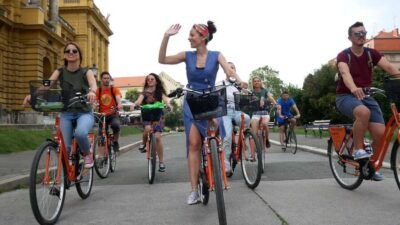
Browse the lists this tour appears in