
Reviewed · CITY TOURS
Private Fort Lovrijenac and Dubrovnik City Tour
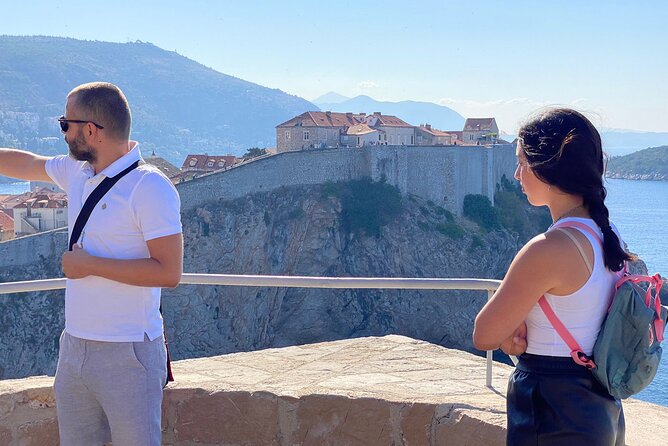
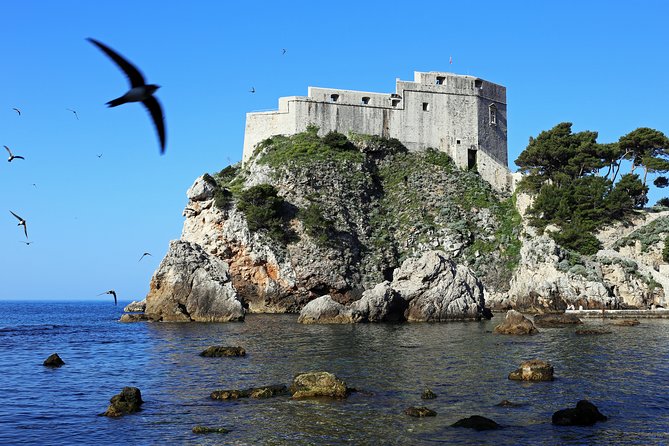
Fort Lovrijenac gives this compact Dubrovnik tour its best hook. The fortress sits outside the main city-wall system, once guarding the republic from attack and now serving as a famous open-air stage for Shakespeare. From there, you walk into the Old Town for its main street, political square, palace, and Baroque church.
I like the private format, since your guide can adjust the conversation to your interests. I also like the route’s clear progression from fortress to Stradun and then through the Old Town, which helps you get your bearings quickly. Guide Josip is especially useful if you want local advice about food, drinks, and what to see afterward.
The main drawback is the short running time. Two hours gives you a sharp introduction, not a slow exploration, and the €15 Fort Lovrijenac admission fee is not included in the $59.67 price. Expect to see the key places from outside unless you arrange extra time on your own.
Key points to know before booking
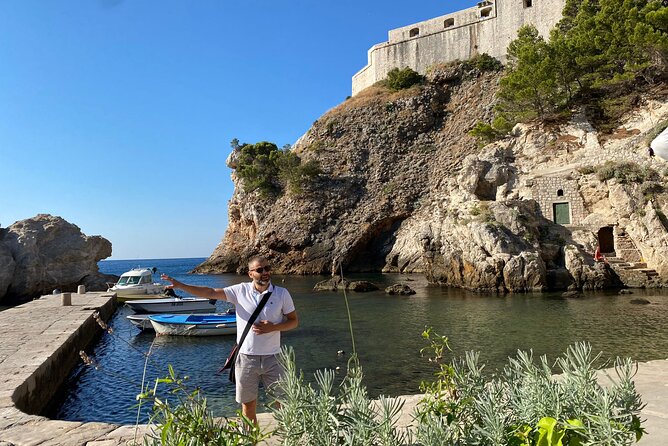
- Fort Lovrijenac opens the tour with Dubrovnik’s strongest view and story, but its €15 admission fee is paid separately.
- Josip may guide your visit, offering both past events and practical advice for the rest of your stay.
- The route is private, so only your group participates and the discussion can follow your interests.
- The walk ends at St. Ignatius Church, beside Dubrovnik’s famous Baroque staircase.
- The two-hour schedule is efficient but brisk, with several short stops rather than long interior visits.
- Free cancellation is available up to 24 hours before the start, with weather protection if poor conditions cancel the tour.
Why Fort Lovrijenac is the right place to begin
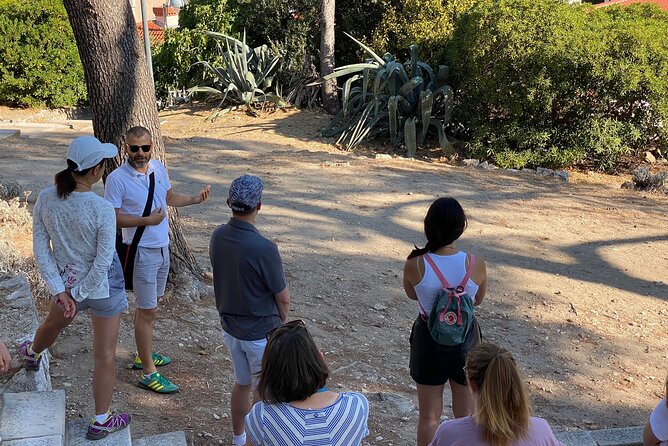
Dubrovnik’s Old Town can feel like a maze when you first arrive. Starting at Fort Lovrijenac gives you a useful outside perspective before you enter the tightly packed streets behind the Pile Gate area.
The fortress is one of only two fortifications not connected to the main Dubrovnik City Walls system. Its original job was serious: protect the city from attack. Today, it is also known for outdoor Shakespeare performances, giving the site a pleasing mix of military purpose and theater.
You have about 30 minutes here. That is enough for an introduction to the fortress and its role, but not enough for a leisurely visit if you want to examine every corner. The ticket costs €15 per person, and it is not covered by the tour price, so add that amount when comparing this experience with other city walks.
The fortress stop also sets the tone for the rest of the visit. You are not simply being led from one postcard view to another. You are hearing why Dubrovnik placed defenses where it did, then seeing how the city developed inside those defenses.
A few more Dubrovnik half-days worth comparing
- Blue Cave Small-Group Boat Tour from Dubrovnik
★ 5.0 · 9,360 reviews - Dubrovnik: Epic Game of Thrones Tour + Lokrum & Saver Option
★ 4.9 · 5,995 reviews - Dubrovnik: Old Town Walking Tour
★ 4.8 · 5,174 reviews
Walking from Brsalje Street into the Old Town
The meeting point is Brsalje ul. 9, near the Pile Gate side of Dubrovnik. This is a practical starting point because the route then moves naturally toward the Old Town rather than asking you to cross the city before the tour begins.
From the fortress area, the group heads toward the historic center. The exact walking pace will depend on your group, but the plan is compact and straightforward. Wear comfortable shoes, since the route includes stone streets and steps, especially near the final church stop.
A private tour makes this opening section more useful than it might be on a large group walk. You can ask Josip to clarify a point, slow down for a photograph, or shift the conversation toward subjects that matter to you. The supplied price is per person, but the activity itself is reserved for your group alone.
That privacy matters most if you are traveling with family or friends who do not all want the same amount of detail. Someone can ask about Dubrovnik’s political system while another person asks for a restaurant area or advice on exploring the walls later.
Stradun, Dubrovnik’s 200-meter spine
Stradun is the Old Town’s main street, roughly 200 meters long. It links the Pile Gate and Ploče Gate and separates the northern and southern sections of the center.
You spend about 10 minutes here. That may sound brief, but Stradun works best as an orientation point. Once you understand its direction, you can use it to find your way around the side streets and squares without feeling lost.
The street has also changed over time. Its present appearance comes from rebuilding after an earthquake, a detail that helps explain why this central route feels so orderly compared with the narrow streets branching away from it.
This is not a stop where you should expect an extended architectural lecture or free time for shopping. Think of it as the central line on your mental map. Your guide’s role is to explain why this street matters to daily life in Dubrovnik, then move you onward before the tour loses its pace.
Luža Square and the city’s public center
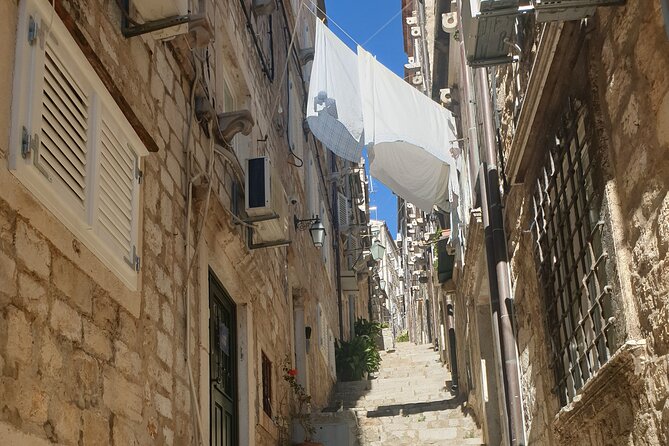
The next stop is Luža Square, where you spend around 15 minutes. If Stradun is Dubrovnik’s main street, Luža is its main square, surrounded by several of the city’s most recognizable buildings.
The square is framed by Sponza Palace, the Bell Tower, St. Blaise Church, and other important structures. This concentration makes the stop valuable even if you are not entering every building. You can look around and understand how religious, civic, and commercial life gathered in one compact space.
I like this part of the route because it gives context to the buildings instead of treating them as isolated sights. Your guide can connect the square to the wider political and religious life of the republic, while you get a close look at the Old Town’s working center.
Again, 15 minutes is an introduction, not a full visit. If Sponza Palace or the Bell Tower is high on your list, plan separate time after the tour. The walking route points you toward the important places, but the experience does not include admission to them.
Same stretch of coast, a completely different kind of day:
- Dubrovnik: The Original Game of Thrones Tour & Lokrum Option
★ 4.8 · 5,064 reviews - Dubrovnik Game of Thrones Tour & Optional Lokrum Island Visit
★ 5.0 · 4,702 reviews - Dubrovnik Discovery Old Town Walking Tour
★ 5.0 · 4,458 reviews - Montenegro Full-Day Trip from Dubrovnik with Optional Boat Trip
★ 4.5 · 3,212 reviews
Rector’s Palace and Dubrovnik’s political system
At Rector’s Palace, the focus shifts from streets and buildings to government. You spend about 15 minutes hearing how the Republic of Dubrovnik was managed, including the Rector’s term of office, duties, and executive role.
This is one of the more useful history stops because it explains the system behind the city’s impressive buildings. Dubrovnik was not simply a fortified port with attractive stone streets. It had a political structure that shaped how power was held and displayed.
The palace is also a good place to ask questions. Josip’s approach, according to the information provided, includes explaining both Dubrovnik’s past and its modern life. That makes the stop more practical than a memorized list of dates.
The palace itself is not included as an interior visit. You should treat this section as an outdoor explanation in front of the building. If you want a longer look inside, you would need additional time and any separate admission required there.
St. Ignatius Church and the Baroque finish

The tour ends in front of the Church of St. Ignatius of Loyola, at Poljana Ruđera Boškovića 7. The church sits in what is described as Dubrovnik’s most Baroque part of town, and the final stop lasts about 15 minutes.
The ending is well chosen. After the fortress and the practical street route, you finish with a more decorative part of Dubrovnik. The church and its setting offer a change of mood, with architecture that feels more theatrical than the stern defensive walls at the start.
The tour also finishes beside the famous Baroque staircase often called the walk of shame stairs. The supplied information identifies this as the final point, so you know exactly where the guided portion ends. From there, you can continue through the Old Town at your own pace.
A small caution: the end point is not the same as the start. If you need to return to a hotel, ship, or meeting point, allow time to navigate back. The Old Town is compact, but the route is not a simple loop.
What $59.67 buys you
At $59.67 per person, this is not the cheapest way to see Dubrovnik’s streets. The value comes from having a private English-speaking guide for about two hours, not from a long list of included admissions.
You also need to add €15 per person for Fort Lovrijenac. The other listed stops have free admission during the tour, but this does not mean that every possible interior visit is included. The price makes the most sense for a small group that wants personal attention and a focused introduction without joining strangers.
For a couple or family, the private setup can be worthwhile. You are paying for control over the conversation and the chance to ask practical questions. Josip has also helped with broader holiday arrangements, including transfers, according to the available information, so you may be able to get useful local direction beyond the formal route.
For a solo visitor, the cost is harder to justify unless private guiding is important to you. A larger group can spread the per-person price, making the experience more attractive. You should also compare it with your own plans: if you already intend to visit the fortress and walk Stradun independently, the main benefit here is interpretation and local guidance.
A brisk route for first-time visitors
The scheduled stops total about 85 minutes, leaving the rest of the two-hour period for walking between them and moving through the Old Town. That tells you something important about the style of the tour. It is designed to cover a lot of ground in a short time.
I would choose this tour early in a Dubrovnik visit. The route gives you the basic layout, introduces the city’s government and religious architecture, and ends with clear ideas about where to continue. One direct benefit is that you should be able to walk inside the walls afterward without feeling quite so turned around.
The pace may be less suitable if you want long pauses for photographs, extended church visits, or detailed discussion at every building. You can ask questions, but the schedule still has to reach five stops. A private guide can adapt the emphasis, though not turn two hours into a full-day exploration.
The tour is also more useful for adults and older children who can keep moving through a historic center. Most people can participate, and service animals are allowed. Public transportation is nearby, but no private transport is part of the experience.
What the local guidance adds
The strongest part of this experience is the human element. The guide is not only there to point at Stradun or identify a palace. You can ask how Dubrovnik works today, what the city is like outside the postcard views, and where to eat or have a drink after the walk.
Josip is the guide name associated with the strongest feedback supplied for this experience. The useful details are his friendly manner, willingness to answer questions, and ability to adjust the tour to the group’s interests. He is also described as explaining historical information in a fun, understandable way.
That matters in Dubrovnik, where a short street can carry several layers of meaning. A guide can tell you why a square mattered, how the political system operated, and how the city’s old structures fit into modern life. Without that context, you may see attractive stone buildings but miss the reason they are arranged as they are.
You should still speak up about what you want. Ask for restaurant suggestions, more political background, or help planning your next walk. A private format gives you that opening, and the available information specifically points to advice about food, drinks, and further sightseeing.
Timing, weather, and cancellation details
You receive confirmation when you book, and the experience is offered as a mobile ticket. That keeps the practical side simple, especially if you do not want to print paperwork.
Free cancellation is available if you cancel at least 24 hours before the local start time. Changes or cancellations inside that 24-hour window are not accepted for a refund. The experience requires good weather, and if poor weather causes the provider to cancel, you are offered another date or a full refund.
Keep the weather rule in mind because Fort Lovrijenac is an outdoor fortress and much of the route is outside. A warm, dry morning may be more comfortable than the hottest part of the afternoon, though the available information does not specify particular departure times.
Who should book this Dubrovnik tour
I would recommend it to you if you are visiting Dubrovnik for the first time, want a private guide, and prefer a clear two-hour introduction rather than a long historical lecture. It suits couples, families, and small groups that value the chance to ask questions.
It is also a good fit if you want practical help after the tour. Josip’s role can include suggestions about eating, drinking, and what to see next, which may save you time in a city where the Old Town offers many choices in a small area.
I would hesitate if you want extensive interior access, a slow photography walk, or a full tour of the city walls. The fortress admission is extra, and the schedule is too short to cover every major sight in detail.
Should you book it?
Book this tour if you want Dubrovnik explained by a local guide, with Fort Lovrijenac, Stradun, Luža Square, Rector’s Palace, and St. Ignatius Church connected into one efficient route. The private format and practical advice are the main reasons to choose it.
Skip it if you are comfortable exploring independently or already have plans to visit each site at length. Remember to budget the additional €15 fortress ticket and allow extra time after the final stop if you want to enter buildings or continue sightseeing.
FAQ
How long does the Fort Lovrijenac and Dubrovnik City Tour last?
The tour lasts approximately two hours. The planned stops include about 30 minutes at Fort Lovrijenac, 10 minutes on Stradun, 15 minutes at Luža Square, 15 minutes at Rector’s Palace, and 15 minutes at St. Ignatius Church.
Is the Fort Lovrijenac entrance fee included?
No. Admission to Fort Lovrijenac costs €15 per person and is paid separately. The other listed tour stops have free admission during the guided route.
Is this a private tour?
Yes. Only your group participates in the activity. An English-speaking local guide leads the tour.
Where does the tour start and finish?
The tour starts at Brsalje ul. 9 in Dubrovnik. It finishes in front of St. Ignatius Church at Poljana Ruđera Boškovića 7, beside the famous Baroque staircase.
Can I cancel for a full refund?
Yes, if you cancel at least 24 hours before the experience start time. Cancellations or changes made less than 24 hours before the start are not refunded.
What happens if bad weather cancels the tour?
The experience requires good weather. If the provider cancels because of poor weather, you can choose a different date or receive a full refund.
Just added around Dubrovnik
- Welcome to Dubrovnik Walking Tour★ 5.0 · 36 reviews
- Walls Of Dubrovnik: Small-Group Walking Tour With A Local★ 5.0 · 67 reviews
- Dubrovnik at War 1991-1992 Private Walking Tour★ 5.0 · 4 reviews
- Olive farm & village★ 5.0 · 41 reviews
- City Walls of Dubrovnik★ 5.0 · 70 reviews
- Walls of Liberty: A Self-Guided Audio Tour of Dubrovnik★ 3.5 · 3 reviews
- Dubrovnik Game of Thrones Walking Tour: Filming Locations&Stories★ 5.0 · 30 reviews
- Trebinje Gastro Tour From Dubrovnik★ 4.5 · 12 reviews
City Tours, compared.
Hop On Hop Off Panoramic bus – Zagreb City Tour
Read our review →

Dubrovnik City Tour: Panorama Drive & Sightseeing Walk
Read our review →

Split Tour by Electric Tuk-Tuk: Top City Highlights
Read our review →Browse the lists this tour appears in