
Reviewed · WALKING TOURS
Dubrovnik Discovery Old Town Walking Tour
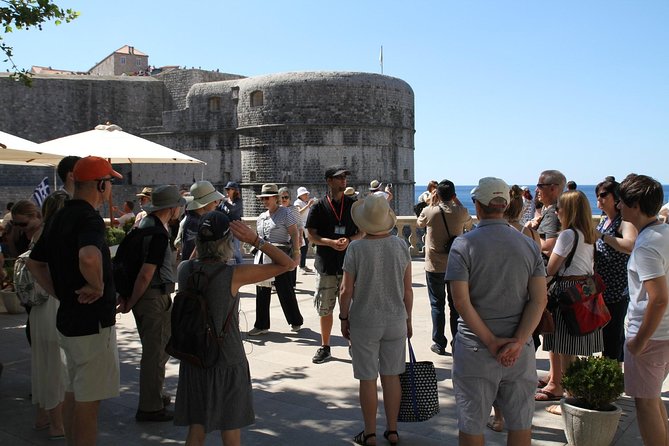
Dubrovnik’s Old Town is easiest to understand on foot, and this 90-minute walk gives you the story behind the polished stone, fortress walls, and grand squares. You move from Pile Gate through the main streets and historic center while a licensed local guide explains how Dubrovnik grew into a prosperous port, defended its independence, survived war, and lives today.
I like the compact route, which works well when you have only a morning or afternoon in the city. I also like the local perspective: guides such as Branko, Lana, Davor, Alex, and Goran have been praised for adding personal stories, humor, and clear explanations rather than simply reciting dates. The main consideration is pace. One guide was said to walk quickly in crowded areas, and the tour can feel talk-heavy if you want more time to stop and examine each building.
Key points at a glance
- About 90 minutes on foot: A useful first look at Dubrovnik before exploring on your own.
- Starts by Pile Gate: Meet at the Dubrovnik Walks orange umbrella near Sky Bar on Brsalje Street.
- Major landmarks included: See Onofrio’s Fountain, Orlando’s Column, Rector’s Palace, Sponza Palace, the Cathedral, and Luza Square.
- History beyond architecture: Expect stories about trade, independence, war, local culture, and present-day life.
- Audio headsets for groups of four or more: These can make the guide easier to hear in busy streets.
- Strong overall reputation: The tour has a 4.9 rating from 4,458 reviews, with 99 percent recommending it.
Why a short walk is the right introduction to Dubrovnik
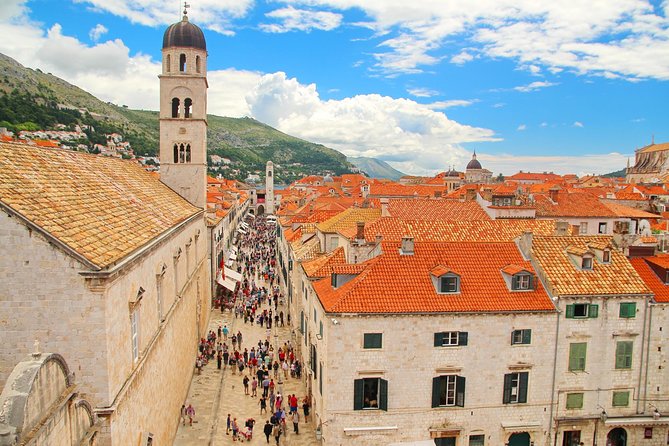
Dubrovnik can look simple at first glance. You see white limestone streets, orange roofs, heavy walls, and a beautiful main avenue. The details become more interesting once someone explains why the city needed its water system, how its government worked, and why symbols of freedom appear throughout the Old Town.
That is the real value of this walk. You are not just pointed toward attractive buildings. You get a timeline that connects the medieval port, the Republic of Ragusa, the 1667 earthquake, the war of the 1990s, and modern Dubrovnik.
I would take this tour near the beginning of a stay. After 90 minutes, you should have a better sense of where the major squares and buildings fit together. You can then return to places that caught your attention, visit interiors independently, or walk the streets without wondering what you are looking at.
The price is $24.19 per person. That is reasonable for a licensed guide and a focused introduction to one of Europe’s most visited old cities. The tour does not include admission to attractions, so the value comes from explanation and orientation, not from bundled entry tickets. Since the listed stops are viewed from outside, budget separately if you plan to enter museums, churches, palaces, or the city walls.
More Walking Tours in Dubrovnik
- Dubrovnik: Old Town Walking Tour
★ 4.8 · 5,174 reviews - Dubrovnik: Game of Thrones Walking Tour
★ 5.0 · 1,732 reviews - Dubrovnik Old Town History Walking Tour
★ 5.0 · 1,684 reviews
Meeting at the orange umbrella near Pile Gate
The meeting point is at the Dubrovnik Walks orange umbrella, at Brsalje ul. 8, near Sky Bar and the Pile area. This is a practical place to begin because Pile Gate is the main western entrance to the Old Town and a natural orientation point.
Look for the orange umbrella rather than relying only on the street address. The meeting point information can feel a little broad in this crowded part of Dubrovnik, especially when cruise groups and day visitors are arriving at the same time. Give yourself enough time to find the guide before the scheduled departure.
The guide introduces the route in Brsalje Square, gives a short outline of what you will see, and then leads the group toward Pile Gate. This opening briefing lasts about five minutes. It is useful because you learn the shape of the walk before entering the narrow streets.
The tour requires at least four people to operate. The maximum listed capacity is 99, although the actual feel of the walk will depend on the departure and attendance. Groups of four or more receive audio headsets, which should help when the street is noisy or the group spreads out.
Pile Gate and the first steps into the Old Town
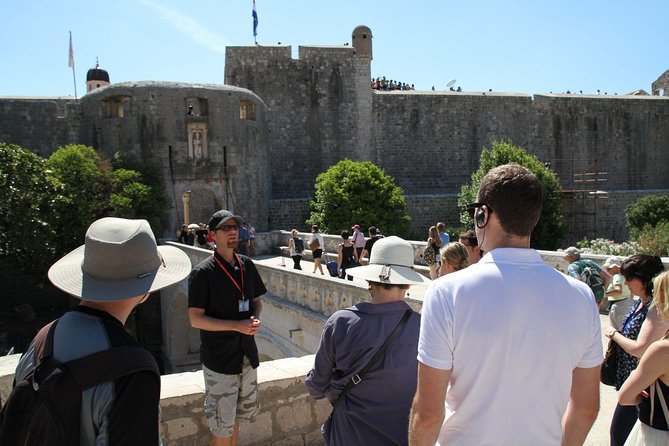
Pile Gate is more than a doorway. It is the main western entrance into the fortified city, and it gives you an immediate sense of Dubrovnik’s defensive design. From here, the tour moves into the Old Town, where the streets become narrower and the pale limestone underfoot reflects the bright coastal light.
The guide uses this early part of the walk to place Dubrovnik in time. You hear how the city developed over roughly 1,400 years and became an important port with strong trading connections. The story also explains the city’s long effort to protect its freedom and political independence.
This is a busy area, so stay close to the guide. One weakness of a walking tour here is that the crowd can make it harder to hear or keep up. The audio equipment helps in larger groups, but it does not remove the need to watch where the group is going.
Franciscan Monastery, Stradun, and Onofrio’s Fountain
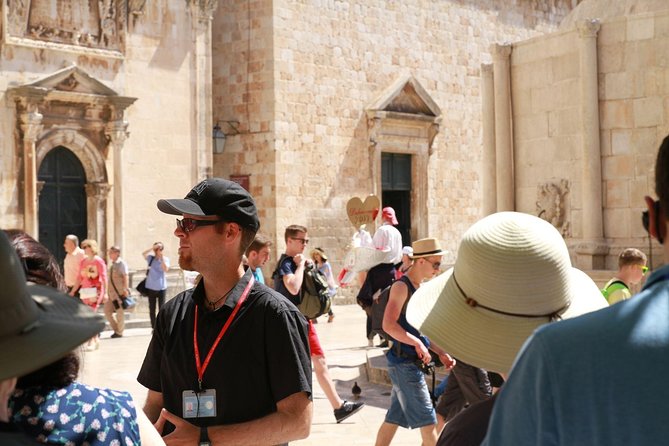
The route passes the Franciscan Monastery and reaches Stradun, Dubrovnik’s main pedestrian street. This is the city’s grand central spine, lined with carefully ordered stone buildings and busy with people moving between the gates, squares, shops, and historic sights.
Orlando’s Column is one of the key symbols along the way. The monument reflects Dubrovnik’s long concern with freedom and sovereignty, themes that return throughout the tour. Rather than treating it as a quick photo stop, the guide uses it to explain how public spaces and civic symbols worked in the old republic.
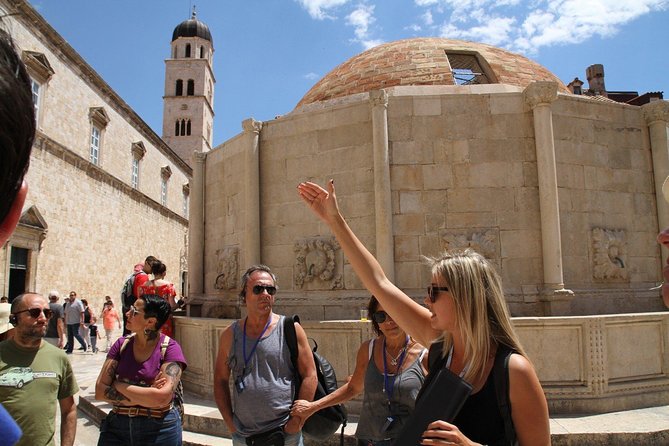
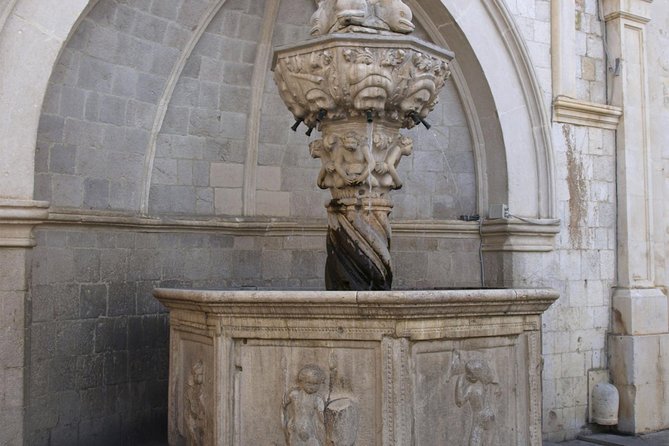
Onofrio’s Fountain is another memorable stop. Built in 1438, it marked the end of an aqueduct that carried water roughly eight miles, or 12 kilometers, into the city. That detail makes the fountain more than a decorative landmark. It shows the engineering and planning needed to support life inside a fortified coastal city.
I especially like this part of the walk because the sights are close together but not interchangeable. The monastery points to religious life, Stradun to public movement and commerce, Orlando’s Column to political identity, and the fountain to practical city planning.
Same stretch of coast, a completely different kind of day:
- Blue Cave Small-Group Boat Tour from Dubrovnik
★ 5.0 · 9,360 reviews - Dubrovnik: Epic Game of Thrones Tour + Lokrum & Saver Option
★ 4.9 · 5,995 reviews - Dubrovnik: The Original Game of Thrones Tour & Lokrum Option
★ 4.8 · 5,064 reviews - Dubrovnik Game of Thrones Tour & Optional Lokrum Island Visit
★ 5.0 · 4,702 reviews
Rector’s Palace and Sponza Palace
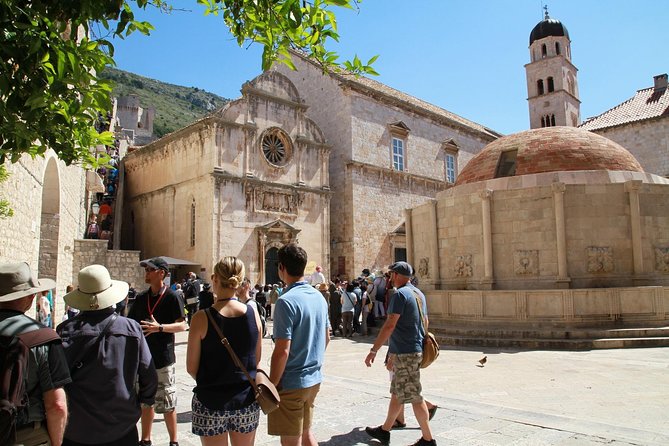
The route continues toward two of Dubrovnik’s most important civic buildings: Rector’s Palace and Sponza Palace. You view them as part of the walking route, and the guide explains their place in the city’s political and commercial story.
Rector’s Palace is a natural focus. Its name alone hints at the system that governed the old republic, and its setting near the harbor connects civic power with trade and maritime activity. The guide’s job here is to help you understand the building as part of a working government, not just as a handsome stone facade.
Sponza Palace adds another side of city life. Together, these buildings show how Dubrovnik organized administration, business, and public affairs within a compact walled center. The tour does not try to cover every room or collection, so I would treat this as an introduction and return later if a particular palace interests you.
The strongest guides make this section feel personal without losing the broader story. Branko has been praised for combining humor with detailed explanations, while Davor has been noted for connecting old events with present-day life. Lana has also been praised for clear communication and personal stories tied to Dubrovnik.
Luza Square and the Cathedral
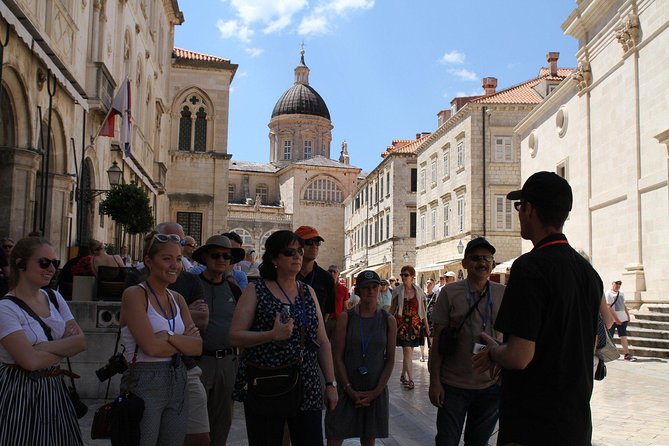
Luza Square is the main square of the Old Town and one of the busiest information points on the route. Several important sights gather here: St. Blaise’s Church, Orlando’s Column, Sponza Palace, the Small Onofrio’s Fountain, and the bell tower.
This concentration of landmarks makes the square useful for orientation. You can look around and see how religious, civic, and practical buildings share the same public space. The guide covers several stories here, so this may be the most information-packed section of the walk.
The Cathedral of the Assumption adds another major layer. The baroque church was built after the devastating earthquake of 1667, a disaster that changed the city’s buildings and appearance. Hearing that background helps you read Dubrovnik’s architecture more carefully. The Old Town is not simply medieval; it also reflects rebuilding, adaptation, and later styles.
You do not enter facilities on the brief Brsalje Square introduction, and the listed route does not include admission into the sights. If you want a quiet look inside a church or palace, plan to do that after the walking tour rather than expecting the guide to provide an interior visit.
The final stop near the old town port
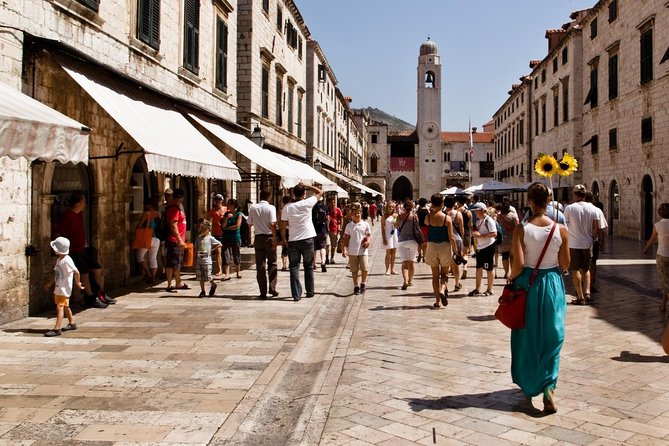
The last stop is in the Porat Dubrovnik area, near the Old Town port. The walk ends after a short closing summary, with the map also displaying the original meeting point. That can seem confusing, so confirm the end location with your guide before separating from the group.
Ending near the port makes sense for anyone continuing toward the waterfront, but you should not assume the final stop is the exact same physical point as the orange umbrella. The supplied directions identify the meeting address and also say the tour ends near the port. If you have a timed reservation afterward, leave a little extra room for finding your way.
The final portion is brief, so most of the substance comes earlier in the Old Town. You get the best value by listening closely while walking, then using the final location as a launch point for your next activity.
The guides make the difference
The tour is sold around the city, but the guide shapes the experience. The named guides associated with strong feedback include Branko or Branco, Lana, Davor, Alex, and Goran. Spelling varies in the supplied material, so you may see Branko and Branco referring to the same guide.
Branko is repeatedly described as funny, engaging, and able to make the past feel current. Davor is praised for packing a lot of information into a relatively short walk while keeping the tone light. Lana is noted for clear communication, personal experiences, and useful small facts. Alex is described as passionate about local culture, and Goran as witty and well informed.
The best moments seem to come when the guide moves beyond formal dates. Stories about family connections to the war, daily life in Dubrovnik, and the effect of the city’s past on the present give the walk more weight. A guide also adjusted some stories to match the interests of the group, which is a useful sign for anyone who prefers conversation over a fixed speech.
Not every guide will use the same style. One account found the walk fast in crowded places, while another felt there was more talking than sightseeing. If you want long photo stops, independent wandering, or detailed interior visits, this may not be the right format. If you want a clear overview with personality, it is a good match.
Timing, weather, and walking comfort
The tour lasts about one hour and 30 minutes. You can choose a departure time, and an evening start can change the mood of the Old Town. One late-September walk ended around sunset, allowing the group to see Dubrovnik as the lights came on.
The route is on foot over stone streets. Rain can make the limestone slippery, so wear shoes with a secure sole and slow down when needed. The tour requires good weather, and a cancellation caused by poor conditions comes with the choice of another date or a full refund.
The walk is accessible to most people, and service animals are allowed. Still, the pace, crowds, and stone surfaces matter. If you need frequent pauses, stay near the guide and mention your needs at the beginning. Public transportation is nearby, which helps if you are staying outside the Old Town.
You receive confirmation when booking, and free cancellation is available up to 24 hours before the start time. Changes or cancellations inside that 24-hour window are not refunded. The same refund or alternate-date option applies if the minimum group size is not reached.
Is this $24.19 walking tour worth booking?
I would book this tour if you want a clear first orientation to Dubrovnik and prefer learning from a local guide rather than reading signs as you go. The price is modest for a licensed guide, the route includes the city’s essential public sights, and 90 minutes is short enough to fit around other plans.
I would be more cautious if your priority is entering monuments, climbing the walls, or spending several minutes photographing each stop. Those are not included. The tour also works best when you can keep up in a crowded Old Town.
For most first visits, this is a sensible starting walk. Choose a time that suits your schedule, look for the orange umbrella near Pile, wear steady shoes, and listen for the stories that connect architecture with Dubrovnik’s political life and recent past. That context will make the rest of your time in the city easier to enjoy.
FAQ
How long does the Dubrovnik Discovery Old Town Walking Tour last?
The tour lasts approximately one hour and 30 minutes.
Where does the tour begin?
It begins at the Dubrovnik Walks orange umbrella at Brsalje ul. 8, near Sky Bar in the Pile area of Dubrovnik.
Where does the tour end?
The final stop is near the Old Town port. The map also shows the original meeting point, so confirm the exact end location with your guide.
What landmarks are included?
The route includes Pile Gate, the Franciscan Monastery, Stradun, Onofrio’s Fountain, Orlando’s Column, Rector’s Palace, Sponza Palace, the Cathedral of the Assumption, Luza Square, and the Old Town port area.
Does the tour enter the buildings?
The listed stops are walking and viewing points. No admission to the facilities is included.
Is the tour offered in English?
Yes. The tour is offered in English.
Are audio headsets provided?
Audio headsets are used for groups of four or more people.
What does the tour cost?
The listed price is $24.19 per person.
What happens if the weather is poor?
The experience requires good weather. If it is canceled because of poor weather, you will be offered another date or a full refund.
Can I cancel for a full refund?
Yes. You must cancel at least 24 hours before the experience starts to receive a full refund. Cancellations or changes made less than 24 hours before the start time are not accepted for a refund.
Just added around Dubrovnik
- Welcome to Dubrovnik Walking Tour★ 5.0 · 36 reviews
- Walls Of Dubrovnik: Small-Group Walking Tour With A Local★ 5.0 · 67 reviews
- Dubrovnik at War 1991-1992 Private Walking Tour★ 5.0 · 4 reviews
- City Walls of Dubrovnik★ 5.0 · 70 reviews
- Walls of Liberty: A Self-Guided Audio Tour of Dubrovnik★ 3.5 · 3 reviews
- Olive farm & village★ 5.0 · 41 reviews
- Trebinje Gastro Tour From Dubrovnik★ 4.5 · 12 reviews
- Try Scuba Diving Discovery in Dubrovnik★ 5.0 · 43 reviews
Walking Tours, compared.
Split: Old Town and Diocletian Palace Walking Tour
Read our review →
Walking Tour of Split and Diocletian’s Palace
Read our review →

Krka Waterfalls tour with Trogir Walking tour and Krka panoramic boat cruise
Read our review →
Dubrovnik: City Walls Early Morning or Sunset Walking Tour
Read our review →
Dubrovnik: Ancient City Walls & Wars Walking Tour
Read our review →Browse the lists this tour appears in