

Reviewed · WALKING TOURS
Split; Private Morning Walking Tour in Split
Split’s old town is not a museum behind glass. It is a living city built into Diocletian’s 1,700-year-old palace, with homes, cafés, shops, and market stalls tucked into ancient walls. This private morning walk gives you the useful orientation first: where the emperor’s palace begins, how its cellars relate to the streets above, and why the main squares still matter.
I like the early timing, which helps you enjoy the narrow lanes before the day grows crowded. I also like the private format for a group of up to 10, since you can ask about food, nightlife, and things to do after the tour. The main consideration is its short two-hour length. You will see a lot, but the stops are brief, and the walk is best treated as an introduction rather than a full archaeological study.
Key points at a glance
- Morning access to the palace: Start early and avoid much of the daytime pressure in Split’s compact old town.
- A private group of up to 10: You get a more personal walk and can raise your own questions.
- Cellars and palace streets together: The tour links Diocletian’s preserved underground rooms with the city above.
- Local life at Pazar market: The Green Market shows where Split residents buy produce from Dalmatian soil.
- History with practical advice: The guide covers dining, nightlife, and other things to do in the city and nearby area.
- English or German guidance: A licensed guide leads the walk, with Kristina or Christina associated with the highly praised guiding experience.
Why a morning walk works well in Split
Split rewards early exploration. The old center is compact, and its streets can feel tight once more people arrive. A morning start gives you space to look up at the stonework, hear the guide, and stop without feeling that you are blocking a stream of foot traffic.
The tour begins at a model of Split’s historic core. That is a smart place to start. Before you enter the palace, you can see how the old center fits together and get a basic map in your head. Split is easier to understand once you know that the palace is not simply one freestanding building. It is the framework for much of the old town.
This is also a private experience, priced at $129 for the whole group of up to 10 people. For one or two people, that is a substantial outlay. For a larger family or group of friends, the price becomes more reasonable when divided among everyone. The value comes from having a licensed guide focused on your party, rather than paying separately for each person in a large group.
More Walking Tours in Split
- Split: Old Town and Diocletian Palace Walking Tour
★ 4.9 · 4,727 reviews - Walking Tour of Split and Diocletian’s Palace
★ 5.0 · 2,588 reviews - Split & Diocletian’s Palace Walking Tour
★ 5.0 · 1,125 reviews
Entering Diocletian’s Palace after 1,700 years
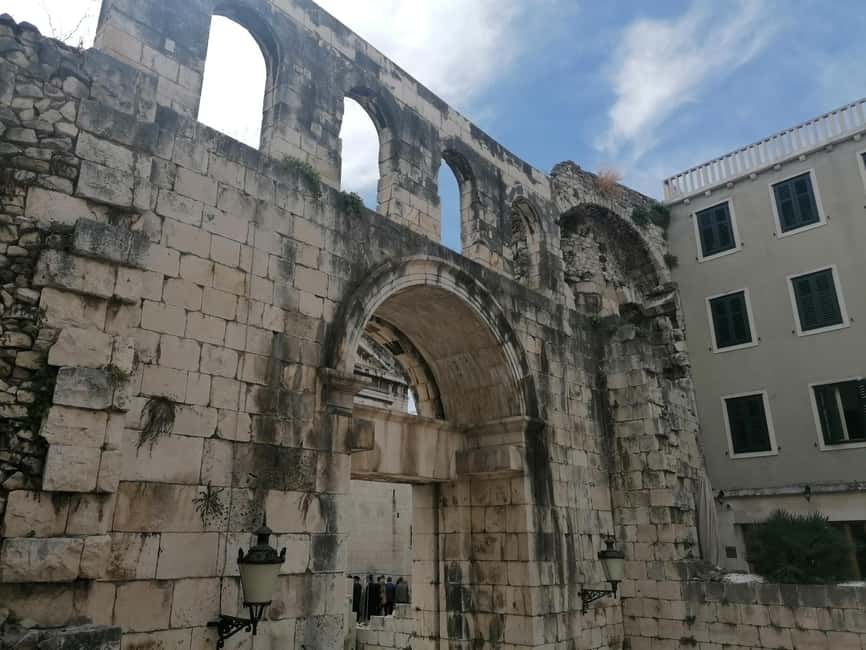
The palace is the central event of the walk. Emperor Diocletian built it at the turn of the fourth century, and its remains now form the core of modern Split. You will not just walk past ruins. You will move through streets and spaces where present-day life continues inside the old structure.
The guide discusses both past and present, which matters here. A quick list of dates would miss the point. Split’s old center makes more sense when you understand how an imperial residence became part of a working city. Buildings, streets, and squares each carry a piece of that story.
You will have a photo stop and a general visit to the palace before heading into the cellars. The schedule gives about 10 minutes to the palace segment, so expect an introduction and a clear sense of place, not a slow inspection of every stone.
The palace cellars reveal the structure below
The cellars receive a guided visit of about 10 minutes. These underground rooms are important because they help you understand the shape of the palace above. They are among the best-preserved parts of the complex, and their walls make the age of the site feel more immediate than a description alone.
I would pay close attention to the relationship between the lower rooms and the streets overhead. The cellars are not a separate attraction tacked onto the walk. They help explain how the palace was built and how the old center developed.
The short timing is the tradeoff. Ten minutes can give you a useful overview, but it will not leave room for a long, detailed examination. If underground architecture is your main reason for visiting Split, you may want extra time on your own after the walk. For a first visit, the cellar stop gives you the essential context without taking over the morning.
St. Domnius and the palace’s religious turn

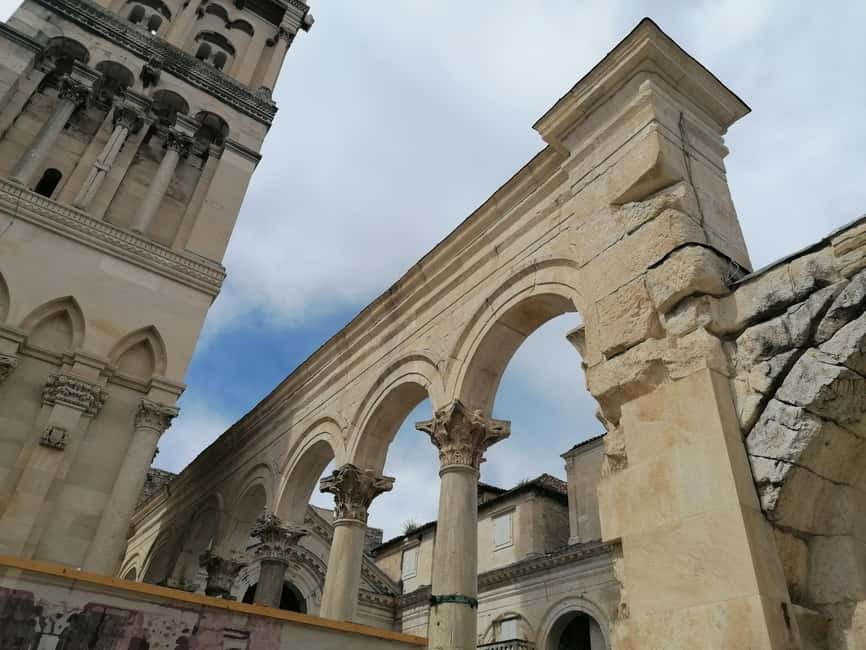
The Cathedral of St. Domnius, or Sveti Duje, receives its own guided visit and sightseeing stop. The building was originally the mausoleum of Emperor Diocletian, a detail that brings together two different chapters of Split’s past.
This stop is valuable because it shows how the site changed function over time. An imperial mausoleum became a Christian cathedral, and the building remains part of the city’s active identity. The guide can connect the architecture to the wider story of Split rather than treating it as an isolated church.
The planned visit lasts around 10 minutes. That is enough for an explanation and a close look at the main features, but not a long period for quiet contemplation. Keep your expectations in line with the pace: this tour gives you a broad, connected picture of the old center.
Same stretch of coast, a completely different kind of day:
- Blue Lagoon & 3 Islands Cruise with Lunch from Split
★ 4.5 · 5,756 reviews - Split: Blue Lagoon Boat Party with DJs, Shots & After Party
★ 4.9 · 4,610 reviews - Split: Blue Lagoon and 3 Islands Speedboat Tour
★ 4.8 · 3,406 reviews - Blue Cave & 6 Islands Speedboat Tour From Split or Podstrana
★ 5.0 · 3,195 reviews
Peristil, the palace’s grand public space
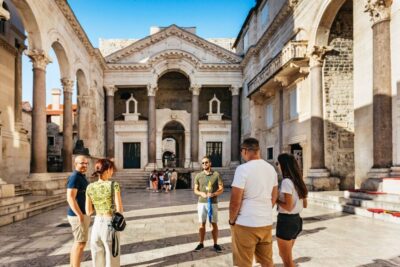
Peristil receives about 15 minutes, making it one of the longer stops. This is the place where the palace’s imperial character becomes easiest to picture. Its open space gives you a break from the narrow streets and a clear setting for the guide’s explanation.
I like the way this stop fits into the route. After the cellars, you can compare the hidden lower structure with the formal public space above. The two locations work together, and you get more from each when you see them in sequence.
Use this time to look at the surrounding buildings and listen for details about how the square functions today. The tour is not only about old stones. It also explains how the city continues to use these spaces.
The Golden Gate and the city’s old entrances
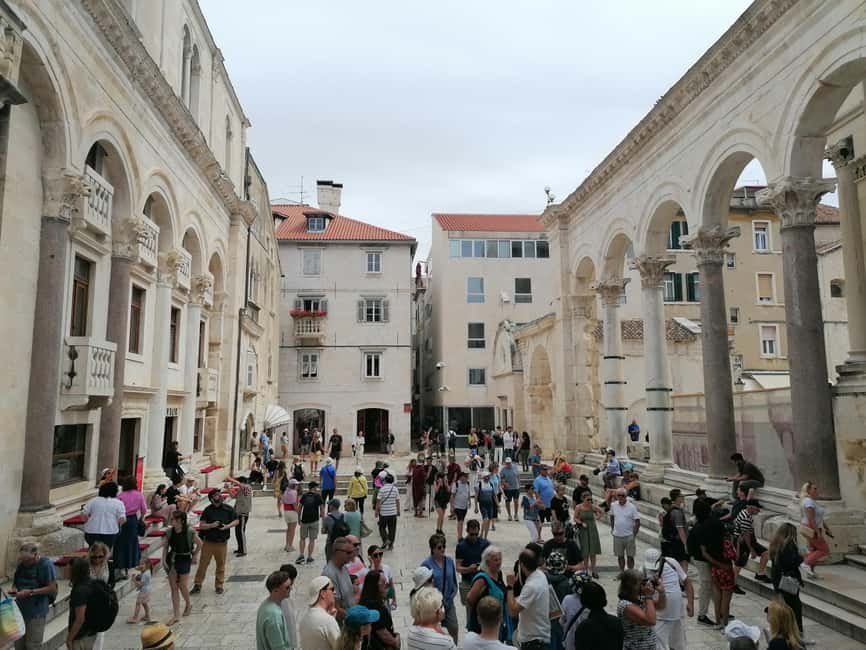
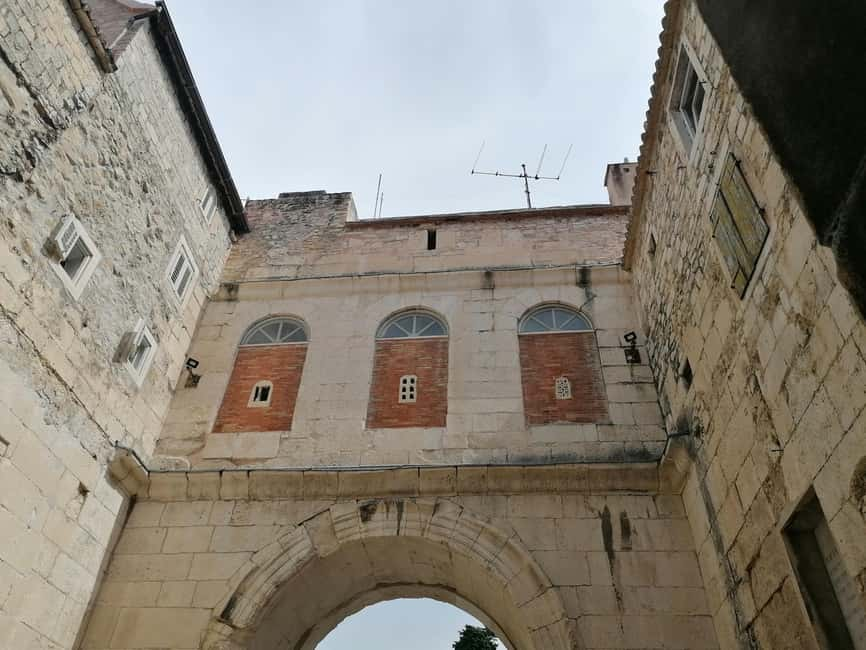
The Golden Gate is scheduled for a 15-minute photo stop and sightseeing visit. It gives you a chance to see one of the palace’s major entrances and to understand how people once approached this fortified complex.
The stop is useful for orientation. Once you have seen the palace from inside, the gate helps you picture its outer edge. It also offers a natural point for photographs, though the exact feel of the stop will depend on the morning crowd and city activity.
Because this is still part of a fast-moving walk, you should not expect a long architectural lecture. The guide’s strength here is likely to be connection: explaining how the gate relates to the palace, the old town, and the streets you have already walked.
A secret stop adds some surprise
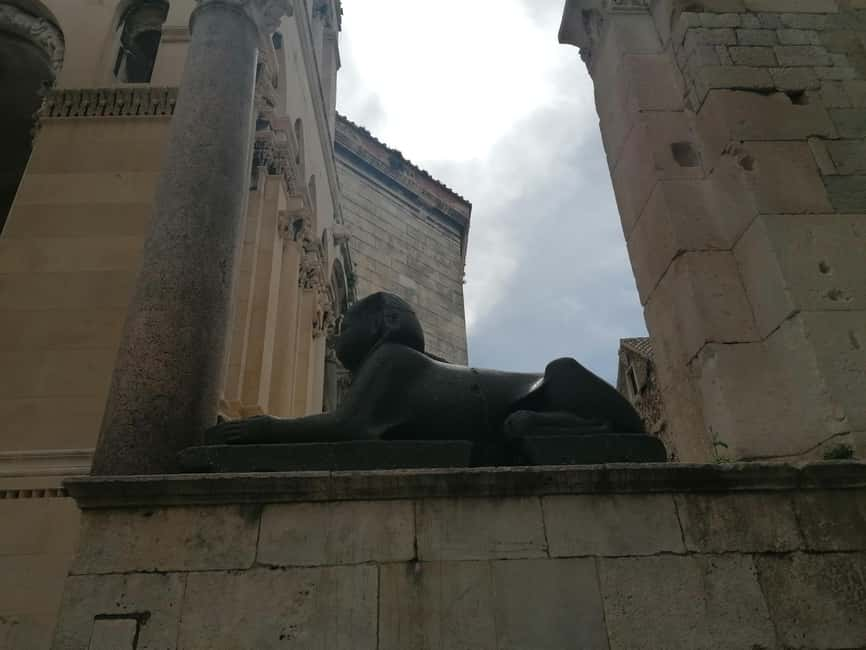
A 20-minute secret stop is built into the route. The lack of detail is deliberate, so I cannot promise what you will see. That uncertainty may be part of the appeal, especially if you enjoy a walk with one small surprise rather than a route made entirely of famous landmarks.
The time allotment makes this more than a quick photo pause. You should have enough time for the guide to explain why the place matters. Still, keep in mind that the stop is not identified in advance, so you cannot judge it by name when comparing tours.
This is one reason the private setup can help. If the unexpected stop sparks your interest, you can ask questions without worrying about slowing down a large crowd.
People’s Square and the Green Market
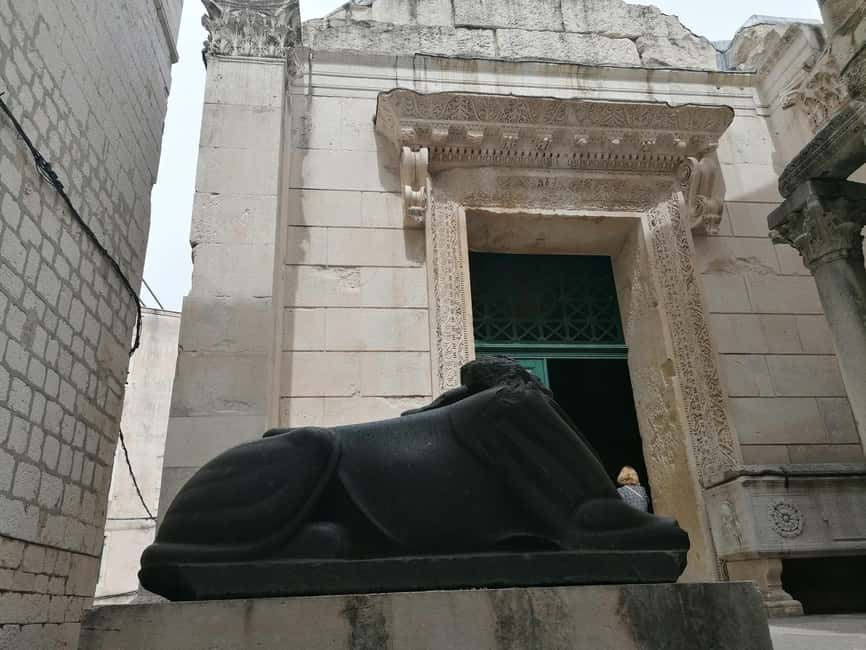
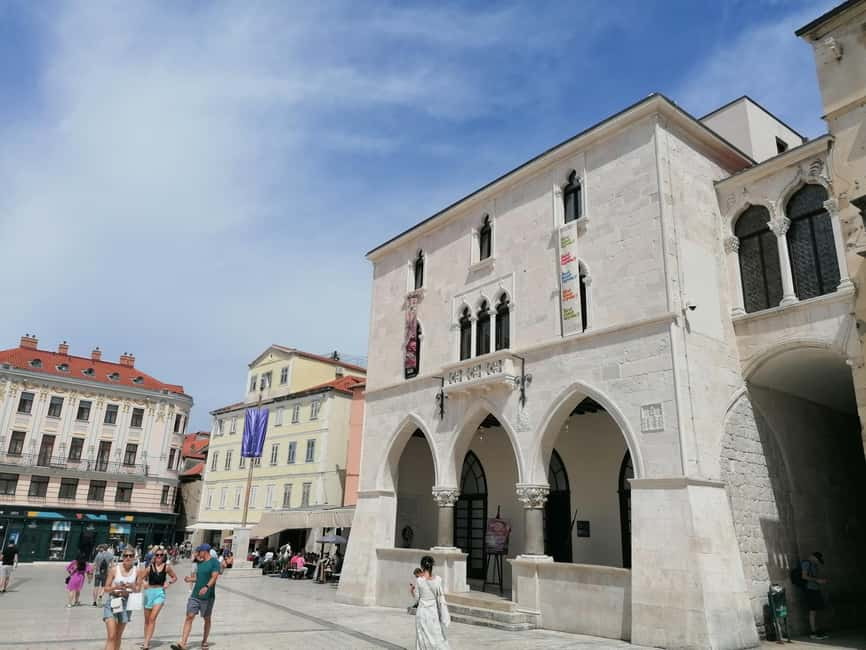
People’s Square receives around 15 minutes for sightseeing and shopping. It is one of the places where the old center feels connected to ordinary city life rather than only to imperial history.
The route also includes Split’s Green Market, known locally as Pazar. This is a worthwhile inclusion. The market is where local people buy and sell products native to Dalmatian soil, and it gives you a practical look at the food culture of the region.
A market stop can be more revealing than another polished monument. You get a sense of what people cook, grow, and bring into the city. The schedule does not promise a long food tasting or a cooking lesson, so think of Pazar as a place to observe, ask questions, and perhaps make a purchase at your own expense.
This is also a good moment to ask the guide for dining tips. The tour specifically covers advice on eating out, nightlife, and further activities in Split and the surrounding area. That kind of local guidance can be especially useful if this is your first morning in the city.
Riva gives the walk a change of pace
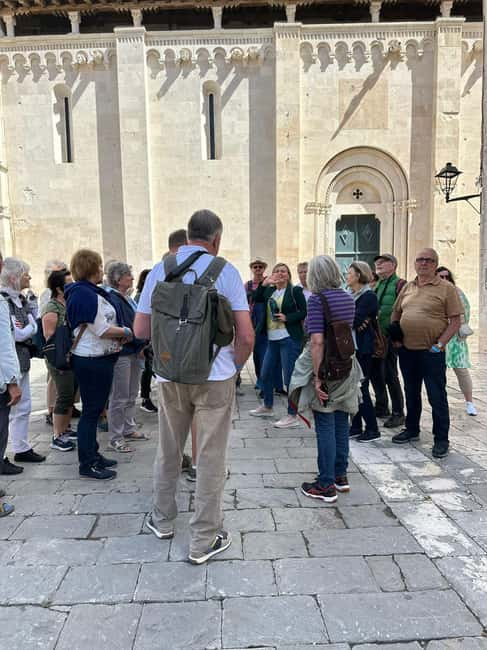
The Riva promenade is the route’s open-air counterpoint to the palace lanes. It receives about 10 minutes for a photo stop. After the enclosed streets, the waterfront gives you a wider view and a chance to reset.
Do not expect a long promenade stroll. Ten minutes is enough to see the setting, take photographs, and hear why the Riva matters to Split’s daily rhythm. If you want extended time along the waterfront, return later on your own.
The route’s phrase about feeling how the city breathes makes sense here. The palace shows the old structure of Split, while the Riva shows how the city presents itself in the open. Together, they give you more than either stop could provide alone.
The final city model and what you can ask
The walk finishes with a break at a model of Split. Ending with a model is practical because you can revisit the city layout after seeing it in person. Streets that seemed confusing at the start may make more sense once you have walked through the palace, crossed its squares, and reached the Riva.
This is also a good time to ask for follow-up suggestions. The guide discusses additional activities in Split and the wider area, as well as food and nightlife. You can use the final minutes to shape the rest of your stay.
The route includes several short stops, so you should wear comfortable shoes and bring water. The activity information specifically asks you to bring water. Personal expenses are not included, which matters if you plan to shop at Pazar or buy anything along the way.
How the guide affects the experience
The guiding style is a major reason to consider this walk. Kristina is named in the feedback, with Christina used as an alternate spelling, and the comments describe her approach as personal, clear, and full of information. That combination suits Split, where the guide needs to explain both major events and small street-level details.
A good guide also keeps the history tied to what you can see. Here, the subject moves from imperial building plans to the cathedral, city squares, markets, food, nightlife, and present-day use. The walk is strongest when those parts feel connected.
The tour is offered in English or German. If you have a preference, confirm the language and guide arrangements when booking. The activity is private, but the named guide may depend on availability.
Is $129 good value?
The price is $129 per group of up to 10, not $129 per person. That distinction changes the calculation. A group of 10 pays about $13 per person, while a couple pays $64.50 each. For a larger party, the private format can be a good deal.
You are paying for a licensed guide, a planned route through the main old-town sights, and the freedom to ask questions within your own group. The value is less convincing if you want long visits at each landmark, since the tour covers many locations in only two hours.
I would compare it with your priorities. If you want a quick, organized introduction at the start of your stay, the price is fair, especially for a group. If you prefer to linger at the cathedral or cellars, a shorter route with more time at fewer sites may suit you better.
Who should book this private morning walk?
I would recommend it for first-time visitors who want to understand Split quickly. It is also a good fit for families and friends who prefer a private guide, want practical advice for the rest of the visit, and can split the group price.
The tour should suit people interested in the link between history and daily life. You see palace architecture, a former imperial mausoleum, old squares, a market, and the waterfront in one compact route.
I would think twice if your main goal is a detailed archaeological tour. The pace is brisk, and the cellar, cathedral, and palace visits are each relatively short. You can still use the walk as a framework, then return to the places that catch your attention.
Cancellation is flexible up to 24 hours before the start for a full refund, and you can reserve now and pay later. Starting times depend on availability, so check the morning options that fit your schedule.
Should you book it?
Book this tour if you want a personal morning orientation to Split, especially with a group large enough to share the $129 price. The route covers the essential palace sights, adds Pazar market and the Riva, and leaves room for useful questions about food, nightlife, and later activities.
Skip it if you want an unhurried visit to each landmark or prefer to explore without a set route. The two-hour schedule moves at a steady pace. For most first visits, though, it offers a clear way to understand why Split feels like an ancient palace that never stopped being a city.
FAQ
Where does the tour start?
The tour starts at the model of the historical core of Split.
How long does the walking tour last?
The tour lasts two hours.
What is the price?
The price is $129 per private group of up to 10 people.
Is the tour private?
Yes. The activity is arranged for a private group, with a maximum group size of 10.
Which languages are available?
The tour is available in English and German.
Is a guide included?
Yes. A licensed tour guide is included.
Are personal expenses included?
No. Personal expenses are not included.
What should I bring?
Bring water.
Can I cancel for a full refund?
Yes. You can cancel up to 24 hours in advance for a full refund.
More Morning in Split
- Morning Split Sea Kayaking Tour
★ 5.0 · 11 reviews - Morning Stand Up Paddle Tour in Split
★ 4.9 · 6 reviews - Dubrovnik: City Walls Early Morning or Sunset Walking Tour
★ 4.8 · 1,523 reviews - Morning and Day Tours – Sea Kayaking & Snorkelling Dubrovnik
★ 5.0 · 891 reviews
Just added around Split
- Split Day Trip from Dubrovnik★ 4.0 · 59 reviews
- Dubrovnik to Split Private Transfer with Local Experienced Driver★ 5.0 · 52 reviews
- Private Transfer from Dubrovnik to Split★ 5.0 · 3 reviews
- Private Transfer from Dubrovnik to Split with 2 hours for sightseeing★ 5.0 · 50 reviews
- Private Transfer: Dubrovnik to Split★ 5.0 · 7 reviews
- Dubrovnik to Split Private Transfer with Mostar Town★ 5.0 · 38 reviews
- Private Tour: Split Day Trip from Dubrovnik★ 5.0 · 9 reviews
- Private Day Trip :Dubrovnik- Mostar- Split★ 5.0 · 3 reviews
Walking Tours, compared.
Split: Old Town and Diocletian Palace Walking Tour
Read our review →
Walking Tour of Split and Diocletian’s Palace
Read our review →

Krka Waterfalls tour with Trogir Walking tour and Krka panoramic boat cruise
Read our review →
Dubrovnik: City Walls Early Morning or Sunset Walking Tour
Read our review →Browse the lists this tour appears in