
Reviewed · WALKING TOURS
Split: Palace & Old Town Private Walking Tour-Entrance incl.
Diocletian’s Palace is not a museum sitting apart from modern life. It is the working heart of Split, with homes, cafés, shops, and narrow lanes tucked inside a Roman imperial complex. This 2.5-hour private walk gives you a clear route through that layered old town, from the palace cellars to the Venetian squares beyond.
I like two things right away: the included entrances save you from sorting out tickets at the cathedral, baptistery, and cellars, and the private format lets the guide adapt the pace. The tour also covers a lot of ground without transport, so you get a useful first look at Split on foot.
The main consideration is the price: $192 per person is a serious outlay, especially for one or two people. The value improves for a larger private group of up to 10, but you should also expect steps, uneven historic surfaces, and a fairly brisk program.
Key points to know before booking
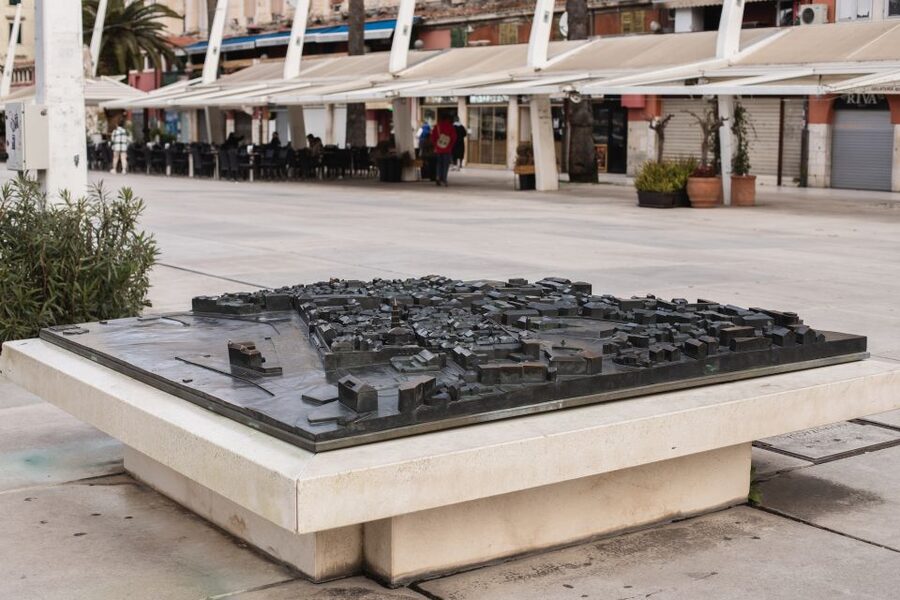
- The Roman core comes first: Begin at the city model on the Riva, enter through the south gate, and visit Diocletian’s cellars before reaching the Peristyle.
- Three important admissions are included: The cathedral, baptistery, and palace cellars are covered, with ticket-line skipping included.
- The route connects Roman and Venetian Split: You’ll see Jupiter’s Temple, the Silver Gate, Fruit Square, Pjaca, the Golden Gate, and Prokurative.
- You get a private guide: Groups are limited to 10, and the route can be adjusted to suit the group.
- The walk is available in three languages: You can book an English, French, or German-speaking guide.
- The finish is easy to use: Prokurative has cafés and restaurants, making it a practical place to stop after the tour.
Why Diocletian’s Palace works best with a guide
The palace is easy to enter but harder to understand on your own. Modern Split has grown through and around the Roman walls, so a short walk can take you from an imperial corridor to a medieval square, then into a Venetian-style civic center.
A guide helps connect those pieces. You will not simply look at old stone. You will see how Diocletian presented himself as the son of Jupiter, how his mausoleum became Split Cathedral, and how the palace changed as the city grew.
The private setup matters here. With a group of no more than 10, you can ask questions without shouting across a crowd. The tour is also individually customizable, useful if you want more time at religious sites, less time at general viewpoints, or an easier pace.
The experience has a 4.8 rating from eight ratings, with the available written feedback offering a simple five-star assessment. That is a strong overall signal, though the published comments do not provide much detail about the guide’s personal style. You should book this for the route and format rather than for a particular named guide.
More Walking Tours in Split
- Split: Old Town and Diocletian Palace Walking Tour
★ 4.9 · 4,727 reviews - Walking Tour of Split and Diocletian’s Palace
★ 5.0 · 2,588 reviews - Split & Diocletian’s Palace Walking Tour
★ 5.0 · 1,125 reviews
Starting on the Riva and entering through the south gate
The meeting point is at the bronze model of Split’s historic center on the Riva, the city’s waterfront promenade. This is a sensible place to begin because the model gives you a quick picture of the palace shape before you walk into it.
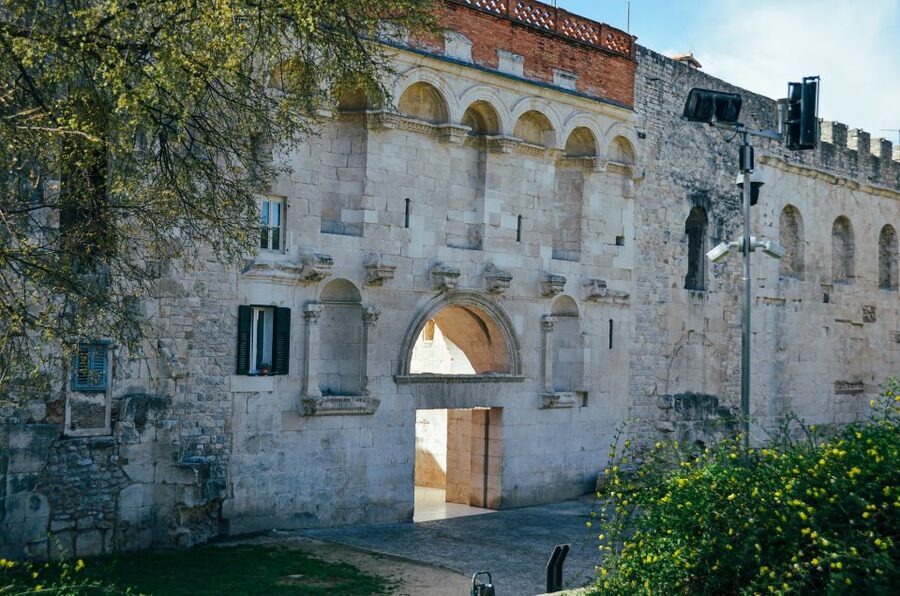
The guide then leads you to the south gate, the approach that brings you into the palace from the waterfront side. That transition is one of the tour’s strongest moments. You move from an open public promenade into a compact Roman complex where the old walls still shape the streets.
The route is not a long-distance walk, but it is packed with stops. If you want a relaxed pace with long pauses at every site, tell the guide early. The advertised timing allows roughly 20 minutes for the palace and 20 minutes for the cellars, followed by a series of shorter stops.
Palace cellars: the clearest look at Roman construction
The palace cellars are among the most useful parts of the experience because they preserve the lower structure of Diocletian’s residence. The tour spends about 20 minutes here, enough to understand how the palace was built and why the underground spaces give such a strong sense of Roman scale.
You can expect broad masonry, stone passages, and a more stripped-back setting than the streets above. The cellars also help you picture the former palace before later homes, shops, and public buildings filled its upper levels.
Entrance is included, and the tour includes skip-the-line access. That is especially useful at busy times, when waiting for a ticket can eat into a short visit. If the cellars cannot open because of an event or another restriction, the entrance cost is refunded.
The Peristyle and the power of Emperor Diocletian
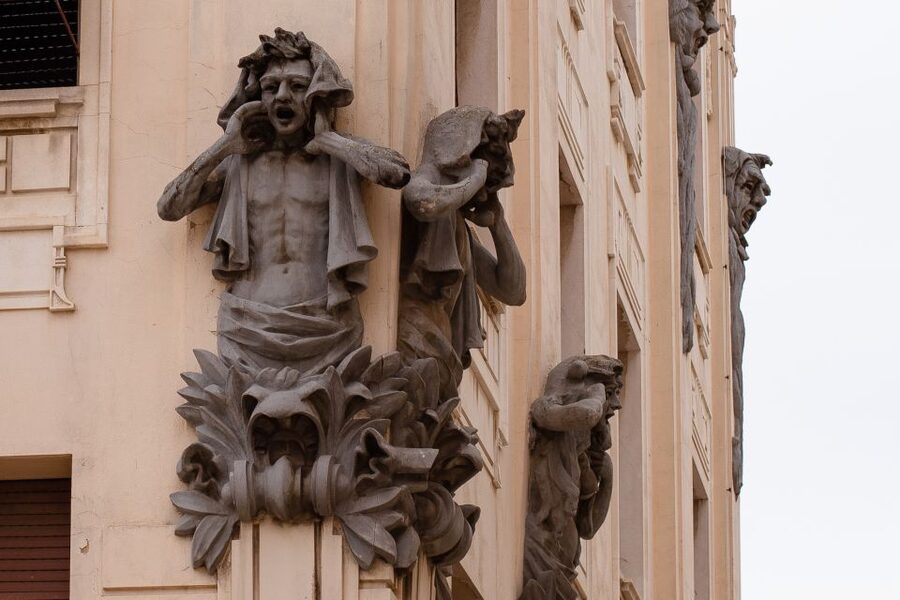
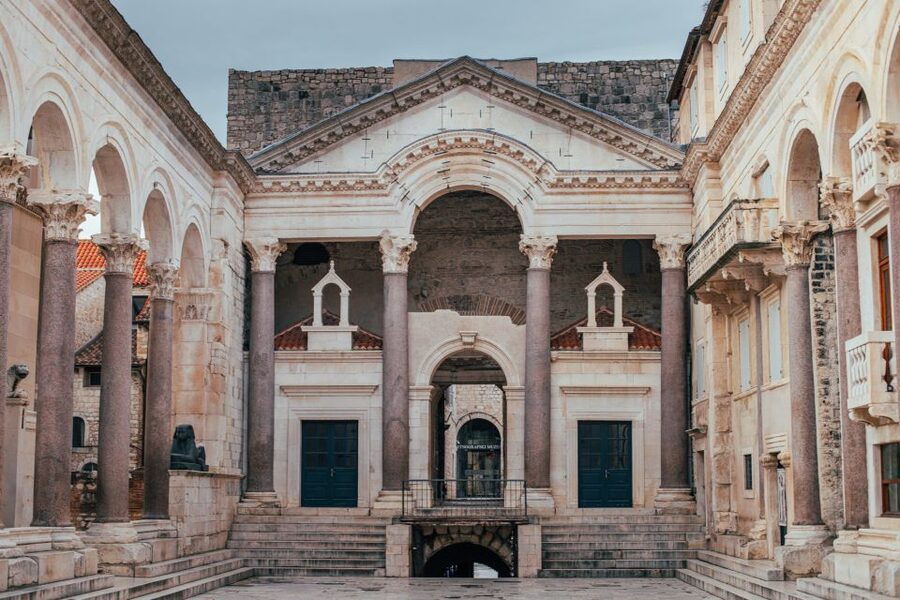
After the cellars, you climb steps to the Peristyle. This is the ceremonial center of the palace and one of the places where the Roman ruler’s image becomes clear.
Diocletian presented himself as the son of Jupiter and expected worship from his subjects. The arrangement of the square was designed for ceremony and authority, not casual wandering. Your guide can explain why the Peristyle feels different from an ordinary town square, even though Split uses it as part of daily life today.
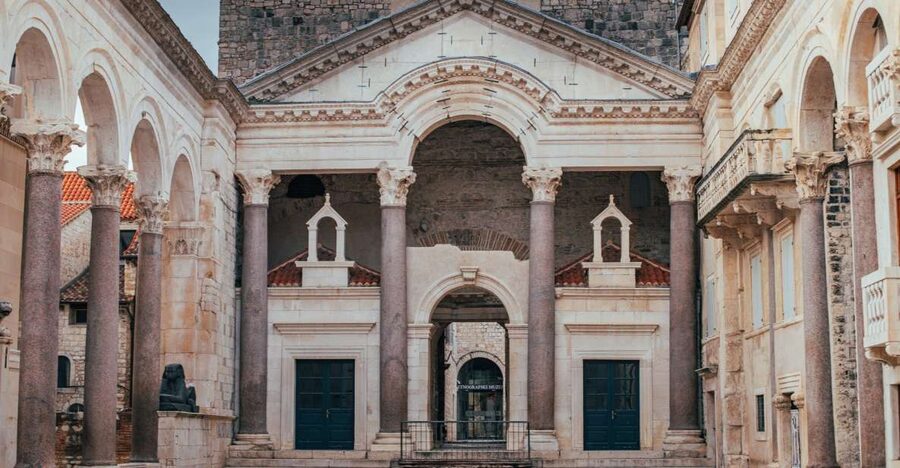
The listed visit allows about 10 minutes at the Peristyle, with another 10 minutes at the Vestibule. That is enough for an introduction, but not a long architectural study. I would pay close attention here, since the guide’s explanation makes the surrounding stones far more meaningful.
The Vestibule follows naturally from the Peristyle. It was an important approach space within the palace, and its position helps you understand how visitors once moved toward the emperor’s private and ceremonial rooms.
Same stretch of coast, a completely different kind of day:
- Blue Lagoon & 3 Islands Cruise with Lunch from Split
★ 4.5 · 5,756 reviews - Split: Blue Lagoon Boat Party with DJs, Shots & After Party
★ 4.9 · 4,610 reviews - Split: Blue Lagoon and 3 Islands Speedboat Tour
★ 4.8 · 3,406 reviews - Blue Cave & 6 Islands Speedboat Tour From Split or Podstrana
★ 5.0 · 3,195 reviews
Split Cathedral and the former mausoleum
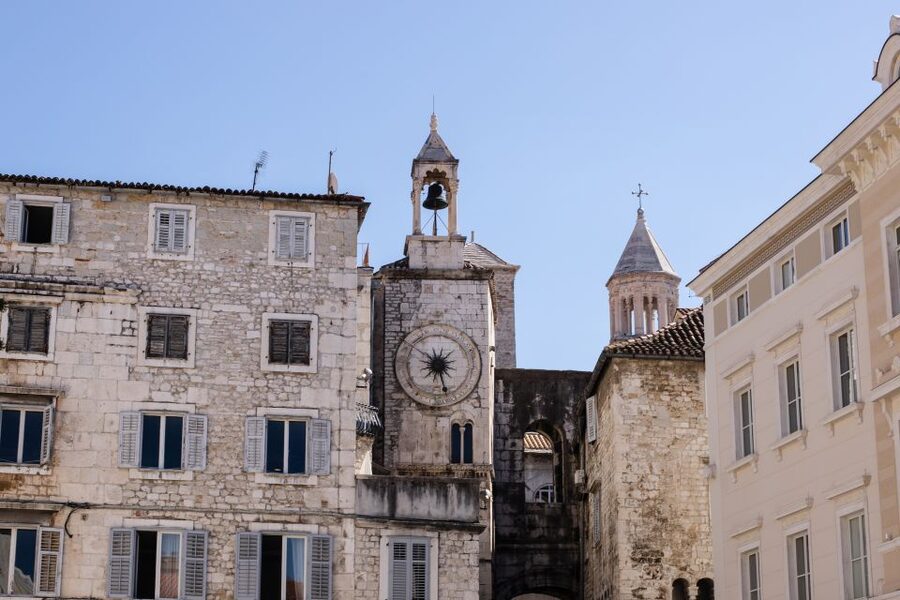
Split Cathedral began as Diocletian’s mausoleum. During the Christianization of the palace, it became a place of Christian worship, creating one of the city’s most striking changes in purpose.
You spend about 20 minutes at the Cathedral of Saint Domnius. That is a useful amount of time for seeing the interior and hearing how a Roman imperial burial building became a Christian cathedral. The included entrance is valuable because this is one of the tour’s central stops, not an optional extra.
The cathedral visit may be changed if a service or special event is taking place. If the interior cannot be visited, the entrance fee is refunded. This is worth keeping in mind if seeing the inside is your main reason for booking.
The tour also includes the baptistery, although the stop-by-stop timing gives more detail about the cathedral than the baptistery itself. Together, these admissions give you more than an exterior walk around the palace.
Jupiter’s Temple and the Silver Gate
Jupiter’s Temple is a short visit of about 10 minutes, but it carries a lot of meaning. This was another sacred place in Diocletian’s time, and the coffered ceiling is the detail to watch for.
The temple is compact, so the guide’s explanation matters more than the length of the stop. You can expect a quick look at the surviving Roman setting and a reminder that the palace was also a religious center.
The Silver Gate follows with a five-minute guided stop. It is one of the palace entrances and helps complete the picture of how people moved through the fortified complex. This is a brief orientation point rather than a long photo stop.
If you prefer architecture and ancient religion to modern shopping streets, these early portions will likely be your favorite part of the walk.
Triklinij, Fruit Square, and Pjaca
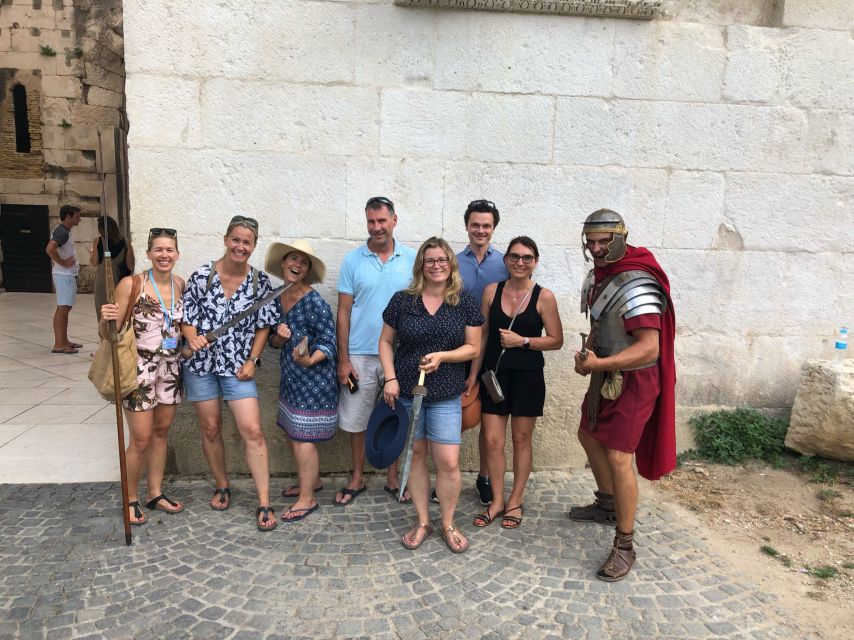
The route then moves through Triklinij and back into the more open parts of the old town. Triklinij receives about five minutes, so expect a focused explanation rather than a full interior visit.
Fruit Square, or Voćni trg, gets about 10 minutes. The stop helps show how Split’s old town shifted from imperial residence to a lived-in medieval and later urban center. The name and character of the square connect it to ordinary city life, while the surrounding buildings point to later periods.
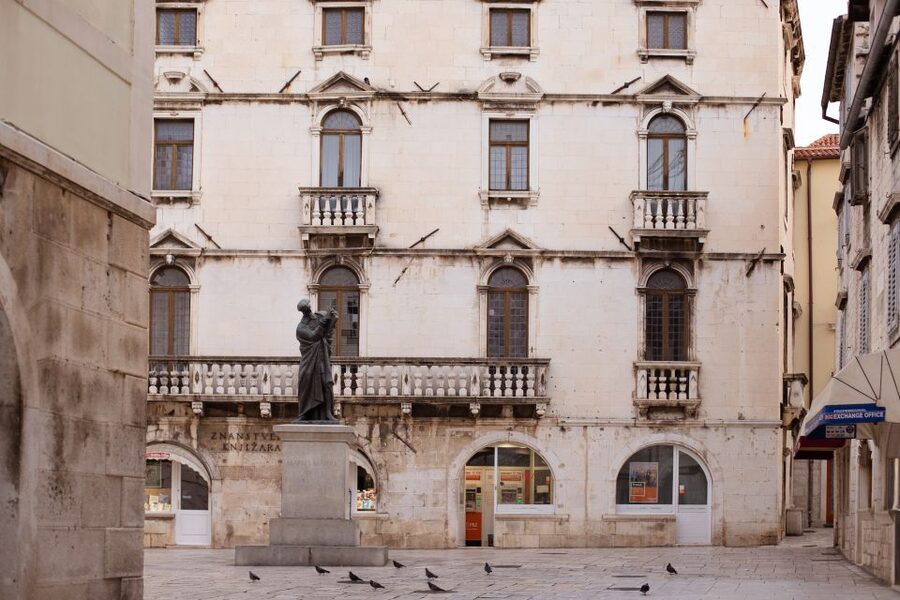
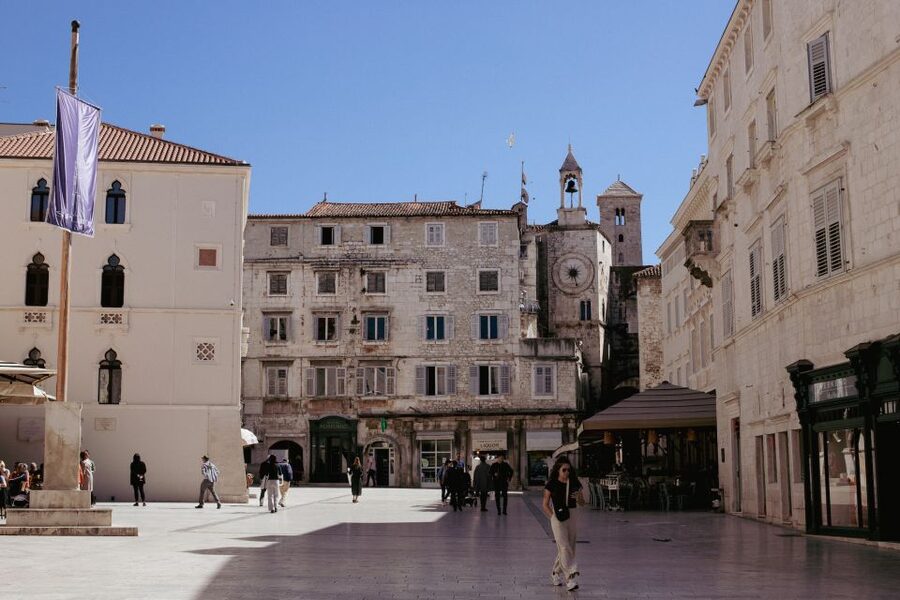
Narodni trg, better known as Pjaca, is another 10-minute stop. It has been a central square since the Middle Ages and is surrounded by Venetian palaces. The historic town hall is here as well.
Pjaca is a good place to notice the contrast between Roman planning and later Venetian influence. You are no longer looking only at an emperor’s palace. You are seeing a city that kept adapting the same stone framework for public life.
The City Lodge, or Loggia, is covered in about five minutes. This stop is short, but it adds civic context to the square. If you enjoy understanding how towns governed themselves, listen closely here. If you mainly want photographs, the square itself gives you more to look at than the timing suggests.
The Golden Gate and Gregory of Nin
The Golden Gate is one of Split’s best-known Roman entrances and receives about 10 minutes. The stop gives you a chance to see the palace from another side and to understand the scale of its defensive layout.
Nearby, the tour pauses for about five minutes at the statue of Gregory of Nin. The statue is a modern landmark within the old city route, and the guide can place it within Split’s wider cultural story. The stop is brief, so do not expect a long discussion.
These two locations also show why a guided route helps. If you walked without a plan, you could see both places and still miss how the Roman gate, later city, and public monuments fit together.
Fishmarket, Marmontova Street, and Prokurative
The final stretch leaves the palace core and follows the Split of daily commerce. The fishmarket receives about five minutes, followed by another short stop on Marmontova ulica.
These are quick orientation points rather than major admission sites. They help you see the old town as a living center, not just an archaeological zone. You might find this section less impressive if your main aim is ancient architecture, but it adds useful balance to the Roman material.
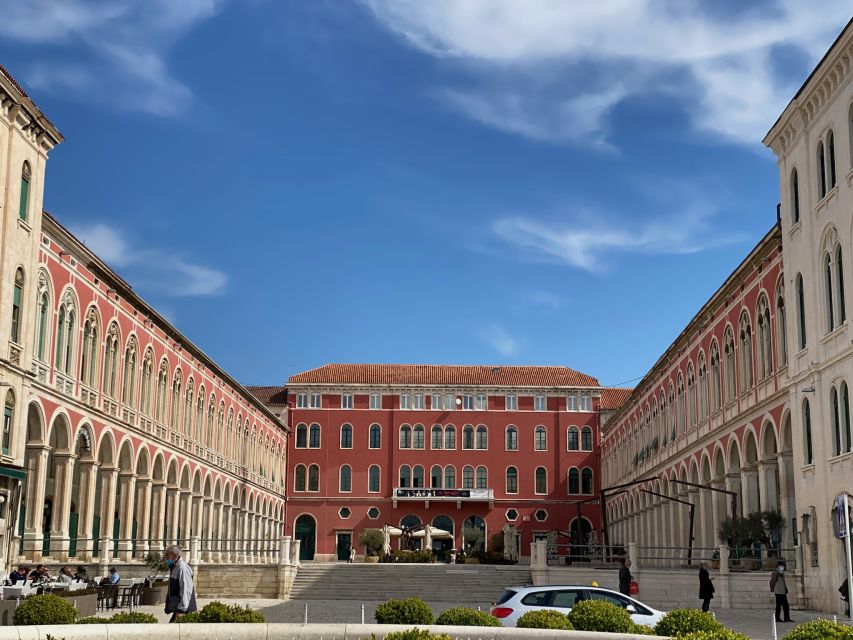
The walk ends at Trg Republike, known as Prokurative. The square is often compared with St. Mark’s Square in Venice because of its arcaded design and formal arrangement. Cafés and restaurants line the area, so it is a practical place to sit down after two and a half hours on foot.
Ending here also makes sense for anyone who wants to continue exploring Split independently. You are left in a pleasant public square rather than at an isolated attraction.
What $192 per person gets you
At $192 per person, this is not a budget walking tour. You are paying for a private guide, a maximum group size of 10, a planned route through the palace and old town, and entrance fees for the cathedral, baptistery, and cellars.
For one person or a couple, the cost may feel high for a 2.5-hour walk. The value is easier to defend when several people share the private booking, especially if you want your own questions answered and do not want to join a large group.
The included admissions also remove some small decisions during the day. You do not have to pause the tour to arrange tickets at each major site, and skip-the-line access protects your limited time in Split.
I would compare the price with your priorities. If you want a broad introduction, a regular group tour may cost less. If you want a private route in English, French, or German, with the option to adjust the pace and cover the important interiors, this package has a clearer case.
Who should book this Split walking tour?
I would recommend it to first-time visitors who want the main Roman and old-town sights explained in one sitting. It also suits families or small groups who value a private guide and can share the cost.
History fans will appreciate the connection between Diocletian’s mausoleum, Jupiter’s Temple, the palace cellars, and the later Christian and Venetian city. You also get enough modern Split to understand how people use the old center today.
The tour may be less suitable if you have limited mobility. Parts of the site are not wheelchair accessible, though the route can be adapted if you tell the provider in advance. Steps and historic surfaces are part of the setting, so ask for adjustments before the tour begins.
It is also not the right choice if you want a slow, highly detailed architectural study. The route has many stops, and several receive only five or 10 minutes. You will get a strong overview, not a specialist seminar.
Practical details before you go
The tour lasts 2.5 hours, with starting times shown when you check availability. The meeting point can vary by the option you choose, so confirm the exact location before setting out. The stated starting point is the bronze model of Split’s historic core on the Riva.
Tours are offered in English, French, and German. The group is private and capped at 10 participants. You can cancel up to 24 hours before the start for a full refund, and the reserve-now, pay-later option gives you some flexibility while planning.
Church services and special events can affect access. If the cathedral, baptistery, or cellars cannot be entered, the related admission fee is refunded, and the guide adjusts the program.
Should you book it?
Book this tour if you want Split’s key sights arranged into a clear story, with the cathedral, baptistery, and palace cellars already covered. The route is especially useful on a first visit, when the old town’s overlapping Roman, medieval, Christian, and Venetian layers can otherwise feel confusing.
Think twice if $192 per person strains your budget or if you prefer to explore slowly on your own. For a private group that can divide the cost, the combination of admissions, a personal guide, and a well-planned route makes the price easier to justify.
FAQ
How long does the Split Palace and Old Town tour last?
The tour lasts 2.5 hours.
What languages are available?
The live guide is available in English, French, and German.
Is the tour private?
Yes. It is a private group experience with a maximum of 10 participants.
Which entrance fees are included?
Admission to Split Cathedral, the baptistery, and Diocletian’s Palace cellars is included.
Does the tour skip ticket lines?
Yes. Skip-the-line access is included.
Where does the tour start?
The stated starting point is the bronze model of Split’s historic core on the Riva. The exact meeting point can vary depending on the option booked.
Where does the tour finish?
The route finishes at Trg Republike, also called Prokurative.
Can the tour accommodate wheelchair users?
The site is partially not wheelchair accessible, but the tour can be adapted to special needs if you provide advance notice.
Just added around Split
- Split Day Trip from Dubrovnik★ 4.0 · 59 reviews
- Dubrovnik to Split Private Transfer with Local Experienced Driver★ 5.0 · 52 reviews
- Private Transfer from Dubrovnik to Split★ 5.0 · 3 reviews
- Private Transfer from Dubrovnik to Split with 2 hours for sightseeing★ 5.0 · 50 reviews
- Private Transfer: Dubrovnik to Split★ 5.0 · 7 reviews
- Dubrovnik to Split Private Transfer with Mostar Town★ 5.0 · 38 reviews
- Private Tour: Split Day Trip from Dubrovnik★ 5.0 · 9 reviews
- Private Day Trip :Dubrovnik- Mostar- Split★ 5.0 · 3 reviews
Walking Tours, compared.
Split: Old Town and Diocletian Palace Walking Tour
Read our review →
Walking Tour of Split and Diocletian’s Palace
Read our review →

Krka Waterfalls tour with Trogir Walking tour and Krka panoramic boat cruise
Read our review →
Dubrovnik: City Walls Early Morning or Sunset Walking Tour
Read our review →Browse the lists this tour appears in