
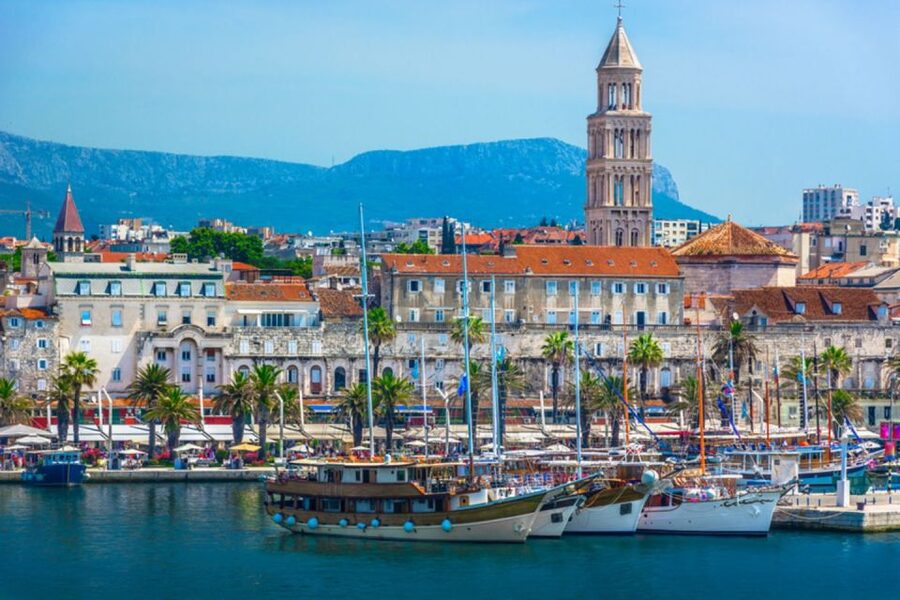
Reviewed · DIOCLETIAN PALACE TOURS
Split: Old Town & Diocletian’s Palace Earlybird Walking Tour
Split is at its best before the day heats up. This 70-minute early-morning walk takes you through Old Town and Diocletian’s Palace while the lanes are calmer and the stone has not yet started throwing the sun back at you.
I like two things here: the early start gives you a quieter look at a very popular part of Split, and the route covers the city’s major Roman and medieval sights without demanding half a day. Guide Duje is also known for mixing local knowledge, humor, and a personal connection to the city.
The main limitation is time. Seventy minutes goes quickly, so you may get more general Split advice than you expected and less time inside the palace itself. If you want a slow, detailed archaeological tour, this may feel brisk.
Key points at a glance

- Early morning timing: A smart choice in July, when the streets are cooler and less crowded.
- Roman palace at the center: Walk through a 1,700-year-old palace that now forms the heart of Split.
- Important sights in a short route: See Peristyle Square, the underground cellars, St. Jupiter’s Temple, and St. Duje Cathedral.
- Guide Duje: Expect an English-language guide with humor, local pride, and a personal style.
- Simple meeting point: Find the guide at the big red SPLIT sign in Split Port, holding a My Special Tour sign.
- Good low-risk booking terms: The price is $29 per person, with pay-later booking and a full refund if you cancel at least 24 hours ahead.
Why an early walk works so well in Split
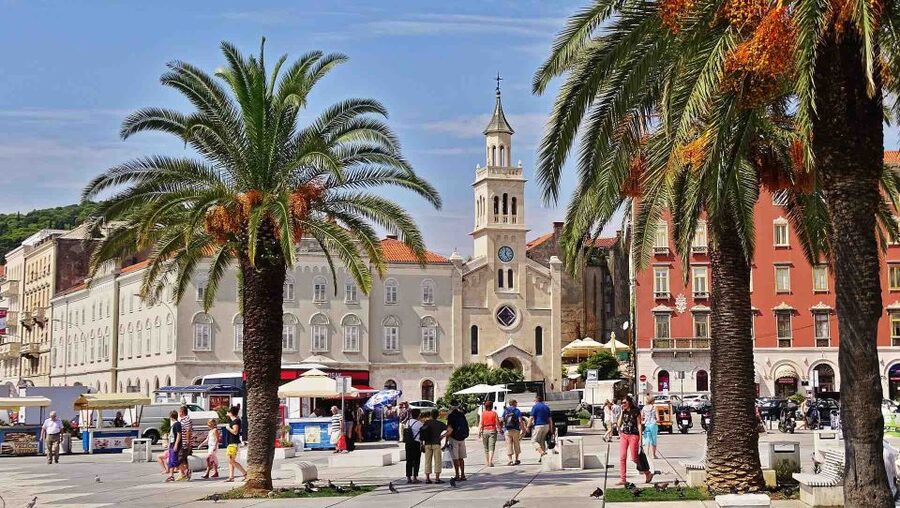
Split’s historic center is not a separate museum district. It is a living part of the city, built through and around the remains of Roman Emperor Diocletian’s palace. That makes the early hour especially useful. You are not simply walking toward an old monument. You are moving through a working city before the streets become crowded with day visitors.
The early start also helps with the heat. One July outing was described as quiet and cool, which is exactly the advantage you want in Dalmatia. The difference between a fresh morning and a hot midday walk can be substantial, especially when much of the route runs over stone streets and open squares.
I also like the way this tour gives you a quick orientation. The meeting point is at Split Port, so it is practical if you have just arrived by ferry or are staying near the waterfront. From there, the walk leads into the old part of town and toward the palace.
You will need to arrive at the correct sign. The guide waits in front of the large red SPLIT sign and holds a My Special Tour sign. That detail matters in a busy port area, where several tours may gather close together.
More Walking Tours in Split
- Split: Old Town and Diocletian Palace Walking Tour
★ 4.9 · 4,727 reviews - Walking Tour of Split and Diocletian’s Palace
★ 5.0 · 2,588 reviews - Split & Diocletian’s Palace Walking Tour
★ 5.0 · 1,125 reviews
Entering a 1,700-year-old palace that became a city
Diocletian’s Palace is the centerpiece of the walk, but it is important to understand what kind of place it is. This is not a single preserved building surrounded by empty lawns. The palace became part of Split itself, with streets, shops, homes, squares, and religious buildings occupying the old Roman structure.
That unusual setup gives the tour more character than a standard monument visit. As you move through the complex, you are seeing how one place changed over centuries. Roman imperial power, Christian worship, medieval city life, and modern daily routines all occupy the same compact area.
Your guide helps connect those layers. The purpose is not just to point out old walls, but to explain how the palace shaped Split. A good guide can make the stone plan easier to read, especially when the remains are folded into ordinary streets.
The pace is relaxed enough for a general introduction, but the tour lasts only 70 minutes. You will cover the key areas rather than linger at every architectural detail. I would treat this as a strong first look, not a complete study of the palace.
Peristyle Square and the palace’s public face

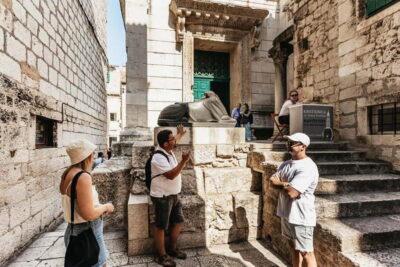
Peristyle Square is one of the most important stops. This was the ceremonial heart of Diocletian’s palace, and it gives you the clearest sense of imperial scale. The square’s setting helps explain how the Roman palace was organized around formal public spaces, rather than simply being a private residence.
It is also one of the places where the early hour pays off. A quieter Peristyle lets you look up, notice the surrounding stonework, and follow the guide without constantly stopping for passing groups. You get a better chance to appreciate the proportions of the space.
Your guide will place the square within the larger story of Split. That context is useful because the remains can otherwise seem like a collection of unrelated walls and columns. The square becomes easier to understand when you know its role in the palace.
Still, do not expect a long, solitary visit. The route is shared with the rest of the walking group, and the timing is compact. The early morning improves the setting, but it does not turn a popular square into a private site.
The underground cellars and the palace below street level

The underground cellars are another major part of the route. They help you see how the palace was built and how its lower structure supported the rooms above. They also offer a different feel from the open square, with a more enclosed look at the palace’s construction.
This stop is especially valuable if you enjoy seeing the practical side of ancient buildings. Above ground, you experience grand spaces and public architecture. Below ground, you get a clearer sense of foundations, storage areas, and the physical work needed to create such a large complex.
The cellars also make the palace easier to picture. Ancient remains can be confusing when viewed only from street level. A lower-level visit gives you another angle on the plan of the building and helps link the surviving sections together.
Because the tour moves through several sights, you should expect an introduction rather than a long archaeological explanation. If the cellars are your main interest, you may want extra time afterward to explore at your own pace.
More tours inside Diocletian's Palace:
- Split: Diocletian Palace & Old Town Guided Walking Tour
★ 4.7 · 882 reviews - Split: Game of Thrones Tour with Diocletian’s Palace Cellar
★ 4.8 · 545 reviews - Diocletian’s Palace and Old Town SMALL GROUP Walking Tour
★ 5.0 · 502 reviews - SPLIT-PRIVATE Walking Tour of Diocletian’s Palace & Old Town
★ 5.0 · 467 reviews
St. Jupiter’s Temple and the change from Roman religion
The Temple of St. Jupiter adds another layer to the walk. Its presence points back to the religious world of the Roman Empire and to the beliefs that shaped the palace in its original period.
This stop is useful because it connects architecture with ideas. The palace was not only a residence or political center. Religion was part of its design and public meaning. Seeing the temple within the wider palace helps you understand how Roman authority and worship worked together.
The tour also shows how later Split adapted old structures for new purposes. That shift is one of the most interesting parts of the city. You are not looking at history sealed away from modern life. You are seeing old spaces reused and understood in changing ways.
The temple visit will likely be brief, given the 70-minute schedule. I would listen for the guide’s explanation of why the building matters, then return later if you want to study details more closely.
St. Duje Cathedral and Split’s medieval identity

St. Duje Cathedral brings the story forward from the Roman period into Christian and medieval Split. Its presence inside the former palace shows how the city’s religious center developed within the old imperial complex.
This is one of the route’s most useful contrasts. The palace began as a Roman imperial project, yet the old structure later became the setting for Christian worship and local civic life. The cathedral helps you see that Split is not simply a Roman site with a modern city around it. The city grew through the palace and changed its meaning.
The stop also gives the tour a good balance. You see Roman public architecture, an ancient temple, underground spaces, and a major Christian building. That range makes the walk more worthwhile than a route focused only on imperial ruins.
Again, the schedule limits how much time you can spend inside or around each sight. If you want a detailed cathedral visit, check what is open after the tour and plan a separate visit. This walk is mainly about understanding how the cathedral fits into Split’s larger story.
The Old Town streets between major sights
The spaces between the headline monuments matter. The route passes through the special old part of Split, where the palace remains blend into streets and daily city life. Those short stretches help you understand the city’s unusual layout.
I like this part of the experience because it keeps the tour from feeling like a string of isolated stops. You are walking through the connections between the palace, the squares, the temple, the cathedral, and the waterfront area. The Old Town becomes a place with a long sequence of uses, not just a backdrop for photographs.
A local guide can also point out the character of Split beyond the major Roman landmarks. Duje has been praised for his humor and for speaking with clear personal pride in his home city. He is also involved in local politics, which may give his view of Split a particularly grounded, current tone.
One caution: the tour may include more practical advice about the city than you expect. That can be useful at the beginning of a stay, especially if you need help getting oriented. But if your main goal is extended time inside Diocletian’s Palace, the balance may feel slightly off.
What guide Duje adds to the walk
The guide can make or break a short historical tour. With only 70 minutes, you need someone who can explain the main story without turning every stop into a lecture. Duje has been singled out for his humor, his passion for Split, and his ability to make the walk welcoming.
His style appears to include subtle humor rather than constant performance. That is a good fit for a morning tour. You get personality without losing the main thread of the city’s history.
A local guide also helps with scale. A 1,700-year-old palace can seem distant or abstract when you first enter it. Someone who knows the city well can show you how the old structure remains part of present-day Split.
The tour is offered in English. If English is the language you want for historical explanations, that keeps the experience simple. No other languages are specified, so you should not assume a multilingual guide.
Is $29 a fair price?
At $29 per person, this is a reasonable price for a guided introduction to Split’s historic center. You are paying for the guide and the walking tour, not for hotel transportation or a long attraction package.
The value depends on what you want. If you are new to Split and want the main story, the early hour, route planning, and guide’s interpretation make the price worthwhile. You can then return to the places that interest you most.
If you already know the palace well, or prefer to read signs and explore independently, the cost may be harder to justify. The tour is short, and the palace itself can be explored on your own afterward.
The biggest value is the timing. You are not only buying information. You are getting a calmer introduction before the heat and crowds build. For a July visit, that can make the morning more pleasant and leave the rest of your day open.
Who should book this early morning walk?
I would recommend it to first-time visitors who want a fast but meaningful introduction to Split. It suits people who like history but do not want a long lecture, as well as anyone who prefers to start sightseeing before the city gets busy.
It is also a good fit if you arrive near Split Port and want a meeting point that is easy to locate. The red SPLIT sign and My Special Tour sign provide a clear visual reference.
The tour may suit cruise or ferry passengers with limited time, though the provided details do not state a specific cruise schedule or guarantee timing around departures. You should check your own schedule carefully before booking.
I would be more cautious if you want a palace-only experience. One part of the route includes general Split advice, and the 70-minute length means the palace stops are necessarily selective. Visitors who want detailed architecture, long cellar visits, or extended cathedral time may prefer a longer tour or a self-guided return visit.
You can reserve now and pay later, which keeps your plans flexible. Cancellation is free up to 24 hours before the tour for a full refund. The experience has also had occasional operating problems, including a late cancellation because the group was too small. That is worth keeping in mind if your schedule is tight.
Should you book the Split Earlybird Walking Tour?
Book this tour if you want a calm morning introduction to Split, especially in July. The combination of a 70-minute route, major palace sights, a central port meeting point, and guide Duje’s lively local style gives you good value for $29.
Skip it if you want a slow, highly detailed study of Diocletian’s Palace or need a guaranteed long visit focused only on the palace. For everyone else, it is a sensible way to get your bearings before returning later to the sites that catch your interest.
FAQ
How long does the walking tour last?
The tour lasts 70 minutes.
What language is the tour offered in?
The tour is offered in English.
Where does the tour begin?
Meet the guide at Split Port, at Trg Braće Radić. The guide waits in front of the large red SPLIT sign and holds a My Special Tour sign.
Where does the tour end?
The activity ends back at the meeting point.
What sights are included?
The route includes Split Old Town and Diocletian’s Palace, with stops or visits covering Peristyle Square, the underground cellars, the Temple of St. Jupiter, and the Cathedral of St. Duje.
Is hotel pickup included?
No. Hotel pickup and drop-off are not included.
How much does the tour cost?
The price is $29 per person.
Can I cancel for a full refund?
Yes. You can cancel up to 24 hours in advance for a full refund.
Just added around Split
- Split Day Trip from Dubrovnik★ 4.0 · 59 reviews
- Dubrovnik to Split Private Transfer with Local Experienced Driver★ 5.0 · 52 reviews
- Private Transfer from Dubrovnik to Split★ 5.0 · 3 reviews
- Private Transfer from Dubrovnik to Split with 2 hours for sightseeing★ 5.0 · 50 reviews
- Private Transfer: Dubrovnik to Split★ 5.0 · 7 reviews
- Dubrovnik to Split Private Transfer with Mostar Town★ 5.0 · 38 reviews
- Private Tour: Split Day Trip from Dubrovnik★ 5.0 · 9 reviews
- Private Day Trip :Dubrovnik- Mostar- Split★ 5.0 · 3 reviews
Diocletian Palace Tours, compared.
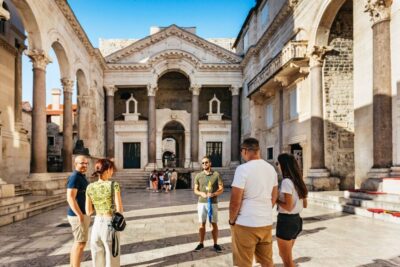
Split: Old Town and Diocletian Palace Walking Tour
Read our review →
Walking Tour of Split and Diocletian’s Palace
Read our review →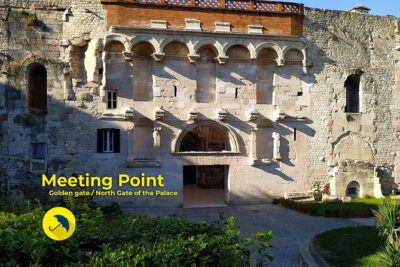
Split: Diocletian Palace & Old Town Guided Walking Tour
Read our review →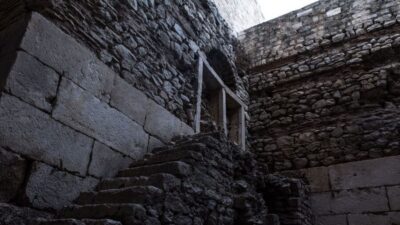
Split: Game of Thrones Tour with Diocletian’s Palace Cellar
Read our review →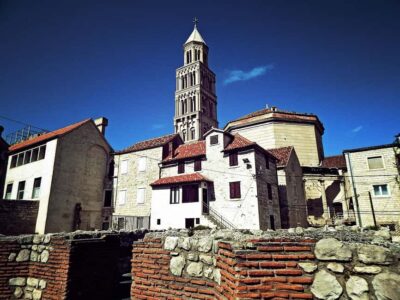
Diocletian’s Palace and Old Town SMALL GROUP Walking Tour
Read our review →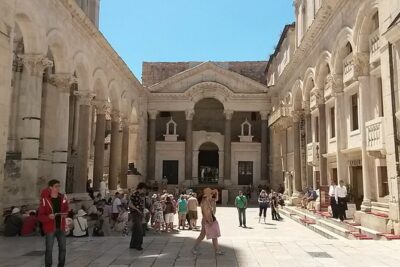
SPLIT-PRIVATE Walking Tour of Diocletian’s Palace & Old Town
Read our review →
Browse the lists this tour appears in