Reviewed · GUIDED
Guided Tour to Kupari From Holiday Resort to War Zone
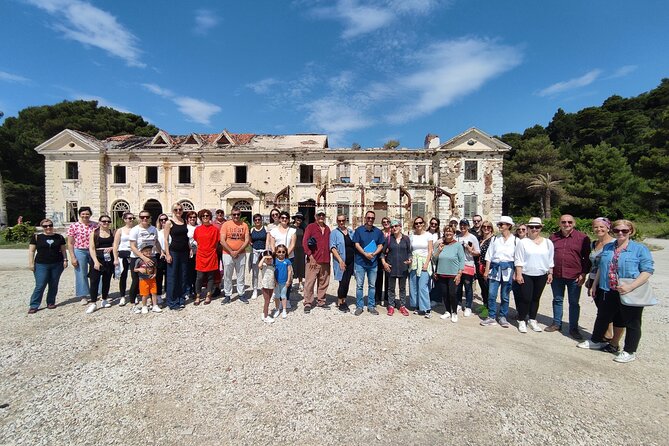
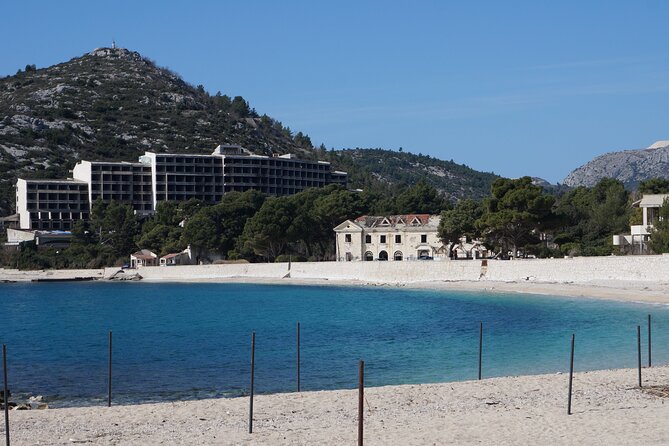
Kupari is not a polished sightseeing stop. It is a shuttered Adriatic resort, where abandoned hotels, an old pool, and shell damage still sit beside a beautiful beach. The contrast is the point: you see how a place built for military officers and famous holidaymakers became a war zone, then remained untouched for years.
I like two things here. First, guide Vedran gives the ruins a human story, not just a list of dates. Second, the tour adds context you would miss while walking around alone, from Kupari’s earlier tile-making days to its role as a Yugoslav military resort. The main caution is practical: the site has faced redevelopment changes, so confirm that the tour is operating before making a costly trip to the meeting point.
Key points
- Abandoned hotels beside Kupari Beach: See damaged resort buildings, old reception areas, bars, and an Olympic-sized swimming pool.
- A guide with personal war knowledge: Vedran explains the Homeland War in a clear, measured way and can connect the site to local experience.
- A former military holiday resort: Kupari was built mainly for Yugoslav National Army officers after the Second World War.
- More than a ruin walk: The story reaches back to the area’s tile factory and forward to its stalled redevelopment.
- Short, focused morning visit: The tour begins at 9:00 am, lasts about two hours, and returns to the starting point.
- A beach worth allowing extra time for: Kupari Beach is a useful place for a swim after the guided portion, if conditions and your plans allow.
Why Kupari matters beyond the ruins
Dubrovnik is easy to admire from a boat, a city wall, or a sunny terrace. Kupari asks you to look at a less comfortable part of the region’s past. The former resort was once designed for military use, later became a sought-after holiday destination, and was then badly damaged during the Balkan conflict.
That sequence gives the place its unusual force. This is not an ancient ruin slowly worn down over centuries. The hotels belonged to the recent past. Their reception desks, bars, swimming pool, and traces of interior design help you picture a working resort before the war interrupted it.
I find that recent history can be harder to process than Roman or medieval history. The buildings look familiar. The resort idea is familiar. You can imagine the people who arrived for a week by the sea. Then the shell scars and empty rooms bring the Homeland War into view.
The guide matters greatly here. Vedran explains the resort’s history and the war years without turning the visit into a bleak lecture. His personal perspective, including his experience of the conflict as a teenager, gives the tour emotional weight while keeping it approachable.
A few more Dubrovnik half-days worth comparing
- Blue Cave Small-Group Boat Tour from Dubrovnik
★ 5.0 · 9,360 reviews - Dubrovnik: Epic Game of Thrones Tour + Lokrum & Saver Option
★ 4.9 · 5,995 reviews - Dubrovnik: Old Town Walking Tour
★ 4.8 · 5,174 reviews
Meeting Vedran at 9:00 am
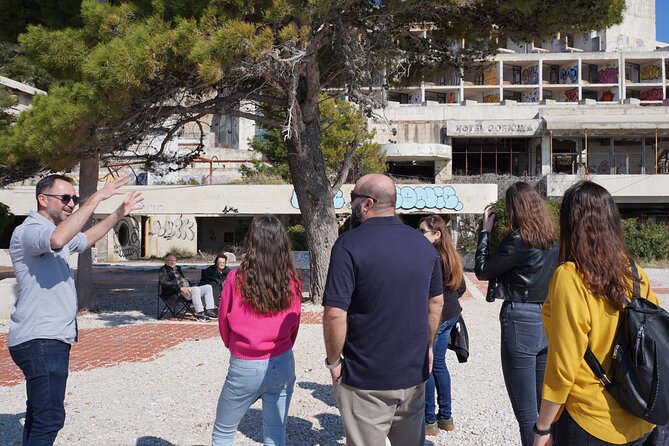
The tour begins at the Sheraton Dubrovnik Riviera Hotel, Šetalište Dr. F. Tuđmana 17 in Srebreno. The listed start time is 9:00 am, and the activity ends back at the same meeting point.
That arrangement is useful if you are staying near Srebreno, Mlini, or the Dubrovnik coast. It is less convenient if you are based in Dubrovnik’s Old Town and need to arrange your own way to the hotel. The details provided do not include a separate pickup service, so treat the hotel as the place where you should arrive.
The group can include up to 30 people. That is a reasonable maximum for a site visit, though the experience will feel more personal with a smaller group. Some bookings have also been arranged privately when the regular schedule did not fit. If a personal tour matters to you, ask about availability before booking rather than assuming it is included.
The tour is offered in English. Confirmation is provided when you book. Service animals are allowed, and the meeting point is near public transportation. Most people can take part, but the information supplied does not promise a fully accessible route through every abandoned building. Ruined sites can have uneven ground, so ask the operator about current conditions if mobility is a concern.
Kupari’s early days as a tile-making site
The first hour is devoted to Kupari itself, including the former resort complex and its past. One especially interesting thread is the site’s earlier connection with tile production. The factory supplied red roof tiles used on buildings in Dubrovnik, tying Kupari to the city’s familiar rooftops before it became a holiday destination.
That detail helps you see Kupari as more than a collection of abandoned hotels. The area had an economic role before the resort years, and the tour follows the changes in its use rather than presenting the ruins as a frozen scene.
After the Second World War, Kupari became a resort in the former Yugoslav Republic. Its main purpose was to serve military personnel, especially officers of the Yugoslav National Army. Later, the complex attracted a wider holiday crowd and became known as a destination for wealthy and famous visitors.
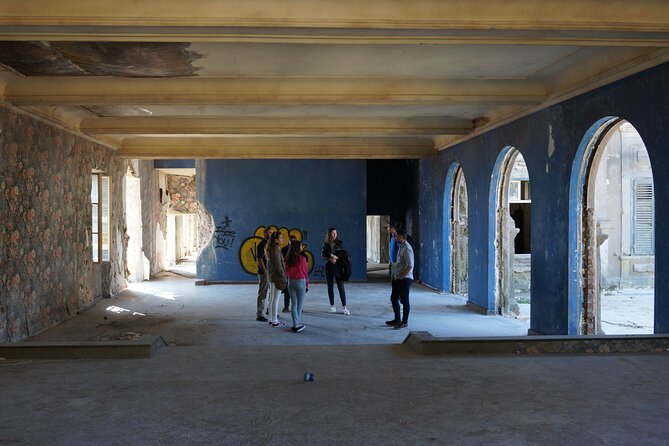
The resort’s old design still hints at that former status. You might see original reception counters, bars, and the remains of large leisure facilities. An Olympic-sized swimming pool is among the features that help you understand the scale of the complex.
This is where a guide is worth paying for. On your own, you can identify a damaged hotel or a vacant room. With Vedran, you get a clearer idea of how the buildings functioned and who used them. He also explains the resort before the war, so you are not left with only the image of decay.
Walking through abandoned hotel shells
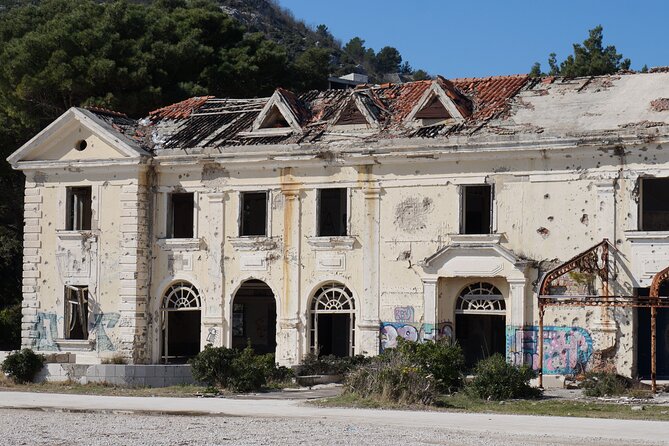
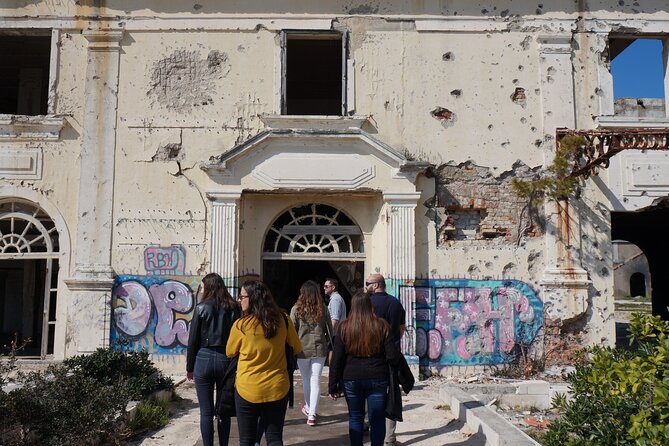
The buildings are the visual heart of the experience. Kupari’s hotels were heavily damaged during the Homeland War, and the scars remain visible. Walls, openings, and portions of the former resort show how quickly a busy seaside complex can be changed by violence.
The guided walk is not a museum visit. There are no polished displays or carefully arranged rooms. Instead, the remains provide the evidence. You may see old desks, bar areas, pool structures, and other fragments of a functioning hotel. Those pieces make the history more immediate than a standard talk in a city museum.
You should also set your expectations correctly. The appeal is not comfort or visual perfection. The site is abandoned, and the condition of the buildings can change. Some sections may be off limits or unsuitable for close exploration. Stay with the guide and do not treat the complex like a playground for climbing or wandering into unstable areas.
The war discussion is handled in a way that suits a visitor who wants understanding without a graphic presentation. Vedran is able to explain the trauma of the period while keeping the tone measured. If you have questions about the conflict, this is a good setting to ask them respectfully.
I particularly value the personal angle because it connects the physical damage to local memory. The buildings show what happened to the resort. A local guide helps explain what the event meant to people living in the region.
Same stretch of coast, a completely different kind of day:
- Dubrovnik: The Original Game of Thrones Tour & Lokrum Option
★ 4.8 · 5,064 reviews - Dubrovnik Game of Thrones Tour & Optional Lokrum Island Visit
★ 5.0 · 4,702 reviews - Dubrovnik Discovery Old Town Walking Tour
★ 5.0 · 4,458 reviews - Montenegro Full-Day Trip from Dubrovnik with Optional Boat Trip
★ 4.5 · 3,212 reviews
Kupari Beach and the resort’s lost glamour
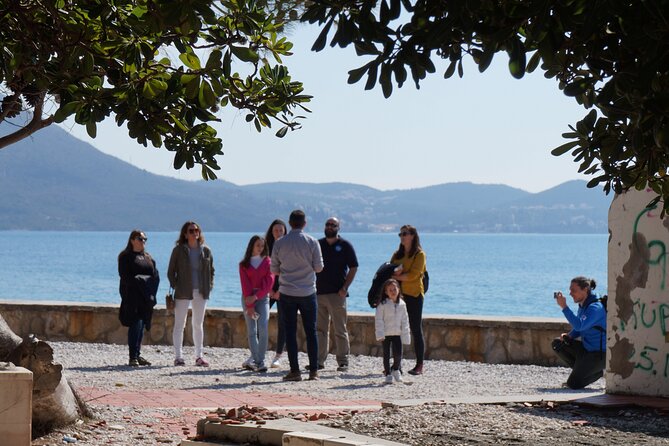
The second part of the itinerary spends about 30 minutes at Kupari Beach. The beach gives you a different view of the site. From the shoreline, the setting looks like the sort of Adriatic retreat that could have remained a major resort for decades.
That contrast is central to the experience. The water and coast are attractive, while the buildings behind them remain damaged and empty. It is easy to understand why the area once drew holidaymakers and why redevelopment has been discussed.
The resort also carried a glamorous reputation during its better years. One account of the tour connects Kupari with figures ranging from Indira Gandhi to Sophia Loren. The exact focus of the discussion can vary, but the larger point is clear: this was not always an obscure or forgotten corner of the coast.
The beach may be the best part of the visit for anyone who wants to extend the morning. You can plan time for a swim after the guided portion, though swimming is not presented as a formal included activity. The official tour lasts about two hours, so any beach time beyond the guided schedule should be treated as your own extra time.
Bring insect repellent. One visitor was caught without it, and the advice is practical for a warm coastal site with overgrown or undeveloped areas. Comfortable shoes are also sensible, although the supplied details do not specify a required dress code.
What the $60.01 price buys you
At $60.01 per person, this is not the cheapest way to see an abandoned beach resort. You can look at Kupari independently, and the beach itself does not carry an admission charge.
The value comes from the explanation. Without a guide, you see damaged hotels. With Vedran, you learn how the site developed from a tile factory into a Yugoslav military resort, how it became a fashionable holiday destination, and how the war changed it. You also gain a local perspective that a quick self-guided visit cannot provide.
For a two-hour activity, the price makes the most sense if you are interested in modern Croatian history, the breakup of Yugoslavia, war sites, architecture, or places that reveal more than the postcard version of the coast. It is less convincing if you only want a beach outing or a quick photo stop.
The small amount of time is also part of the value. You do not need to give up a full day in Dubrovnik. The 9:00 am start leaves much of the day open, and the return to the same meeting point keeps the plan simple.
Still, I would verify the current status before paying. One serious account describes a booking problem in which the local operator had no record of the reservation and said redevelopment had changed the location. That may reflect an outdated booking channel or a period of transition, but it is enough reason to confirm the date, meeting point, and operating status directly if possible.
The activity is often booked well ahead, with an average lead time of about 176 days. That suggests you should not wait until the last moment if your dates are fixed. At the same time, the redevelopment warning means early booking alone is not enough. Check that the tour is active.
Who will get the most from this visit
I would choose this tour if you want to understand Dubrovnik and its surroundings beyond beaches, seafood, and medieval walls. It suits history-minded visitors, architecture fans, photographers interested in decay, and anyone who wants a clearer picture of the Homeland War’s impact on the region.
It is also a good fit for people who prefer a focused visit. Two hours is long enough to hear the story and see the main remains, but short enough to pair with other plans.
Families and older visitors should consider the physical condition of the site. The provided information says most people can participate, but it does not describe every surface or building interior. If you need a smooth, fully managed route, contact the operator first.
I would skip it if you want a polished attraction with restored rooms, formal exhibits, or a lighthearted morning. Kupari is quiet, damaged, and serious. Its appeal comes from the questions it raises, not from entertainment.
Booking details and cancellation timing

The activity includes a mobile ticket and is offered in English. Free cancellation is available when you cancel at least 24 hours before the local start time. Cancellations or changes made within 24 hours are not accepted for a refund.
That deadline matters because the tour begins early and may require you to arrange transport to Srebreno. If your plans are uncertain, make the cancellation decision the day before, not on the morning of the tour.
Because the listing history includes a report of an outdated or unavailable booking, I would also keep your confirmation handy and make sure the operator has your reservation. This is particularly important if you are traveling a long way to the meeting point.
Should you book the Kupari tour?
Book it if you want a thoughtful look at a recent and painful chapter of Croatian history, presented by a guide who can connect the buildings to local experience. The abandoned hotels, old resort facilities, beach, and shell damage create a memorable visit, but Vedran’s explanation is what turns the scene into a meaningful one.
Do not book it solely for a beach day or attractive ruins. The subject is serious, and the site is not fully restored or polished. Also confirm that the tour is running and that redevelopment has not changed access.
For the right visitor, $60.01 is fair because you are paying for interpretation, not entry. If you have a free morning near Dubrovnik and want to see the Adriatic coast with its postcard mask removed, Kupari is a strong choice.
FAQ
Where does the Kupari tour begin?
It begins at the Sheraton Dubrovnik Riviera Hotel, Šetalište Dr. F. Tuđmana 17, 20207 Srebreno, Croatia.
What time does the tour start?
The scheduled start time is 9:00 am.
How long does the activity last?
The tour lasts approximately two hours and ends back at the meeting point.
Is the tour offered in English?
Yes. The activity is offered in English.
What is included at Kupari?
The guided visit covers Kupari and Kupari Beach. Admission tickets to both stops are free.
How many people can join the tour?
The maximum group size is 30 people.
Can I cancel for a full refund?
Yes, if you cancel at least 24 hours before the experience start time. Cancellations or changes made less than 24 hours before the start are not refunded.
Just added around Dubrovnik
- Welcome to Dubrovnik Walking Tour★ 5.0 · 36 reviews
- Walls Of Dubrovnik: Small-Group Walking Tour With A Local★ 5.0 · 67 reviews
- Dubrovnik at War 1991-1992 Private Walking Tour★ 5.0 · 4 reviews
- Olive farm & village★ 5.0 · 41 reviews
- City Walls of Dubrovnik★ 5.0 · 70 reviews
- Walls of Liberty: A Self-Guided Audio Tour of Dubrovnik★ 3.5 · 3 reviews
- Trebinje Gastro Tour From Dubrovnik★ 4.5 · 12 reviews
- Try Scuba Diving Discovery in Dubrovnik★ 5.0 · 43 reviews
Guided, compared.
Zadar: Plitvice Lakes Guided Day Tour with Tickets
Read our review →
From Split: Plitvice Lakes National Park Guided Tour
Read our review →
From Zagreb: Plitvice & Rastoke Guided Day Trip with Ticket
Read our review →
From Split: Plitvice Lakes Guided Tour with Entry Tickets
Read our review →From Split: Plitvice Lakes National Park Guided Tour
Read our review →
Plitvice Lakes National Park Guided Day Tour from Split
Read our review →
Zagreb: Rastoke & Plitvice Lakes Guided Tour with Ticket
Read our review →