
Reviewed · DIOCLETIAN PALACE TOURS
Split & Diocletian’s Palace Walking Tour
Split’s old town is not a museum behind a rope. It is a living city built into a 1,700-year-old Roman palace, with shops, homes, cafés, churches, and narrow medieval lanes filling the ancient walls. This tour gives you a useful introduction before you wander off on your own.
I like the short 90-minute format and the guides’ mix of history, humor, and practical advice. Mia, Slavko, Ivana, Tino, and other guides are praised for clear English and lively storytelling. The main drawback is that a group can include as many as 49 people, so you may not get much personal attention.
Key points to know before booking
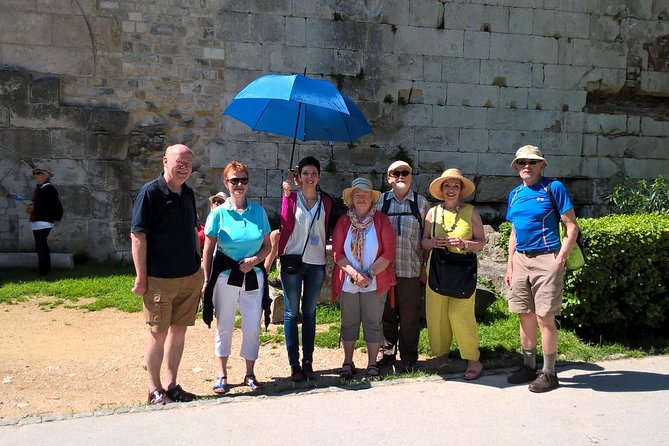
- The palace is a living part of Split: You walk through streets and squares still used by local residents.
- The route covers the essentials: Diocletian’s Palace, Pjaca Square, the City Clock, Saint Domnius Cathedral, and the Riva all fit into about 90 minutes.
- Guides add local character: Mia, Slavko, Ivana, Tino, and other guides are praised for humor, clear English, and useful restaurant advice.
- It is strong value at $21.77: You get a local guide and a solid introduction without paying separate admission for the main walking sights.
- The group may be large: The maximum is 49 people, which can make narrow streets and guide conversations less intimate.
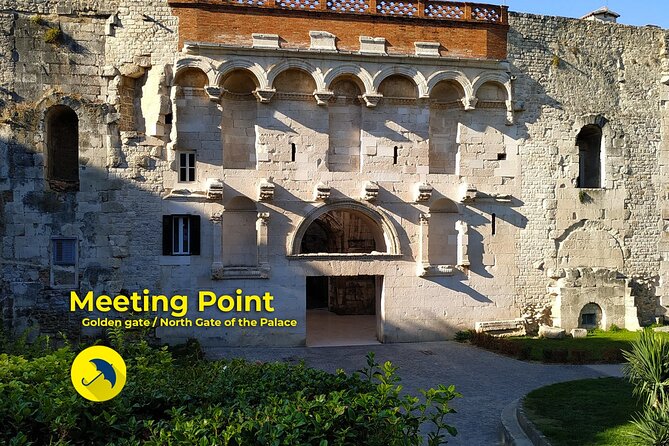
- Allow time to find the Golden Gate: Construction or crowds around the meeting point can slow you down.
Why Diocletian’s Palace makes this tour worthwhile
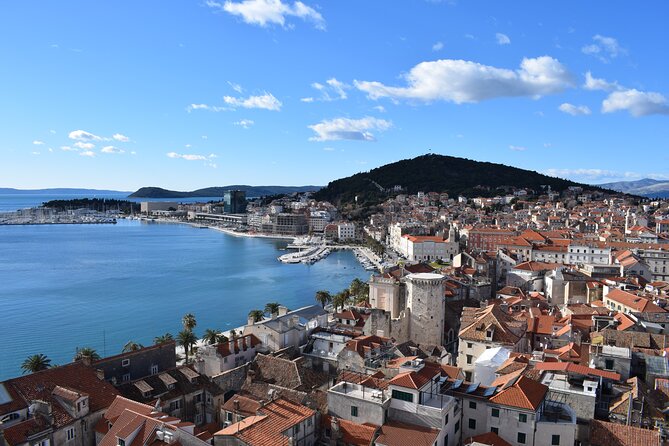
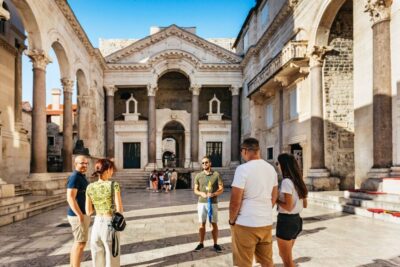
The name Diocletian’s Palace can make you picture one grand building. In practice, it is a whole district at the heart of Split. Roman walls frame streets, courtyards, shops, apartments, cafés, and religious buildings. The palace is not simply something you look at. It is the setting for everyday life.
That is why a guided walk helps. Without context, you can easily treat the old town as a maze of attractive stone lanes. With a guide, the walls and doorways begin to make sense. You learn how the imperial complex became part of the medieval and modern city, and why Split developed around it.
The experience is conducted in English and lasts about an hour and a half. That is long enough to build a clear picture of the old town without using half a day. I see it as an orientation walk, not a detailed archaeological tour. You get the main story, then have time to return to the places that catch your eye.
The tour has earned a 4.9 rating from 1,125 reviews, with 98 percent of customers recommending it. Those figures suggest a consistently strong experience, especially for the price, though they do not remove the usual limits of a group walk.
More Walking Tours in Split
- Split: Old Town and Diocletian Palace Walking Tour
★ 4.9 · 4,727 reviews - Walking Tour of Split and Diocletian’s Palace
★ 5.0 · 2,588 reviews - Walking Tour of Split with a ‘Magister’ of History
★ 5.0 · 1,122 reviews
Starting at the Golden Gate
The meeting point is the Golden Gate at Dioklecijanova 7. This is a smart place to begin because the gate gives you an immediate sense of the palace’s scale and defensive design.
Arrive with a few extra minutes. One visitor specifically noted that construction made the meeting point harder to find. Split’s old center is compact, but the streets around the palace can be confusing when you are arriving for the first time. Having the exact address ready on your phone will help.
From the Golden Gate, your guide can set the basic scene: this was an imperial residence and military complex, but it later became a town. That change is central to understanding Split. The most interesting details are not only the Roman remains, but the way later generations built into them.
The route returns to the meeting point at the end. That is useful if you are using the walk to get your bearings on your first morning in Split. It also means you are not left at an unfamiliar corner of the old town.
Walking through the palace for about an hour
The main part of the experience is the walk through Diocletian’s Palace. Admission to the walking sights is included, so you are paying for the guide rather than a bundle of separate entry tickets.
Expect uneven stone streets, steps, narrow passages, and ordinary city movement around you. The tour is not described as a private or small-group walk, and the maximum group size is 49. In a large group, you may need to stay close to the guide and listen carefully when the street noise rises.
The payoff is the explanation. Guides are praised for bringing the story of the palace and Croatia to life without turning the walk into a dry list of dates. Slavko is described as energetic and entertaining. Tino is praised for speaking clearly, answering questions, and keeping a comfortable pace. Ivana receives repeated praise for her command of Split’s past and her personal stories about growing up inside the palace walls.
Those personal connections matter. The palace is still lived in, and a guide who knows the area as a home rather than only as a workplace can point out how unusual that arrangement is. You may hear about local life, shopping, restaurants, and parts of the city that are easy to miss when you follow only the main streets.
The tour does not promise entry into every major interior site. Saint Domnius Cathedral is included among the sights, but the route is primarily an outdoor walking experience. If you want a detailed visit inside the cathedral or a longer archaeological explanation, plan extra time afterward.
Pjaca Square and Split’s public life
The walk continues to Narodni Trg, better known as Pjaca Square. You spend about 10 minutes here, learning why the square once mattered to the city.
A short stop can work well in a compact old town. Your guide can explain the square’s role, point out its architecture, and connect it to the larger story of Split without holding you in one place too long. I like this kind of stop because it shows that Split’s history is not limited to Roman stonework. Public squares reveal how the city organized trade, meetings, and civic life over time.
Do not expect a long pause for photos or a full architectural lecture. Ten minutes is enough for orientation, not close study. If Pjaca appeals to you, note where it is and return later after the group has moved on.
More tours inside Diocletian's Palace:
- Split: Diocletian Palace & Old Town Guided Walking Tour
★ 4.7 · 882 reviews - Split: Game of Thrones Tour with Diocletian’s Palace Cellar
★ 4.8 · 545 reviews - Diocletian’s Palace and Old Town SMALL GROUP Walking Tour
★ 5.0 · 502 reviews - SPLIT-PRIVATE Walking Tour of Diocletian’s Palace & Old Town
★ 5.0 · 467 reviews
The City Clock and the 24-hour dial
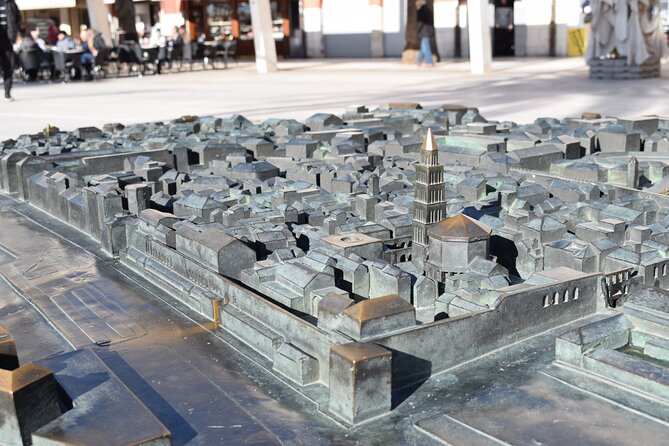
The City Clock stop lasts about 10 minutes and includes the famous 24-hour sun clock at the City Square. It is one of those details that many people could pass without understanding what they are seeing.
A guide adds value here by giving the object a place in the story of the city. The clock is a small feature compared with the palace walls and cathedral, but it gives the walk variety. You move from imperial remains to a civic landmark and see how different periods overlap in Split’s center.
This is also a good moment to pay attention to the guide’s style. The strongest part of this tour is not simply the number of sights. It is the ability to make a modest detail memorable through a short explanation or local anecdote.
The Riva, Split’s waterfront promenade
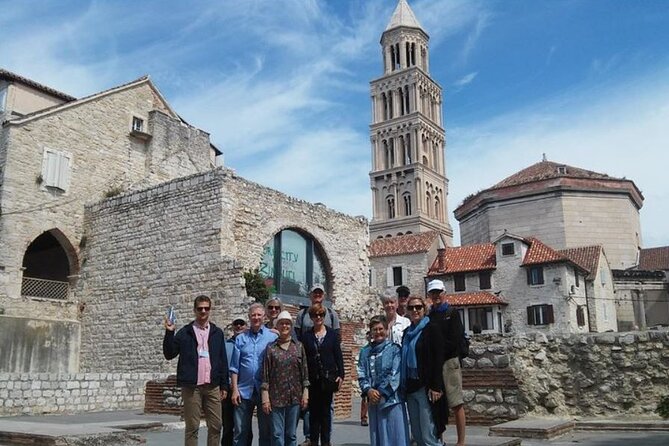
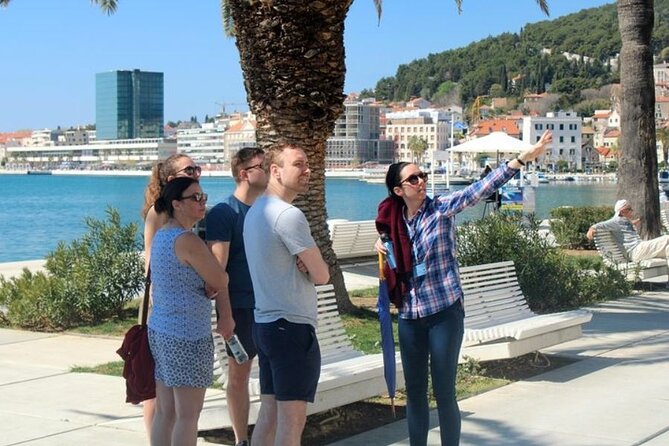
The final listed stop is the Riva Harbor, the busy waterfront promenade. The Riva is a useful contrast to the enclosed lanes of the palace. Here, the city opens toward the harbor, with cafés, movement, and a broad route for walking.
The stop lasts about 10 minutes. That gives you a quick introduction rather than time for a drink or a long harbor visit. You can use the guide’s suggestions to decide if you want to return later for coffee, a meal, or an evening walk.
Several guides are praised for giving practical recommendations at the end of the tour. Mia, for example, is described as offering suggestions for restaurants, coffee shops, and other activities. Another guide directed a group toward a local neighborhood restaurant after the walk. This kind of advice can be more useful than another set of memorized facts, especially if Split is one stop on a short Croatian trip.
The Riva also helps you understand Split’s layout. Once you know how the waterfront relates to the palace, Pjaca, and the Golden Gate, it becomes easier to explore independently.
The guides are the main reason to book
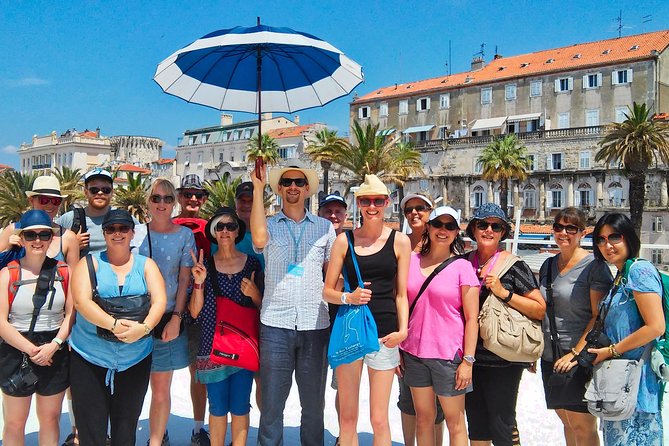
The tour’s strongest feature is the guide. The supplied guide names include Mia, Slavko, Ivan, Ivana, Tino, Franke, Marta, Maria, Antonia, and others. You are not guaranteed a particular person, but the range of feedback points to a team that places real weight on presentation.
The qualities to look for are clear English, a voice you can hear, a steady pace, and the ability to answer questions. Tino is praised for being patient and easy to understand. Mia is described as warm, funny, and generous with local suggestions. Ivana is praised for personal stories and an engaging approach. Franke is described as sharing both Croatian history and the story of the palace with energy.
The style seems to vary by guide, which is normal. Some focus more on jokes and lively delivery. Others lean toward cultural context and personal stories. The common thread is that the walk gives you more than you would get from reading signs as you pass.
A group of up to 49 can make the guide harder to hear, especially in tight lanes. Stay near the front when possible. If you have a question, ask it during a natural pause rather than waiting until the end.
What the $21.77 price gets you
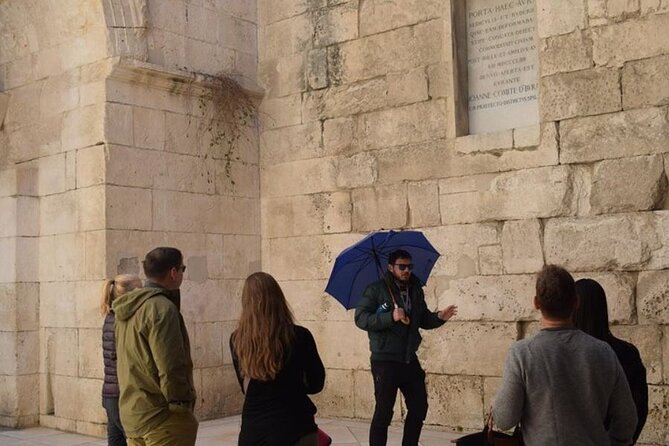
At $21.77 per person, this is a sensible purchase for a first visit to Split. The price includes an English walking tour and a professional local guide. It does not include food, drinks, hotel pickup, or drop-off.
The value comes from the setting. You are not paying for a coach transfer or a long trip outside the city. You are paying for someone to explain a complicated old town while you walk through it. For many people, that is exactly where a guide earns their fee.
I would be less enthusiastic if you already know Split well or prefer to explore without a schedule. The walk covers the main sights rather than offering a highly specialized study of Roman architecture. It is also not a private tour, so visitors seeking a quiet, personal experience may want another format.
For a first day, a cruise stop, or a short stay, the price is easy to justify. A 90-minute overview can save you time later by showing you where to return for a closer look.
Pace, weather, and practical comfort
The tour requires walking over old streets and may involve steps or uneven surfaces. Most people can participate, and service animals are allowed. Children must be accompanied by an adult.
One family found that the guide adjusted the pace when a member had trouble walking. That is encouraging, but you should still be realistic about the surface and group format. Tell the guide early if you need a slower pace.
Weather matters. The tour can be canceled in poor weather, with a different date or a full refund offered. If you are visiting during a wet or stormy period, keep some flexibility in your schedule.
Winter can be a useful time for this experience. One booking took place during the off-season, when many attractions and restaurants were closed, yet the walking tour still provided a worthwhile way to understand Split. In busy months, the tradeoff is more street activity and potentially more difficulty keeping the group together.
The tour is offered in English only. Confirmation arrives when you book, and it operates near public transportation. There is no hotel pickup, so you must make your own way to the Golden Gate.
Who will get the most from this walk
I would choose this tour if you are visiting Split for the first time and want a fast, well-organized introduction. It also suits cruise passengers, couples, families with older children, and anyone who wants practical food and sightseeing suggestions along with the main historical story.
It is especially useful if you have only one day. The route touches the palace, Pjaca Square, the City Clock, the cathedral area, and the Riva, giving you a clear map for the rest of your visit.
I would think twice if you want extensive time inside individual monuments, a private guide, or a slow photography walk. The tour is designed to cover ground and explain the city in broad strokes. That is its strength, but also its limit.
Book at least a little ahead if your schedule is fixed. The experience is booked, on average, 26 days in advance, suggesting that demand can be steady. Free cancellation is available up to 24 hours before the start time. Within 24 hours, the payment is not refunded, and changes are not accepted.
Should you book the Split Palace walk?
Yes, if you want an affordable first look at Split with a guide who can connect Roman remains, medieval streets, and present-day city life. The 90-minute length is practical, the route covers the essential center, and the guide quality is the main attraction.
I would book it early in your stay, then use the rest of your time to revisit the places that interest you. Stay close to the guide, arrive early at the Golden Gate, and leave room afterward for the Riva or a meal recommendation.
Skip it only if you already know the old town well or want a private, highly detailed archaeological tour. For most first-time visitors, this is a useful and fairly priced way to make sense of Split.
FAQ
How long does the Split and Diocletian’s Palace walking tour last?
The tour lasts approximately 1 hour and 30 minutes.
Where does the walking tour start?
It starts at the Golden Gate, Dioklecijanova 7, 21000 Split, Croatia.
Where does the tour end?
The activity ends back at the meeting point at the Golden Gate.
Is the tour conducted in English?
Yes. The walking tour is offered in English.
What sights are included?
The route includes Diocletian’s Palace, Narodni Trg or Pjaca Square, the City Clock, the Riva Harbor, and sightseeing around the Cathedral of Saint Domnius.
Is admission included?
The walking tour and sightseeing of Diocletian’s Palace are included. Food, drinks, hotel pickup, and hotel drop-off are not included unless specified.
What is the cancellation policy?
You can cancel up to 24 hours before the start time for a full refund. Cancellations or changes made within 24 hours are not accepted and are not refunded. If poor weather causes the tour to be canceled, you will be offered another date or a full refund.
Just added around Split
- Split Day Trip from Dubrovnik★ 4.0 · 59 reviews
- Dubrovnik to Split Private Transfer with Local Experienced Driver★ 5.0 · 52 reviews
- Private Transfer from Dubrovnik to Split★ 5.0 · 3 reviews
- Private Transfer from Dubrovnik to Split with 2 hours for sightseeing★ 5.0 · 50 reviews
- Private Transfer: Dubrovnik to Split★ 5.0 · 7 reviews
- Dubrovnik to Split Private Transfer with Mostar Town★ 5.0 · 38 reviews
- Private Tour: Split Day Trip from Dubrovnik★ 5.0 · 9 reviews
- Private Day Trip :Dubrovnik- Mostar- Split★ 5.0 · 3 reviews
Diocletian Palace Tours, compared.
Split: Old Town and Diocletian Palace Walking Tour
Read our review →
Walking Tour of Split and Diocletian’s Palace
Read our review →
Split: Diocletian Palace & Old Town Guided Walking Tour
Read our review →
Split: Game of Thrones Tour with Diocletian’s Palace Cellar
Read our review →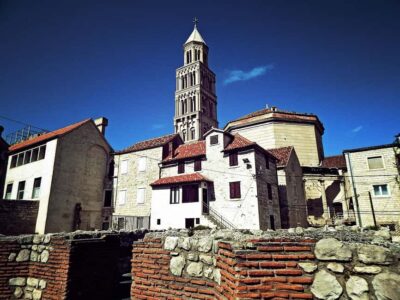
Diocletian’s Palace and Old Town SMALL GROUP Walking Tour
Read our review →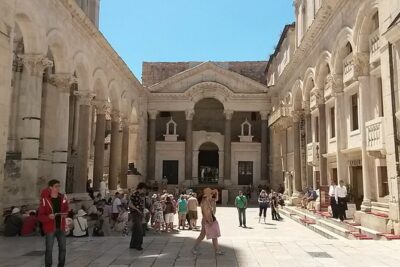
SPLIT-PRIVATE Walking Tour of Diocletian’s Palace & Old Town
Read our review →

Split: Diocletian’s Palace Virtual Reality Experience
Read our review →Browse the lists this tour appears in