Reviewed · PRIVATE
Dubrovnik to Tirana; Semi – Private Tour with Tour Leader & Car
Dubrovnik is only the beginning here. In eight days, you move through four Balkan countries, from Mostar’s Ottoman lanes and Sarajevo’s war-scarred streets to Kosovo’s monasteries and Albania’s lively markets. I especially like the mix of major sights and smaller stops, such as Biscevic House, the Venetian mask workshop in Shkoder, and a working farm near Lezhe.
I also like the practical setup: transport, a tour leader, seven breakfasts, road costs, and hotel pickup are included. The main drawback is the pace. You cover a lot of ground, cross several borders, and spend only one or two hours at many stops, so this suits you if you want a broad first look rather than a slow stay in each town.
Key points to know before booking
- Eight days, four countries, one-way travel: Begin in Dubrovnik and finish in Tirana, passing through Bosnia and Herzegovina, Montenegro, Kosovo, and Albania.
- Small-group format: The maximum group size is 10, giving you more room than a large coach tour.
- Strong cultural range: See Ottoman homes, Orthodox monasteries, Catholic and Islamic landmarks, Austro-Hungarian Sarajevo, vineyards, markets, and food workshops.
- Many costs are covered: Transport, fuel, road and tourist taxes, 3-star accommodation, breakfast, a Sarajevo coffee or tea, and the final-day Tirana food tour are included.
- Plan for active sightseeing: Several walks use cobbled or uneven ground, and the program includes hills at places such as Rozafa Castle, Kalaja Fortress, and Kruja.
- Meals are mostly your responsibility: Lunches, dinners, drinks, snacks, and souvenirs are not included, so budget extra for local food.
A cross-border route with real variety
This is not simply a transfer from Croatia to Albania. The route gives you a quick but meaningful introduction to a part of Europe shaped by Ottoman rule, the Austro-Hungarian period, Yugoslavia, religious coexistence, war, and modern economic change.
The order of the journey works well. Mostar and Sarajevo provide the historical foundation. Montenegro adds dramatic old towns and coastal scenery. Kosovo brings a different mix of markets, mosques, monasteries, and vineyards. Albania finishes the trip with food, craft, and everyday city life.
You should also understand the rhythm. The tour begins at 7:00 a.m., and several days combine sightseeing with international border crossings. Border procedures and road conditions can affect the schedule. The operator also notes that weather, strikes, public holidays, closures, or other events can force changes.
A few more Dubrovnik half-days worth comparing
- Blue Cave Small-Group Boat Tour from Dubrovnik
★ 5.0 · 9,360 reviews - Dubrovnik: Epic Game of Thrones Tour + Lokrum & Saver Option
★ 4.9 · 5,995 reviews - Dubrovnik: Old Town Walking Tour
★ 4.8 · 5,174 reviews
Day 1: Mostar and a preserved Ottoman home
Your Dubrovnik pickup is arranged from the nearest practical point to your hotel. Cars cannot enter some parts of Dubrovnik Town, so you may need to walk a short distance to meet the local driver. That detail matters if you are carrying heavy bags or staying inside the old city walls.
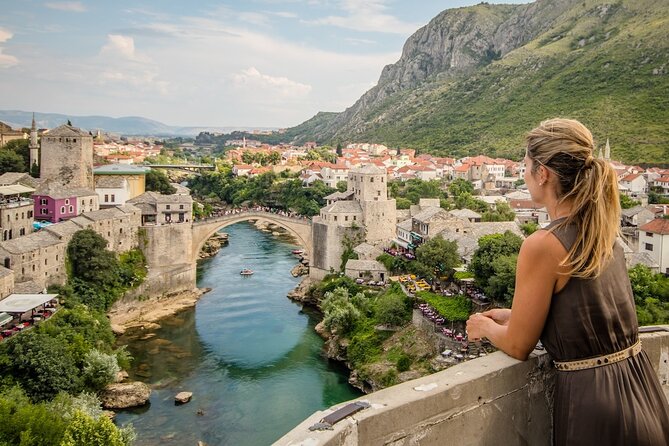
The driver takes you toward the border, where you meet the tour leader. The first major stop is Mostar, one of the clearest introductions to Bosnia and Herzegovina’s Ottoman past. You walk across or around Stari Most, the celebrated 16th-century bridge, then follow the cobbled lanes of the Old Bazaar.
Mostar is a place of sharp contrasts. Turkish-style shops, mosques, old stone buildings, and souvenir stalls sit close to newer construction and visible reminders of the city’s difficult past. The repeated Don’t Forget message around town is not decoration. It asks you to keep the war and the destruction of the bridge in mind while enjoying the city as it is now.
You have about two hours in Mostar, which is enough for an introduction but not enough for a leisurely museum day. Wear shoes with a firm grip. The old streets are uneven, and the bridge area can be busy.
The shorter visit to Biscevic House adds something the bridge alone cannot. This 17th-century riverside residence shows how a wealthy Ottoman family lived, with a more intimate feel than the public streets and monuments. Admission is included, and the visit lasts about 30 minutes.
Day 2: Sarajevo, war memory, and Ottoman coffee
The drive from Mostar to Sarajevo leads into a more serious day of sightseeing. Sarajevo is presented through several layers: the medieval Bosnian kingdom, Ottoman urban life, Austro-Hungarian planning, and the marks left by the Yugoslav War.
You will walk on uneven surfaces and see bullet holes and cannon damage in parts of the city. The value of having a tour leader here is context. Without explanation, a damaged wall is simply a damaged wall. With local interpretation, it becomes part of the city’s recent story and its effort to live with the past.
The walking tour covers mosques, churches, synagogues, markets, and bazaars. Sarajevo’s appeal is this close contact between different faiths and architectural traditions. You can move from Ottoman streets to Austro-Hungarian facades within a short walk.
Latin Bridge receives a separate hour. This modest bridge is linked to the assassination of Archduke Franz Ferdinand, an event that helped trigger the First World War. The tour explains the bridge’s older name and its connection to the Catholic quarter known in Ottoman times as Latinluk.
The day ends with a complimentary Turkish coffee or tea at Caffe Divan. That is a small inclusion, but a useful one. Sarajevo’s coffee culture gives you a chance to sit down, watch local life, and digest a heavy historical day.
Day 3: Blagaj and the stone lanes of Kotor
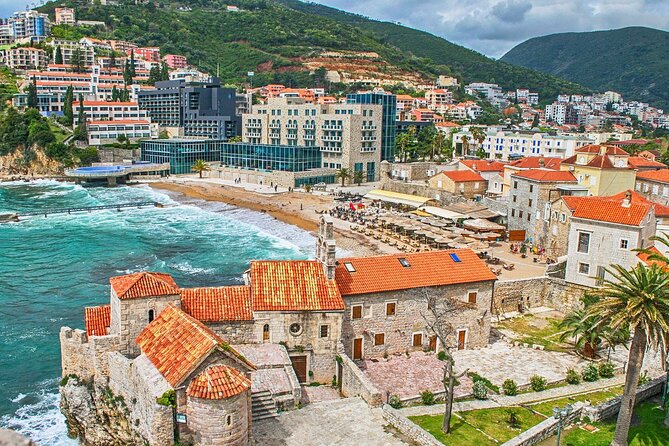
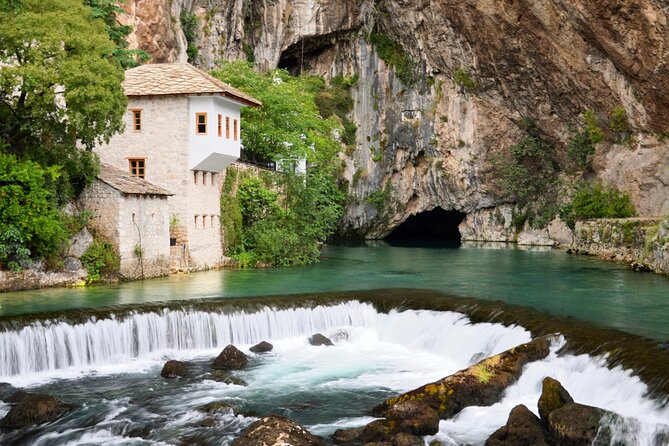
Blagaj is a short excursion from Mostar and a welcome change of pace. The town sits below a cliff beside the spring of the Buna River, with clear blue water and an Ottoman-era setting. You have about an hour here, enough to take in the natural setting and the riverside architecture.
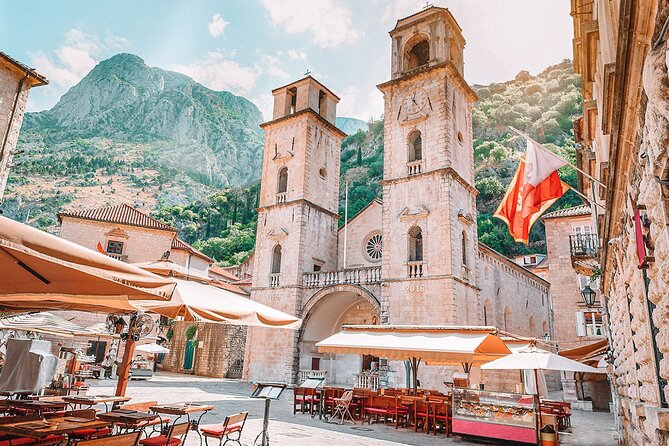
Later, the route crosses into Montenegro and reaches Kotor. The old town is a UNESCO World Heritage site, enclosed by stone walls and filled with narrow lanes. The apparently confusing street plan was designed to make it harder for attackers to find their way around. Today, that maze is part of Kotor’s charm.
The visit includes St. Luke’s Church, important locally as a symbol of unity. You then receive free time to explore on your own. This is a good balance after several guided walks. You can pause for coffee, examine the dated plaques on old buildings, or simply follow whichever lane looks most interesting.
The listed sightseeing time in Kotor is about two hours, so do not expect a full exploration of the surrounding bay or fortifications. If you want to climb extensively or visit several churches, you will need to use your free time carefully.
Same stretch of coast, a completely different kind of day:
- Dubrovnik: The Original Game of Thrones Tour & Lokrum Option
★ 4.8 · 5,064 reviews - Dubrovnik Game of Thrones Tour & Optional Lokrum Island Visit
★ 5.0 · 4,702 reviews - Dubrovnik Discovery Old Town Walking Tour
★ 5.0 · 4,458 reviews - Montenegro Full-Day Trip from Dubrovnik with Optional Boat Trip
★ 4.5 · 3,212 reviews
Day 4: Budva, Sveti Stefan, and Shkoder’s creative side
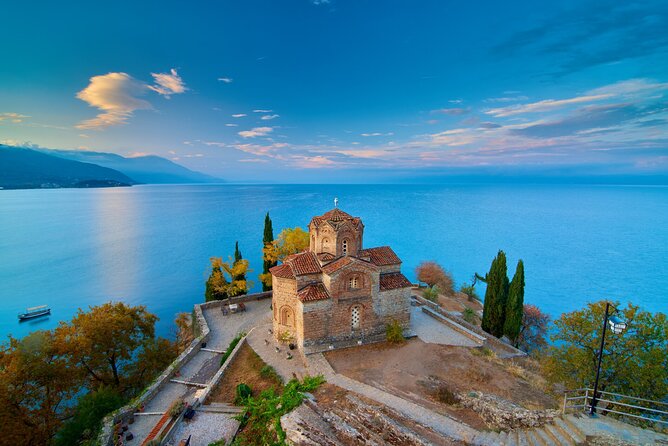
Budva brings you to Montenegro’s popular Adriatic coast. The town has a modern section with shops, restaurants, offices, and bars, as well as an old section with medieval buildings and churches.
The stop is brief, about 30 minutes in the modern town and another 30 minutes around St. Ivan Church and the old center. This is more of a focused introduction than a beach holiday. If your priority is swimming or lingering over a seaside lunch, the schedule may feel rushed.
Sveti Stefan is a photo stop rather than a full visit. The former fishing village now functions as an exclusive residential resort, and the island itself is not open for ordinary sightseeing. You see it from the coast, which is still worthwhile, but expectations should be clear.
After crossing into Albania, you reach Shkoder. Rozafa Castle offers wide views toward the lake and the rivers that meet before flowing to the Adriatic. Shkoder’s architecture also reflects Venetian influence, and its handmade Venetian masks provide one of the day’s most distinctive stops.
At the mask factory, you can see papier-mache masks made and painted by hand. The workshop connects local craft with Venetian carnival tradition without requiring you to visit Venice. The admission is included, and you have about an hour.
Day 5: Farm food and Prizren’s old center
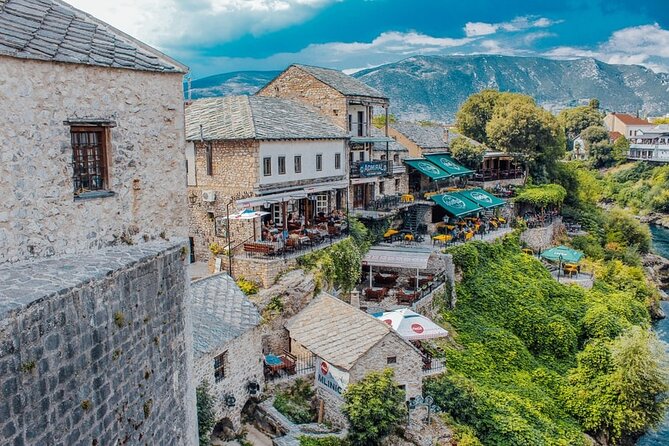
Mrizi i Zanave is one of the most useful stops for understanding present-day Albania. This slow-food farm gathers, prepares, and preserves local organic products. You tour the property, hear how the family business created work for more than 400 people in the area, and see how former communist buildings were adapted for storage.
Lunch is not included, but this is a logical place to spend some of your meal budget. You can also buy local produce. The farm visit lasts about two hours, giving you more time than many of the city stops.
In the afternoon, the route continues to Prizren in Kosovo. The city is known for its cultural importance, Ottoman-era streets, bridges, religious buildings, and restaurants. The river runs through the old center, and the town is best experienced on foot.
Sinan Pasha Mosque receives a dedicated visit. Its colorful arabesque decoration makes it one of the more memorable religious buildings on the route. Kalaja Fortress then gives you a view over the town from the hill above it.
You have free time in Prizren after the guided visits. The city is also known for metal filigree, so look for local craftwork if you want a useful souvenir rather than a generic keepsake.
Day 6: Gjakova, Decan Monastery, and Rahovec wine
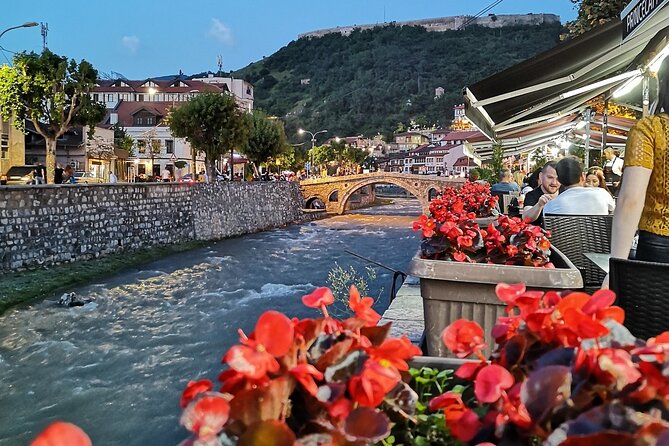
Gjakova begins the day with its large historic bazaar. It has been destroyed and rebuilt more than once, including after the Kosovo War. Today, the rebuilt market includes shops and artisan workshops where you can see traditional crafts.
This is a good place to slow down and look closely. The point is not simply to buy something. You can watch how local makers work and understand how old commercial areas continue to support daily life.
The Monastery of Decan offers a different experience. Its white exterior is memorable, but the main reason for the visit is inside: 14th-century frescoes connected with the Palaeologan revival of Byzantine painting. Orthodox monks still live there and produce food such as cheese.
Religious sites in Kosovo can involve additional security or access rules, though no special procedure is specified for this tour. Follow your tour leader’s instructions and dress respectfully.
The final stop is Rahovec Valley, Kosovo’s wine area. Grapes have reportedly been grown here since Illyrian times, and vineyards sit on low hills between roughly 350 and 520 meters above sea level. The stop lasts about an hour. A September visit may coincide with the annual wine festival, although festival access is not promised.
Day 7: Kruja and Albania’s mountain stronghold
Kruja is linked with Albanian resistance to Ottoman expansion in the 15th century. The town sits on rocky ground at about 560 meters, giving it a different feel from the coastal and river towns earlier in the route.
The Medieval Old Bazaar is one of the day’s pleasures. Narrow lanes and wooden buildings hold carpets, jewelry, and handmade souvenirs. This is the best place on the route to shop for Albanian crafts, but take your time comparing items and prices.
Kruja Castle sits on a rocky hill and includes paths that local defenders once used to move out of the fortress unseen. The tour leader guides you through these less obvious routes. You should expect some uphill walking and uneven footing.
There is about an hour of free time for lunch, shopping, or simply looking across the town. Since lunch is not included, this is another day when local food becomes an extra cost, not an unpleasant surprise.
Day 8: Tirana through food and ordinary markets
The final day shifts away from monuments and toward daily life. A local companion takes you around Tirana, with food as the main theme. Come hungry, because the included food tour replaces a standard museum-heavy morning.
You begin with byrek, a familiar Albanian pastry made from thin layers of dough and filled with ingredients such as cheese, meat, or spinach. The route continues through Tregu Çam, where you can browse clothing, kitchen goods, produce, and other everyday items while learning how to bargain.
The itinerary includes overlapping descriptions of the Tregu Çam and Tirana stops, so the exact timing may vary. The important point is that you spend time in local markets rather than only visiting the capital’s main squares.
At Pazari i Ri, you explore a market for second-hand goods and then sit down for a traditional Albanian meal. Albanian grape raki is also included as part of the food experience. This makes a fitting final stop: less formal sightseeing, more conversation, food, and a taste of the city’s present life.
What the $3,433 price includes
At $3,433.11 per person, this is a costly tour, but the comparison depends on how you normally travel. The price is calculated on double, twin, triple, or quadruple occupancy in 3-star hotels. Solo accommodation arrangements are not described, so ask before booking if you are not sharing a room.
The package includes:
- Seven nights with breakfast
- Transport provided by the company
- Professional tour leader
- Fuel, road taxes, and tourist taxes
- Pickup from Dubrovnik Town
- One Ottoman-style coffee or tea in Sarajevo
- The Tirana food tour
You still pay for lunches, dinners, drinks, snacks, souvenirs, and anything not listed. With so many border crossings and different countries, the included transport and coordination have real value. The price is harder to justify if you prefer independent public transport, budget lodging, or long stays in just two cities.
Who will enjoy this trip most
I would choose this tour if you want one organized route through a complicated region and do not want to manage every border, hotel, and road connection yourself. A maximum of 10 people is a major advantage over a large coach, especially on narrow old-town streets.
You should have moderate physical fitness. Expect uneven cobbles, uphill routes, castle grounds, and walking in historic districts. The early 7:00 a.m. start and quick visits also favor people who like full days.
The company has received strong praise for organization, communication, safety, and guide support. Names connected with its wider guiding team include Ana, Taulant, Nelly, and Gezim, but a specific guide is not assigned in the information provided for this departure. Ask who will lead your group before paying.
The tour is also suitable for people who want cultural variety without treating the Balkans as a single place. Bosnia, Montenegro, Kosovo, and Albania each receive a different look, and the route includes Muslim, Catholic, and Orthodox traditions.
Practical details that affect your decision
Book only when your dates are firm. The experience is non-refundable and cannot be changed after booking. Confirmation is provided at booking, but the schedule can change because of weather, strikes, public holidays, temporary closures, or other events beyond the operator’s control.
The trip begins in Dubrovnik and ends in Tirana. That makes it useful as part of a larger one-way itinerary, but less convenient if you need to return to Croatia.
Pack light enough to handle short walks to pickup points and hotel entrances. Bring comfortable shoes, modest clothing for religious sites, and some local currency or payment method for meals and small purchases. Since food and drinks outside the included breakfast and Tirana tour are extra, set aside a daily meal budget.
Should you book the Dubrovnik to Tirana tour?
Book it if you want an efficient first journey through the western Balkans, value a small group, and enjoy history explained on the move. The strongest parts are the cultural range, the unusual craft and farm visits, the included logistics, and the chance to see Kosovo as part of a wider regional route.
Think twice if you want beach time in Budva, long museum visits in Sarajevo, or several quiet nights in each city. This is a fast-moving survey with early starts and border crossings. For the right person, it offers a lot of place and story in eight days. For a slower independent trip, use the route as inspiration and spend more nights in fewer towns.
FAQ
Where does the tour start?
The tour starts in Dubrovnik, Croatia, with pickup at 7:00 a.m. from the nearest practical point to your hotel in Dubrovnik Town.
Where does the tour end?
The tour ends in Tirana, Albania.
How long does the tour last?
The experience lasts approximately eight days and includes seven breakfasts and overnight accommodation.
Which countries does the route visit?
The route begins in Croatia, then continues through Bosnia and Herzegovina, Montenegro, Kosovo, and Albania.
What type of accommodation is included?
Accommodation is in 3-star hotels. Prices are based on double, twin, triple, or quadruple room occupancy.
Is transport included?
Yes. Transport, fuel, road taxes, and tourist taxes are included.
Are meals included?
Seven breakfasts are included, along with one Ottoman-style coffee or tea in Sarajevo and the Tirana food tour. Lunches, dinners, drinks, and snacks are not included.
How large is the group?
The maximum group size is 10 people.
Is the tour physically demanding?
You should have a moderate level of physical fitness. The route includes walking on uneven ground, cobbled streets, hills, castle areas, and some ruins.
Just added around Dubrovnik
- Welcome to Dubrovnik Walking Tour★ 5.0 · 36 reviews
- Walls Of Dubrovnik: Small-Group Walking Tour With A Local★ 5.0 · 67 reviews
- Dubrovnik at War 1991-1992 Private Walking Tour★ 5.0 · 4 reviews
- Olive farm & village★ 5.0 · 41 reviews
- City Walls of Dubrovnik★ 5.0 · 70 reviews
- Walls of Liberty: A Self-Guided Audio Tour of Dubrovnik★ 3.5 · 3 reviews
- Trebinje Gastro Tour From Dubrovnik★ 4.5 · 12 reviews
- Try Scuba Diving Discovery in Dubrovnik★ 5.0 · 43 reviews
Private, compared.
Mostar and Kravice Waterfalls Tour from Dubrovnik (Semi-Private)
Read our review →
Dubrovnik: Blue & Green Caves Private Boat Tour with Drinks
Read our review →
Dubrovnik Private Speedboat Tour to Elaphite Islands with Drinks
Read our review →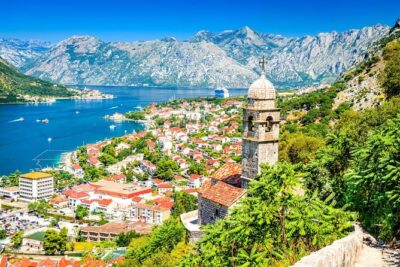
Private Tour: Montenegro Day Trip from Dubrovnik
Read our review →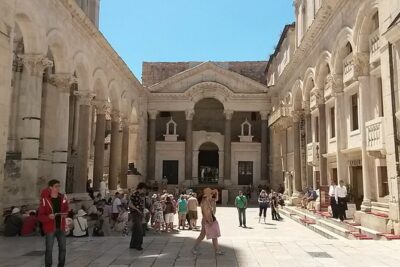
SPLIT-PRIVATE Walking Tour of Diocletian’s Palace & Old Town
Read our review →
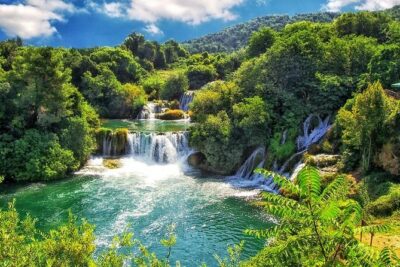
Private Krka Waterfalls tour with 30min Boat Cruse
Read our review →