Reviewed · PRIVATE
Dubrovnik Homeland War Private Tour
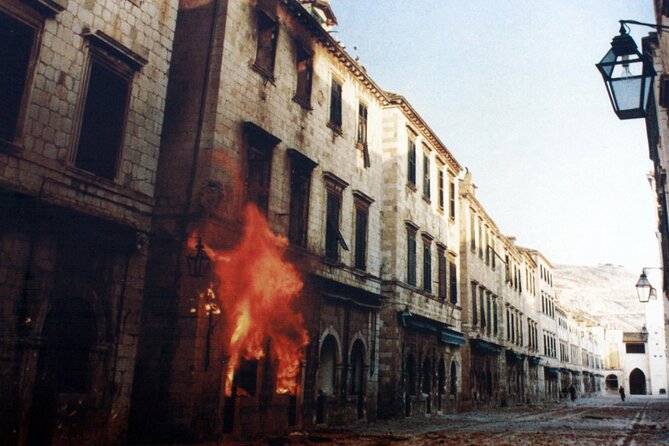
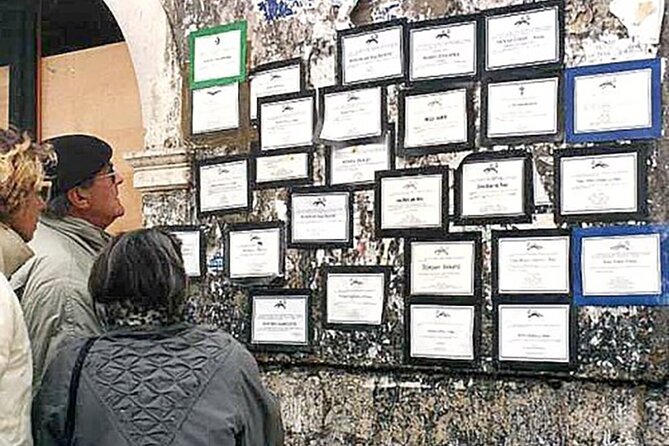
The most powerful part of this tour is the personal account of the Homeland War. A guide with firsthand experience explains what happened during Dubrovnik’s seven-month siege, linking the conflict to the streets, walls, and buildings around you. The visit to the Homeland War Memorial Room in Sponza Palace adds photographs and video to those spoken stories.
I like two things in particular: the tour connects recent wartime events with Dubrovnik’s older political and cultural past, and it remains private, so your guide can adjust the pace and answer your questions. Guides named Mato and Vlaho have received especially warm praise for their personal approach. The main consideration is that this is a serious history tour, not a light stroll. Some stories are painful, and the 2.5-hour walk includes stairs and uneven old-city streets.
- A veteran’s perspective: Hear firsthand accounts of the 1991 to 1992 conflict and its effect on soldiers and civilians.
- A full old-city route: Walk from the eastern Ploče area to western Pile Gate, passing major landmarks along the way.
- Memorial room entry: Visit the Homeland War Memorial Room inside Sponza Palace, with videos and photographs.
- Private format: Your group has its own guide, allowing time for questions and personal interests.
- More than wartime history: The route also covers Dubrovnik’s government, churches, markets, fortresses, and city defenses.
- A thoughtful pace: The tour lasts about two and a half hours, with 11 stops and no food or drinks included.
Why this Dubrovnik tour feels different
Dubrovnik’s old city is easy to admire at a glance. Pale stone streets, polished squares, church steps, and sea-facing fortifications do much of the visual work. But this tour asks you to look at the city as a living place that endured a recent attack, not just as a medieval postcard.
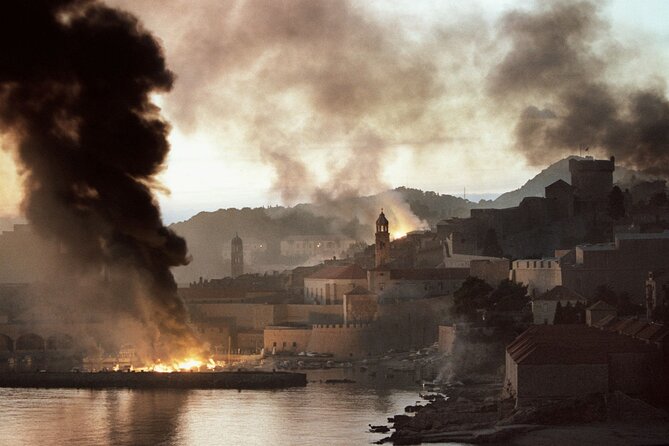
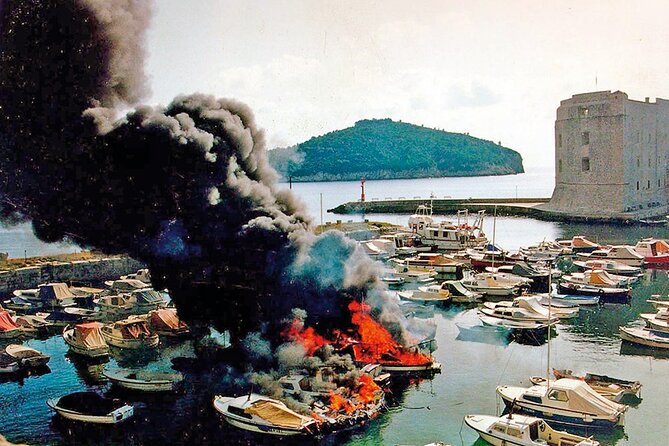
The Homeland War, also called the Croatian War of Independence, forms the central thread. Your guide explains the conflict in the setting where people experienced it. The old walls, harbor, gates, and rooftops become part of the story rather than a backdrop.
That setting matters. You are not only hearing dates and military facts in a room. You are moving through the city from Revelin Fortress toward Pile Gate, seeing defensive structures and key public spaces as the guide explains how the war affected Dubrovnik.
Guides such as Mato and Vlaho bring a personal connection to the subject. Mato has been praised for sharing stories about his own experiences and those of friends and family. Vlaho has been described as a veteran who fought at the site and could explain the complicated effect of the war on both civilians and soldiers.
Personal storytelling can make a difficult subject easier to understand, but it also means the mood is more reflective than festive. I would choose this tour for historical context and human stories, not as a quick introduction to Dubrovnik’s pretty streets.
Starting at Revelin Fortress and the eastern gate
The meeting point is on Ulica Vrata od Ploča, near Ploče Gate and Revelin Fortress. The tour begins with an introduction to Dubrovnik and a short orientation before moving toward the old city.
Revelin Fortress is a fitting place to begin. It belongs to Dubrovnik’s system of defenses and helps set up the connection between the city’s older military planning and its more recent wartime experience. You receive a brief introduction here, with no separate entrance ticket required for this stop.
The next section follows the city walls for about 20 minutes. You look toward the old harbor, Fortress of St. John, the fortifications of St. Luke, and the Dominican Monastery. These views help you understand how Dubrovnik guarded its eastern side and controlled access by sea.
The tour does not include a ticket to walk the full city walls. Instead, the wall area is used as part of the guided route and viewpoint. That distinction matters if you hoped to take a complete independent circuit of the walls. You may want to arrange that separately if it is a priority.
A few more Dubrovnik half-days worth comparing
- Blue Cave Small-Group Boat Tour from Dubrovnik
★ 5.0 · 9,360 reviews - Dubrovnik: Epic Game of Thrones Tour + Lokrum & Saver Option
★ 4.9 · 5,995 reviews - Dubrovnik: Old Town Walking Tour
★ 4.8 · 5,174 reviews
Luža Square and the Homeland War Memorial Room
At Luža Square, the tour reaches one of Dubrovnik’s main public spaces. The Clock Tower, Small Onofrio’s Fountain, City Hall, and the Church of St. Blaise gather around this compact area, giving you a quick lesson in the city’s civic and religious life.
The most important stop here is the Homeland War Memorial Room in Sponza Palace. Admission to this room is included, and it is the only listed attraction with a separate entrance included in the tour price.
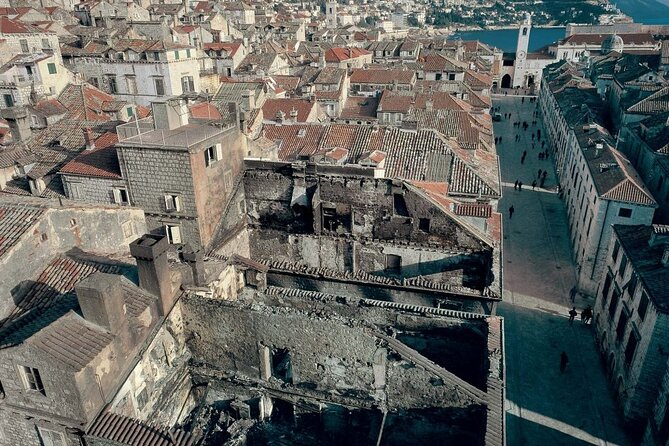
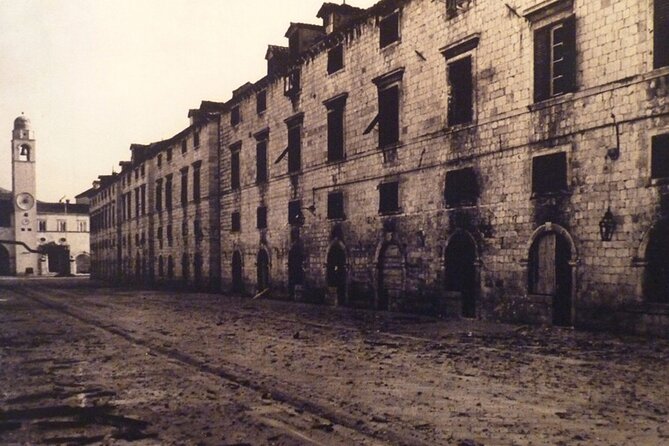
Inside, videos and photographs add visual detail to the guide’s account. The memorial room gives you a clearer sense of the damage, fear, and daily pressure created by the siege. I value this pairing of spoken memory and preserved evidence. One explains the human experience, while the other gives you something concrete to examine.
The visit is scheduled for about 20 minutes, so do not expect a long museum visit. The guide’s explanation is part of the experience, and your private format gives you a chance to ask about details that catch your attention.
Stradun, Buža Gate, and the city’s public life
The route continues along Stradun, Dubrovnik’s main street, then toward Ruđera Boškovića Street and Buža Gate. Stradun is the city’s social spine, so it offers a useful contrast to the wartime subject.
Here, you see how the city functions as a public place: people cross the street, shopfronts line the stone pavement, and historic buildings frame one of Croatia’s best-known urban views. Your guide can connect that familiar setting to the more difficult recent past.
Buža Gate and the surrounding streets also show how Dubrovnik opens toward the rocky slopes outside the main urban core. The route is not only about famous buildings. It includes smaller passages and transitions that help you understand the shape of the old city.
The streets can be busy, especially during the main sightseeing hours. A private guide is useful here because you can pause for context without being tied to a large group’s pace.
Gundulić Square and the old market
At the Monument of Poet Ivan Gundulić, you visit the green market, Pucić Palace, and a small fountain. The market adds an everyday note to a tour otherwise filled with political and military history.
This is a good place to remember that Dubrovnik is more than its walls and monuments. A market square tells you about daily routines, local trade, and the way public space has been used over time. The stop lasts about 10 minutes, so it is mainly an orientation and viewing point rather than a food visit.
No food or drinks are included. If you want to browse or buy something, those costs are yours. One past tour experience included refreshments at a veterans’ cafe, but that is not listed as part of the standard inclusions, so you should not count on it being guaranteed.
Same stretch of coast, a completely different kind of day:
- Dubrovnik: The Original Game of Thrones Tour & Lokrum Option
★ 4.8 · 5,064 reviews - Dubrovnik Game of Thrones Tour & Optional Lokrum Island Visit
★ 5.0 · 4,702 reviews - Dubrovnik Discovery Old Town Walking Tour
★ 5.0 · 4,458 reviews - Montenegro Full-Day Trip from Dubrovnik with Optional Boat Trip
★ 4.5 · 3,212 reviews
Rector’s Palace and the old republic
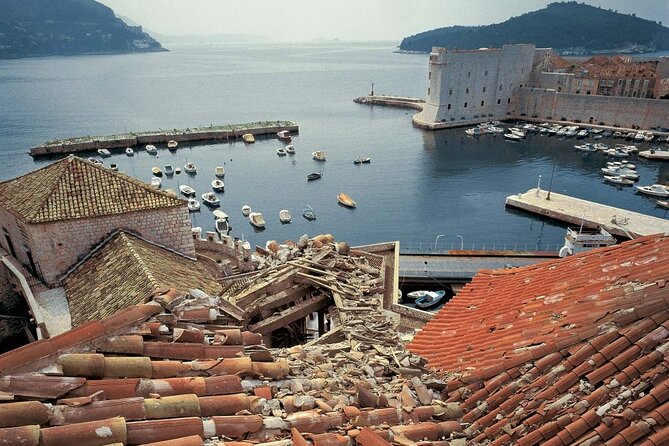
Rector’s Palace was the seat of government for the Republic of Dubrovnik. The guide uses this stop to explain how the former republic was governed and how Dubrovnik protected its political independence through diplomacy, trade, and careful administration.
The palace gives the tour a wider time frame. You move from the 1990s conflict to the institutions that shaped the city centuries earlier. That broader context is one of the tour’s strongest features. The Homeland War becomes part of Dubrovnik’s long struggle to preserve its autonomy, rather than an isolated event.
You do not receive a separate palace entrance with the tour. The stop is scheduled for about 15 minutes and focuses on the exterior and surrounding setting.
Cathedral, Treasury, and the Ponta Gate
The Cathedral of the Assumption of the Virgin Mary is the next major stop. The route also points out the Treasury of the Republic, the Bishop’s Palace, and Ponta Gate.
This section brings together religion, civic wealth, and the harbor edge. The Treasury is especially useful for understanding the importance of church institutions and the value placed on preserving precious objects. The guide can help you see how these buildings fit into the city’s compact political and religious center.
The schedule allows about 10 minutes here. That is enough for an outside explanation and a look around, but not enough for a long independent visit to each building. If you want extended time inside the cathedral or Treasury, check how that fits with your plans before booking.
The Jesuit Staircase and quieter old-city lanes
The Jesuit Staircase is one of the more memorable walking sections. The route includes the Church of St. Ignatius of Loyola, the staircase, nearby side streets, the Great Granary, and views toward Minčeta Tower.
The staircase is visually striking, but it also demands a little more from your legs. You should expect steps and uneven stone underfoot throughout the old city. Most people can participate, but this is not a flat, effortless walk.
The surrounding lanes are valuable because they slow the tour down. You move away from the most obvious route and see smaller streets that are easy to pass without a guide. The Great Granary and Minčeta Tower extend the story from religious buildings to food storage and military defense.
The Church of St. Ignatius also gives the guide a chance to explain Dubrovnik’s Catholic traditions and the city’s links to broader European religious culture. It is another example of the tour’s wide reach.
St. Joseph’s Church and the city’s working streets

The route then visits Placeta, St. Joseph’s Church, the Wide Street, and the House of Ivo Grbić. This is a shorter section, but it helps fill in the texture between the major squares and palaces.
The Wide Street is a useful reminder that Dubrovnik’s old city is a real neighborhood as well as a historic monument. The smaller churches and houses show how religious, domestic, and commercial spaces sit close together.
I appreciate this kind of stop because it keeps the tour from becoming a parade of only famous sites. You get more of the city’s ordinary scale, where a doorway, lane, or small church can carry as much local meaning as a grand palace.
Franciscan Monastery and the western approach
At the Franciscan Church and Monastery, the tour also visits Large Onofrio’s Fountain and the Church of the Holy Saviour. This section brings you close to Stradun’s western end and the busy approach to Pile Gate.
The Large Onofrio’s Fountain is one of the city’s best-known waterworks. Along with the monastery, it helps explain how Dubrovnik handled religious life and basic public needs inside its fortified walls.
The Franciscan complex is also a useful pause before the final military views. You are moving from daily life and worship back toward the city’s outer defenses. The stop lasts about 15 minutes and does not include a separate admission ticket.
Finishing at Pile Gate and Kolorina Bay
The tour ends at Pile Gate, on the western side of the old city. From here, you can see Fortresses of St. Lawrence and Bokar, along with Kolorina Bay.
This ending works well because it returns the focus to defense. You began near Revelin Fortress in the east and finish near the western fortifications, with the city’s geography clearer than it was at the start.
The official end point is near Nautika on Brsalje, in the area outside Pile Gate. That location is convenient for continuing your sightseeing, finding a meal, or returning to nearby transport. You finish after about two and a half hours, although the exact timing can depend on questions and walking pace.
What the private format is worth at $120.16
The price is $120.16 per person. That is not a bargain-priced city walk, but the value depends on what you want from Dubrovnik.
You are paying for a private experience, professional guidance, entry to the Homeland War Memorial Room, and a route that combines recent conflict with older political and cultural history. If your group has a strong interest in military history, Croatian independence, or personal wartime accounts, the price can make sense.
The private format also matters for families and small groups. A 14-year-old has reportedly stayed engaged with the material, which suggests the guide can explain a serious subject in an accessible way. Your group can ask questions without holding up strangers, and the guide can spend more time on the parts that matter to you.
The value is weaker if you only want a fast overview of Dubrovnik’s sights. Many landmarks are viewed from outside, and food, drinks, personal purchases, and full city-wall admission are not included. Group discounts are available, so larger private groups should check the final per-person rate.
Timing, meeting point, and practical details
The tour is offered in English and lasts approximately two hours and 30 minutes. It starts near Revelin Fortress and Ploče Gate, then ends near Pile Gate. That east-to-west route means you should plan to arrive at the starting point rather than assume the tour begins near the cruise-port side of the city.
You receive booking confirmation at the time of reservation. The meeting area is near public transportation, and most people can take part, though the stone streets and Jesuit Staircase require ordinary walking ability.
Wear shoes with a firm grip and bring water, especially in warm weather. The tour does not include drinks. Since the route crosses open squares and exposed fortification areas, weather matters. The operator may offer another date or a full refund if poor weather causes cancellation.
Free cancellation is available up to 24 hours before the start time. Cancellations or changes made less than 24 hours before the experience are not accepted for a refund.
Who should book this experience
I would recommend this tour to you if you want to understand Dubrovnik beyond its famous views. It suits history-focused visitors, families with older children, people interested in battlefield sites, and anyone who wants a local account of Croatia’s independence.
It is especially useful early in your stay because the guide gives you a framework for later sightseeing. After the tour, the walls, harbor, gates, and public buildings should mean more than they did during a quick first walk.
You may want a different tour if your main goal is food, photography, architecture alone, or a relaxed stroll with little discussion of war. The subject is thoughtful and at times upsetting. The walk also covers many stops, so you should expect steady movement rather than long unstructured visits.
Should you book the Dubrovnik Homeland War Private Tour?
Book it if you want personal wartime testimony joined to a full old-city walk. The Memorial Room, the veteran perspective associated with guides such as Vlaho, and the personal stories shared by Mato give the tour a human focus that a standard sightseeing route may lack.
I would skip it only if the Homeland War is not a subject you want to consider during your holiday, or if you need a very gentle, flat walk with plenty of free time. For everyone else, this is a serious, well-shaped way to understand why Dubrovnik is more than beautiful stone and sea views.
FAQ
How long does the Dubrovnik Homeland War Private Tour last?
The tour lasts approximately two hours and 30 minutes.
What language is the tour offered in?
The tour is offered in English.
Is this a private tour?
Yes. Only your group participates in the private activity.
Where does the tour start?
It starts on Ulica Vrata od Ploča near Ploče Gate and Revelin Fortress in Dubrovnik.
Where does the tour end?
It ends near Nautika on Brsalje, in the area of Dubrovnik’s western Pile Gate.
Is entrance to the Homeland War Memorial Room included?
Yes. Entrance to the War Memorial Room in Sponza Palace is included.
Are food and drinks included?
No. Food, beverages, and personal purchases are not included.
Does the tour include a ticket to walk the city walls?
No separate city-wall admission is included. The route uses the wall area to view and discuss Dubrovnik’s defenses.
Can I cancel for a full refund?
Yes, if you cancel at least 24 hours before the experience begins. Poor-weather cancellations may result in another date or a full refund.
Just added around Dubrovnik
- Welcome to Dubrovnik Walking Tour★ 5.0 · 36 reviews
- Walls Of Dubrovnik: Small-Group Walking Tour With A Local★ 5.0 · 67 reviews
- Dubrovnik at War 1991-1992 Private Walking Tour★ 5.0 · 4 reviews
- Walls of Liberty: A Self-Guided Audio Tour of Dubrovnik★ 3.5 · 3 reviews
- Olive farm & village★ 5.0 · 41 reviews
- City Walls of Dubrovnik★ 5.0 · 70 reviews
- Trebinje Gastro Tour From Dubrovnik★ 4.5 · 12 reviews
- Try Scuba Diving Discovery in Dubrovnik★ 5.0 · 43 reviews
Private, compared.
Mostar and Kravice Waterfalls Tour from Dubrovnik (Semi-Private)
Read our review →
Dubrovnik: Blue & Green Caves Private Boat Tour with Drinks
Read our review →
Dubrovnik Private Speedboat Tour to Elaphite Islands with Drinks
Read our review →
Private Tour: Montenegro Day Trip from Dubrovnik
Read our review →
SPLIT-PRIVATE Walking Tour of Diocletian’s Palace & Old Town
Read our review →

Private Krka Waterfalls tour with 30min Boat Cruse
Read our review →