Reviewed · TOURS
Vis Military Tour
Fort George, submarine tunnels, abandoned military passages, and a mountaintop view give this Vis military tour more substance than a standard island sightseeing drive. You move through the island’s Napoleonic, WWII, and Yugoslav-era past in one compact outing, with guides such as Karim, Karin, or Ante explaining what you are seeing.
I like the mix of military sites and big views, and I like the small maximum group size of 16, which gives you a better chance to ask questions. The main consideration is the short length: at 2 to 3 hours, this is an introduction rather than a full study of Vis’s military past.
Key things to know before booking
- Fort George begins the story: Walk through a British fort built during the Napoleonic era, with free admission included.
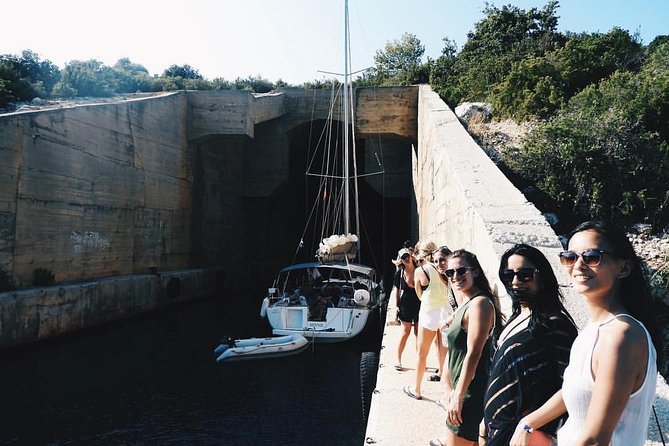
- The submarine shelter is a rare stop: The Bay Parja tunnel offers a close look at how Vis was used for military protection and concealment.
- Yugoslav tunnels add a later layer: Underground passages show that the island’s military role continued long after WWII.
- Mount Hum brings the payoff: The island’s highest point offers a wide panoramic view and strong photo opportunities.
- The tour stays personal: A maximum of 16 participants is more manageable than a large coach outing.
- Pickup may simplify the day: Collection can be arranged from some parts of Vis, including Kut, Komiža, Rukavac, Ženka, and Hotel Issa.
Why Vis military history is worth your time

Vis is not simply an island of harbors, stone houses, and swimming spots. Its position in the Adriatic made it useful for military forces over many generations. This tour lets you see that story in physical places rather than only hearing dates and names.
You begin with a British fort from the Napoleonic era, then move into submarine protection, underground Yugoslav army tunnels, and a WWII airport site. That sequence matters. It shows how the island’s role changed with new weapons, new governments, and new military technology.
I like this approach because each stop gives you a different kind of evidence. Fort George is open-air and architectural. The submarine shelter is built around concealment and defense. The tunnels are close, enclosed, and practical. Mount Hum then gives you the broad view, helping you understand why Vis mattered in the first place.
The tour is offered in English and runs for about 2 to 3 hours. That makes it easy to fit into a day on Vis, especially if you want time left for lunch, swimming, or wandering through the island’s towns.
Other Dalmatia days people book alongside this one:
- Whitewater Rafting on Cetina River from Split or Šestanovac
★ 5.0 · 560 reviews - Extreme Canyoning on Cetina River from Split or Šestanovac
★ 5.0 · 262 reviews - Montenegro: Bay of Kotor Day Trip from Dubrovnik English -Español
★ 4.5 · 188 reviews
Fort George and the island’s Napoleonic chapter
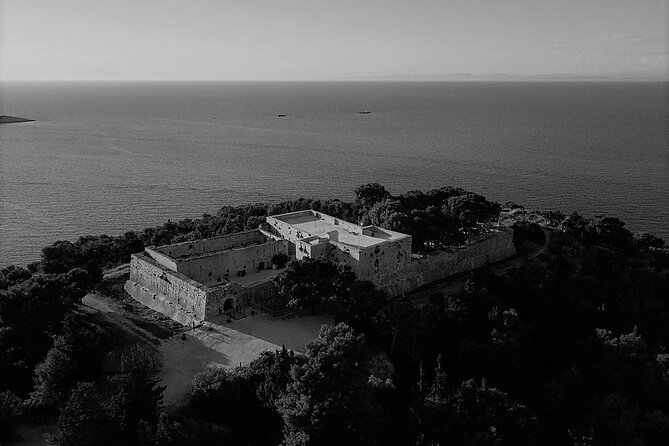
Fort George is the first stop, with about 15 minutes set aside for the visit. You walk through an old British fort built during the Napoleonic era, and the free admission is included in the tour price.
This is a useful opening because it places Vis in a wider European conflict. The fort is not presented as an isolated monument. It belongs to a period when control of the Adriatic mattered to British and French forces, and when defensive buildings shaped the island’s future.
Fifteen minutes is enough for a focused look, but not enough for a long architectural study. You should expect an overview rather than a detailed tour of every wall and room. The guide’s explanation is important here, since the value comes from connecting the fort to the rest of Vis’s military story.
Fort George also helps set the tone for the experience. You are not only visiting one old building. You are following a chain of military uses that continues through the twentieth century.
The submarine shelter at Bay Parja
The stop at the submarine tunnel or shelter in the Bay Parja takes about 20 minutes. This is one of the more unusual parts of the outing because it brings you into a space designed for military concealment and protection.
A submarine shelter is easier to understand when you are standing inside or near the structure. The shape and setting show the practical problem it was built to solve. The guide can explain how the shelter functioned, why the location mattered, and how engineering supported military operations.
You should expect a plain, utilitarian site rather than a polished museum. That is part of its appeal. There are no display cases or carefully arranged exhibits listed for this stop, so the guide’s explanation carries much of the interpretation.
Karim has been praised for explaining the engineering and purpose of the submarine bunkers and gun positions in a way that works for both adults and older children. If you are curious about how military installations actually worked, this may be more interesting than simply looking at ruins from the outside.
Wear practical shoes and be ready for a site that may feel more rugged than a regular town attraction. The supplied details do not promise extensive walking instructions or special equipment, so it is sensible to dress for a short outdoor visit and uneven historic spaces.
Inside the former Yugoslav army tunnels
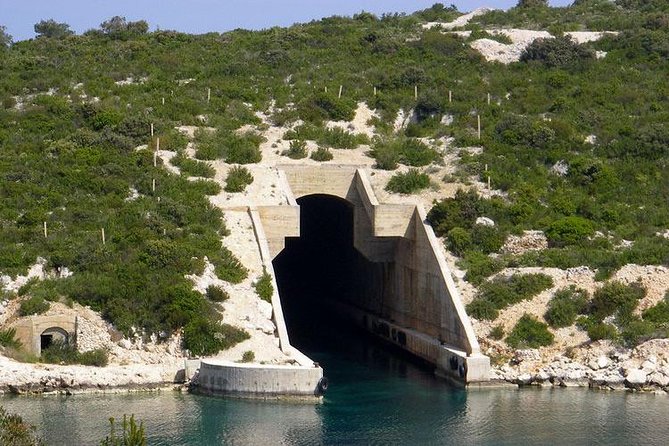
The next stop lasts about 20 minutes and takes you into underground tunnels built by the former Yugoslav army. This adds a more recent chapter to the tour and shows that Vis remained strategically important after the Second World War.
The tunnels are valuable because they make military history physical. You can imagine the need for hidden movement, protected storage, and controlled access more easily underground than in a textbook. The setting also gives the tour a different mood from Fort George and the open views at Mount Hum.
This is another place where the guide makes a major difference. The guides named in the supplied material include Karim, Karin, and Ante. Karim is described as friendly and clear in his explanations, while Ante is noted for his command of the island’s past and his approachable manner. Since the guide assigned to your departure may vary, book this knowing that the exact person is not guaranteed.
The tunnels may not suit anyone who dislikes enclosed historic spaces. The information provided does not specify lighting, walking surfaces, or the full length of the underground route, so ask the operator if you have concerns before booking. For most people interested in military sites, though, this is likely to be one of the most memorable stops.
Same stretch of coast, a completely different kind of day:
- Adrenaline Quad Safari Tour
★ 5.0 · 177 reviews - Canyoning on Cetina River from Split or Šestanovac
★ 5.0 · 173 reviews - Dubrovnik Airport Transfer (Private transfer)
★ 5.0 · 135 reviews - Islands & Caves Private Tour with pickup, drinks & fuel included
★ 5.0 · 102 reviews
The WWII airport and its wartime role
The tour also visits the site of a WWII airport, with about 10 minutes devoted to the story of its role during the war. This is the shortest stop, so do not expect a long examination of an intact airport complex.
Instead, think of this as a brief historical pause. The guide explains how the airport fit into wartime activity on Vis, adding an important connection between the island and the wider conflict. It also helps you see that military infrastructure was not limited to forts and tunnels. Airfields were part of the same defensive system.
The value here depends on the explanation. A remaining structure or open area can seem ordinary without context. With a guide, the site becomes part of a larger picture involving movement, supply, aircraft, and the island’s strategic position.
Families can get a good deal from this stop because it is short and easy to connect to the other sites. The tour has also worked for families with teenagers, including children aged 16 and 18. Younger children may have less interest in the historical detail, but the variety of locations keeps the outing from feeling like a single long lecture.
Mount Hum gives Vis the final word

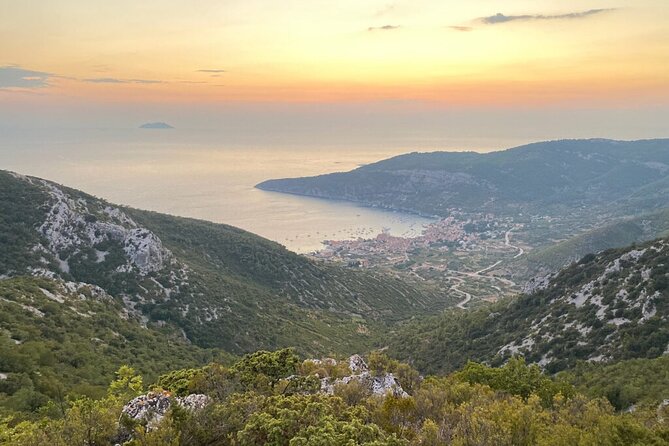
The final major stop is Mount Hum, the highest point on the island. About 20 minutes are allocated for the panoramic view, and this is where the tour shifts from military structures to geography.
The view helps explain the island’s importance. From a high point, you can better grasp its position in the Adriatic and the value of seeing surrounding water and approaches. Even if you came mainly for tunnels and forts, this stop gives the day a satisfying visual finish.
Bring your camera, since the view is one of the tour’s strongest photo opportunities. The tour information does not specify exactly how close the vehicle reaches the summit or how much walking is required, so confirm those details if mobility is a concern.
Mount Hum also breaks up the enclosed and technical parts of the outing. After a submarine shelter and underground tunnels, open air and a wide view are welcome. I like that the tour does not end with another bunker. It closes by showing you the island as a place, not only as a military site.
What the small group and short duration mean
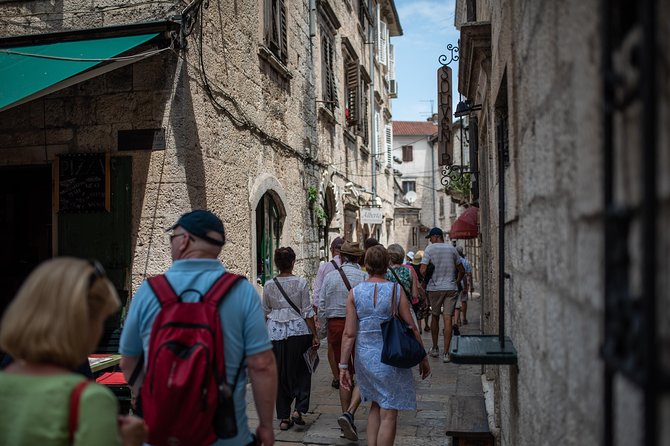
The group limit is 16 people. That is not a private tour, but it is small enough to feel more personal than a large bus excursion. You should have a better chance to hear the guide at outdoor sites and ask about details that catch your attention.
The 2 to 3 hour length is both a strength and a limit. It is long enough to visit five distinct points without taking up your whole day. You can combine it with other plans on Vis, which is useful if your time on the island is limited.
At the same time, this is not a slow archaeological examination. Several stops are brief: about 10 minutes at the WWII airport and 15 minutes at Fort George. If you want long walks, extensive photography, or a detailed study of each tunnel, you may find the pace quick.
The tour works best when you want a well-organized introduction. It gives you enough context to explore Vis on your own afterward, rather than trying to cover every military site in one morning.
Price, pickup, and planning the day
The listed price is $60.34 per person. For that amount, you receive a guided visit to several sites across the island, including stops that may be difficult to understand without local explanation. Since admission is listed as free at the scheduled stops, the main value is the guide, transportation arrangement, and access to a connected story.
I would judge the price by your interests. If military history is high on your list, the submarine shelter and Yugoslav tunnels make the cost easier to justify. If you mainly want scenic viewpoints, a general island tour may offer a broader range of sights.
Pickup is available on request from some areas of Vis. Listed locations include Kut, Stonac, Hotel Issa, Ženka, Rukavac, Postražje, and Komiža. You begin and finish at the meeting point in Vis, but ask about pickup when booking rather than assuming it is automatic from every address.
The activity is usually booked well ahead, with an average lead time of 42 days. That is useful information if your island schedule is fixed, particularly during a busy season. Confirmation is sent at booking, and the operator offers free cancellation up to 24 hours before the start time.
The tour depends on good weather and a minimum number of participants. If poor weather or low enrollment cancels it, you are offered another date or experience, or a full refund. That policy gives you some protection, but you should still avoid placing this tour on the only possible day of a short island visit.
Who will enjoy this tour most
I would choose this tour if you like military history, engineering, abandoned structures, or local stories that go beyond the usual sightseeing stops. It is also a good choice for anyone who wants to understand why Vis mattered rather than simply photograph its coast.
Families with older children and teenagers can do well here. The mix of forts, tunnels, an airport story, and a mountain view gives the experience enough variety to hold attention. The English-speaking guide can also add useful context about the island beyond the military subject.
The tour is less suitable if you want a relaxed half-day of cafés, beaches, and town streets. It is also not ideal if you need a fully specified accessibility plan, since the available details do not describe tunnel surfaces, stairs, or exact walking distances.
Service animals are allowed, and the activity is near public transportation. Most people can participate, but anyone with mobility, enclosed-space, or weather concerns should ask the operator for current site conditions before booking.
Should you book the Vis Military Tour?
Book it if you want a focused, well-paced look at the forces that shaped Vis from the Napoleonic era through WWII and the former Yugoslav period. The submarine shelter, army tunnels, and Mount Hum view give the outing a strong mix of atmosphere, explanation, and scenery.
Skip it if military sites hold little interest or if you want a leisurely island tour with long stops. For the right audience, $60.34 buys more than transport between viewpoints. It gives you a clear way to read Vis, with a guide helping you connect forts, tunnels, airports, and geography into one practical story.
FAQ
Where does the Vis Military Tour start?
The tour starts in Vis, Croatia, and the activity ends back at the meeting point.
How long does the tour last?
The experience lasts approximately 2 to 3 hours.
Is the tour offered in English?
Yes. The tour is offered in English.
What is the price?
The listed price is $60.34 per person.
How many people can join the tour?
The maximum group size is 16 travelers.
Is pickup available?
Pickup can be arranged on request from some parts of the island, including Kut, Stonac, Hotel Issa, Ženka, Rukavac, Postražje, and Komiža.
What places are visited?
The tour visits Fort George, the submarine tunnel or shelter at Bay Parja, former Yugoslav army tunnels, a WWII airport site, and Mount Hum.
Is admission to the stops included?
Admission is listed as free for each scheduled stop.
Can I cancel for a full refund?
Yes. You can cancel at least 24 hours before the experience start time for a full refund. Cancellations made less than 24 hours before the start time are not refunded.
What happens if weather cancels the tour?
If poor weather cancels the experience, you are offered a different date or a full refund. The same options apply if the minimum number of participants is not reached.
Just added around Dalmatia
- Half-Day River Rafting in Zrmanja★ 5.0 · 7 reviews
- Zrce Booze Cruise – Novalja Boat party★ 4.5 · 26 reviews
- Wine Tasting & Winery Tours★ 5.0 · 7 reviews
- Stiniva, Green Cave, Blue Lagoon & Secret places★ 4.5 · 23 reviews
- Vis sandy beach Stand Up Paddle Tour★ 5.0 · 16 reviews
- Explore Dubrovnik by Sea – Rent a JET SKI Yamaha VX 1, 4 or 8 Hours★ 5.0 · 48 reviews
- Guided River & Sea Kayaking with Snorkeling in Omiš★ 5.0 · 4 reviews
- Sailboat tour to the islands★ 4.5 · 6 reviews
Tours, compared.
Blue Cave Small-Group Boat Tour from Dubrovnik
Read our review →
From Split: Krka Waterfalls, Food & Wine Tasting Tour
Read our review →
Blue cave, Mamma Mia and Hvar, 5 islands speedboat tour
Read our review →From Split: Krka Waterfalls, Food & Wine Tasting Tour
Read our review →
Split/Trogir: Blue Cave, Mamma Mia, Hvar and 5 Island Tour
Read our review →
Dubrovnik: Epic Game of Thrones Tour + Lokrum & Saver Option
Read our review →