
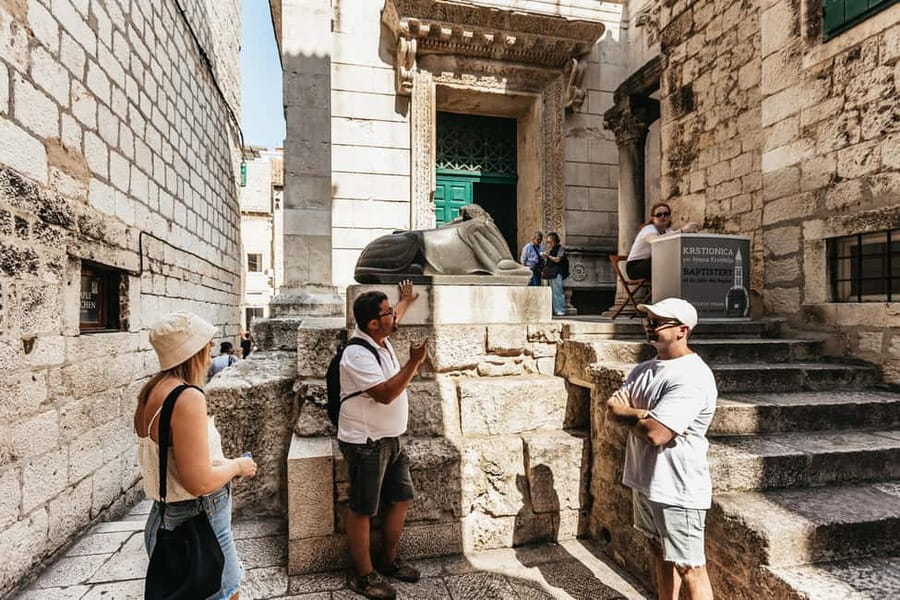
Reviewed · DIOCLETIAN PALACE TOURS
Split: Diocletian Palace & Old Town Guided Walking Tour
Diocletian’s Palace is not a lonely ruin behind a fence. It is the working heart of Split, with homes, cafés, shops, lanes, and churches built into and around the old Roman complex. This short walk gives you a useful first look at how an emperor’s retirement palace became a living city.
I like the compact route and the guides’ strong storytelling. Ina, Natasa, Darko, and Tin are repeatedly praised for making history clear, funny, and easy to follow. I also like that the walk includes less obvious corners, such as the Benedictine area, the 15th-century Town Hall, and the old gates.
The main limitation is time. At 50 minutes, this is an introduction rather than a full archaeological tour, and crowded lanes or a large group can make it harder to hear. You will need comfortable shoes and the ability to manage uneven cobblestones and 15 to 30 steps.
Key points at a glance

- Roman palace turned city center: Walk through an ancient imperial complex that is still part of everyday Split.
- A clear first orientation: The route covers the Peristyle, cellars, four gates, Old Town lanes, Fruit Square, and Town Hall in less than an hour.
- Strong local guiding: Ina, Natasa, Darko, Tin, and other local guides are praised for history, humor, patience, and practical tips.
- Good value at $17: The price is modest for a live guide and a focused introduction to Split’s central sights.
- Easy waterfront meeting point: Find the open-top red bus and staff in red or white shirts near Apodos Travel Agency on the Riva.
- Best for a first visit: Take it early in your stay so you can return later to the places that catch your interest.
Why Diocletian’s Palace is more than an ancient monument

The first thing to understand about Split is that Diocletian’s Palace is not simply one attraction among many. It forms much of the Old Town. Roman walls became city walls, imperial rooms became homes and businesses, and old courtyards became public spaces.
That makes a guided walk especially useful. Without context, you may see a stone arch, a narrow lane, or a worn column and move on. A good guide explains what the space was built for, how it changed, and why people still use it today.
The palace was built in the 4th century AD for Roman Emperor Diocletian. He chose this part of the Dalmatian coast for his retirement residence, creating a large fortified complex with ceremonial rooms, private quarters, entrances, and religious spaces.
You will also see how later periods shaped the site. Medieval changes, Venetian influence, baroque buildings, and modern life all sit on top of the Roman plan. The result is not a preserved time capsule. It is a city that kept adapting.
That is the central idea this tour communicates well: Split is old, but it is not frozen.
More Walking Tours in Split
- Split: Old Town and Diocletian Palace Walking Tour
★ 4.9 · 4,727 reviews - Walking Tour of Split and Diocletian’s Palace
★ 5.0 · 2,588 reviews - Split & Diocletian’s Palace Walking Tour
★ 5.0 · 1,125 reviews
Starting on the Riva promenade
The walk begins at the Riva, Split’s palm-lined waterfront. This is a practical meeting place because it is easy to recognize, open to the sky, and close to the palace entrances.
Look for the open-top red bus and staff wearing red or white shirts near Apodos Travel Agency. The staff connect you with your guide. One useful tip is to look for the red city sightseeing bus stop, since the bus may not always be exactly where you expect it.
The Riva gives the tour a pleasant opening. You begin beside the Adriatic, with cafés and the steady movement of the waterfront, then move into the stone lanes of the Old Town. That change helps you see the palace as part of Split rather than as a separate archaeological site.
Arrive with a little extra time. The meeting point is straightforward once you know to look for the red bus, but a busy waterfront can still slow you down.
Entering through the palace gates
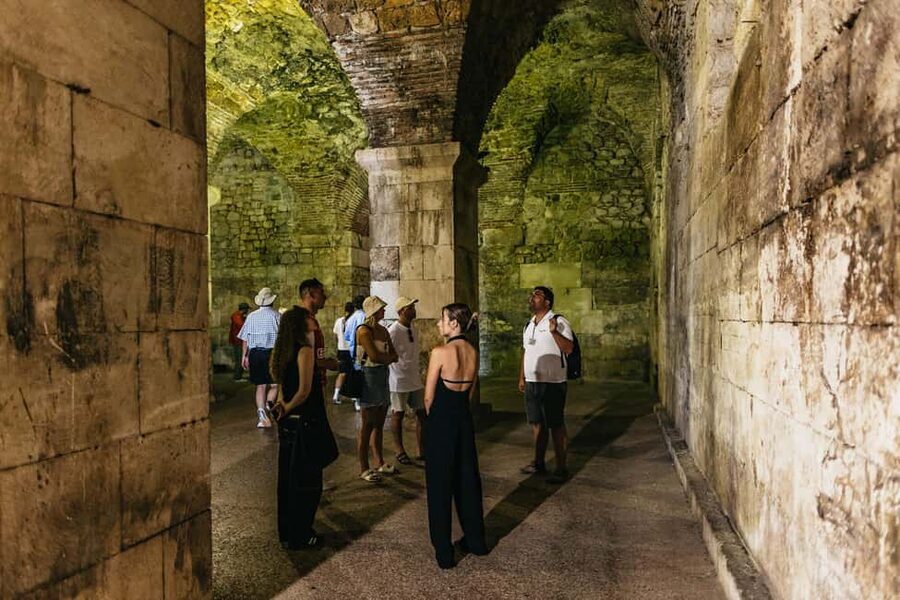
The route introduces the Bronze, Silver, Golden, and Iron Gates, the four historic entrances to the palace. Each gate once controlled access to a different side of the complex.
The names are easy to remember, but the gates become more interesting when you understand their position. They are not random openings in a wall. They show how the palace was organized and defended, with routes leading toward the sea, the city, and the surrounding land.
This is also where a guide can help you picture the original scale. Roman builders designed the palace as a serious fortified residence, not merely a grand house. The entrances connected imperial rooms with streets, harbor access, and the wider area.
The gates are good photo stops, but do not expect long stops at each one. The tour keeps moving, which is part of its appeal and part of its limitation.
The palace cellars and the Peristyle courtyard
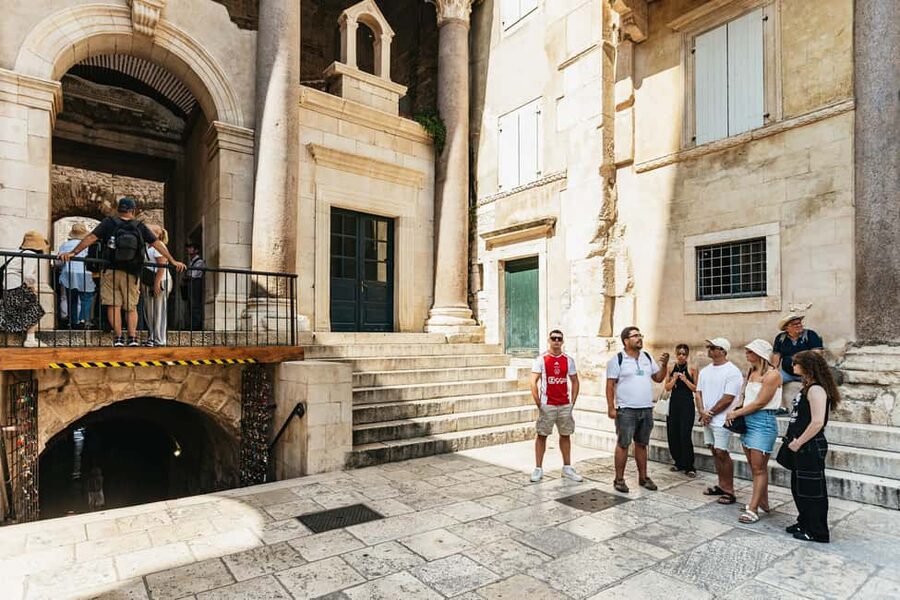
The cellars are one of the most useful parts of the walk. They preserve the lower structure of the palace and help you understand the layout above. Looking at the cellars can make the upper streets suddenly make sense.
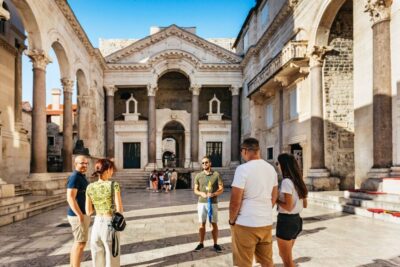
The Peristyle is the visual center of the tour. This grand courtyard was designed for ceremony, and its columns and surrounding stonework give you the clearest sense of imperial ambition.
Here, your guide explains how the space functioned and how later residents reused the palace. That change from imperial ceremony to ordinary city life is one of Split’s most striking features.
You may find the Peristyle busy, especially during the main sightseeing hours. A short tour cannot control the flow of people through a public square, so listen carefully and stay near the guide. Several people praised guides for keeping groups together and making room so everyone could hear, but group size and street noise can still affect the experience.
More tours inside Diocletian's Palace:
- Split: Game of Thrones Tour with Diocletian’s Palace Cellar
★ 4.8 · 545 reviews - Diocletian’s Palace and Old Town SMALL GROUP Walking Tour
★ 5.0 · 502 reviews - SPLIT-PRIVATE Walking Tour of Diocletian’s Palace & Old Town
★ 5.0 · 467 reviews - 90-min Diocletian Palace Walking Tour
★ 5.0 · 323 reviews
Diocletian’s private rooms and observatory

The tour also covers the emperor’s former private chambers and private observatory. These areas help balance the grand public spaces with a more personal view of the palace.
Diocletian’s complex had ceremonial areas for display, but it also needed rooms for daily life and retreat. The private spaces make the emperor feel less like a name from a textbook and more like someone who planned a residence around his own habits and interests.
The observatory is a particularly useful stop because it adds a detail beyond the standard palace overview. You see that the site was designed not only for power and defense, but also for private use.
Do not expect every room to appear as it might have in Roman times. Centuries of rebuilding changed the interiors, and the tour is designed to explain the remains rather than provide a complete reconstruction.
Cathedral of St. Domnius and the palace’s changing purpose
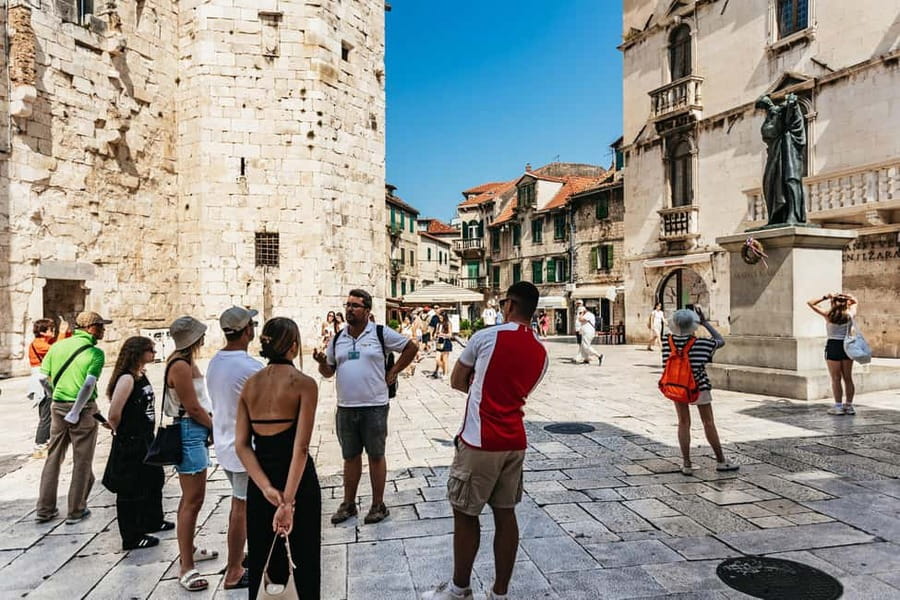
The Cathedral of St. Domnius, or Sv. Duje, occupies a former mausoleum built for Diocletian. That change in function tells you a great deal about Split. A structure created for an emperor’s burial became a Christian cathedral, while the surrounding palace became a medieval and modern town.
This is one of the strongest historical moments in the route. It connects Roman power, later religious change, and the continued use of the old complex.
The tour information highlights the cathedral and its bell tower, including the possibility of panoramic views over Split and the harbor. Ask your guide about the current plan for your departure time if climbing the tower is important to you, since the walking tour itself is focused on the palace and Old Town route rather than a long tower visit.
The bell tower can be a separate decision for your day. The walking tour gives you the historical setting first, then you can decide if you want to spend more time there.
Medieval lanes, the Benedictine area, and Town Hall
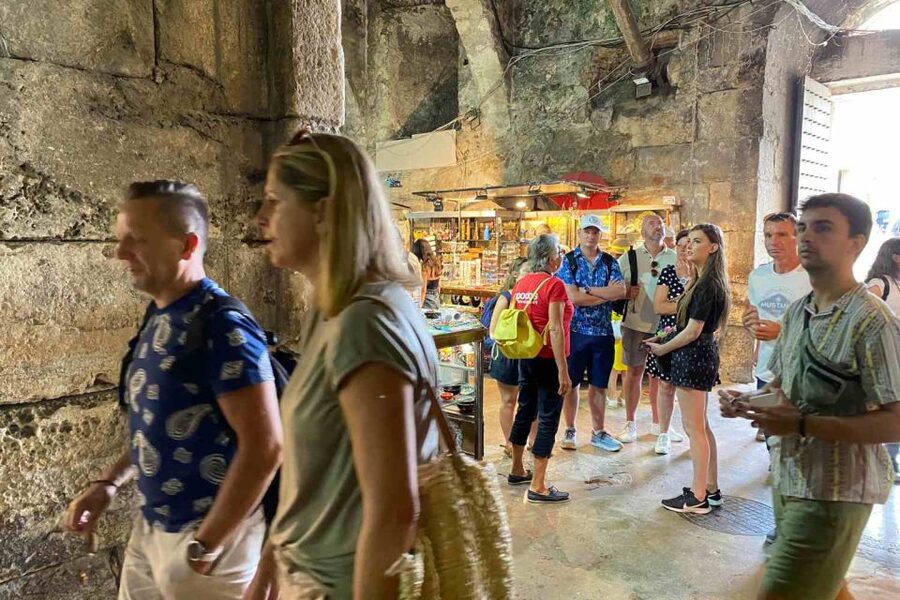
After the Roman core, the route moves through the maze of Old Town streets. This is where the tour earns its small-group walking format. Split’s lanes can be confusing at first, and the guide points out how medieval life fitted into the old palace walls.
The Benedictine area adds a quieter historical layer. It is not as immediately grand as the Peristyle, but it helps show how religious communities became part of the city’s growth.
The 15th-century Town Hall is another worthwhile stop. Its presence reminds you that Split was not only a Roman foundation or a palace settlement. It developed civic institutions, public buildings, and local government over many centuries.
These stops also help you notice details you might miss alone. Look up at the façades, watch how later buildings meet older stonework, and pay attention to the narrow passages between larger squares. The guide’s job here is less about pointing to one famous object and more about showing how the whole town developed.
Fruit Square and Split’s later character
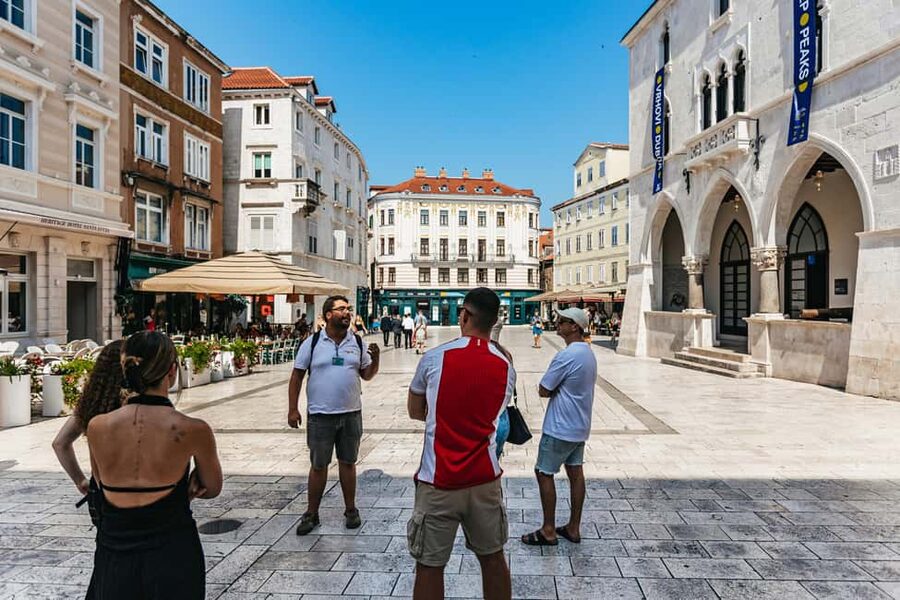
Fruit Square, with its baroque monuments, gives the walk a change of mood. After Roman gates and imperial stone, you see a later public space shaped by a different period and a different idea of city life.
This is a useful reminder that Split’s identity did not end with Diocletian. Venetian influence and baroque design added another layer, while local businesses and homes kept the center active.
The square is also a good place to connect history with your own visit. Some guides, especially Darko, have been praised for pointing out small local businesses connected with traditional crafts and food production. Those details can help you decide where to return after the tour.
The route ends back at Apodos Travel Agency. That makes the walk easy to fit into a day of independent exploring. You are not left at an unfamiliar edge of town, and you can continue into the Old Town, return to the Riva, or revisit a stop that interested you.
Guides who make the short format work
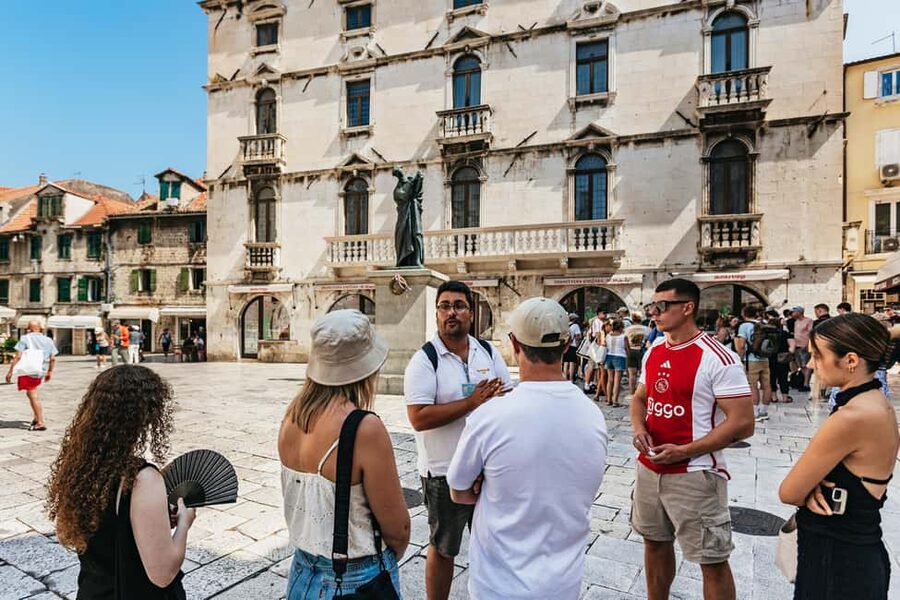
The biggest strength of this experience is the guiding. Ina is repeatedly praised for clear explanations, archaeological interest, humor, and patience with questions. Natasa is noted for her enthusiasm, art history background, and ability to help families with strollers and wheelchairs. Darko brings historical interest and a warm sense of humor, while Tin is praised for confident explanations and strong English.
Guide quality matters here because the palace can be visually confusing. A guide who simply recites dates would leave you with facts but little sense of how the site works. The best guides connect the emperor, the buildings, later residents, and modern Split.
Several people especially valued being able to ask questions after the main explanations. That is worth using. Ask about the palace’s transformation into a town, the cathedral’s earlier purpose, or the meaning of a particular gate.
One practical issue came up: a guest wished for a microphone. If you have hearing difficulty, stay close to the guide and avoid drifting to the back of the group. The guides are praised for watching stragglers, but the lanes can be noisy.
Is 50 minutes enough for Split?
For a first orientation, yes. For a full study of Diocletian’s Palace, no.
The short duration is helpful in summer heat, especially when you want an introduction without committing half a day. It also works well for families with young children. One family found the length manageable with toddlers, and the route can sometimes be adjusted toward paths with fewer steps.
The tradeoff is that each stop receives a concise explanation. You will not have unlimited time for photographs, long questions, or close study of every architectural detail. If you already have a strong background in Roman history or want a specialist archaeological tour, you may want something longer.
I see this as a get your bearings fast walk. Take it near the start of your stay, then use the rest of your time for the cathedral, bell tower, palace cellars, museums, cafés, and lanes you want to explore at your own pace.
Price, practical comfort, and accessibility
At $17 per person, this is good value if you want a live introduction to Split. You are paying for a local guide, a focused route, historical explanation, and help making sense of a complicated urban site. The price is modest compared with a private tour, though you should expect a shared group experience.
The tour is listed as wheelchair accessible, but the Old Town includes uneven stone and cobblestone surfaces, along with 15 to 30 steps. If you use a wheelchair or stroller, contact the guide at the start so the route can favor paths with fewer steps where possible.
Wear shoes with a firm sole. Bring water, a camera, sunglasses, and a hat on sunny days. Long sleeves are useful on windy days along the waterfront.
There is no meal, drink, or transport to the meeting point included. That is not a serious drawback for this format, since the route begins centrally and takes less than an hour. Just make sure you can reach the Riva on your own.
Tours are offered in English, Spanish, and Italian. The booking terms allow cancellation up to 24 hours before the tour for a full refund, and you can reserve now and pay later. Availability and starting times vary, so check the schedule that fits your day.
Who should book this walk?
I would choose this tour if you are visiting Split for the first time, have limited time, or want a historical framework before exploring alone. It is also a good fit if you prefer facts delivered in a lively way rather than reading signs at each stop.
Families may appreciate the short route. Couples and solo visitors can use it as a practical orientation, while cruise passengers or people arriving from nearby islands can get a quick look at the city without giving up a full afternoon.
I would be more cautious if you need a very slow pace, dislike cobblestones, or want extensive time inside the cathedral and cellars. A 50-minute walk moves at a purposeful pace, and busy conditions can make the group feel hurried.
Should you book the Diocletian Palace walking tour?
Yes, if you want a concise and affordable introduction to Split’s Roman core and later Old Town. The route covers the sights that give the city its shape, and the guides are the main reason the experience works. Ina, Natasa, Darko, and Tin are all associated with clear, friendly explanations and a willingness to answer questions.
Book it early in your stay if possible. You will leave with a better map in your head and a list of places to revisit. Just remember what you are buying: a well-focused 50-minute overview, not an exhaustive archaeological study.
FAQ
How long is the Split walking tour?
The tour lasts 50 minutes. The palace portion is described as taking about one hour in the itinerary, so check the available departure details when booking.
How much does the tour cost?
The listed price is $17 per person.
Where does the tour begin?
It begins at Apodos Travel Agency on Split’s Riva promenade. Look for an open-top red bus and staff wearing red or white shirts, who will connect you with the guide.
What languages are available?
The tour is offered in English, Spanish, and Italian.
What sights are included?
The route includes Diocletian’s Palace and Split Old Town, the palace cellars, Peristyle courtyard, private observatory, Bronze Gate, Silver Gate, Golden Gate, Iron Gate, 15th-century Town Hall, the Benedictine area, and baroque monuments around Fruit Square.
Is the tour wheelchair accessible?
The activity is listed as wheelchair accessible, but you must be able to manage uneven cobblestone surfaces and 15 to 30 steps. Guides may help use routes with fewer steps where possible.
What should I bring?
Bring comfortable shoes, water, and a camera. Sunglasses and a hat are recommended on sunny days, while long sleeves can help on windy days.
Just added around Split
- Split Day Trip from Dubrovnik★ 4.0 · 59 reviews
- Dubrovnik to Split Private Transfer with Local Experienced Driver★ 5.0 · 52 reviews
- Private Transfer from Dubrovnik to Split★ 5.0 · 3 reviews
- Private Transfer from Dubrovnik to Split with 2 hours for sightseeing★ 5.0 · 50 reviews
- Private Transfer: Dubrovnik to Split★ 5.0 · 7 reviews
- Dubrovnik to Split Private Transfer with Mostar Town★ 5.0 · 38 reviews
- Private Tour: Split Day Trip from Dubrovnik★ 5.0 · 9 reviews
- Private Day Trip :Dubrovnik- Mostar- Split★ 5.0 · 3 reviews
Diocletian Palace Tours, compared.
Split: Old Town and Diocletian Palace Walking Tour
Read our review →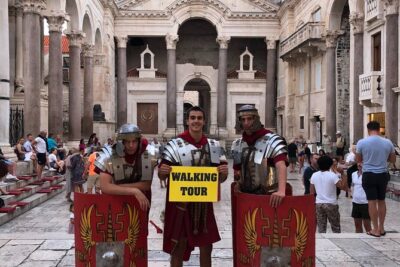
Walking Tour of Split and Diocletian’s Palace
Read our review →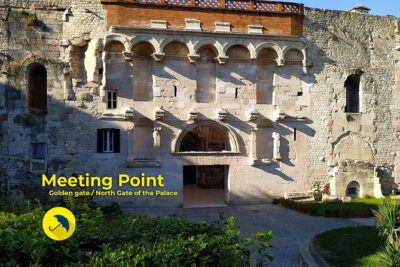
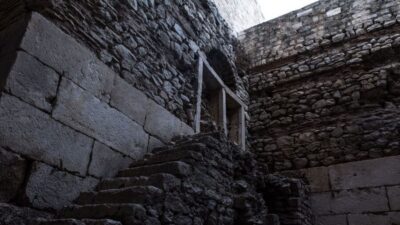
Split: Game of Thrones Tour with Diocletian’s Palace Cellar
Read our review →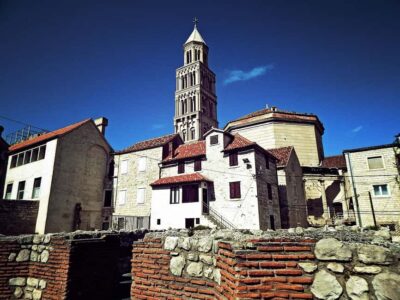
Diocletian’s Palace and Old Town SMALL GROUP Walking Tour
Read our review →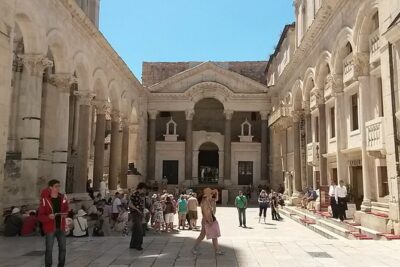
SPLIT-PRIVATE Walking Tour of Diocletian’s Palace & Old Town
Read our review →

Split: Diocletian’s Palace Virtual Reality Experience
Read our review →Browse the lists this tour appears in