
Reviewed · DIOCLETIAN PALACE TOURS
Split: Private Walking Tour with Diocletian’s Palace
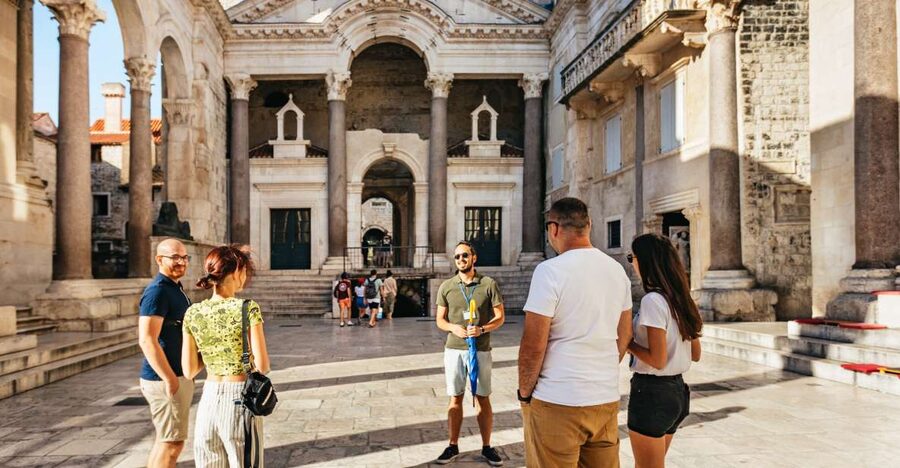
Split’s old center is not a museum behind glass. It is a living city built into the remains of a 1,700-year-old Roman palace. This private walk helps you read that unusual mix, from the Golden Gate and palace cellars to medieval squares, Gothic palaces, and the harbor promenade. I especially like the private format and the freedom to set your pace. A guide such as Slavko, who was born and raised in Split, can add local context that a standard audio guide cannot.
I also like that the route is adjustable, so you can spend more time on Roman history, churches, architecture, or family-friendly stories. Guides including Vinka and Antonia have been praised for their personal approach and willingness to answer questions. The main drawback is that the walk is not suitable for wheelchair users, and the wide five-hour duration range means you should confirm the exact length and inclusions when booking.
Key points to know before you book
- The palace is still part of daily Split: You walk through streets, squares, shops, and cafés built among Roman walls.
- Private means flexible: Your guide can adjust the pace and focus to suit your interests, age group, and questions.
- The best stops are tightly packed: Golden Gate, Peristil, the cathedral, Vestibul, and the cellars all connect on foot.
- Local guides add personality: Guides such as Slavko, Vinka, and Antonia are noted for clear explanations, local tips, and enthusiasm for Split.
- The standard route takes about 90 minutes: The experience can last longer, up to five hours, depending on the selected option and pace.
- Wear proper walking gear: Comfortable shoes, sunglasses, and a sun hat are useful on stone streets with little shade.
Why Diocletian’s Palace makes such a good walking tour
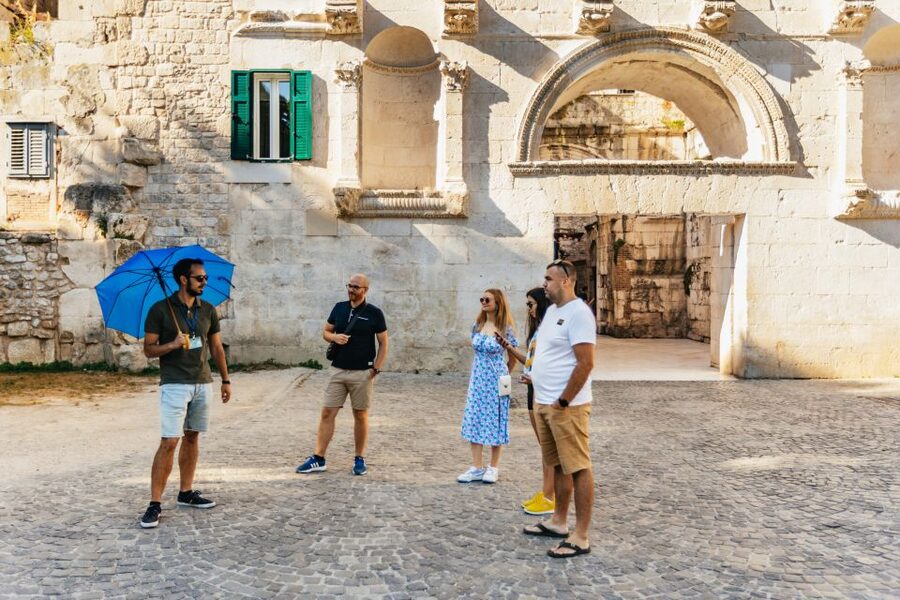
Diocletian’s Palace is often described as one building, but that can give you the wrong idea. It is really the old core of Split, with Roman walls and gates folded into later homes, churches, squares, and businesses.
The palace dates from the early fourth century and was built for the Roman emperor Diocletian. Over time, the site changed from an imperial residence into a medieval town. That long reuse is the point. You are not simply looking at ruins. You are seeing how one city kept adapting to the same stone framework.
A private guide can help you spot these layers without making the walk feel like a lecture. You might begin with Roman military planning, shift to the medieval city, then pause for details about local customs or architecture. If you are visiting with children or teenagers, the guide can also adjust the story and keep the pace moving.
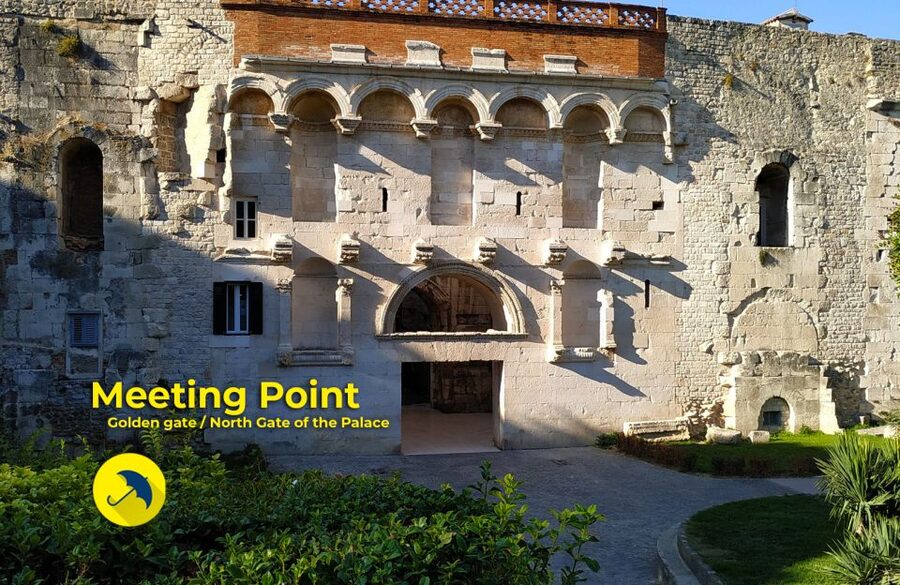
The meeting point is the Golden Gate, the palace’s north entrance. Look for a guide carrying a blue umbrella. This is a sensible starting point because the gate gives you an immediate sense of the palace’s scale and defensive design.
More Walking Tours in Split
- Split: Old Town and Diocletian Palace Walking Tour
★ 4.9 · 4,727 reviews - Walking Tour of Split and Diocletian’s Palace
★ 5.0 · 2,588 reviews - Split & Diocletian’s Palace Walking Tour
★ 5.0 · 1,125 reviews
Golden Gate and the Roman entrance
The Golden Gate is one of Split’s clearest Roman landmarks. Its name refers to the main northern entrance, and the route begins here with about ten minutes of guided explanation.
Your guide can set up the rest of the walk by explaining how the palace was organized and why the gates mattered. The north side also gives you a useful introduction before the route narrows into the old center.
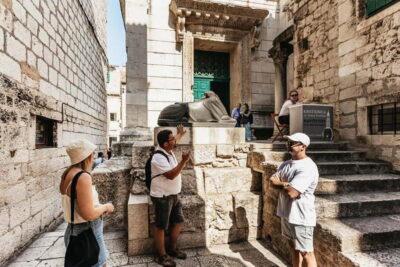
Nearby, the statue of Gregory of Nin adds a later Croatian chapter. Gregory was a medieval bishop, and his statue has become one of the city’s familiar meeting points. The itinerary also includes the tower-clock, which has kept time in Split since the 15th century.
The nearby Game of Thrones Museum receives only a short guided stop of about five minutes. That makes it more of a quick point of interest than a full museum visit. If you are a serious fan, ask your guide how much attention can be given to it, since the tour’s main focus is the city’s Roman and medieval fabric.
People’s Square and Fruit Square
From the palace area, the walk reaches People’s Square, known locally as Pjaca. This is one of the city’s main public spaces and a good place to see how Split’s medieval and later architecture developed outside the original Roman core.
The stop lasts about ten minutes. Look for the contrast between old stone façades, civic buildings, and the everyday activity of the square. Your guide can explain the role of City Hall and point out how later architectural styles sit beside older Roman remains.
The route then continues to Fruit Square, another ten-minute stop. Its name reflects the produce once sold there, and the square helps show Split as a working town rather than just an archaeological site.
These two squares are valuable because they break up the Roman material. If you only focus on Diocletian, you can miss the city that grew after him. The private format gives you room to ask about local life, architecture, or the changes between Roman, medieval, Renaissance, and Baroque Split.
Riva Harbor and the modern face of Split
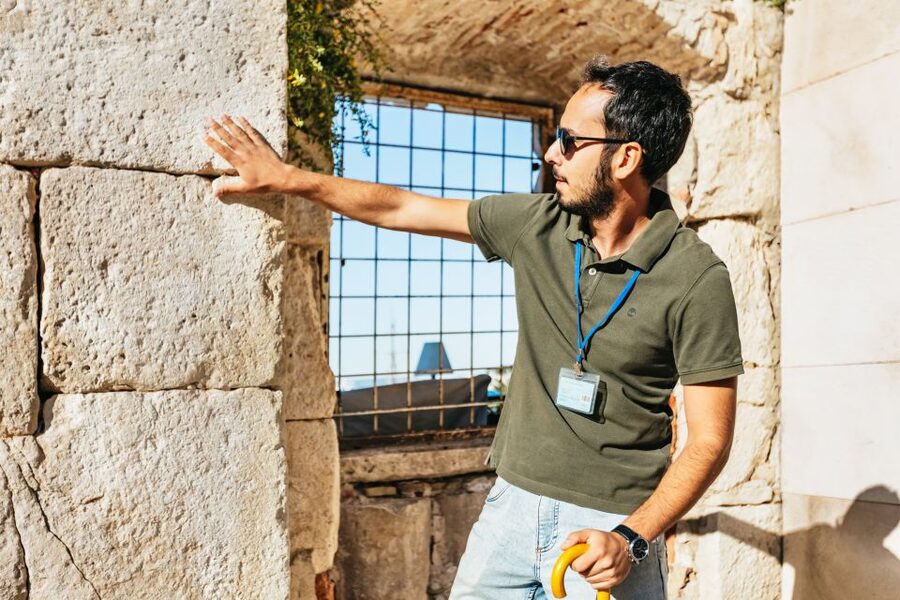
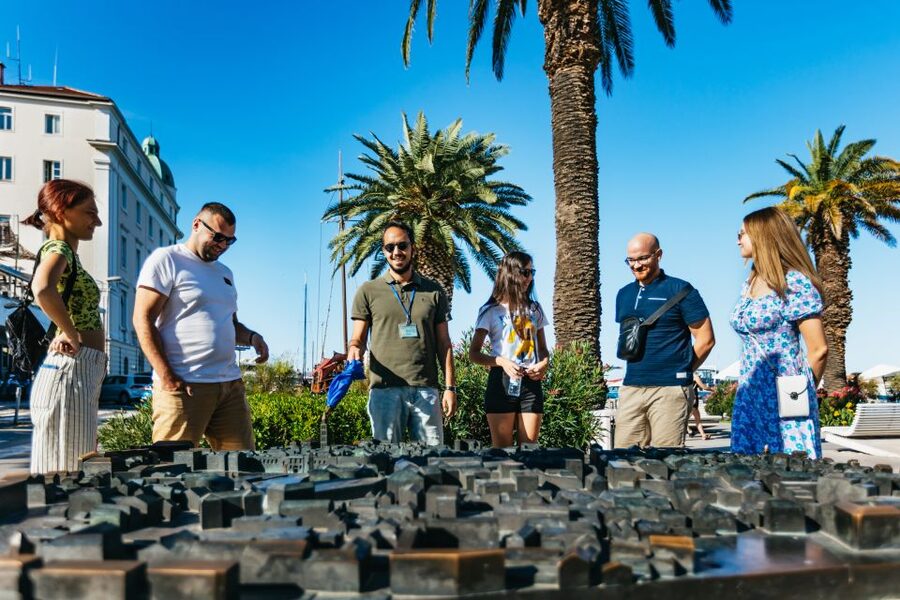
The walk reaches Riva, Split’s waterfront promenade, for about ten minutes. This is where the old city opens toward the harbor, and it gives you a change of pace after the narrow lanes and enclosed palace spaces.
Riva is also a useful orientation point. Your guide can connect the harbor to Split’s role as a coastal city and explain how the waterfront relates to the old center. You will see a more open public space, while still remaining close to the palace walls and historic buildings.
Do not expect a long waterfront excursion. Riva is one stop in a compact walking route, not a separate harbor cruise or food tour. Still, it is an important part of understanding Split because the city’s identity is tied to both its Roman core and its position on the Adriatic coast.
More tours inside Diocletian's Palace:
- Split: Diocletian Palace & Old Town Guided Walking Tour
★ 4.7 · 882 reviews - Split: Game of Thrones Tour with Diocletian’s Palace Cellar
★ 4.8 · 545 reviews - Diocletian’s Palace and Old Town SMALL GROUP Walking Tour
★ 5.0 · 502 reviews - SPLIT-PRIVATE Walking Tour of Diocletian’s Palace & Old Town
★ 5.0 · 467 reviews
Diocletian’s Cellars and the palace below
The Diocletian’s Cellars are scheduled for about 15 minutes, making them the longest single stop on the basic route. These underground spaces are among the clearest places to understand the original palace plan.
The cellars supported the rooms above them and preserve the shape of the imperial complex. Walking here helps you picture the palace as a planned residence, not just a collection of scattered stones. The spaces can also feel more immediately Roman than the upper streets, where later buildings have altered the original layout.
Because the cellars are a major part of the visit, listen for how your guide connects them to the rest of the palace. The value is not only in seeing old walls. It is in understanding why the modern streets above follow the palace’s original structure.
The tour information does not say that admission to every interior site is included separately, so check the exact booking details if access charges matter to your budget. The listed price includes the professional guide, private sightseeing, taxes, fees, and handling charges.
Peristil, Saint Domnius, and Vestibul
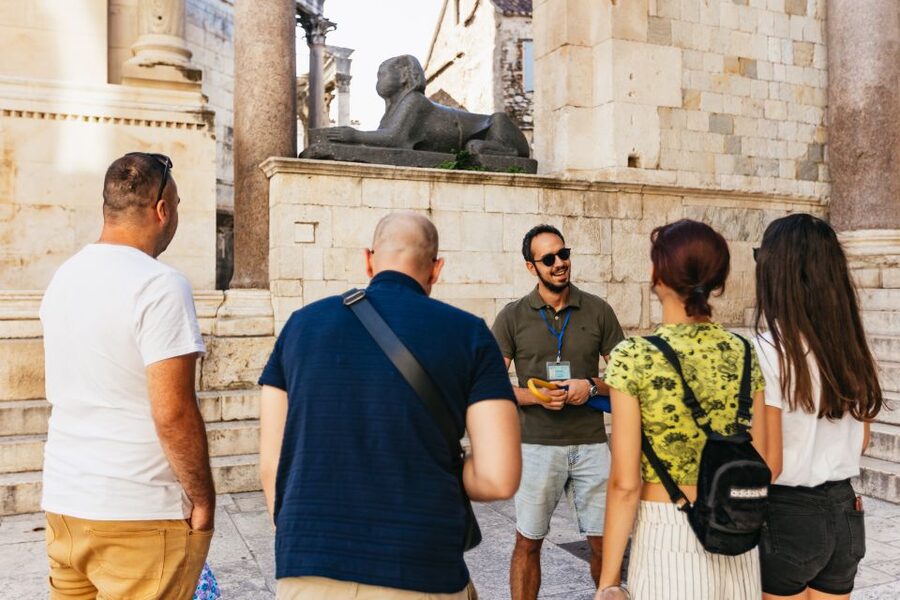
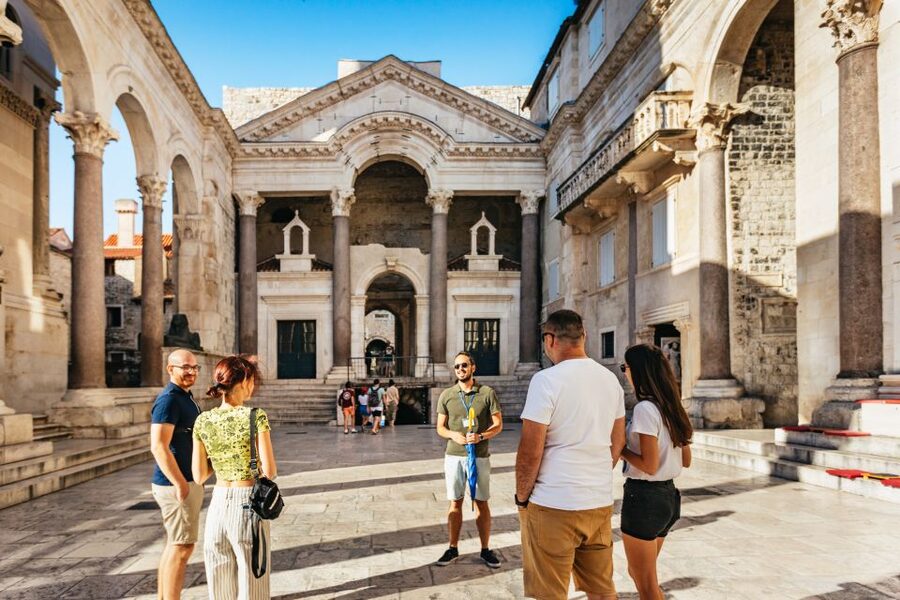
The route then reaches Peristil, the palace’s central ceremonial square, for about ten minutes. This is one of the most important stops because it shows the Roman design at its grandest while also revealing how the space has been used by later generations.
Your guide can explain the relationship between the square, the cathedral, and the surrounding palace structures. Take a moment to look upward and around rather than rushing from one point to the next. The square is compact, but its position gives it unusual visual power.
Next comes the Cathedral of Saint Domnius, known locally as St Duje. The scheduled explanation lasts about ten minutes. The building is especially unusual because it began as Diocletian’s mausoleum. Diocletian was buried here in 311 AD, and the structure was later transformed into a Christian cathedral.
That change tells you a great deal about Split. The building’s purpose shifted, but the stone structure remained part of the city. It is described as one of the best-preserved ancient Roman buildings still standing, though you should remember that the cathedral complex also contains later additions and religious history.
The final listed stop is Vestibul, with another ten minutes of guided explanation. This circular space was once an entrance area to the emperor’s apartments. Its form and position help you understand the transition from the palace’s public areas toward the private imperial section.
The route then returns to the Golden Gate. Since the walk is private, ask your guide to pause if you want more time for photographs or questions. The suggested timings are useful for planning, but they do not need to feel like a stopwatch schedule.
A private guide can change the quality of the walk
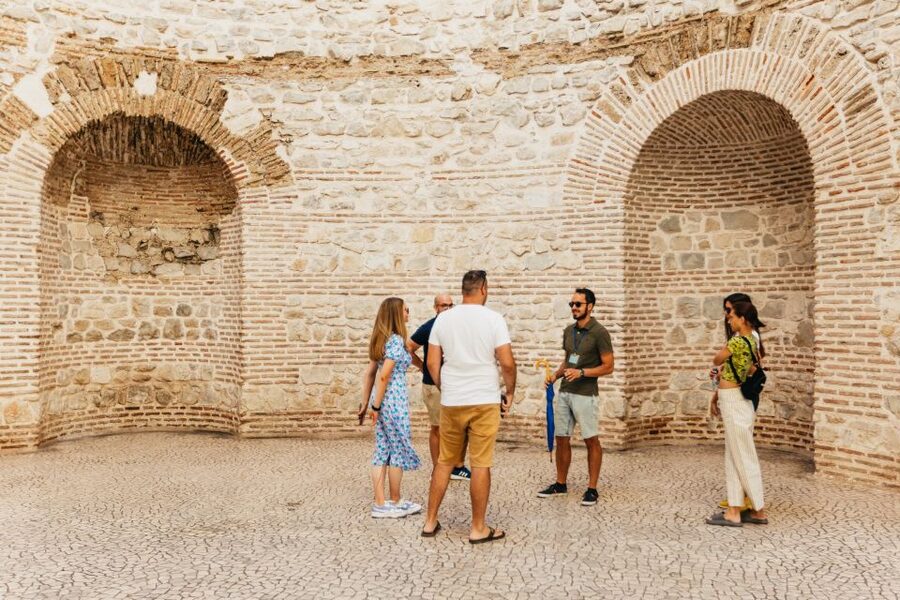
The strongest reason to choose this experience is the guide, not simply the list of monuments. Split’s old center can be confusing at first. Roman walls, medieval lanes, church buildings, later palaces, and modern businesses overlap in a small area.
A private guide can explain what you are seeing at the moment you see it. Antonia, for example, is described as taking time to answer questions and explaining the architecture, palace, and unusual place Split holds in history. That matters if you prefer discussion over a fixed speech.
Slavko is noted as being from Split and for avoiding the largest tour groups while keeping the experience personal. That is useful in a compact historic center, where several groups can gather around the same landmark. Vinka is also specifically recommended, while a German-speaking guide provided individual tips for a visitor who wanted local suggestions.
The listed languages are English, German, Spanish, and French. You should select or confirm your preferred language when checking availability. Since this is a private group, you do not have to match the pace of strangers or wait for a large party to move between stops.
Price, timing, and practical value
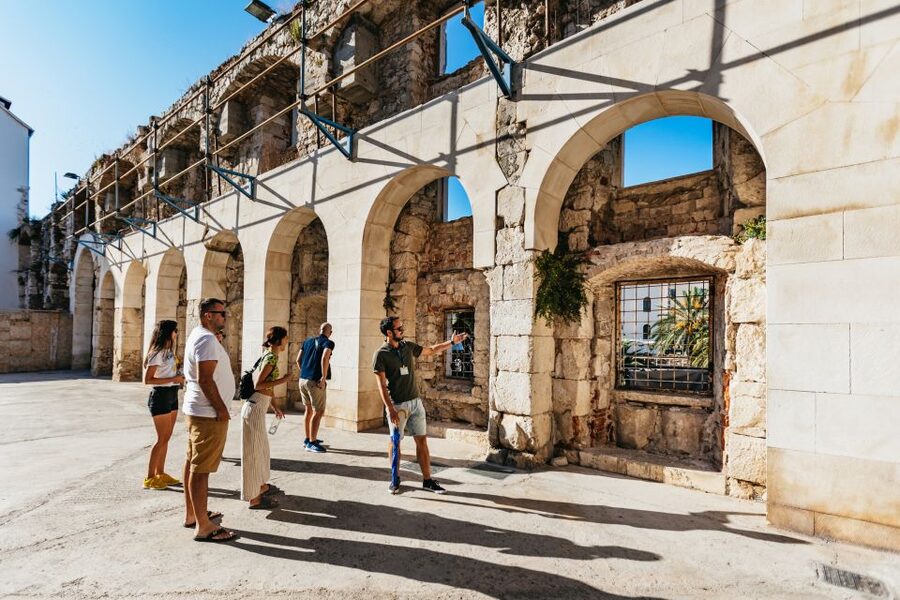
The listed price is $117 per group of up to two people, rather than a per-person price. For a couple, that works out to about $58.50 each. The value depends on how much you use the private format. If you ask questions, request local recommendations, or want the walk shaped around your interests, the price is easier to justify than it would be for a simple point-to-point introduction.
The duration range is wide, from 90 minutes to five hours. The route described above adds up to roughly 90 minutes of guided stops, not counting the time needed to walk between them. Longer options may allow more discussion or a broader custom route, but you should check the available start time and exact duration before paying.
A private tour also works well for families. The guide can keep the history shorter for younger children, explain more architecture to adults, or focus on the parts of the palace that interest your group. It is less suitable if you want a completely independent walk with no fixed meeting time.
The activity allows cancellation up to 24 hours before the start for a full refund, and you can reserve now and pay later. These policies make the booking less rigid, particularly when your Split plans may change.
Wear comfortable shoes. The route is on foot and includes historic stone surfaces. Sunglasses and a sun hat are sensible, especially during sunny weather. The activity is not suitable for wheelchair users, so anyone with mobility concerns should ask for specific details before booking.
Who should choose this Split walking tour?
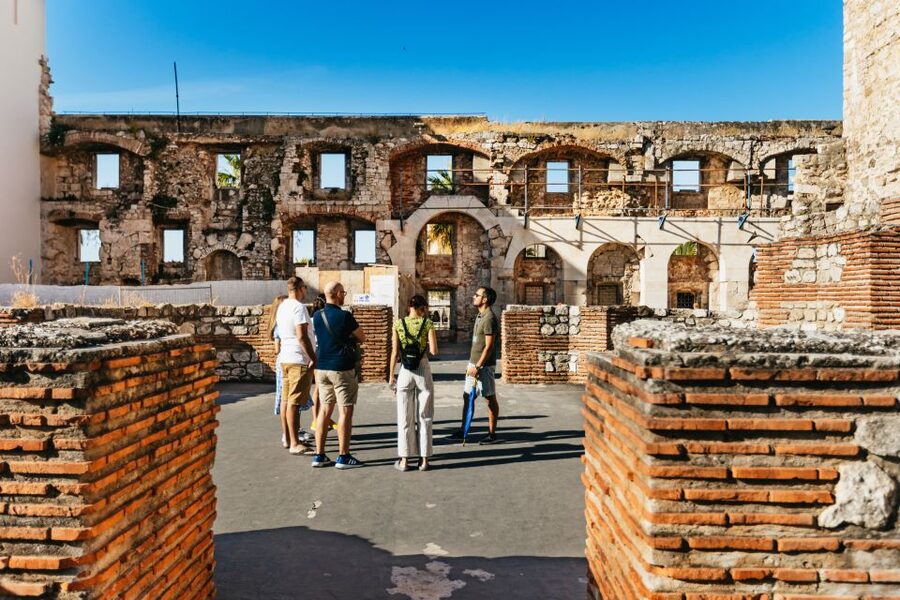
I would choose this tour if you want a clear introduction to Split and prefer conversation to a large group. It is especially useful for first-time visitors who want the palace explained rather than simply photographed.
It also suits couples and small families who want control over the pace. You can ask for more Roman history, more medieval architecture, local suggestions, or a shorter route if the group is tiring.
You may want another option if you need step-free access, dislike guided sightseeing, or want a dedicated Game of Thrones tour. The museum appears only briefly in the route, and the main subject remains Split’s layered history.
Should you book it?
Book this private Split walking tour if you want the palace to make sense as a living city, not just a set of ruins. The strongest features are the private guide, adjustable pace, compact route, and access to local explanation from guides such as Slavko, Vinka, and Antonia.
I would confirm the exact duration, language, and any interior admission details before booking. If those match your plans, the $117 group price offers good value for two people who want personal attention and a useful first look at Split’s Roman, medieval, and later architectural layers.
FAQ
Where does the tour begin?
The meeting point is the Golden Gate, the north gate of Diocletian’s Palace in Split. Look for a guide with a blue umbrella.
How long does the tour last?
The available duration ranges from 90 minutes to five hours. Check the available option and start time when booking.
Is the tour private?
Yes. It is a private sightseeing tour for your group, with a maximum listed price covering up to two people.
What languages are available?
Live guides are available in English, German, Spanish, and French.
What places does the route include?
The route includes the Golden Gate, the Game of Thrones Museum, People’s Square, Fruit Square, Riva, Diocletian’s Cellars, Peristil, the Cathedral of Saint Domnius, and Vestibul. It returns to the Golden Gate.
Is the Cathedral of Saint Domnius included?
The route includes a guided stop at the Cathedral of Saint Domnius, also known as St Duje.
What should I bring?
Bring comfortable shoes, sunglasses, and a sun hat.
Is the tour suitable for wheelchair users?
No. The activity is listed as not suitable for wheelchair users.
Can I cancel the booking?
You can cancel up to 24 hours in advance for a full refund. The reserve-now-and-pay-later option is also available.
Just added around Split
- Split Day Trip from Dubrovnik★ 4.0 · 59 reviews
- Dubrovnik to Split Private Transfer with Local Experienced Driver★ 5.0 · 52 reviews
- Private Transfer from Dubrovnik to Split★ 5.0 · 3 reviews
- Private Transfer from Dubrovnik to Split with 2 hours for sightseeing★ 5.0 · 50 reviews
- Private Transfer: Dubrovnik to Split★ 5.0 · 7 reviews
- Dubrovnik to Split Private Transfer with Mostar Town★ 5.0 · 38 reviews
- Private Tour: Split Day Trip from Dubrovnik★ 5.0 · 9 reviews
- Private Day Trip :Dubrovnik- Mostar- Split★ 5.0 · 3 reviews
Diocletian Palace Tours, compared.
Split: Old Town and Diocletian Palace Walking Tour
Read our review →
Walking Tour of Split and Diocletian’s Palace
Read our review →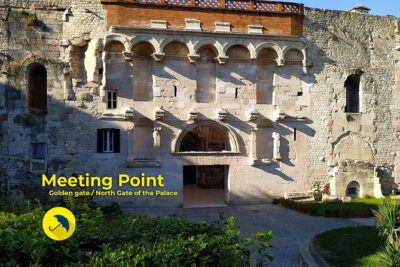
Split: Diocletian Palace & Old Town Guided Walking Tour
Read our review →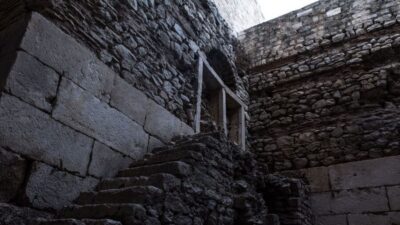
Split: Game of Thrones Tour with Diocletian’s Palace Cellar
Read our review →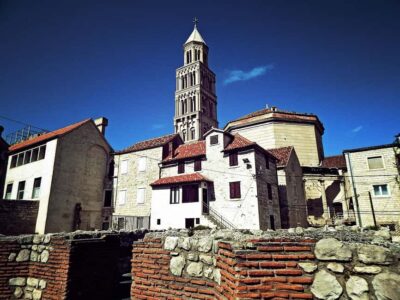
Diocletian’s Palace and Old Town SMALL GROUP Walking Tour
Read our review →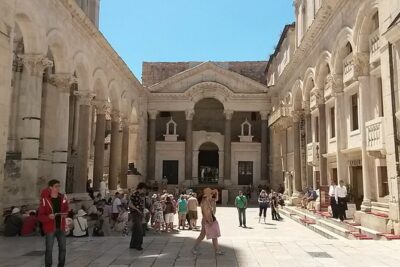
SPLIT-PRIVATE Walking Tour of Diocletian’s Palace & Old Town
Read our review →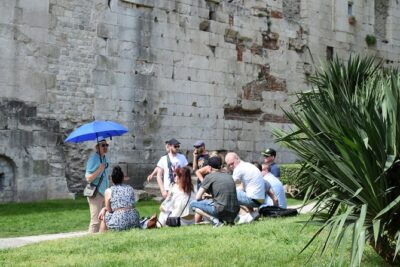
Browse the lists this tour appears in